
Master How to Get Newborn to Sleep Without Nursing Tonight
This post contains affiliate links. As an Amazon Associate we earn from qualifying purchases.
To get a newborn to sleep without nursing, you need to separate feeding from sleeping. Use one of three core methods: a full “dream feed” 30 minutes before bedtime, the rhythmic “shush-pat” technique during the bedtime routine, or scheduled soothing with gradually increasing check-in intervals. The goal is to teach self-soothing while ensuring a safe, firm, flat sleep surface.
This shift hinges on timing. Nursing to sleep works because sucking is a powerful soporific. To break that link, you must move the feeding earlier in the sequence and insert a new, predictable calming step. The baby still gets the calories, but sleep becomes its own event.
What follows is the mechanics of each method, the exact sleep environment that makes them possible, and how to read your baby’s readiness cues. This isn’t about withholding food. It’s about building a sleep habit that doesn’t require a nipple to start.
Key Takeaways
- Separate feeding from bedtime by at least 20-30 minutes. A “dream feed” done while the baby is drowsy but awake breaks the suck-to-sleep association.
- The shush-pat technique works by overriding the startle reflex. Rhythmic patting on the back paired with a steady “shush” sound mimics womb sensations and blocks the Moro reflex that often wakes newborns.
- Controlled comforting (Ferber method) is for babies over four months. Newborns under three months lack the neurological capacity for self-soothing; attempting it earlier leads to excessive crying and parental burnout.
- Any sleep surface inclining more than 10 degrees is unsafe. This CPSC/AAP rule eliminates many inclined sleepers, docks, and nests from consideration.
- Wearable blankets (sleep sacks) are the only safe blanket alternative. Loose blankets, quilts, and soft bedding increase suffocation risk 16-fold.
Why Nursing to Sleep Stops Working
Newborns are wired to fall asleep at the breast or bottle. The sucking motion triggers a calming reflex and releases sleep-inducing hormones. This is biological, not a habit. The problem starts around weeks 6-8, when sleep cycles begin to consolidate and the baby starts waking fully between cycles. If the only way they know how to fall asleep is by sucking, they’ll demand that same condition every 90-120 minutes all night long.
You hit the wall when night wakings stop being about hunger and become about skill. The baby is fed, dry, and warm, but wide awake and crying because the “on” switch for sleep is missing. That’s the moment you need a method that doesn’t involve milk.
Where this goes sideways: Trying to replace nursing with a different sleep prop like rocking or bouncing. You’re just trading one external sleep association for another. The goal is to move the soothing inside the crib, not from your arms.
The transition works when you address both the timing of the last feed and the conditions in the crib. One without the other usually fails.
The Core Three Methods (And When Each Fails)
You need one primary method. Jumping between them confuses the baby and stretches the process out for weeks. Pick based on your baby’s age and temperament, and your own capacity for listening to protest.
| Method | Best For | How It Works | Failure Timeline |
|---|---|---|---|
| Dream Feed & Settle | Babies 0-4 months, parents who want minimal crying. | Feed the baby until drowsy before the bedtime routine. Finish the routine, place awake in crib, use hands-on settling. | If the baby is truly hungry, they’ll cry hard within 10 minutes and won’t settle. This means the dream feed was too early or too small. |
| Shush-Pat | Fussy newborns, babies with a strong startle reflex, parents needing a clear physical routine. | Place baby on back in crib. Lean over, say a calm “shush” near their ear while patting their back or side in a steady, heartbeat-like rhythm. | If patting excites instead of calms (legs start pumping), stop contact. Switch to voice-only shushing from across the room. Overstimulation kills sleep. |
| Scheduled Soothing (Ferber) | Babies 4+ months who are healthy weight and have a established bedtime. | After routine, place awake in crib. Leave room. Return for brief, boring check-ins at set intervals (3 min, 5 min, 10 min). Do not pick up. | If crying intensifies for more than 30 minutes on night three, the baby may not be ready. Pause and retry in two weeks. |
The Dream Feed & Settle Sequence
This method moves the feeding out of the “sleep zone.” Start about 30 minutes before your target bedtime. Offer a full feeding in a well-lit, quiet room. The goal is a drowsy, satisfied baby, not an unconscious one.
After the feed, move to the sleep space for the rest of the routine: a fresh diaper, a change into a safe wearable blanket, maybe a short lullaby. Place the baby in the crib on their back while they are still awake but calm.
Your job now is hands-on settling. This might be a firm hand on the chest, or gentle rhythmic pats. The touch is constant and predictable, not a jiggling bounce. You are a stationary anchor, not a moving ride. Leave the room within 2-3 minutes of them closing their eyes.
A full feeding 30 minutes prior is non-negotiable. A snack feed guarantees a wake-up call 45 minutes later, and now you have a hungry, angry baby who associates the crib with frustration.
The Mechanics of the Shush-Pat
The shush-pat isn’t a random comfort. It works by engaging two sensory pathways that override the nervous system’s panic button. The steady “shush” sound (white noise) masks jarring environmental sounds. The rhythmic patting provides deep-pressure touch that suppresses the Moro, or startle, reflex.
You must match the pat to the cry. A frantic cry gets a firm, slow, metronome-like pat on the back or shoulder. A whiny cry gets a lighter, slower pat. As the baby calms, slow your patting and soften your shush. The fade-out teaches descending relaxation.
The most common mistake is stopping too soon. The baby’s eyes close and you tiptoe out. Their nervous system is still primed, and the startle reflex fires 30 seconds later. Continue the shush-pat for a full two minutes after their eyes close and their breathing deepens.
What Scheduled Soothing Actually Looks Like
For babies over four months, scheduled soothing (often called the Ferber method) can be effective. The Mayo Clinic baby sleep guide outlines its use for teaching self-soothing. The key is the intervals. They are not punishments; they are windows for the baby to practice a new skill.
Night one might be check-ins at 3, 5, and 10 minutes. Each check-in is boring and brief, less than a minute. You might say “It’s sleep time, I love you,” and give a back rub. You do not pick up, rock, or offer a feed. The check-in proves you’re present, but sleep is their job.
The part nobody mentions: The first check-in often makes the crying worse. That’s normal. The baby is protesting the change in rules, not experiencing abandonment. Consistency over the next three nights is what changes the pattern.
A 2016 study noted in the Cleveland Clinic’s Ferber method resource found this approach helped infants fall asleep 15 minutes faster with no long-term stress effects. It works in about 80% of babies. For the other 20%, a gentler “camping out” method (sitting quietly in the room) is a better fit.
Why the Sleep Space is Non-Negotiable
You can execute any method perfectly, but if the sleep environment is wrong, it will fail. Safety and comfort aren’t optional extras; they are the foundation. The American Academy of Pediatrics recommendations are your blueprint.
The surface must be firm and flat. Hand-test any mattress. If it conforms to the shape of your hand, it’s too soft. This is why choosing the right crib mattress is a safety purchase, not a comfort one. Any incline over 10 degrees, common in many loungers and “nappers”, is unsafe for sleep and increases suffocation risk.
The crib must be bare. This means no pillows, quilts, stuffed animals, or loose baby blankets. A CDC analysis found soft bedding raises suffocation risk 16 times. The only safe covering is a fitted sheet and a wearable blanket.
The location is your room. The NHS advises room-sharing for at least the first six months to reduce SIDS risk. A bedside bassinet with a breathable, drop-down side makes this practical for night feeds and soothing.
| Safe | Unsafe | Why |
|---|---|---|
| Firm, flat crib/bassinet mattress | Inclined sleeper, dock, nest | Incline can cause chin-to-chest positioning, blocking airway. |
| Wearable blanket (sleep sack) | Loose blanket, quilt | Loose fabric can cover face; sleep sack cannot. |
| Fitted sheet only | Pillow, bumper, stuffed toy | Soft objects pose suffocation and entrapment risks. |
| Parent’s room (bassinets) | Separate room before 6 months | Room-sharing is correlated with lower SIDS risk. |
Reading Your Newborn’s Sleepy Cues (Not the Clock)
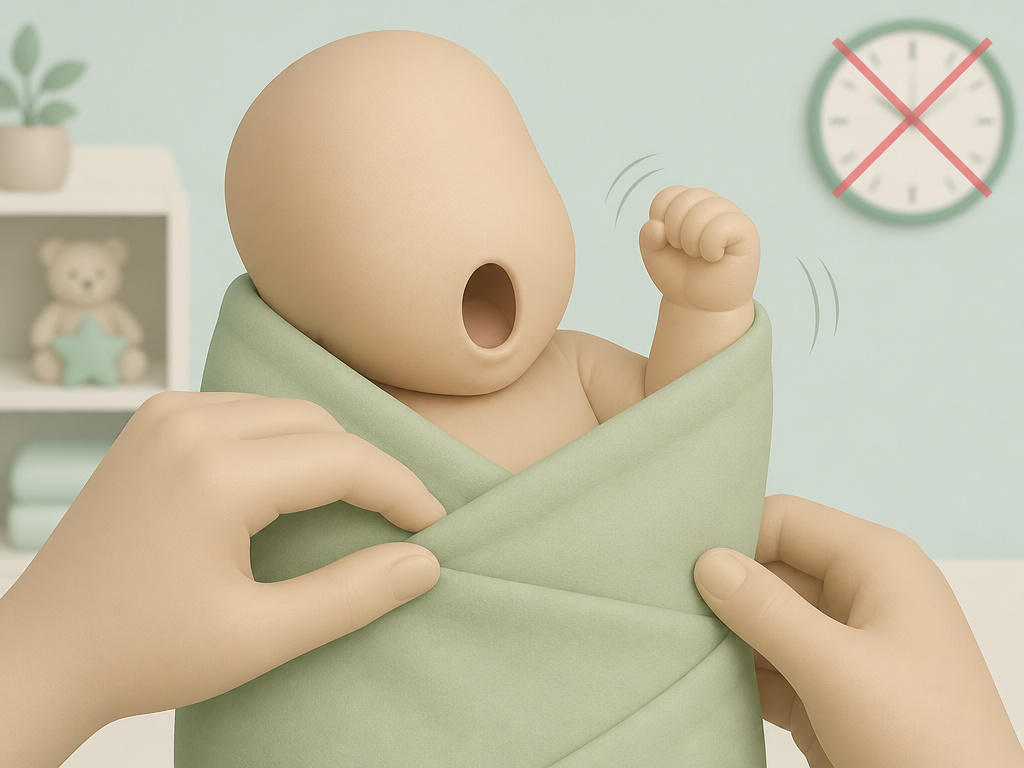 Newborns don’t follow a schedule. They follow sleep pressure. Missing the “sleep window” leads to an overtired, frantic baby who cannot settle, no matter the method. The cues are subtle and sequential.
First comes the early cue: turning away from stimulation, red eyebrows, slower movements. This is your one-minute warning to start the routine. Next is the active cue: yawning, jerky arm movements, fussing. You’re now in the window. The late cue, rubbing eyes, arching the back, hard crying, means you missed it. An overtired newborn produces cortisol, a stress hormone that fights sleep.
For a baby under three months, the awake window is often just 60-90 minutes. That window includes feeding time. So if a feed takes 30 minutes, you have 30-60 minutes of play/quiet time before you need to start settling again. Trying to implement a dream feed with an overtired baby is a guaranteed meltdown.
The Bedtime Routine: Your Consistent Trigger
 The routine is the signal that sleep is coming. It must be short, boring, and repeatable. For a newborn, five to ten minutes is plenty. The sequence matters more than the activities.
A typical sequence: dim lights, fresh diaper, change into sleep sacks, read a short board book or sing the same song, place in crib. Every step should be calm and low-energy. The routine starts after the final feeding when you’re using the dream-feed method.
This routine becomes the new sleep association. It tells the baby’s brain, “The food part is over; now we do these quiet things, then I sleep in my crib.” Consistency is what makes it work. Doing it 80% of the time yields 0% reliability.
When to Call It and Try Again Tomorrow
Some nights fail. The baby is sick, teething, had a vaccination, or the planets are misaligned. Pushing a method when the baby is in genuine distress teaches them the crib is a scary place.
Stop if:
- The baby is crying so hard they are coughing or gagging.
- You feel rising anger or frustration, your tension transfers to them.
- It’s been 45 minutes of continuous, intense protest with no downward trend.
- The baby is under three months and you’re attempting scheduled check-ins.
On those nights, do what you need to do to get everyone some sleep. Nurse to sleep, hold them, use the swing (while awake and supervised). Reset the next night. One broken night doesn’t ruin the process. Inconsistency over a week does.
Frequently Asked Questions
Can a 2-week-old learn to sleep without nursing?
2-week-old cannot self-soothe. Their neurological system is too immature. You can, however, start practicing good habits: separate feeding from sleeping when possible by keeping them awake during feeds, and placing them down drowsy but awake occasionally. The primary goal at this age is feeding on demand and survival, not sleep training.
What if my baby only sleeps while held?
This is common. The transition involves moving from “held” to “touched in crib.” Start by holding them until they are in a deep sleep (limp limbs, regular breathing), then place them down with a firm hand on their chest. Over several days, place them down progressively earlier, from deep sleep, to light sleep, to drowsy. Pair this with the shush-pat technique so your touch moves from holding to stationary contact.
How long does it take to see results?
With the dream-feed or shush-pat method, you may see improvement in 3-5 nights. The baby might still wake, but will resettle with minimal intervention. With scheduled soothing for older infants, the first three nights are hardest, with noticeable improvement by night five. If there’s zero change after seven consistent nights, reevaluate your method or talk to your pediatrician.
Is it okay to use a pacifier instead?
Pacifier can be a helpful tool, as it satisfies the suck-to-sleep urge without feeding. The AAP even notes pacifier use at bedtime may reduce SIDS risk. However, it’s still an external sleep prop. If the baby cannot replace it themselves when it falls out, it will cause wake-ups. Use it as a bridge, but the long-term goal is sleep independent of any object in the mouth.
What if my baby seems genuinely hungry every time?
Cluster feeding in the evening is normal for young infants. Ensure you’re offering full, uninterrupted feeds. If the baby is over four months and medically cleared, ensure daytime calories are sufficient. Sometimes a top-off bottle of expressed milk or formula 30 minutes before the routine can help. True hunger will not be soothed by patting or shushing.
The Bottom Line
Getting a newborn to sleep without nursing is a skill swap. You’re replacing one sleep association (sucking) with another (a predictable routine and a safe sleep space). The dream feed, the shush-pat, and scheduled soothing are your tools. Pick one based on age, commit to it for five nights, and pair it with an environment that meets every AAP safe sleep policy standard.
Start with a full feed, then a boring routine, then a firm crib with a wearable blanket. Watch for sleepy cues, not the clock. Some nights will be messy. That’s part of the process, not a sign you’re failing. The goal isn’t perfection. It’s a baby who can find sleep without a nipple in their mouth, and a parent who isn’t a hostage to the rocking chair all night.
