
How to Get a Fluffy Duvet: Essential Care & Storage Guide
This post contains affiliate links. As an Amazon Associate we earn from qualifying purchases.
To get a fluffy duvet, you need three things: a front-load washer with enough drum space, a dryer set to low heat with timed drying for thick fills, and a strict ban on fabric softener. The Swiss bedding industry standard is to clean or replace duvets every 3 to 5 years—skip that, and the filling compacts permanently.
That timeline isn’t a suggestion. It’s the point where nightly wear and moisture from sleep overwhelm the down or synthetic fill’s ability to rebound. A duvet that feels flat at breakfast might still puff up by bedtime. One that stays flat for a week has crossed the line.
What follows is the breakdown of why standard cycles fail, the exact machine capacities you need, and the storage mistake that kills loft faster than any wash cycle.
Key Takeaways
- Match your washer’s drum capacity to your duvet’s size. A king-size duvet needs a 10 kg capacity machine; stuffing it into a smaller drum crushes the fill permanently.
- Use the dryer’s “Timed Drying” function, not the automatic sensor. Humidity sensors can’t read moisture inside a thick duvet, leaving the core damp and prone to mold.
- Never use fabric softener or dryer sheets. The coating clumps down and smothers synthetic fibers, destroying their loft.
- Plan for professional cleaning or replacement every 3 to 5 years. This is the standard from the Verband Der Schweizer Bettwarenfabriken (VSB) for maintaining hygiene and support.
- Store duvets in a breathable bag, never vacuum-sealed long-term. Compressing the fill for months breaks the internal structures that create fluff.
The Non-Negotiable Washing Rules
Head straight to the care label. If it doesn’t say “machine washable,” stop. The Verband Der Schweizer Bettwarenfabriken (VSB) states non-washable duvets should only be professionally cleaned. For washable duvets, the label is your blueprint.
Use a large, front-loading washer on a cold, gentle cycle with a pH-neutral liquid mild detergent. Avoid fabric softener entirely, as it coats fibers and destroys loft. This method is endorsed by manufacturers from Casper to Cloud Sleep for preserving duvet integrity.
Your washing machine’s drum size is the first make-or-break factor. The duvet needs room to tumble freely. If it’s crammed in, the agitation will tear the internal baffles and mat the filling beyond recovery.
| Duvet Size (cm) | Minimum Washer Drum Capacity | What Happens If It’s Too Small |
|---|---|---|
| 140×200 / 140×220 | 5 kg | The duvet cannot move. Fill clusters break, and the outer fabric may tear at the seams from stress. |
| 160×200 up to 200×220 | 7 kg | Inadequate water flow leaves detergent residue, which attracts moisture and dust mites. |
| 240×200 / 240×220 & larger | 10 kg | The motor strains, the drum balance fails, and the fill compacts into irreversible clumps. |
This isn’t about a slightly less fluffy result. A duvet washed in an undersized machine is often a total loss. The damage is mechanical.
Common mistake: Using a top-load agitator washer. The central post wraps the duvet around itself, twisting and straining the internal construction. It’s a guaranteed way to break baffle walls.
Why Your Dryer is Lying to You
That “Duvet” or “Bedding” cycle on your dryer is a starting point, not a solution. LG’s guidance is clear: the cycle is designed for single-layer or summer-weight duvets. For anything thicker, the humidity sensors are defeated.
The moisture is trapped deep in the core. The sensor reads the dry outer layers and shuts off early, leaving a damp center. In 48 hours, that dampness will smell like a wet dog.
Where this goes sideways: Relying on the automatic sensor for a thick winter duvet. The inner filling stays damp, and mold spores germinate within a week. You’ll smell it before you see it.
The fix is manual control. Use the “Timed Drying” function. Start with 40 minutes on low heat. After that cycle, turn the duvet over—flip it end-to-end and inside-out—and run another 30 minutes on “Warm Air.” This ensures heat penetrates from both sides.
Dryer balls are non-optional. Tennis balls work in a pinch, but purpose-made wool dryer balls are better. They physically bash the clumps of down or synthetic fiber apart as the drum turns. Without them, the fill dries in matted lumps.
The Fill-Type Firewall
This is the most critical warning in the entire process. LG’s manual explicitly states: never dry duvets with animal or vegetable fillings (duck down, goose down, wool, cotton) in a tumble dryer. The risk is fire. These natural materials can overheat and ignite.
For down or wool duvets, you have two safe paths: professional cleaning or air-drying flat over multiple clotheslines or racks with daily flipping. The dryer is off-limits.
Fluffing and Maintenance Between Washes
Daily loft maintenance takes ten seconds. Each morning, give the duvet a vigorous shake and a few sharp snaps along its length. This redistributes the fill and breaks up any flat spots from body pressure.
Weekly, take it outside for an airing. Hang it over a clean line on a dry, breezy day. The fresh air evacuates moisture, and sunlight is a mild disinfectant. Don’t leave it in direct sun for more than an hour, as prolonged UV exposure can weaken fabrics.
The right duvet covers act as a shield. A high-thread-count cotton cover with corner ties keeps the duvet anchored and prevents it from sliding into a lumpy pile at the foot of the bed. This constant shifting is a major cause of uneven wear.
Storage: The Vacuum-Pack Trap
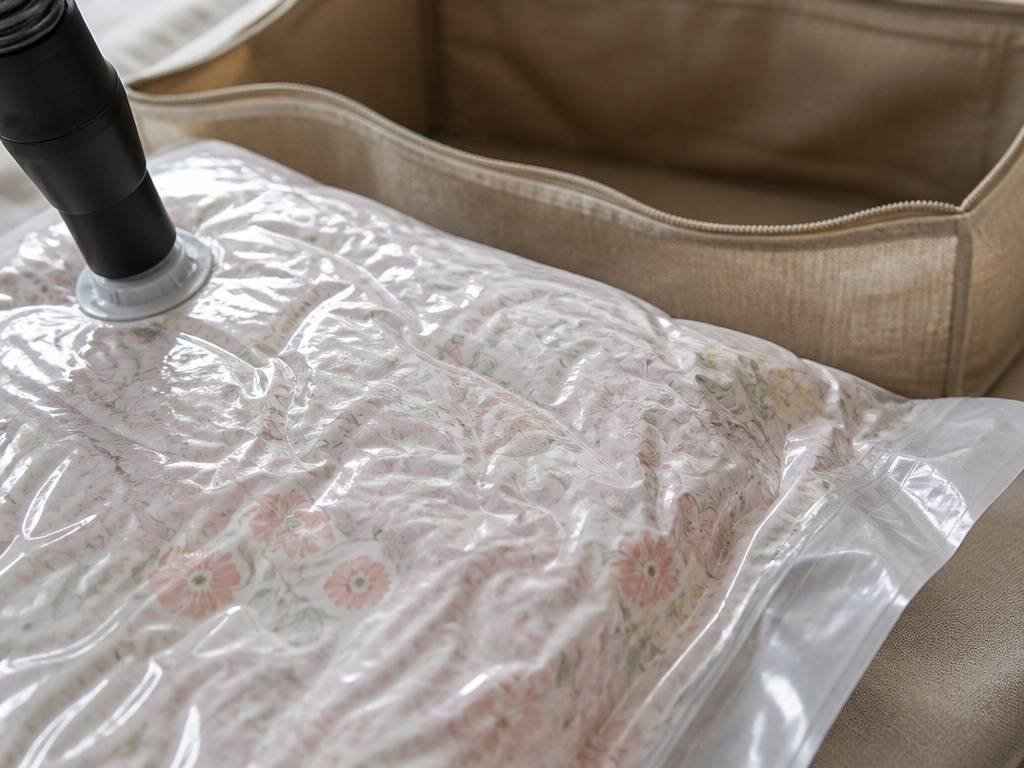
When the season changes, you want to stash the bulky winter duvet. The instinct is to vacuum-seal it. The VSB advises against long-term vacuum-packing.
Compression for months on end collapses the delicate structures of down clusters or synthetic fibers. They lose their “memory” and won’t fully rebound. Some of the filling power is permanently lost.
Store duvets in a breathable cotton storage bag or the ventilated bag they arrived in. Never stack heavy items on top. An air-permeable environment lets moisture escape and preserves the loft.
If you must vacuum-pack for a cross-country move, ensure the duvet is bone-dry. Any residual moisture sealed in that bag will create mold, and the resulting odor never fully leaves the fibers.
When to Call a Professional (The 3-Year Rule)
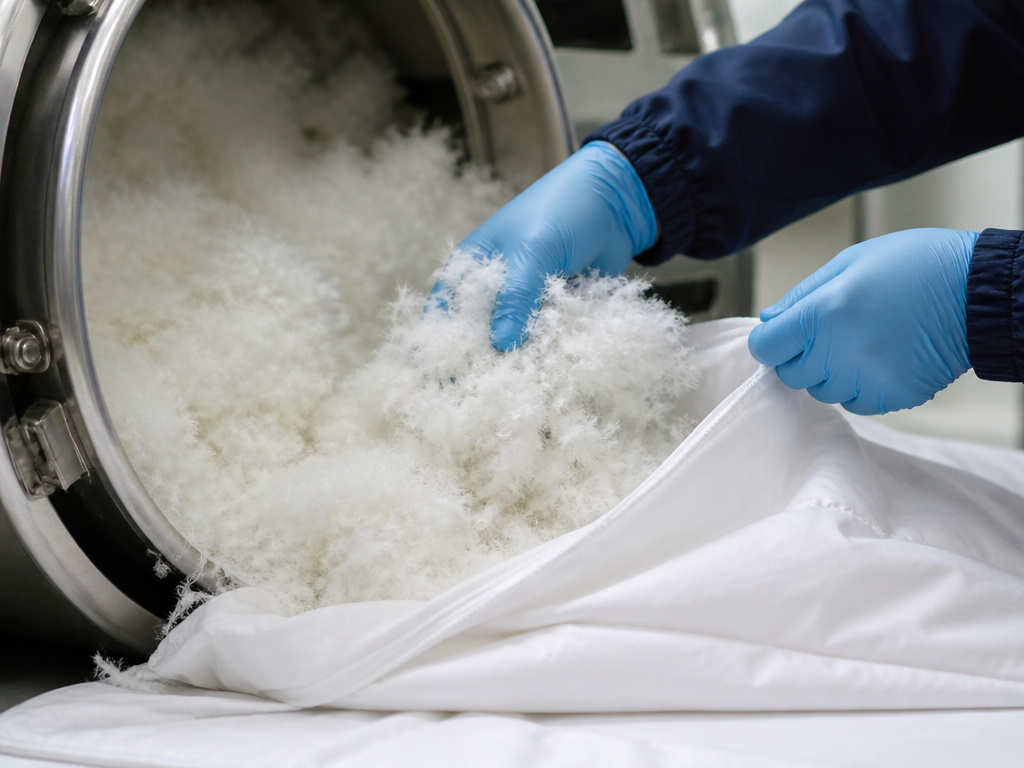
You can do everything right at home and still hit a wall. The Verband Der Schweizer Bettwarenfabriken (VSB) sets the industry standard: duvets should be cleaned or replaced every 3 to 5 years. Pillows have a stricter 3-year timeline.
This isn’t about dirt you can see. It’s about the accumulation of skin cells, moisture, and oils that break down the fill’s resilience. A pro doesn’t just wash the cover; they empty the entire duvet, wash and disinfect the filling in industrial machines, replace damaged material, and restuff a new or cleaned shell.
For a quality down duvet, this service can add years to its life. For a mid-range synthetic duvet, replacement after five years is often more economical. The support is just gone.
This maintenance is part of a larger sleep system. A flat duvet on a sagging mattress for children creates a poor sleep environment. The right foundation matters.
Choosing a Duvet Designed for Fluff
All this work is easier if you start with the right duvet. High-loft designs have internal baffle boxes or channels that keep the filling distributed. A cheap duvet with simple stitching will always deflate into the corners.
For kids’ rooms, where bedding for children gets heavy use, prioritize durability. A synthetic fill like PrimaLoft or a down alternative often stands up to frequent washing better than delicate natural down and is safe for home drying.
The size of the duvet should match the bed options for kids. A duvet that’s too large for a toddler bed is cumbersome and won’t loft properly; one that’s too small for a bunk bed leaves cold gaps.
| Duvet Fill Type | Best For | Fluff Recovery After Washing | Key Caution |
|---|---|---|---|
| High-Quality Down | Dry climates, luxury feel | Excellent (with proper drying) | Must be air-dried or professionally cleaned. |
| Down Alternative | Allergies, humid climates, kids’ beds | Very Good | Can tolerate machine drying on low heat. |
| Synthetic Hollowfibre | Budget-friendly, frequent washing | Good | Can flatten over time; shorter lifespan. |
| Wool | Temperature regulation, moisture-wicking | Fair | Requires flat air-drying; never machine dry. |
The bottom line? A Cloud Sleep Down Duvet built for longevity responds to care. A cheap department store model might not.
Frequently Asked Questions
Can I wash a duvet in a top-load washer?
You should not. The central agitator twists and strains the duvet’s internal construction, likely tearing baffles and matting the fill. A front-load washer with a large drum is the only safe home option.
Why is my duvet still flat after drying?
The core is likely still damp. Dryer sensors fail on thick items. Use “Timed Drying” for 40 minutes on low, then turn the duvet over and dry another 30 minutes on warm. Ensure you used dryer balls to break up clumps during the cycle.
How often should I actually wash my child’s duvet?
For general maintenance, once or twice a year is sufficient if you use a protective duvet cover. Wash immediately after any illness or accident. The 3-5 year professional cleaning rule is for deep hygiene and fill restoration.
Is it okay to vacuum-pack my duvet for summer storage?
Only for very short periods (a few weeks). The VSB warns that long-term compression permanently damages the fill’s structure, reducing loft. For seasonal storage, use a breathable cotton bag.
What’s the fastest way to fluff a duvet without washing it?
Take it outside on a dry, breezy day and shake it vigorously. Then, hang it over two parallel clotheslines so air can circulate on all sides. Leave it for a few hours. The fresh air will evacuate moisture and revive the fibers.
Can I use dryer sheets to reduce static?
No. The coating from dryer sheets (and liquid fabric softener) adheres to the duvet’s fibers, weighing them down and causing them to stick together. This is a primary cause of lost loft. Use wool dryer balls instead.
The Bottom Line
Fluff is a function of care, not magic. Start with a duvet designed for it, wash it in a machine large enough to give it room, and dry it on manual timers with dryer balls. Ban fabric softener forever. Then, mark your calendar: every three years, budget for a professional clean or a replacement. That’s the cycle that keeps a duvet from becoming a flat, lifeless blanket. It turns a basic bedding item into a lasting part of a cozy kids bedding setup.
