
How Often a Newborn Should Sleep During the Day Explained
This post contains affiliate links. As an Amazon Associate we earn from qualifying purchases.
Newborns should sleep 14–17 hours total per day, broken into 6–8 short naps that last 30 minutes to 3–4 hours each. They can only stay awake for 1–2 hours at a time before needing to sleep again. Follow their feeding schedule, every 2–3 hours for breastfed babies, 3–4 hours for bottle-fed, and let them nap after each feed. The goal isn’t a schedule; it’s watching for sleep cues and preventing overtiredness.
That “1–2 hour awake window” is the single most useful piece of the puzzle. It’s the guardrail that keeps everything from falling apart. A newborn’s system is simple: eat, stay awake briefly, sleep, repeat. Push past two hours of wakefulness, and the baby’s nervous system floods with stress hormones. The result isn’t a longer next nap, it’s a frantic, overtired baby who fights sleep and sleeps fitfully.
What follows breaks down the numbers from the National Sleep Foundation and the American Academy of Sleep Medicine, but more importantly, it translates them into the physical rhythms you’ll actually see. We’ll cover the realistic nap lengths, the critical exception to “never wake a sleeping baby,” and how to set up a safe sleep space for those countless daytime naps. By the end, you’ll know how to read your baby’s signals, not just a clock.
Key Takeaways
- Newborns log most of their 14–17 hours of daily sleep during the day initially, with naps ranging from 30 minutes to 4 hours.
- Never let a newborn stay awake for more than 2 hours at a time; watch for early sleep cues like yawning or staring off.
- You must wake a newborn to feed every 3–4 hours until they regain their birth weight and are gaining steadily.
- Daytime sleep safety is identical to nighttime: alone, on their back, on a firm, flat surface with nothing else in the crib.
- The American Academy of Sleep Medicine states there is insufficient evidence to set a firm sleep duration recommendation for infants under 4 months due to normal extreme variation.
The Daytime Sleep Clock: Hours, Naps, and Awake Windows
Forget trying to map a newborn’s sleep onto an adult schedule. Their sleep is polyphasic, meaning it’s scattered in multiple short chunks across the 24-hour cycle with no initial difference between night and day. The total is what matters most.
Newborns (0-3 months) need 14–17 hours of sleep per 24-hour period, according to the National Sleep Foundation. This sleep is divided into many brief periods, ranging from 30 minutes to 3–4 hours at a time, with the baby awake for 2 hours or less between sleeps.
The University of Colorado Boulder’s sleep development lab provides the most practical data point: at 3 weeks of age, the average longest sleep period is just over 2 hours. That’s for a long stretch. Many naps will be shorter. By 6 months, that longest stretch extends to almost 6 hours, but that’s a future milestone. Right now, a 2-hour nap is a marathon.
This means daytime sleep isn’t optional downtime; it’s the majority of their total sleep. A newborn might take 6 to 8 of these short naps in a 24-hour period. Trying to limit daytime sleep to “save it” for night backfires every time. An overtired newborn has a harder time falling asleep and staying asleep.
The 2-Hour Awake Window: Your Most Important Timer
The clock you should watch isn’t for sleep duration, but for wakefulness. From the moment your baby wakes up, you have a 60 to 120-minute window before they need to be asleep again. This includes feeding time.
Where this goes sideways: Missing early sleep cues like yawning, rubbing eyes, or a glazed stare. If you wait until they’re crying and frantic, they’re already overtired. Putting an overtired baby down can take three times as long, and their sleep will be more restless.
Start the wind-down process at the first sign. For a newborn, this often means a feeding is part of the pre-sleep routine. After the feed, a brief period of quiet alertness or a diaper change, then it’s back to the bassinet while they’re drowsy but still awake. This 2-hour rule is non-negotiable for the first 8-12 weeks.
The Feeding Schedule Dictates the Nap Schedule
A newborn’s nap rhythm is inextricably tied to their hunger. Their stomach is tiny, holding only 1-2 ounces at a time.
| Feeding Method | Typical Interval | How It Affects Naps |
|---|---|---|
| Breastfed | Every 2–3 hours | Baby will often fall asleep at the breast. A full feeding usually precedes the longest nap stretch. |
| Bottle-fed | Every 3–4 hours | May allow for slightly longer sleep intervals after a feed, but the 3-4 hour wake-to-feed rule still applies. |
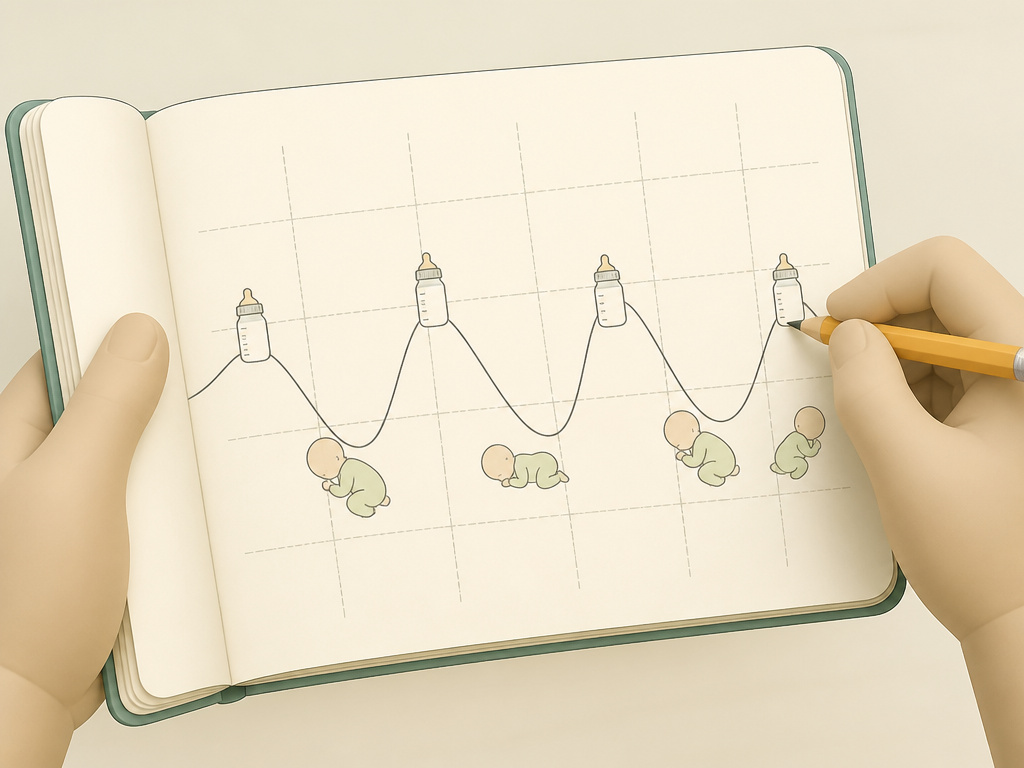
The “schedule” is this cycle: wake, feed, brief awake time, sleep. Repeat. The nap starts after the feed. This is why rigid nap timing is impossible, it shifts based on how long the last feed took and how alert the baby was afterward.
When to Wake a Sleeping Newborn (Yes, Really)
The old adage “never wake a sleeping baby” has a critical, non-negotiable exception for the newborn period.
You must wake your newborn to feed if they sleep longer than 4–5 hours in the first few weeks. This is a direct medical guideline for two reasons: to ensure adequate hydration and, most importantly, to support weight gain. A newborn who isn’t feeding enough can become lethargic and sleep even more, creating a dangerous cycle.
Common mistake: Letting a sleepy newborn consistently skip feeds for longer sleep stretches before they’ve regained their birth weight. This can slow weight gain and require clinical intervention to correct.
The rule of thumb from pediatric resources like the KidsHealth newborn sleep guide is clear: wake your baby every 3–4 hours to eat until they show good weight gain, which usually happens within the first couple of weeks. After your pediatrician confirms steady growth, you can let them sleep for longer periods at night.
Safe Sleep for Daytime Naps
A nap on the couch or in a swing is not safe sleep. The risk of SIDS (Sudden Infant Death Syndrome) and accidental suffocation doesn’t clock out during the day. Every sleep period, no matter how short, must follow the ABCs of safe sleep.
A is for Alone. No pillows, blankets, stuffed animals, or crib bumpers. The crib, bassinet, or bedside sleeper should contain only the baby and a fitted sheet. B is for Back. Always place your baby on their back to sleep. This is the single most effective step to reduce SIDS risk. C is for Crib (or bassinet). A firm, flat, CPSC-approved sleep surface. Inclined sleepers, loungers, car seats, and swings are not for unsupervised sleep.
This consistency is crucial. It protects your baby and helps them associate their safe sleep space with sleep itself. Using a wearable blanket or swaddle (if they’re not yet rolling) keeps them warm without the hazard of loose blankets.
Why There’s No “Official” Schedule for Under 4 Months
 You might search for a official chart and find a gap. There’s a reason for that.
The American Academy of Sleep Medicine report explicitly states that recommendations for infants younger than 4 months are not included in their consensus guidelines. The reason? “The wide range of normal variation in duration and patterns of sleep, and insufficient evidence for associations with health outcomes.”
In plain English: newborns vary too much for a one-size-fits-all rule. One might sleep 14 hours total, another 19. Both can be perfectly healthy. This is why the Cleveland Clinic sleep guide emphasizes talking to your pediatrician about what’s normal for your baby. The ranges (14-17 hours) are guides, not prescriptions.
Tracking Sleep: Patterns Over Precision
Instead of obsessing over minute-by-minute logs, look for patterns over 24-48 hours. – Are they getting roughly 14+ hours of total sleep? – Are feeding intervals generally within 2-4 hours, with adequate wet diapers? – Are most awake windows under 2 hours?
If yes, the details of when those hours happen are less important. The rhythm will emerge and gradually shift toward longer nighttime stretches over the coming months. The focus should be on safe sleep practices and responding to your baby’s needs, not fitting them into a predetermined grid.
Creating a Sleep-Friendly Environment
 Daytime sleep helps set the stage for nighttime sleep by reinforcing healthy sleep habits. Environment matters, even at noon.
Dim the Lights. You don’t need pitch black, but drawing shades or using blackout curtains for naps helps signal that it’s sleep time and supports the development of their circadian rhythm. Minimize Noise. Use a white noise machine or a fan to dampen sudden household sounds. Consistent sound is better than aiming for utter silence. Watch the Temperature. Overheating is a SIDS risk factor. The room should be comfortable for a lightly clothed adult, around 68–72°F (20–22°C). Feel the back of the baby’s neck or chest; they should feel warm, not sweaty.
These cues help a newborn’s brain start to learn the difference between active wake times and rest times. A consistent bedtime routine for nighttime is crucial, but a mini-version for naps, like a song, a swaddle, and into the crib, can also be helpful.
Frequently Asked Questions
Should I wake my newborn from a long daytime nap?
In the first two weeks, yes, to ensure 8-12 feeds per 24 hours. After weight gain is established, generally no. Long daytime naps might mean a shorter next awake window or a slightly later bedtime, but it’s usually fine. If long daytime naps consistently hurt nighttime sleep, gently cap the nap at the 3-hour mark.
How many naps should a 2-week-old take?
There’s no set number. With 14-17 hours of total sleep and awake windows of 1-2 hours, a 2-week-old will naturally cycle through 6-8 sleep periods in a day. Some will be 30-minute catnaps, others might be 2-3 hours. Count cycles, not naps.
My newborn only sleeps when held. What do I do?
This is extremely common. Their number one comfort is you. The goal is to start transferring them to their safe sleep space drowsy but awake for at least one sleep period a day. Use a firm swaddle or wearable blanket, white noise, and a gentle hand on their chest after putting them down. It may not work every time, but the practice helps them learn.
Is it okay if my newborn’s sleep is noisy and active?
Yes. Newborn sleep is often loud, grunts, squeaks, and irregular breathing are normal. This is called active sleep (similar to REM). Wait for a true cry or signs of distress before intervening. Often, they are soundly asleep through the noise.
When will daytime naps become more predictable?
Around 3-4 months, you’ll see a more regular pattern emerge, often with 3-4 distinct naps. The first nap of the day usually consolidates first. Until then, follow the 2-hour awake window and their cues, it’s the most predictable thing you’ve got.
The Bottom Line
Forget the clock for the first few months. Your newborn’s daytime sleep needs are met by following a simple, biological loop: feed, brief wakefulness, sleep. Watch the awake window more closely than the nap length. Protect every sleep with a safe, empty crib. And remember, the wide variation you see is normal, the official guidelines say so. Your job isn’t to enforce a schedule, but to provide a safe, responsive environment where sleep can happen as often as their growing brain and body demand. The rest will follow.
