
The Complete Guide on How to Dry a Duvet Effectively
This post contains affiliate links. As an Amazon Associate we earn from qualifying purchases.
Dry a duvet by matching three things: the filling material, your dryer’s specific duvet program, and the duvet’s bulk. Use a dedicated “Duvet” or “Bed Linen” cycle at a medium-to-high heat (around 75–90°C), ensure the duvet fills only half the drum for proper tumbling, and never machine-dry duvets filled with down, wool, or cotton wool due to extreme fire risk.
That fire warning isn’t a generic caution. It’s a direct, verbatim instruction from major appliance makers. Getting the fill wrong doesn’t just risk a damp comforter, it risks a house fire. The rest of the process hinges on that first check.
What follows is a breakdown of the two proven paths: machine drying with the right specs and settings, and air drying with the right technique to prevent mildew. We’ll walk through the manufacturer manuals, the capacity math that most guides gloss over, and the specific failure points for each method.
Key Takeaways
- Natural fillings are flammable. LG’s official guidance states to never dry duvets with duck down, goose down, wool, or cotton wool in a tumble dryer, as it may cause a fire.
- Use the dedicated cycle. Dryers like the IKEA UDDARP have a specific “Duvet 90” program; using a standard cycle can overheat synthetic fills or fail to dry down properly.
- Half-full is the rule. For proper tumbling and airflow, the duvet should fill only about half the dryer’s drum capacity.
- Weight ≠ bulk. A dryer’s capacity rating (e.g., 4.0 kg for bedding) refers to dry weight, not physical size. A lightweight king-size duvet can still overwhelm a drum.
- Air drying demands airflow. Hanging a duvet over a single line creates a damp, mold-prone core. You must use multiple parallel lines or a large rack.
The #1 Rule: Check the Filling First
This isn’t about care labels. It’s about the manufacturer’s safety warning printed in the dryer manual. The filling material dictates your entire path forward because it determines the physical risk.
Never dry duvets with animal or vegetable fillings. It may cause a fire. (Filling: duck down, goose down, wool, cotton wool, etc.) . LG Dryer Support Guidance
That’s a non-negotiable stop sign for machine drying. Natural materials like down and wool can retain oils that lower their ignition point, and the intense, confined heat of a dryer drum creates a perfect storm. The risk isn’t theoretical; it’s specific enough for manufacturers to issue a global warning.
For synthetic fills, hollowfibre, microfibre, polyester, the risk shifts from fire to damage. They can melt or clump if overheated, which is why using the correct dryer program is non-optional. Your first step is always to find the tag and identify the fill. If it lists any natural material, your only safe option is air drying.
Decoding Your Dryer’s Duvet Program
If your duvet has a synthetic fill, your dryer is your tool. But “tumble dry low” isn’t precise enough. Modern dryers have specific programs engineered for bulkier items, and their settings are published in the manual.
| Dryer Model | Duvet Program Name | Program Temperature | Key Spec / Note |
|---|---|---|---|
| IKEA UDDARP | Duvet 90 | 90°C | Labeled for duvets; uses high heat for thorough drying. |
| LG Dryers (General) | Duvet / Bed Linen | Varies (Med-High) | Works best when duvet fills half the tub for tumbling. |
| Fisher & Paykel DE4024P | Bed Linen | Not Specified | Max load: 4.0 kg dry weight for sheets/duvet covers. |
The IKEA UDDARP manual lists a “Duvet 90” program that runs at 90°C. This is a specific, high-temperature cycle designed to penetrate the dense bulk of a comforter, not a generic “Cotton” cycle with a different heat profile and cool-down phase.
The program name matters because it controls the heat profile, tumbling action, and cool-down sequence. A “Bed Linen” or “Duvet” cycle typically incorporates longer cool-down periods to prevent the insulation from setting wrinkles or retaining residual heat that could damage the fibres. Using a quick “Mixed” or “Synthetics” cycle might seem faster, but it often uses uneven heat and insufficient cooling, leading to damp patches or premature wear.
Capacity: The Weight vs. Bulk Trap
Here’s where most advice fails. Dryer capacity is listed in kilograms, the dry weight of laundry it can handle. The Fisher & Paykel DE4024P manual states its 4.0 kg capacity is for “Sheets, pillowcases and duvet/ doona covers.” A duvet’s bulk, however, is about volume, not weight. A lightweight, king-size hollowfibre duvet might weigh under 3 kg but be so voluminous it can’t tumble freely in a standard 7-8 kg capacity drum.
The universal rule from LG’s guidance is visual: the duvet should fill about half the tub. This allows the item to lift and fall freely with each rotation, which is the mechanical action that separates the fibres and lets hot air circulate. An overstuffed drum just slides the duvet around, leaving the core wet and straining the dryer’s motor and bearings.
Step-by-Step: Tumble Drying a Duvet
Follow this sequence. Skipping the balance step is the most common reason for a duvet coming out damp in the middle.
- Wash thoroughly first. Never dry a duvet that hasn’t been washed. Dirt and body oils act as insulation against heat and can bake into the fibres.
- Inspect and secure. Check for any loose threads or seams that could unravel during tumbling. Fasten any buttons or ties.
- Load for balance. Place the duvet in the drum evenly. Do not stuff it. If it’s a double or king, you may need to fold it in half loosely to achieve the “half-full” drum rule. The goal is a balanced load that won’t thump.
- Select the exact program. Turn the dial to the dedicated “Duvet,” “Bed Linen,” or “Comforter” cycle. If your dryer lacks one, use a “Cotton” or “Heavy Duty” cycle with a medium heat setting, high heat can glaze synthetic fibres.
- Add dryer balls (optional). Two or three wool or plastic dryer balls will help beat the duvet as it tumbles, separating the fill and reducing drying time.
- Start and listen. Run the dryer. Listen for the first few minutes. A rhythmic thumping means it’s not tumbling freely, stop and re-balance the load.
- Check and fluff mid-cycle. After about 30-40 minutes, pause the dryer. Reach in, shake the duvet vigorously, and turn it over or inside out. This exposes damp inner layers to the hot air. This one step can cut total drying time by a third.
- Complete the cycle. Restart and let the cycle finish, including the full cool-down period. A warm duvet straight from the drum can feel dry but may hold residual moisture that leads to mildew in storage.
Where this goes sideways: Skipping the mid-cycle fluff. The outer layers dry first and insulate the wet core. Without manually redistributing the fill, you’ll have a duvet that feels dry on the surface but is damp and cold inside, requiring a second full cycle.
How to Air-Dry a Duvet Safely

For down, wool, or delicate duvets, air drying is your only safe method. The goal is to support the duvet’s full area while maximizing airflow around it to prevent a damp, musty core.
- Use parallel lines or a large rack. Draping a duvet over a single washing line causes it to fold in half. The inner layers have zero airflow and will stay wet for days, inviting mildew. String two or three parallel lines about 18 inches apart and spread the duvet over them like a bridge. A large, grid-style drying rack works better.
- Flip and shake, twice a day. Moisture migrates downward. Every 6-8 hours, flip the duvet over. Give it several strong shakes first to redistribute the fill and break up any clumps, especially with down.
- Sunlight is a powerful ally. Direct sunlight does more than dry; its UV rays are a natural disinfectant and deodorizer. It helps eliminate lingering smells and bacteria. Just be mindful that prolonged, intense sun can fade dark fabrics over time.
- Patience is non-negotiable. A thick duvet can take 2-3 full days to air-dry completely, even in good weather. The final test is a hand-check deep within the folds, it should feel completely dry and cool, not cool-damp.
Duvet Filling-Specific Guide
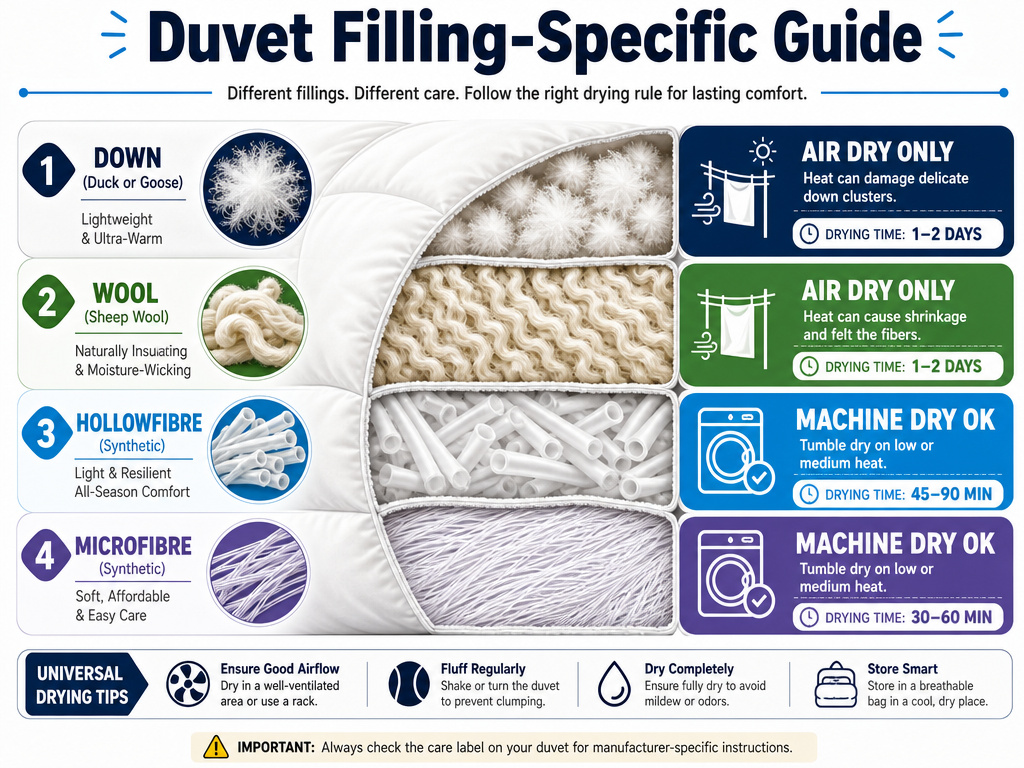
Your approach changes completely based on what’s inside the cover. Treating all fills the same ruins them.
| Filling Type | Machine Dry? | Recommended Dryer Cycle | Air Drying Priority | Key Risk |
|---|---|---|---|---|
| Down (Duck/Goose) | No – Fire Hazard | Do Not Use | Essential | Fire risk from oils; clumps irreparably if overheated. |
| Wool | No – Fire Hazard | Do Not Use | Essential | Fire risk; shrinks and felts with heat and agitation. |
| Hollowfibre / Polyester | Yes | Duvet / Bed Linen (Medium Heat) | Good Option | Can melt or glaze on high heat; must tumble freely. |
| Microfibre | Yes | Delicate / Low Heat | Good Option | Retains heat; easy to over-dry and damage fibre structure. |
For down duvets, the air-drying fluff ritual is critical. Shake it vigorously multiple times a day. Once completely dry, a final, vigorous shake in a warm, dry room will restore its loft. Never store a down duvet unless you are 100% certain it’s bone-dry.
For synthetic fills like hollowfibre, the risk is clumping. If the fill bunches up in one corner after washing, it’s often because the dryer was overloaded and the item couldn’t tumble. Redistribute the fill by hand and run it again on a no-heat “Air Fluff” cycle with dryer balls to break it apart.
Frequently Asked Questions
Can you dry a duvet in a 7kg dryer?
It depends on the duvet’s bulk, not its weight. A 7kg dryer can handle the weight of most double duvets. The real question is whether the duvet can tumble freely. If you can fit it in without forcing the door shut and it only fills half to two-thirds of the drum, yes. If you have to compress it, it’s too big and will dry poorly.
How long does it take to dry a duvet?
In a dryer on a proper duvet cycle, expect 60 to 90 minutes for a synthetic single duvet, and up to 2-3 hours for a king-size. Always factor in the mid-cycle fluff check. Air drying takes significantly longer, anywhere from 24 to 72 hours, heavily dependent on humidity and airflow.
Why is my duvet still damp after drying?
Three likely causes. First, the dryer was overloaded, preventing tumbling. Second, you didn’t use a dedicated high-heat, long-cycle program meant for bedding. Third, with air drying, the duvet was folded over a single line, trapping moisture in the core. The fix is always to improve airflow around the entire item.
Can I put a duvet in the dryer without washing it?
No. Drying a soiled duvet bakes stains and body oils into the fibres, making them permanent and degrading the fabric. It also creates a musty smell as the moisture evaporates. Always wash according to the care label before drying.
How do you dry a duvet without a dryer?
Use the parallel line or large rack air-drying method. Ensure it’s outdoors in a breezy, sunny spot if possible. Flip and shake it at least morning and evening. To speed the process, you can lay it flat over several clean, dry towels, roll the bundle up tightly to press out moisture, and then replace the towels with dry ones. Repeat until the towels come away mostly dry.
The Bottom Line
Drying a duvet is a test of patience and precision. The shortcut, tossing any large blanket into the dryer on any setting, costs you time, energy, and can ruin a good comforter. Match the fill to the method: synthetics get a dedicated machine cycle with room to tumble, while natural fills demand respectful air drying. Listen to the manufacturer’s warnings, respect the bulk, and never underestimate the power of a midday fluff. Your reward is a properly dried, fresh, and fluffy duvet that actually keeps you warm.
