
Guide: Can a Baby Safely Sleep in the UPPAbaby Bassinet? Tips
This post contains affiliate links. As an Amazon Associate we earn from qualifying purchases.
Yes, a baby can sleep in a UPPAbaby bassinet, but only under specific, non-negotiable conditions. The bassinet is certified for sleep from birth until the infant reaches 20 pounds (9 kg) OR can push up on hands and knees, whichever comes first. It must be used only on its compatible stroller frame or official stand, on a firm, flat surface, with only the included mattress and a fitted sheet.
That 20-pound cutoff is printed in the manual for a reason. It’s the point where the bassinet’s structure and the infant’s mobility create a fall risk that the product wasn’t tested to handle. The rest of the rules, no extra padding, no soft surfaces, a mandatory audible click on attachment, are how you keep that safe sleep window open until that limit.
What follows: the exact rules from the UPPAbaby manual, the federal safety standards they meet, the one common setup mistake that voids all protection, and what to use when your baby outgrows it.
Key Takeaways
- The UPPAbaby bassinet is approved for overnight sleep but has a hard stop at 20 pounds (9 kg) or when the baby can push up on hands and knees.
- It must only be used on its compatible UPPAbaby stroller (Vista, Cruz, Ridge) or the official UPPAbaby bassinet stand, never on beds, sofas, or other elevated, soft surfaces.
- Never add a second mattress, pillow, or loose bedding. Use only the included, firm pad and a tightly fitted sheet designed for its specific dimensions (740mm x 321mm).
- An audible “click” and a visible green safety indicator are mandatory checks before placing your baby inside. If you don’t hear or see both, the bassinet is not securely attached.
- Once outgrown, transition to a certified crib, mini-crib, or playard. The bassinet is not safe for sleep beyond its stated limits.
The Official UPPAbaby Bassinet Sleep Rules
The manual is the manufacturer’s legal document stating how the product was tested and what keeps it from failing. For the UPPAbaby bassinet, the sleep rules are absolute.
First, the weight and development limit: 20 pounds (9 kg). This value is the maximum load the bassinet’s frame and attachment points are engineered to support during sleep. The alternative limit, when the infant begins to push up on hands and knees, is just as critical.A baby who can get up on all fours can rock the bassinet, potentially tipping it if placed on an elevated surface, or could fall over the side.
Second, the surface rule. The bassinet must be used on a “firm, horizontal, level and dry surface.” This means the floor when on its stand, or locked securely onto the stroller frame with the brakes engaged. The manual states it in the negative because the hazard is so severe: “NEVER place carrycot on beds, sofas, or other soft surfaces.” On a soft mattress, the bassinet can tilt or roll, creating a gap where an infant can become trapped and suffocate.
Where this goes sideways: Adding a plush mattress topper for comfort. The gap between that extra pad and the bassinet wall is a documented suffocation hazard cited by the U.S. Consumer Product Safety Commission. The included mattress is the only one certified to fit the 740mm by 321mm base.
Third, the attachment verification. You must hear an audible “click” when the bassinet handle locks into the stroller frame or stand. You must also see the green safety indicator window show green. No click, no green? The bassinet is not safe for use. This is how you prevent a catastrophic detachment while the stroller is moving or if a child shifts weight.
Finally, the bassinet is designed for a single child. It is not a toy, a storage bin, or a car bed. Using it for anything other than its intended purpose voids its safety certifications and any warranty.
Why These Rules Exist: The Federal Safety Backstop
UPPAbaby’s manual rules are the company’s implementation of mandatory federal safety standards. Since June 2022, a U.S.Consumer Product Safety Commission (CPSC) rule requires that any product marketed or intended for infant sleep must meet the existing federal bassinet safety standard (16 CFR Part 1218, which incorporates ASTM F2194).
This rule was a direct response to infant deaths in products that were not held to any safety standard. It effectively outlawed inclined sleepers and vague “nappers” for overnight sleep. The UPPAbaby bassinet complies because it meets the ASTM F2194 standard’s core requirements.
| ASTM F2194 Bassinet Standard Requirement | How the UPPAbaby Bassinet Complies | Risk If Standard is Not Met |
|---|---|---|
| 7.5-inch minimum side height | Bassinet sides are tall enough to contain an infant up to 5 months. | Fall hazard; infant can roll out. |
| Stability test (withstands a 23-lb vertical + 5-lb horizontal force) | Bassinet on its stand or frame must not tip when force is applied. | Tip-over hazard, especially from sibling interaction. |
| Firm, flat sleep surface ≤10° from horizontal | Included mattress is firm; bassinet lies flat when properly installed. | Suffocation risk; infant’s airway can become obstructed. |
| No entanglement hazards on interior | Smooth interior walls, no loose cords or strings inside. | Strangulation risk. |
The standard also mandates that a bassinet must have a stand, frame, or legs. This is why the UPPAbaya bassinet must be used on its stroller or stand, it prevents parents from placing the sleep compartment directly on an unstable adult bed or couch. The CPSC’s analysis found that compact sleep products used on elevated, soft surfaces were a major factor in infant deaths.
The 2021 CPSC rule states that any “infant sleep product” must meet the bassinet standard, including its stability and side-height requirements. This closed a regulatory gap that had existed for years.
This federal backstop is why the rules are non-negotiable. When you follow the UPPAbaby manual, you are following a protocol designed to meet these tested, mandatory safe sleep for babies benchmarks. When you deviate, you step outside that protection.
The One Compatibility Mistake That Voids Everything
The bassinet’s safety system is integrated. The frame, the locks, the mattress dimensions, they are designed to work together. Using the bassinet outside of its designed system introduces unseen points of failure.
The bassinet is only compatible with specific UPPAbaby strollers and its official stand. According to the manual, this includes: * Vista V2 and later models (Note: Not intended for use with UPPAbaby Vista models from 2014 or earlier) * Cruz V2 and Cruz * Ridge * MINU V2 and MINU * The UPPAbaby bassinet stand
The warning about pre-2014 Vista models is critical. The attachment mechanism changed. Forcing a new bassinet onto an old frame, or using a knock-off stand from another brand, means the audible click and green indicator are no longer valid guarantees of a secure lock. The bassinet could detach.
Furthermore, the bassinet is never a car seat or a car bed. It lacks the reinforced structure and crash-testing of a child restraint system. Using it for travel sleep in a vehicle is extremely dangerous.
What about aftermarket accessories? The manual is clear: “It is unsafe to use accessories other than those approved by UPPAbaby.” This includes canopies, shades, or storage bags not sold by UPPAbaby for this specific model. Non-approved items can alter airflow, create entanglement risks, or interfere with the structural integrity of the product.
What to Use When the Bassinet is Outgrown
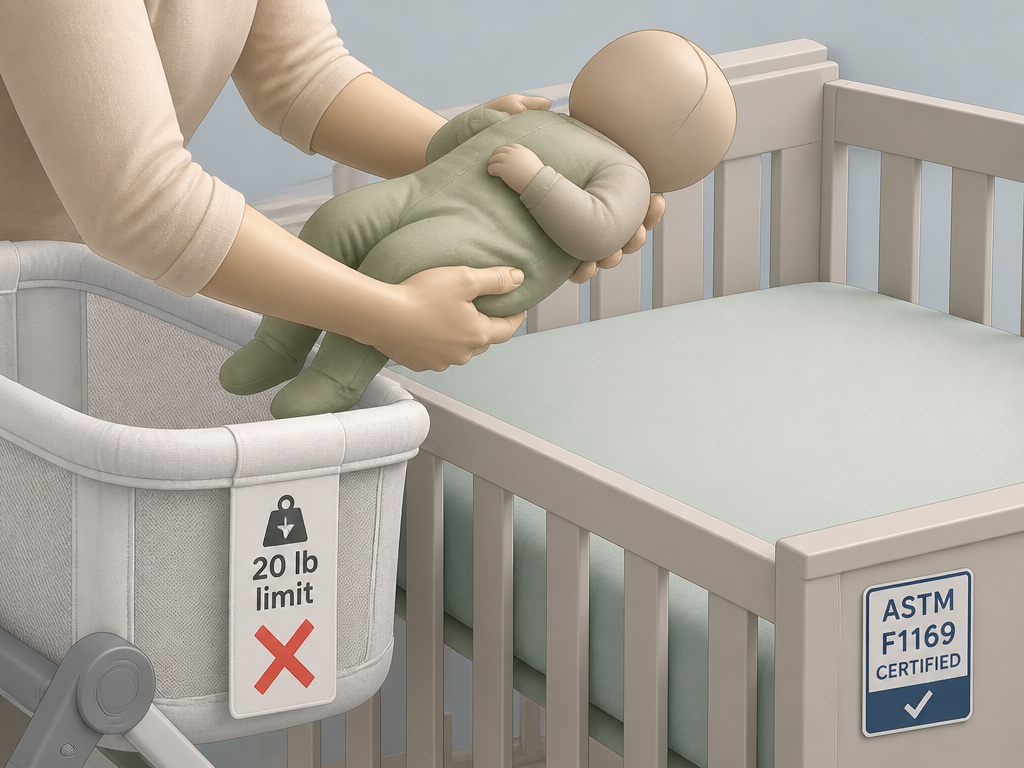
The 20-pound limit arrives quickly, often between 4 and 6 months for many infants. You need a plan before that day comes. The transition isn’t just about size; it’s about the infant’s developing mobility and strength, which the bassinet is not designed to contain.
Your next step should be a sleep product certified to a standard for older, more active infants. The bassinet has served its purpose as one of the best bassinets for newborns, but it’s time to graduate.
The direct upgrade paths are:
- A full-size crib, which must meet the federal crib safety standard (16 CFR 1219 or 1220). This is the long-term solution.
- A mini-crib, which meets the same stringent standards in a smaller footprint.
- A playard (playpen) marketed for sleep, which must meet the playard standard (16 CFR 1221). Many include a firm, bassinet-level insert suitable for infants up to 15 pounds or until they can push up.
When shopping, look for the certification label on the product. It should reference ASTM F406 (for playards) or ASTM F1169 (for cribs). These are the safe infant beds standards that take over where the bassinet standard leaves off.
This is also the time to assess your baby bedding. A crib uses a standard crib mattress and fitted crib sheets. The bassinet’s special-sized sheets won’t fit. Invest in a firm, breathable crib mattress and several tight-fitting cotton sheets.
Common mistake: Moving a baby to a softer “toddler” mattress for comfort. The American Academy of Pediatrics policy is unwavering: a firm, flat surface is safest for the first year. Soft mattresses increase re-breathing and suffocation risks.
If you still want the convenience of having your baby close at night, a certified bedside sleeper that attaches securely to your adult bed (and meets ASTM F2906) is a potential option. These are different from standalone bedside bassinets, so verify the product’s certifications match your needs.
Frequently Asked Questions
Is the UPPAbaby bassinet safe for overnight sleep?
Yes, the UPPAbaby bassinet is safe for overnight, unsupervised sleep when all manufacturer instructions are followed. It is certified to the ASTM F2194 bassinet safety standard, which is the U.S. Mandatory standard for infant sleep products. This certification means it has been tested for stability, side height, and structural integrity specifically for sleep.
How long can a baby sleep in a UPPAbaby bassinet?
Baby can sleep in the UPPAbaby bassinet until they reach 20 pounds (9 kg) OR can push up on their hands and knees, whichever milestone comes first. Most babies reach this weight limit between 4 and 6 months of age. Do not use the bassinet for sleep beyond this point.
Can I use a different mattress in the UPPAbaby bassinet?
No. You must use only the firm mattress pad included with the bassinet. The manual explicitly warns: “NEVER add a mattress, pillow, comforter, or padding. Use ONLY the pad provided by the manufacturer.” The included mattress is designed to fit the bassinet’s exact internal dimensions (740mm x 321mm) with no gaps. A different mattress could create a suffocation hazard.
What is the difference between a bassinet and a stroller bassinet?
Bassinet” generally refers to a standalone sleep product with its own base. A “stroller bassinet” is a sleep-approved attachment for a compatible stroller system, like the UPPAbaby bassinet. As of the 2022 CPSC rule, both must meet the same federal safety standard for bassinets if they are marketed for infant sleep. The key is the certification, not the name.
Why does the manual say not to use it with pre-2014 Vista models?
The attachment mechanism (the locks and receptors) on UPPAbaby Vista strollers was updated after 2014. Using a newer bassinet on an older frame may not result in a secure, tested connection. The audible click and green safety indicator may not function correctly, creating a risk that the bassinet could detach from the stroller frame during use.
Before You Go
The UPPAbaby bassinet is a safe, convenient sleep space for your newborn, if you treat its rules as law. The 20-pound limit is your stop sign. The requirement for a firm, level surface and the included mattress is your daily checklist. That audible click is your green light.
Its job is to bridge those first few months until your baby needs the fortified space of a crib. When that day comes, move on. The bassinet’s safety certification ends where your baby’s next stage begins. Your best move is to have a certified crib or playard ready, so the transition is seamless and safe.
