
Rolling Baby in Bassinet: The 3 Critical Signs to Stop Now
This post contains affiliate links. As an Amazon Associate we earn from qualifying purchases.
A baby cannot sleep in a bassinet if rolling over. The moment a baby can intentionally roll from back to stomach or push up on hands and knees, the bassinet is no longer safe. Stop use immediately and move them to a crib, play yard, or other certified sleep product with higher, non-mesh sides.
That’s the absolute rule. The danger isn’t just falling out. It’s suffocation against the soft mesh or fabric side of a bassinet that isn’t designed to withstand that kind of pressure. Manufacturers like Sealy Baby and Graco state this limit clearly in their manuals for a physical reason.
What follows is a breakdown of the three non-negotiable stop signs, the specific hazards each one creates, and the data behind them, including a 2023 recall for bassinets that violated the very angle rule designed to prevent rolling. By the end, you’ll know exactly when to transition and how to pick the next safe sleep space.
Key Takeaways
- Rolling is the primary stop sign. Once a baby can roll over intentionally, they can press their face against the bassinet’s side, risking rebreathing and suffocation.
- Weight and age limits are secondary guards. Models like the Graco bassinet have a 15 lb or 3-month limit, while others like Sealy Baby use a 20 lb limit, whichever comes first.
- Inclined sleep surfaces are banned. The CPSC standard mandates a sleep surface angle ≤10°; the 2023 Peg Perego recall happened because their bassinets exceeded this, creating a roll risk.
- Mechanical failures cause 17% of bassinet-related fatalities. A CPSC study of 53 deaths found broken legs, collapsed frames, and shifting mattresses as direct contributors.
- The next step is a crib or play yard. These products are tested to higher stability and side-height standards (like Australia’s 250mm minimum) specifically for mobile infants.
The Three Hard Stop Signs (And Why They’re Non-Negotiable)
Bassinets have a narrow safety window by design. They are for non-mobile newborns. The exit criteria aren’t suggestions, they are engineering limits.
The surface of an infant sleep product must not have an incline greater than 7 degrees from the horizontal. This is the Australian standard, stricter than the U.S. 10-degree rule. An incline creates a gravity-assisted roll hazard.
Sign 1: Rolling Over. This is the most critical. It doesn’t mean the first accidental roll during a diaper change. It means the baby can consistently and intentionally roll from back to front or front to back during sleep. The bassinet’s low sides and often soft, breathable mesh become a suffocation surface when a rolled baby presses against them. The Product Safety Australia bassinet guide states use must stop once a baby “start[s] to roll over.”
Sign 2: Pushing Up on Hands and Knees. This developmental milestone indicates not just mobility but significant upward force. A baby doing a mini push-up can rock the bassinet, potentially tip it, or leverage themselves over the side. The Sealy Baby manual for models EB003 and EB004 explicitly says: “do not use this bassinet for a child who can… push up on hands and knees.”
Sign 3: Reaching the Weight or Age Limit. These are backup limits. Always defer to the manual for your specific model. – Graco Bassinet (per manual PD319052E): 15 lb (6.8 kg) or 3 months. – Sealy Baby Bassinet: 20 lb. – Skip Hop Bedside Sleeper & Bassinet: 20 lb (9.1 kg).
Exceed any one of these three signs, and the bassinet’s safety certification is void. It is now a hazard.
What Happens If You Keep Using It?
The consequences are physical and documented. They are not scare stories.
Where this goes sideways: Ignoring the roll-over milestone. In a CPSC-reviewed study of 53 bassinet-related infant deaths, over half of the infants were found prone. They had rolled or been placed prone in a space not designed to keep a face clear.
Suffocation and Entrapment: This is the top risk. A baby who rolls into a soft mesh side can block their own airway. The mesh, while breathable when loose, does not provide a firm, flat surface. Gaps are another issue. Health Canada advises that the space between the mattress and the bassinet side should be no more than 3 centimetres, a wider gap can trap a head or limb.
Fall Hazard: A baby pushing up can raise their center of gravity. Combined with the light weight and narrow base of many bassinets, this can lead to tipping. The same CPSC study noted infants found “partially out of a tipped over bassinet.”
Mechanical Failure: This is the silent risk. The study found specific mechanical problems in 17% of fatal cases. These included broken wooden slats, bent metal clips that allowed the mattress to shift, and legs that collapsed. A bassinet stressed by a larger, more active baby is more likely to fail.
| Risk | Direct Cause | Typical Timeline After Milestone |
|---|---|---|
| Suffocation | Face pressed into soft side/mesh after rolling | Can happen the first successful roll |
| Entrapment | Head/limb caught in >3cm mattress gap | Immediate risk if gap exists |
| Fall | Tipping from push-up leverage or rocking | Within days of gaining strength |
| Product Collapse | Stress on frame from weight/movement | Weeks; accelerated by weight over limit |
The Hidden Danger: Inclined Sleeper Bassinets
This is not a theoretical design flaw. It triggered a federal recall.
In November 2023, Peg Perego recalled its inclined sleeper bassinets for YPSI and Z4 strollers. The CPSC bassinet recall notice states the products violated the Safe Sleep for Babies Act because their incline angle was greater than 10 degrees from horizontal. This created a “risk of suffocation and fall hazard” because infants could roll onto their stomach or side.
The key takeaway? Any bassinet with an inclined sleep surface is non-compliant and dangerous. The U.S. federal bassinet safety standard (CFR Part 1218) incorporates the ASTM F2194 standard, which defines a bassinet sleep surface as ≤10° from horizontal. If your bassinet doesn’t have a perfectly flat, firm pad, stop using it.
How to Choose the Next Safe Sleep Product
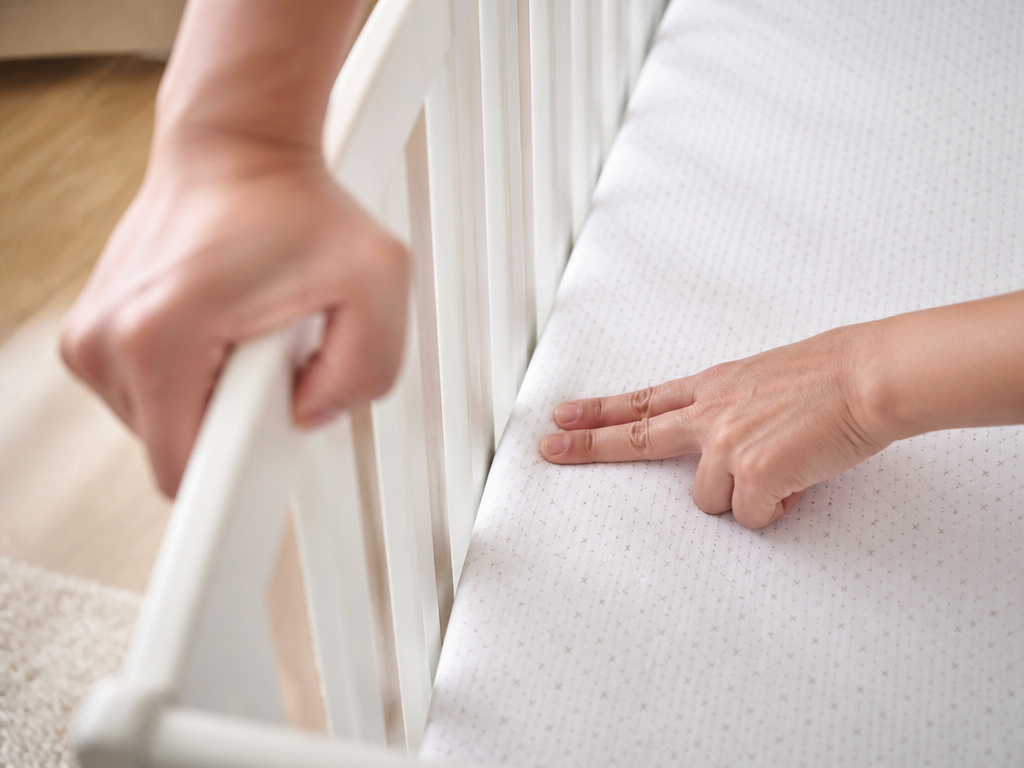
Once the bassinet is out, you need a product engineered for mobility. Your main options are a full-size crib or a play yard (pack ‘n play). Both are subject to stricter, more rigorous stability and strength testing.
Cribs are the gold standard. They have high, solid slatted sides that prevent climbing and falls for much longer. They are designed to be used until a child can climb out, often around 35 inches tall. You’ll need a firm, well-fitting crib mattress.
Play Yards are a versatile and portable alternative. Look for one that meets current safety standards and has a firm, thin mattress pad, never add a plush aftermarket mattress. A quality play yard can serve as a safe sleep space for travel and naps.
When evaluating any new sleep product, check these specs: – Side Height: Australia’s standard mandates a minimum of 250mm from the mattress top to the top of the lowest side. Look for similarly tall sides. – Mattress Fit: The gap rule still applies. No more than two fingers’ width between the mattress and the side. – Stability: Give the assembled product a firm shake. It should not wobble or feel tipsy.
This transition is also the right time to audit your baby bedding. Remove any loose blankets, pillows, or soft toys. For a safe, warm alternative, consider a wearable blanket.
Frequently Asked Questions
My bassinet has higher mesh sides. Is it safe longer?
No. The safety limit is based on developmental milestones, not just side height. A baby pushing up on hands and knees can still leverage against the mesh or cause the entire unit to tip. The mesh itself poses a suffocation risk if a rolled baby’s face is pressed flat against it. Follow the manufacturer’s stated limits for rolling and pushing up.
What if my baby rolls only during the day, not at night?
Intentional rolling ability is the threshold, not nighttime behavior. If they can do it, they can do it in their sleep. The risk is not worth the gamble. Transition to a crib or play yard immediately.
Can I use a bedside sleeper bassinet if my baby is rolling?
No. Bedside sleeper bassinets have the same developmental and weight limits as standalone bassinets. Their defining feature is the open side that attaches to an adult bed, not a reinforced structure for mobile infants. The same roll-over and push-up rules apply.
Are there any bassinets for older babies?
No legitimate, safety-standard-compliant bassinet is marketed for babies who can roll. Products that claim this are likely mislabeled or non-compliant. The logical next step is not a different bassinet, but a different category of product: a crib, a mini crib, or a play yard. Explore vetted infant beds designed for this next stage.
How do I know if my bassinet mattress is firm enough?
It should be firm enough that you cannot contour your hand around it when pressing down. It should never sink under the baby’s weight. Use only the mattress pad provided by the manufacturer. Aftermarket mattresses are a known hazard, as they can create gaps or be too soft. If you need a replacement, source an exact bassinet mattress from the manufacturer.
Before You Go
The rule is simple but absolute. The moment your baby can roll over or push up, the bassinet has finished its job. The data from recalls and safety studies shows the risks are specific and severe, suffocation against the side, entrapment, and tipping.
Don’t look for loopholes. Look for the crib manual. That’s where your attention needs to go next.
Prioritize a firm, flat sleep surface with high, sturdy sides. Pair it with a tight-fitting sheet and a sleep sack. That combination, in a crib or play yard, is what keeps a rolling, pushing baby safe for the long months ahead.
