
Swaddle-Free Newborn Sleep: Understanding AAP Policy & Safety
This post contains affiliate links. As an Amazon Associate we earn from qualifying purchases.
Yes, a newborn can absolutely sleep without a swaddle. The American Academy of Pediatrics’ 2022 policy states there is “no evidence to recommend swaddling as a strategy to reduce the risk of SIDS.” For safe sleep, the non-negotiable requirements are a firm, flat surface, a supine position, and a clear crib, not a specific wrapping technique. Swaddling becomes actively dangerous when a baby shows signs of rolling, typically around 3-4 months, and weighted swaddles are not recommended under any circumstances.
That “no evidence” line from the AAP is the pivot point. It means the single most authoritative body on infant health does not classify swaddling as a protective measure. The conversation shifts from “should you swaddle?” to “if you swaddle, here are the non-negotiable rules to not increase risk.” The focus turns to the sleep environment itself and the timeline for discontinuing any wrap.
What follows is a breakdown of the 2022 policy specifics, the documented risks tied to arousal and rolling, and the direct path to safer alternatives like wearable blankets. By the end, you’ll know the exact signs that mean stop, and what to use instead.
Key Takeaways
- The AAP finds no evidence swaddling reduces SIDS risk. Safe sleep fundamentals, back on a firm surface, matter more.
- Stop swaddling at the first sign of attempted rolling, not when they master it. That window is usually 3-4 months, but can be earlier.
- Weighted swaddles or sleep sacks are not recommended by the AAP or state health agencies due to breathing restriction risks.
- For infants new to swaddling, a 2022 systematic review noted a potential increased SUDI risk because it decreases arousal.
- The safest transition is to a certified wearable blanket or sleep sack that allows full arm and leg movement.
The 2022 AAP Policy on Swaddling
The official guidance is clearer than most parenting blogs let on. The American Academy of Pediatrics’ 2022 policy statement is the primary source. It draws a firm line between cultural practice and evidence-based risk reduction.
There is no evidence to recommend swaddling as a strategy to reduce the risk of SIDS. Parents should be aware that implementing conditions unfavorable to arousability may increase SUDI risk among infants who have not previously been swaddled.
This is not a recommendation against swaddling. It is a statement that swaddling does not belong in the same category as back-sleeping or a firm mattress. Those are proven defenses. Swaddling is a neutral item on the list, unless done incorrectly, when it becomes a hazard.
The policy also explicitly rules out weighted products. The C-level recommendation states: “Swaddling: Weighted swaddle clothing or weighted objects within swaddles are not safe and therefore not recommended.” This echoes warnings from agencies like Michigan’s health department, which notes the added weight can make it harder for a baby’s chest to expand for breathing.
Where this goes sideways: Continuing a swaddle past the first roll attempt. The AAP is specific: “When an infant exhibits signs of attempting to roll… Swaddling is no longer appropriate because it could increase the risk of suffocation if the swaddled infant rolls to the prone position.” The sign is the attempt, not the success. If they’re trying, the wrap comes off that day.
Why Swaddling Affects Sleep (And Risk)
Swaddling works because it restricts movement. That’s also why it demands caution. A 2022 systematic review in Frontiers in Pediatrics analyzed how swaddling impacts infant sleep and arousal. The findings explain the AAP’s caution.
The review concluded that swaddling increases quiet sleep duration and reduces sleep-state changes. For a tired parent, that sounds ideal. But from a physiological safety standpoint, decreased arousal can be a problem. A baby who sleeps more deeply may be less likely to stir in response to a breathing obstruction or overheating.
The risk appears most pronounced for swaddle-naïve infants, babies not accustomed to being wrapped. The review authors state that “implementing conditions unfavorable to arousability may increase SUDI risk among infants who are naïve to the intervention.” Introducing a tight swaddle to a newborn who has never been swaddled may dampen their natural startle and arousal reflexes more than for a baby who is used to it.
This doesn’t mean every swaddled baby is at high risk. It means the benefit of slightly longer sleep must be weighed against the potential suppression of a natural safety mechanism. In a safe sleep environment (alone, on the back, on a firm surface), that risk is lower. In an unsafe environment, swaddling can compound the danger.
The Rolling Deadline: When to Stop Immediately
The single hardest rule for parents to follow is also the most critical. You must stop swaddling when your baby shows any sign of attempting to roll from back to tummy. This typically happens between 3 and 4 months of age, but the AAP notes it “may occur earlier.”
The deadline is not when they can reliably roll both ways. It’s when the first attempt is observed. A swaddled baby who rolls onto their stomach cannot use their arms to push up or adjust their head. Their face can become trapped against the mattress, leading to suffocation within minutes. This risk is so well-established it’s reflected in the ICD-10 codes for sleep-related deaths, like W75 (accidental suffocation and strangulation in bed).
| Sign of Rolling | Action Required | Risk If Delayed |
|---|---|---|
| Rocking side to side | Transition out of swaddle | Increased chance of rolling while swaddled |
| Lifting hips/legs | Transition out of swaddle | Momentum can flip them over unexpectedly |
| Partial roll to side | Transition out of swaddle | Full roll can happen in sleep, not just play |
| Successful back-to-tummy roll | Swaddle must be discontinued that day | High risk of prone suffocation with arms restricted |
The transition doesn’t have to be cold turkey. Start with one arm out for naps, then both arms out, then move to a safe wearable blanket. The key is to begin the process at the first hint of mobility, not after it’s already a fact.
Safe Swaddle Alternatives: What to Use Instead
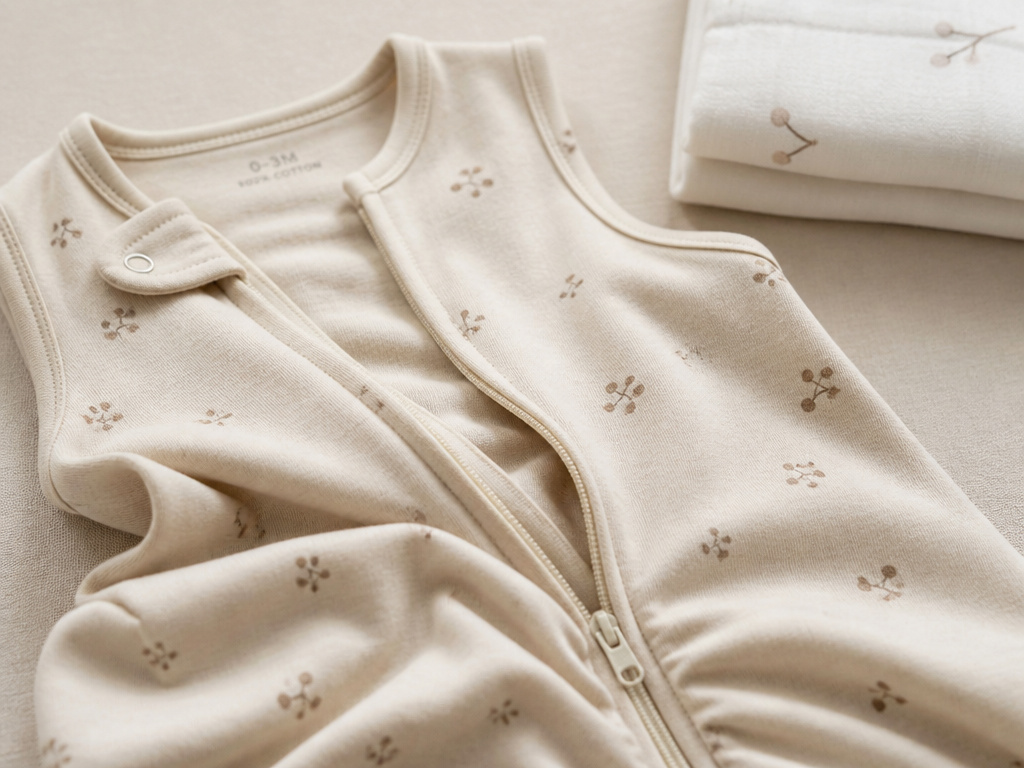
When you stop swaddling, you still need a way to keep your baby warm without loose blankets. The answer is a wearable blanket, often called a sleep sack. These are garments with armholes and a zippered or snapped bottom that act like a blanket that can’t be kicked over the face.
The Consumer Product Safety Commission (CPSC) rule from June 2021 mandates that any product marketed for infant sleep must meet the same federal safety standards as cribs and bassinets. Look for sleep sacks that comply with this rule. A proper sleep sack is designed to be snug at the chest and neck to prevent slipping, but baggy at the bottom to allow free hip and leg movement.
Common mistake: Using a loose blanket as a transition step. A blanket can bunch and cover a baby’s face, or get tangled in their movements. A sleep sack is a controlled, fixed layer.
Here’s how traditional swaddles, transitional products, and true sleep sacks compare:
| Product Type | Best For | Key Safety Feature | Stop Using When |
|---|---|---|---|
| Traditional Swaddle Blanket | Newborns, calming startle reflex | Secure wrap with hip-healthy looseness | First sign of rolling (3-4 months) |
| Swaddle Sack (arms-in) | Newborns who break out of wraps | Integrated wrap wings, no loose fabric | First sign of rolling (3-4 months) |
| Transitional Sack (one arm out) | Babies showing rolling signs | Allows one arm free for mobility | Within 1-2 weeks of starting transition |
| Wearable Blanket / Sleep Sack | All ages after swaddle | Armholes, free leg movement, TOG rating for warmth | Until child outgrows size or begins climbing |
For newborns skipping swaddles altogether, a newborn sleep sack sized for 0-3 months is the safest starting point. Brands like Halo, Burt’s Bees Baby, and Kyte Baby make versions with appropriate TOG (thermal overall grade) ratings for room temperature. The best swaddle blankets are made of breathable fabrics like muslin, but a sleep sack made from similar breathable muslin or cotton is a safer, modern equivalent.
Building a Safe Sleep Environment (With or Without a Swaddle)
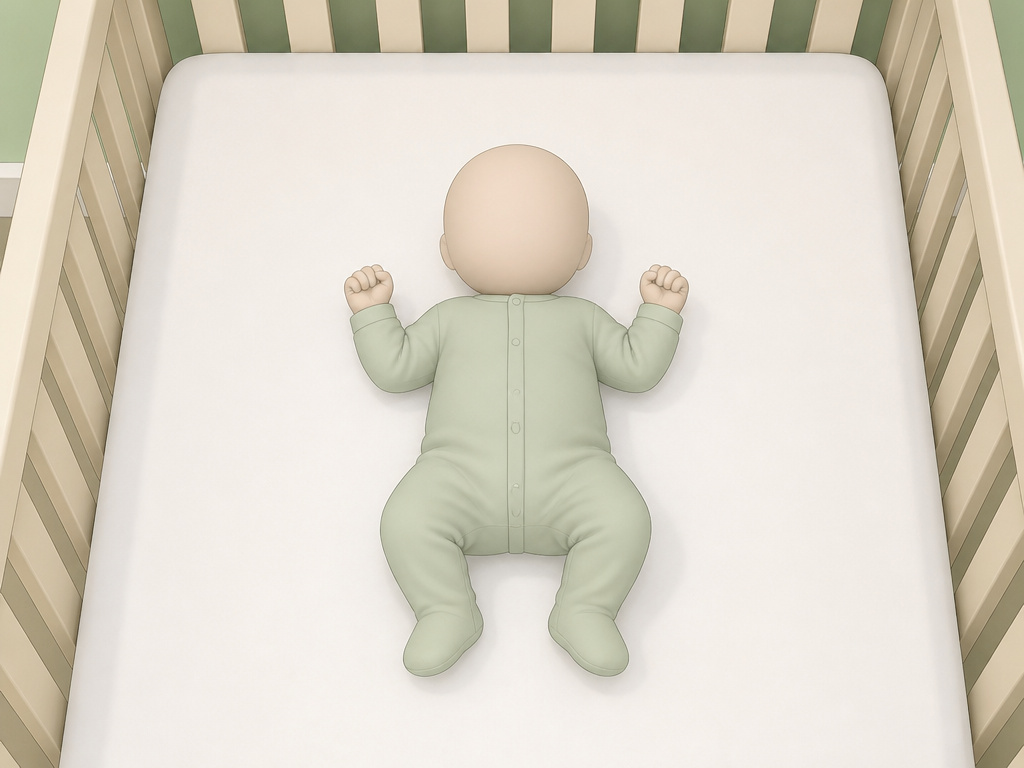
The swaddle is one piece. The foundation is the sleep space itself. Every nap and nighttime sleep should happen in an environment that follows the ABCs: Alone, on their Back, in a Crib (or bassinet/play yard).
The AAP’s safe infant sleep practices are non-negotiable. They have driven a substantial decline in sleep-related deaths since the 1990s. Your setup must check every box: * A firm, flat mattress: Soft, inclined, or memory foam surfaces are dangerous. The mattress should not indent under the baby’s weight. * A fitted sheet only: No pillows, quilts, stuffed animals, crib bumpers, or loose bedding. * Room-sharing for at least 6 months: Place the crib, bassinet, or play yard in your room, but not in your bed. * Avoid overheating: Dress the baby in no more than one layer more than an adult would wear. Feel the back of their neck, not hands or feet, to gauge temperature.
The right crib mattress is a critical, often overlooked, component. It must be firm and specifically designed for that crib model with no gaps. Pair it with a tight-fitting sheet as part of your essential newborn bedding. This foundation matters more than any swaddling technique.
Frequently Asked Questions
Is it okay to never swaddle a newborn?
Yes, it is perfectly okay. Swaddling is a care method, not a medical requirement. Many babies sleep well without ever being swaddled. Focus on the core safe sleep rules: a firm surface, supine position, and a clear crib. Using a wearable blanket from day one is a safe and simple approach.
What if my newborn only sleeps when swaddled?
This is common due to the startle reflex. You can swaddle safely by following the rules: use a breathable fabric like muslin, ensure it’s snug around the chest but loose at the hips, place the baby on their back, and stop at the first rolling sign. Simultaneously, introduce a sleep sack for some naps to help them adjust before the mandatory transition.
Are weighted sleep sacks or swaddles safe?
No. The AAP’s 2022 policy explicitly states weighted swaddles are “not safe and therefore not recommended.” Added weight on a baby’s chest can restrict breathing and make it harder to arouse from sleep. Stick with standard, unweighted wearable blankets.
Can I swaddle with arms out?
The AAP notes “there is no evidence with regard to risk of SIDS related to the arms being swaddled in or out.” Swaddling with arms out may lessen the calming effect but can be a transition step. However, if the chest and torso are still tightly wrapped, you must still stop when rolling attempts begin.
What’s the difference between a swaddle and a sleep sack?
Swaddle (blanket or sack) restricts arm movement to mimic the womb and suppress the startle reflex. A sleep sack or wearable blanket is a blanket-like garment with armholes that keeps the torso warm while leaving arms and legs completely free for movement. Sleep sacks are safe for older babies and the recommended alternative after swaddling.
The Bottom Line
A newborn can sleep safely without a swaddle. The evidence shows that the practice is optional, not protective. The real safeguards are the environment you build and your vigilance for developmental milestones.
Commit to a firm baby mattress and a bare crib. Choose a simple wearable blanket for warmth. Watch for that first sideways rock or hip lift like a hawk, that’s your signal to ditch any arm restriction for good. The goal isn’t a perfectly still baby. It’s a safe one, in a space where their own growing mobility can’t become a danger.
