
Can a Newborn Wear Mittens to Bed? AAP Safe Sleep Advice
This post contains affiliate links. As an Amazon Associate we earn from qualifying purchases.
Newborns can wear mittens to bed, but only under specific, time-limited conditions. Use plain, fitted cotton mittens for no more than the first two weeks to prevent scratching, and remove them immediately if they become loose or the baby shows signs of overheating. Knitted mittens, decorative strings, and prolonged use introduce documented risks of entanglement, digital ischemia, and increased SUDI risk from thermal stress.
That answer is the short version. The long version is where most parenting advice stops and the actual hospital incident reports begin. A baby’s hand is small; a loose thread doesn’t need much force to cut off circulation.
What follows is not a list of generic tips. It’s a breakdown of the three variables that decide whether mittens are a temporary tool or a hazard: the material, the fit, and the clock. We’ll walk through the documented injury from a neonatal unit, the official thermal guidelines that explain why overheating matters, and the clear line between helping a newborn and hindering an infant.
Key Takeaways
- Knitted mittens have caused documented cases of digital ischemia and necrosis in hospitals when a loose thread tightened around a finger; plain cotton is the only safe fabric choice.
- Limit mitten use to the first two weeks maximum; beyond that, they interfere with essential hand exploration and tactile development.
- Overheating is a recognized SUDI risk factor; mittens add a layer that can disrupt a baby’s ability to self-regulate temperature during sleep.
- In neonatal intensive care, mittens are classified as medical restraint devices to protect lines and tubes, not for routine sleep at home.
- Always choose mittens with a snug but not tight elastic cuff and no decorations; check fingers for redness or coolness at every diaper change.
The Hospital Incident That Changed the Rules
Before you start: Never use hand-knitted or crocheted mittens for sleep. A single loose thread can tighten around a tiny finger with enough force to cut off blood supply, causing ischemic damage within hours. Always inspect for loose threads and check circulation frequently.
The conversation about baby mittens isn’t theoretical. It’s grounded in a specific patient safety incident reported to the NHS. A baby in a neonatal unit was found with a necrotic ring finger and poor blood supply to the entire hand. The cause? A loose thread from a knitted mitten had become tightly woven around the fingertip.
This triggered a formal patient safety review and a warning from the British Association of Perinatal Medicine (BAPM) about the potential for ischemic harm from loosely knitted materials. The clinical term “ischemic damage” means tissue death from lack of blood flow. In a newborn, this can happen fast.
| Risk Factor | How It Happens | Timeline to Injury |
|---|---|---|
| Loose Thread (Knitted Mittens) | Thread wraps around digit during hand movement, tightens. | Hours |
| Overheating | Mitten adds insulating layer, impairing thermal self-regulation. | Ongoing SUDI risk |
| Poor Fit (Too Tight) | Elastic cuff restricts circulation at the wrist. | 30+ minutes |
| Decorative Elements | Strings, ties, or tassels pose entanglement and choking hazards. | Immediate |
The response in many hospital units was a direct shift from knitted items to smooth, seam-checked cotton. At home, the lesson is even simpler: skip the cute, handmade knitted mittens for sleep. The risk isn’t worth the aesthetic.
Why This Isn’t Just a “Hospital Problem”
You might think this only applies to sick babies surrounded by medical equipment. It doesn’t. A newborn’s grasp reflex is strong and uncoordinated. They constantly move their hands near their face. A thread that catches on a fingernail or swaddle blanket can tighten just as easily in a crib as in an incubator.
The fundamental mechanics are the same: tiny digits, fragile circulation, and a constricting force. The hospital incident is a non-commodity data point—a real outcome that shows how the generic warning “could be a risk” actually plays out.
Can Newborns Wear Mittens to Bed? The AAP Safe Sleep Context
The American Academy of Pediatrics (AAP) safe sleep guidelines don’t explicitly mention mittens. Instead, they provide the framework that makes mittens a conditional yes at best. The cardinal rule is a bare, empty crib—a firm, flat mattress with a fitted sheet and nothing else.
Soft objects, loose bedding, and anything that could obstruct breathing or cause entanglement are out. So where do mittens fit?
Mittens are a clothing item, not bedding. Their safety hinges entirely on being treated as a secure, well-fitted part of the baby’s attire, not as a loose object that can come off.
The AAP strongly prefers layered clothing or a wearable sleep sack over loose blankets for warmth. A mitten is essentially a tiny, closed-end sleeve for the hand. If it stays on securely and doesn’t overheat the baby, it can be part of that layered approach. But the “if” is doing a lot of work.
The guidelines from NSW Health in Australia explicitly list overheating due to excess clothing as a risk factor for Sudden Unexpected Death in Infancy (SUDI). Adding mittens to a already appropriately dressed baby pushes them closer to that line. This is why the official safe sleep directive emphasizes monitoring for overheating signs, like sweating or a hot chest.
The Two-Week Rule and Why It Exists
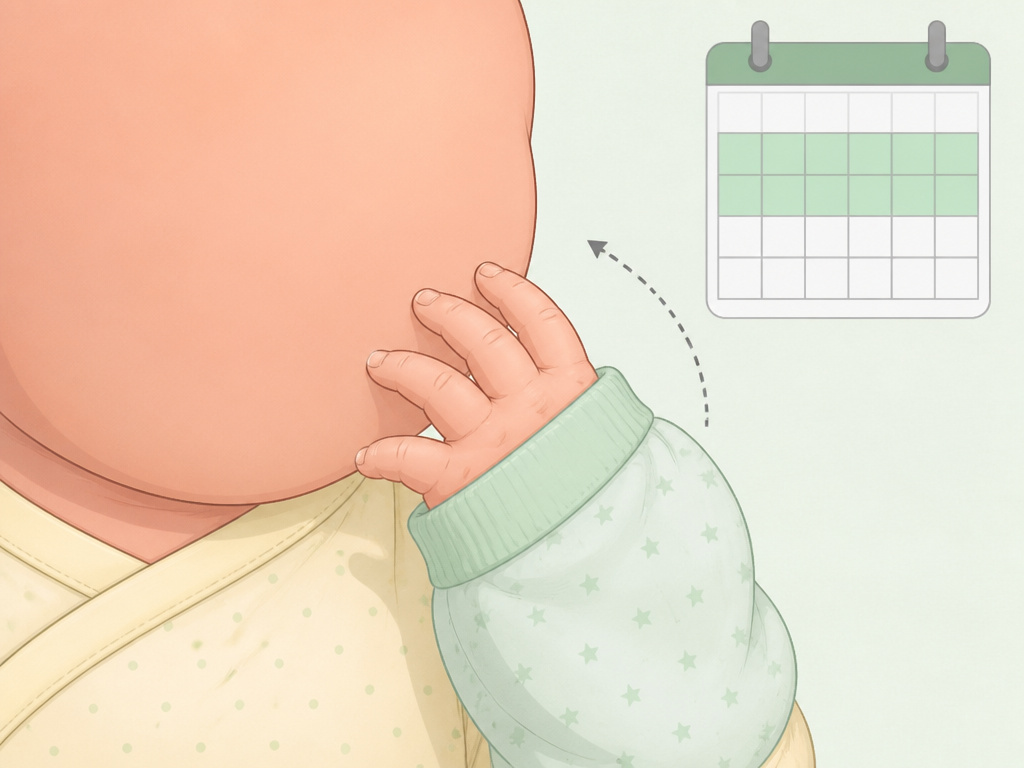
Most advice says “use mittens for a short time.” The specific, sourced recommendation is up to two weeks. This isn’t arbitrary. It aligns with two developmental milestones.
First, a newborn’s nails are soft but sharp, and they have little control over their arm movements. The risk of scratching their own face is highest in these first days. By two weeks, you’ve likely had a few chances to trim those nails safely with a baby nail file or clipper.
Second, and more important, is sensory development. Around the two-week mark, babies begin to discover their hands. They bring them to their mouth, grasp at things, and start learning about their world through touch. Keeping mittens on constantly blocks this critical feedback loop.
| Age | Primary Mitten Purpose | Risk of Continued Use |
|---|---|---|
| Birth – 2 Weeks | Prevent facial scratches. | Low, if monitored. |
| 2 Weeks – 2 Months | (Transition period) | Begins to hinder tactile exploration. |
| 2+ Months | None recommended. | Significantly impedes hand-mouth coordination and sensory learning. |
There is no research proving mittens delay development. But there is solid developmental science showing that unrestricted hand use is vital for early learning. After the initial scratching phase passes, the mittens have to come off.
Bottom line: Use them as a temporary bridge to your first successful nail-trimming session, not as a permanent part of the sleep uniform.
Choosing Safer Mittens: A Materials Guide
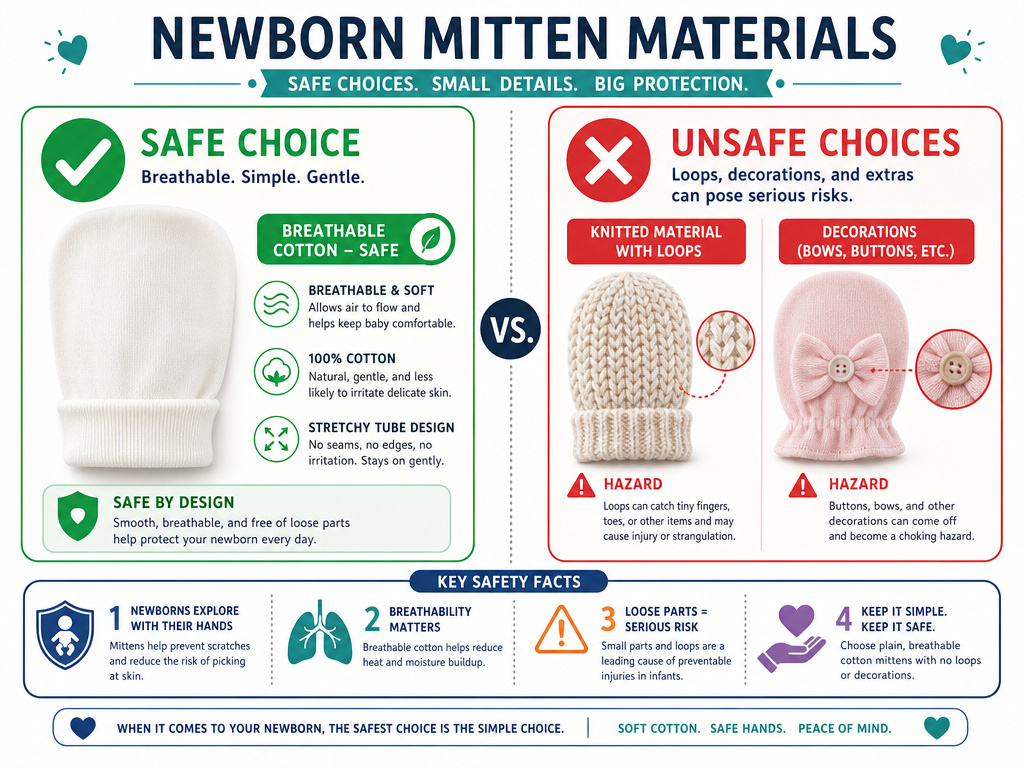
If you use mittens, the material is your first and most important decision. The choice is straightforward.
Cotton Mittens: This is the only material you should consider. Look for soft, breathable cotton with minimal internal seams. Brands like Hudson Baby or Gerber make simple, cotton jersey mittens that are widely available. The fabric should be stretchy enough to allow fist clenching but smooth enough not to catch.
Knitted or Crocheted Mittens: These are not safe for sleep. The inherent structure has loops and potential for loose threads. As the hospital incident report notes, even units that receive knitted donations often re-purpose them as keepsakes, not for actual wear.
What about “breathable” synthetics? Some polyester blends are marketed as breathable. For a newborn’s sensitive skin and temperature regulation, cotton is the proven, lower-risk default. It wicks moisture and allows for better heat exchange than most synthetics.
Where this goes sideways: Choosing mittens with any decoration. Bows, buttons, sewn-on appliqués, or interior tags are unnecessary points of failure. They can detach and become choking hazards or create uncomfortable pressure points. The safest mitten is a featureless tube of fabric.
The Fit Test You Must Do
A mitten that’s too loose will come off, becoming the very loose object the AAP warns against. One that’s too tight can restrict circulation.
- The Cuff: The elastic should be snug enough that you can’t easily pull the mitten off the baby’s hand, but loose enough that you can comfortably slide your pinky between the elastic and your baby’s wrist.
- The Length: There should be enough extra fabric beyond the fingertips so the baby can make a fist without the mitten pulling taut. This “wiggle room” prevents constant pressure on the tips of the fingers.
- The Post-Wear Check: Every time you remove the mittens—for feeding, changing, or play—check your baby’s fingers. They should be their normal color (not red, purple, or pale) and feel warm. Coolness or marks from the elastic are signs the fit is wrong.
What Are the Real Risks of Mittens at Night?
Beyond the entanglement hazard, two systemic risks define the safety equation: overheating and the loss of a vital self-soothing tool.
Overheating and SUDI Risk
Newborns are terrible at regulating their own temperature. The World Health Organization’s evidence-based newborn warmth guide stresses the “warm chain” but is equally clear about avoiding hyperthermia. A baby’s primary method of cooling is through the head and hands.
Covering the hands with an extra layer of insulation removes one of their natural thermostats. In a warm room or while wearing a swaddle blanket or sleep sack, mittens can contribute to overheating. The signs are a sweaty neck or back, flushed cheeks, rapid breathing, or heat rash.
The Self-Soothing Argument
Babies use their hands to self-soothe. They suck on their fists to calm down. This is a healthy, instinctive behavior that mittens physically prevent. While the two-week rule mitigates this, it’s a reason to retire mittens as soon as you can. A baby who can find their hand is developing a crucial self-regulation skill.
For parents looking for a safer alternative to loose blankets for warmth, a well-fitting wearable sleep sack is the gold standard. It keeps the core warm while leaving the hands free for movement and self-soothing.
The Medical Exception: Mittens in the NICU
In a neonatal intensive care unit, the rules are different. Here, mittens are often used as a medical device to prevent babies from accidentally pulling out nasogastric tubes, IV lines, or CPAP prongs. Their use is documented, timed, and part of a strict protocol with frequent skin checks—sometimes every few hours.
This clinical protocol from the WHO thermal management guide is about managing risk in a controlled environment with constant monitoring. It is not a model for unsupervised sleep at home. Translating NICU practices directly to your nursery misses the critical context of professional oversight.
Practical Alternatives to Mittens
You have better options for managing scratching and warmth.
For Scratching:
- Trim Nails Early and Often: Use a baby nail file or clippers while the baby is asleep or very drowsy. Do it after a bath when nails are softer.
- Use Scratch Sleeves: These are long sleeves with built-in, fold-over cuffs made of soft cotton. They cover the hands without isolating the fingers, allowing for some touch and eliminating the risk of a lost mitten.
- Keep Hands Clean: Simply washing your baby’s hands with a damp cloth can remove lint or threads that might catch and tighten.
For Warmth:
- Layer Core Clothing: A onesie under a footed sleeper is often enough. Add a swaddle blanket or sleep sack over that.
- Regulate the Room: Keep the nursery temperature between 68-72°F (20-22°C). This is more effective than piling on clothing.
- Feel the Torso: Check your baby’s chest or back of the neck to gauge temperature. Hands and feet are often cooler naturally and are not a good indicator of core warmth.
Remember, the goal for a safe crib mattress environment is simplicity. Every addition should have a clear, necessary purpose.
Frequently Asked Questions
Are mittens a SIDS risk?
Mittens are not a direct cause of SIDS, but they can contribute to two major risk factors: overheating and the introduction of a potential loose object in the crib if they come off. The safer path is to dress the baby in appropriate layers and keep the sleep space clear.
How often should I check mittens on my baby?
Check at every diaper change, which is roughly every 2-3 hours for a newborn. Look inside for moisture, feel the fingers for warmth, and inspect the fabric for any pulled threads or signs of wear.
What if my baby keeps scratching their face?
First, ensure the nails are trimmed and filed smooth. If scratching persists, consider cotton scratch sleeves as a safer alternative that allows for more hand movement. Persistent, intense scratching could also be a sign of eczema or dry skin, which a pediatrician should evaluate.
Can I use socks as mittens?
It’s not recommended. Socks are often looser and more likely to come off, becoming a loose item in the crib. Their fabric may also be thicker and less breathable than mittens designed for the purpose.
When should I stop using mittens completely?
By the end of the second week, aim to have them phased out. If you’re still nervous about scratches, transition to scratch sleeves for a few more days while you get comfortable with nail care. By one month, the baby’s hands should be free for exploration.
Before You Go
The mitten question boils down to a short-term, risk-managed tool versus a long-term hindrance. Use plain cotton mittens, if at all, for a maximum of two weeks to prevent newborn scratches. Inspect them relentlessly for fit and wear.
But know that the safest sleep environment is one with fewer variables, not more. A baby in a fitted sleeper and a sleep sack, in a cool room, with trimmed nails and bare hands, hits every mark for safety and development. That’s the configuration that lets everyone rest easier.
