
What to Dress Baby in at 72 Degrees: Safe Sleepwear Layers
This post contains affiliate links. As an Amazon Associate we earn from qualifying purchases.
At 72 degrees Fahrenheit (about 22°C), dress your baby in a single base layer, like a short-sleeved cotton onesie, topped with a 1.0 TOG sleep sack or wearable blanket. This two-layer combination matches the warmth recommendation from organizations like the NHS and prevents overheating, which is a higher risk than your baby being slightly cool.
That 1.0 TOG number isn’t a suggestion. It’s the insulation rating tested to keep a baby’s core temperature neutral in that exact 68-73°F range. The whole system falls apart if you swap in a 2.5 TOG sack or add a second layer underneath.
What follows is the breakdown of that formula: why 72°F needs a specific TOG, the single physical check that tells you if you got it right, and the three common mistakes that push a baby from comfortable into the overheating zone within an hour.
Key Takeaways
- At 72°F, use a 1.0 TOG sleep sack over a short-sleeved onesie. This is the tested, safe combination.
- Never double up sleep sacks. Putting two 1.0 TOG bags on a baby doesn’t equal 2.0 TOG, it traps air and drastically increases overheating risk.
- Check for overheating by feeling the back of the neck or chest, not the hands or feet. Sweating or a hot chest means remove a layer immediately.
- Skip blankets, hats, and weighted sleepwear entirely. A fitted sleep sack is the only safe bedding for a child under one.
- Room temperature matters more than the season. A 72°F winter room needs the same lightweight layers as a 72°F summer room.
The Simple 2-Layer Formula for 72 Degrees
A 72-degree room is within the optimal sleep range cited by multiple health authorities. The NHS recommends 16–20°C (61–68°F), and the Lullaby Trust states 16–20°C is comfortable. At 72°F (22°C), you’re at the warmer end of that safe spectrum.
For a room temperature of 16 – 20°C, a lightweight, well-fitting baby sleep bag or light bedding is comfortable. The risk of sudden infant death syndrome (SIDS) is higher in babies who get too hot.
The formula is non-negotiable for safety: one breathable base layer plus one appropriately rated sleep sack.
Layer 1: The Base Layer
This is a short-sleeved, lightweight cotton or bamboo onesie. Its job is to wick moisture and provide a thin barrier. A long-sleeved footed pajama is too much fabric at this temperature, it adds insulation where you don’t need it.
Layer 2: The Sleep Sack
This must be a 1.0 TOG rated wearable blanket. The TOG (Thermal Overall Grade) measures insulation. A 1.0 TOG is designed for rooms between 68°F and 73°F.
| Room Temperature | Base Layer | Sleep Sack TOG | Why It Works |
|---|---|---|---|
| 68–73°F (20–23°C) | Short-sleeved onesie | 1.0 TOG | Matches standard indoor warmth; prevents overheating while providing secure coverage. |
| 61–68°F (16–20°C) | Long-sleeved onesie or footed pajama | 2.5 TOG | Adds insulation for the cooler end of the safe range without needing loose blankets. |
| Above 75°F (24°C) | Diaper only or very lightweight short-sleeve | 0.5 TOG or none | Maximizes breathability; a sleep sack is optional if the room is consistently warm. |
The sleep sack must fit properly. Follow the manufacturer’s weight guidelines, not age. It should be snug around the neck and armholes so the baby cannot slip down inside, but roomy enough in the body for hips and legs to move freely. This safe fit is a key reason experts recommend wearable blankets over loose bedding.
Why Overheating Is the Real Risk (Not Being Cold)
Babies are terrible at regulating their own temperature, especially before three months. Their bodies respond to excess heat by going into a deeper sleep state, which can make them less arousable. This decreased arousal is a known risk factor in sleep-related incidents.
The “add one more layer than you’d wear” rule is flawed at 72 degrees. In a climate-controlled room, an adult sleeping under a sheet is comfortable. Adding “one more layer” for a baby could mean a fleece sleeper and a thick sack, that’s a recipe for overheating. The NSW Health safe sleep practices guideline explicitly warns that thermal stress can occur with excessive clothing.
Common mistake: Doubling sleep sacks. Putting a 1.0 TOG bag over another 1.0 TOG bag does not create a 2.0 TOG rating. Air gets trapped between the layers, insulation spikes, and core temperature can rise dangerously within the sleep cycle.
Weighted blankets or sleep sacks are not safe for infants. Their chest walls are underdeveloped, and the added pressure can restrict breathing. The Lullaby Trust and the AAP advise against any weighted bedding for babies under one year.
How to Check for Overheating (The 10-Second Test)
Forget the hands and feet. A baby’s extremities are often cool because their circulatory system is still maturing. Checking the hands will make you think they’re cold when they’re perfectly fine.
The only reliable check is the back of the neck or the chest.
- Wait 10-15 minutes after your baby falls asleep. This gives their body time to reach a stable temperature under the layers.
- Slide your hand under the sleep sack and onesie at the back of their neck or on their chest.
- Assess:
- Just right: The skin feels warm and dry. Not hot, not clammy.
- Too hot: The skin feels hot, sweaty, or damp. You may see flushed cheeks.
- Too cold: The skin feels cool to the touch.
If they’re too hot, act immediately. Remove the sleep sack. Let them sleep in just the onesie, or switch to a lighter 0.5 TOG sack if you have one. Do not just remove a blanket, there shouldn’t be one in the crib. This is why having the right crib sheets made of breathable cotton is part of the overall temperature equation.
TOG Ratings Demystified: Your Cheat Sheet
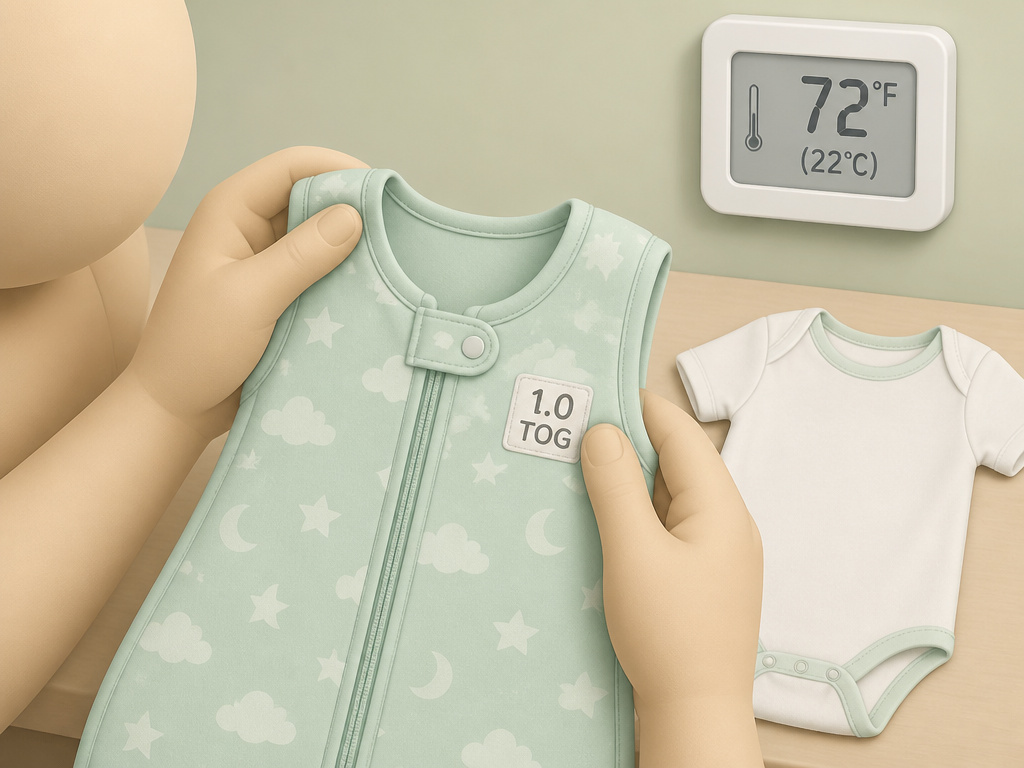 TOG ratings are your best friend because they remove guesswork. They are a standardized measure, with reputable products tested to British Safety Standard BS EN 16781:2018.
| TOG Rating | Room Temperature Range | Best For | Typical Layering Beneath |
|---|---|---|---|
| 0.5 TOG | 75°F+ (24°C+) | Summer, warm climates | Diaper or short-sleeved onesie. |
| 1.0 TOG | 68–73°F (20–23°C) | Standard indoor temps (Spring/Fall) | Short-sleeved onesie. |
| 2.5 TOG | 61–68°F (16–20°C) | Cooler rooms, winter | Long-sleeved onesie or footed pajama. |
| 3.5 TOG | Below 61°F (16°C) | Rarely needed in heated homes | Heavy base layer; consult manual. |
Brands like Kyte Baby and Ergobaby design their sacks around these ratings. Always follow the manufacturer’s tog guide for the specific product. A 1.0 TOG sack from one brand should perform similarly to another, assuming both meet the safety standard.
What to Absolutely Avoid in a 72-Degree Room
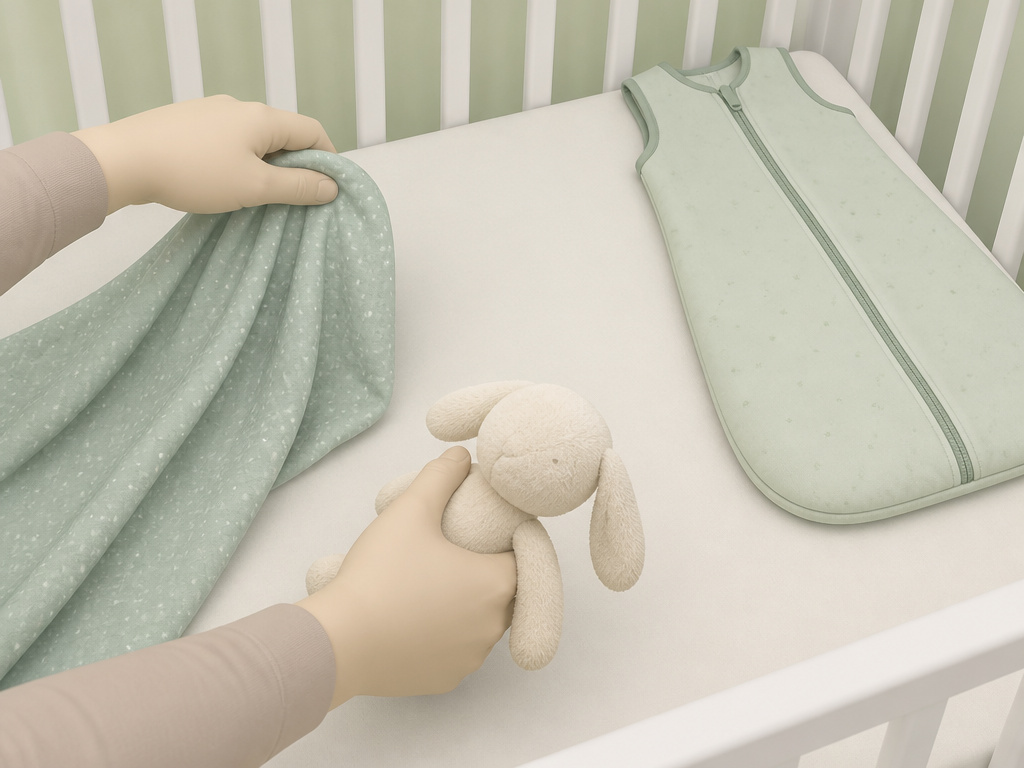 The goal is a bare, safe sleep space. Anything extra is a hazard.
- Loose Blankets: They are a suffocation and entanglement risk. A safe baby blanket is for supervised cuddles, not sleep. The sleep sack is the blanket.
- Hats or Head Coverings: Babies release excess heat through their heads. A hat indoors drastically increases overheating risk. Hospitals use them for initial stabilization, not for sleep at home.
- Swaddles (if baby shows rolling signs): Swaddling is for newborns who cannot roll. The moment your baby shows signs of rolling, even just to the side, you must stop swaddling immediately and switch to a wearable sleep sack. Transition products like swaddle blankets with Velcro wings can help bridge this change.
- Crib Bumpers, Pillows, Stuffed Animals: These have no place in a safe sleep environment for a child under one. They increase the risk of suffocation, entrapment, and overheating.
This minimalist approach is backed by the PubMed evidence base review for safe sleep, which emphasizes a flat, firm surface free of soft objects.
Summer vs. Winter at 72 Degrees: Is There a Difference?
If your thermostat reads 72°F, the season outside is irrelevant. A baby in a climate-controlled room in January needs the same 1.0 TOG sack and onesie as they do in July.
The difference comes from how you maintain that temperature. * Winter: Heating systems can dry the air. Ensure humidity is comfortable (40-60% is ideal) to prevent dry skin and respiratory irritation. The sleep environment is consistent. * Summer: You might use air conditioning, which can create drafts. Place the crib away from direct AC vents. If you use a fan, point it at a wall to circulate air without blowing directly on the baby.
The constant is the baby’s micro-environment. Your job is to maintain that 72°F at the crib level and dress accordingly. This principle is echoed in broader clinical advice for baby sleepwear that focuses on the actual room conditions, not the weather forecast.
Frequently Asked Questions
Can my baby sleep in just a onesie at 72 degrees?
Yes, but it’s not ideal for most infants. A lightweight, short-sleeved onesie alone may be sufficient, but many babies sleep more soundly with the light, secure containment of a 1.0 TOG sack. The sack provides a consistent layer of warmth if the room temperature dips slightly overnight without the risk of a kicked-off blanket.
What if my baby’s hands are cold at 72 degrees?
Ignore cold hands. It’s normal. Always check the core (chest or back of neck) for an accurate temperature reading. Putting socks or mittens on cold hands often leads to overheating the body.
Is a 2.5 TOG sack with no onesie okay for 72 degrees?
No. A 2.5 TOG sack is rated for cooler temperatures (61-68°F). Using it alone at 72°F is too much insulation. The baby will likely overheat. Stick to the 1.0 TOG rating for this temperature.
How do I dress my baby for sleep after a bath at 72 degrees?
Dry your baby thoroughly and dress them immediately in the same sleep outfit: a short-sleeved onesie and 1.0 TOG sack. Don’t add extra layers “because they just got out of the bath.” If the room is 72°F, their dressed state is designed for that temperature.
Are footed pajamas too warm for 72 degrees?
Typically, yes. A footed pajama is a substantial layer. Pairing it with even a 1.0 TOG sack at 72°F is usually too warm. Opt for a short-sleeved onesie as the base layer instead. Save footed pajamas for when you’re using a 2.5 TOG sack in a cooler room.
Before You Go
At 72°F, the answer is simple: a short-sleeved onesie under a 1.0 TOG sleep sack. This two-layer system meets safety standards and prevents overheating. Ditch the loose blankets, forget the hats, and trust the TOG rating. Your final check is the back of the neck, warm and dry means you got it right. Everything else is just noise.
