
How to Dress Baby for Sleep With Swaddle: A Complete Guide
This post contains affiliate links. As an Amazon Associate we earn from qualifying purchases.
Dress a baby for sleep with a swaddle by using a single lightweight, breathable layer like a cotton onesie underneath a properly wrapped muslin or cotton swaddle blanket, ensuring the room is 16–20°C (60–68°F). You must stop swaddling as soon as the baby shows signs of rolling, typically around 2-3 months, because the risk of SIDS increases 12-fold if a swaddled baby rolls onto their stomach.
That 12-fold risk jump comes from a study cited by the International Society for the Prevention of Infant Death, and it lands right at the 3-month mark, the peak age for SIDS. Getting the layers right before that point is about comfort.Getting the timing right is about safety.
What follows: the exact fabric specs that matter, the certified safety standards to look for on product tags, and the clean switch from a swaddle to a sleep sack that doesn’t disrupt sleep.
Key Takeaways
- Stop swaddling at the first sign of rolling, usually between 2-3 months. Continuing past this point multiplies the risk of SIDS if the baby rolls prone.
- The only safe fabrics for swaddling are lightweight, breathable, and non-stretchy for secure wrapping, think 100% cotton muslin or similar weaves.
- Match your baby’s sleep outfit to a room temperature of 16–20°C (60–68°F). Use a room thermometer, not a guess.
- Never use weighted swaddles, blankets, or sleep sacks for infants under one year. They can overheat a baby and restrict breathing.
- The transition from a swaddle to a wearable sleep sack is non-negotiable. Choose a sack certified to standards like ASTM F3735 or BS EN 16781:2018.
The Layer-By-Layer Breakdown: From Skin Out
Forget “one more layer than you.” That old rule leads to overheating. Dress for the room’s actual temperature, measured with a thermometer placed near the crib.
Start with a baseline. A simple, well-fitting cotton onesie or footed pajamas is the first layer. This is the skin-contact layer, so avoid polyester or fleece here, they trap heat. Cotton breathes.
The swaddle itself is the second and final layer. A proper [swaddle blanket](https://littledoze.A swaddle blanket is a thin, woven fabric meant to be wrapped snugly around the baby’s torso while leaving the hips room to move. The best fabric for swaddles is single-ply cotton muslin or a similar lightweight cotton weave.These materials allow heat to escape and reduce the risk of overheating, a known factor in SIDS.
Common mistake: Doubling up swaddle layers or using a thick receiving blanket. Air gets trapped between layers, acting as insulation and raising the baby’s core temperature dangerously. One swaddle, one lightweight inner layer. That’s the rule.
If the room is at the cooler end of the safe range (around 16°C), you might use a slightly heavier cotton pajama as the base layer. You never add a blanket on top of a swaddled baby. The swaddle is the blanket.
The Critical 2-3 Month Mark: When to Stop Swaddling
This is the single most important timing rule in infant sleep. Swaddling is for newborns who sleep almost exclusively on their backs. The moment they start trying to roll, even just to their side, the swaddle becomes a hazard.
The research is specific. The ISPID notes that while swaddling can be protective for young infants, the risk profile flips at the peak age for SIDS, which is around 3 months. One study they cite found swaddling increased the risk of SIDS when infants slept in the prone position to 12-fold, up from a 3-fold risk when unswaddled.
The mechanism is straightforward. A swaddled baby who rolls onto their stomach has their arms pinned. They cannot push up to reposition their head for breathing, and their arousal responses to airway obstruction are diminished. It’s a combination that can turn a simple roll into a catastrophe within minutes.
Where this goes sideways: Waiting for a “full roll” before stopping. The first sign is usually a strong, deliberate-looking arch of the back or a side-to-side rocking motion during tummy time. That’s your cue. The swaddle comes off that week.
Public health agencies put a number on it. The Public Health Agency of Canada recommends stopping around 2 months. Red Nose Australia says to stop once signs of rolling appear, typically around 3 months. The window is narrow, and erring on the side of earlier is always safer.
TOG Ratings and Room Temperature: The Numbers That Matter
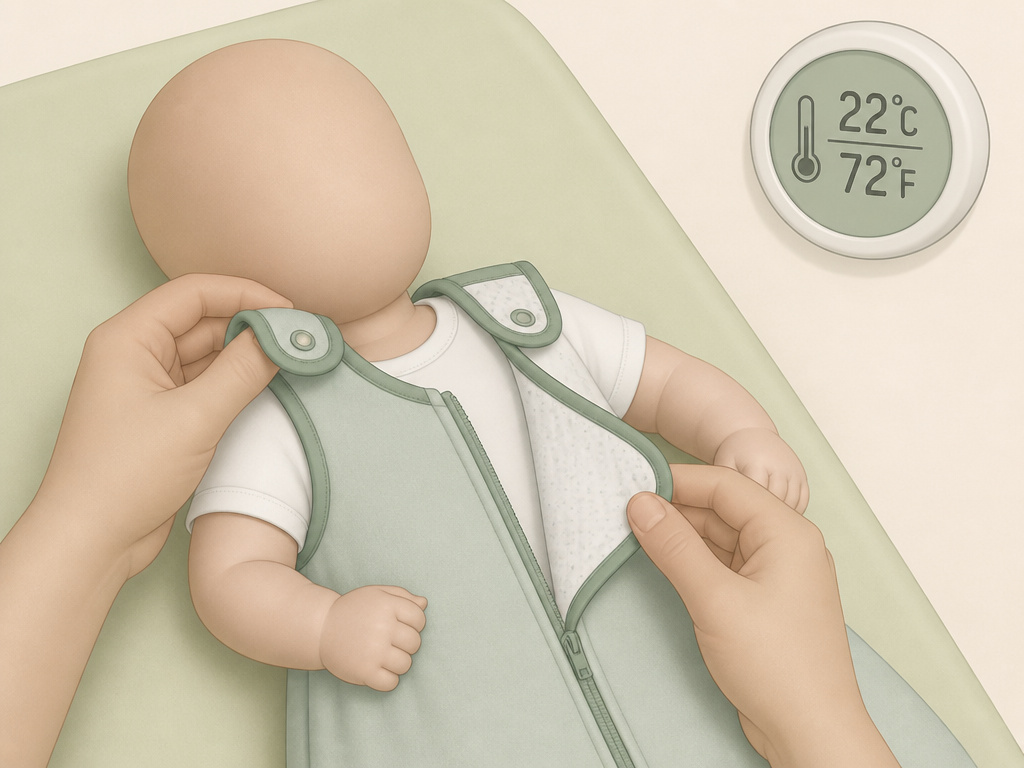
Once you transition out of the swaddle, you move to a wearable blanket, or sleep sack. This is where TOG ratings become your essential guide.
TOG (Thermal Overall Grade) is a standardized measure of thermal insulation. For baby sleep sacks, a higher TOG number means a warmer sack. You match the TOG to your nursery’s constant temperature.
| Room Temperature | Recommended TOG | Base Layer (Under Sack) |
|---|---|---|
| 24°C+ (75°F+) | 0.5 TOG or less | Diaper & short-sleeve bodysuit |
| 20–23°C (68–74°F) | 1.0 TOG | Short-sleeve bodysuit or lightweight pajamas |
| 16–20°C (60–68°F) | 2.0 TOG | Long-sleeve cotton pajamas or footed sleeper |
| Below 16°C (60°F) | 2.5 TOG or higher | Heavyweight footed sleeper; first, try to warm the room. |
The Lullaby Trust and Red Nose both stress using the manufacturer’s TOG guide. They also issue a critical warning: never double up sleep sacks. Putting a 1.0 TOG sack over a 2.0 TOG sack does not make 3.0 TOG. It traps air between the layers and can cause overheating just like doubling swaddle blankets.
A sleep sack must be well-fitted around the neck and armholes so the baby cannot slip down inside. It should be sized by weight, not age, and allow free movement of the legs and hips.
Swaddle Blankets vs. Wearable Sleep Sacks: The Safety Standards

Not all products are created equal, and the labels matter. There are specific safety standards for each category.
A traditional swaddling blanket is a loose piece of fabric. The relevant safety standard, ASTM F3735, covers “wearable sleep products.” It explicitly states that loose swaddle blankets are not within its scope. This means when you buy a simple muslin square, you are relying on the brand’s general fabric safety.
However, ASTM F3735 does cover the swaddle features of “combination” products, like a wearable swaddle sack that has wings that wrap. For these, the standard sets requirements for neck opening size and swaddle design.
For wearable blankets (sleep sacks), the key standard in the UK is BS EN 16781:2018. The Lullaby Trust recommends checking for this British Safety Standard code, especially when buying online, as it confirms the product has passed tests for hazards like flammability and structural integrity.
The part nobody mentions: A product claiming to be “ASTM certified” for swaddling might only be certified as a wearable sleep sack. If it’s meant to be wrapped tightly around the baby, check that the certification specifically includes the swaddle function. The ASTM infant wearable sleep standard has specific clauses for this.
What Not to Use: The Banned List
Some products are actively recommended against by leading safe sleep organizations. This isn’t caution; it’s a directive.
- Weighted Anything: The American Academy of Pediatrics policy is clear: weighted swaddles, blankets, and sleep sacks are not recommended for infants under one year. The AAP safe sleep evidence base cites risks of overheating and the potential for the weight to restrict chest movement, impacting breathing. Even the study they reference using a 1-pound blanket was a short, observed clinical trial, not a model for home sleep.
- Hats Indoors: Once you are home from the hospital, remove the hat for sleep. Babies release excess heat through their heads. A hat indoors can cause overheating.
- Loose Blankets, Pillows, or Soft Toys: In the crib, nothing but the baby and their appropriate sleep clothing. This rule is absolute until at least 12 months.
- Thick, Stretchy Fabrics for Swaddling: Stretchy material can loosen and become a loose blanket, or it can wrap too tightly. Stick to woven fabrics like muslin for a secure, static wrap.
Choosing safe swaddle blanket materials is your first defense. The second is knowing what to never let in the crib.
Making the Transition: From Swaddle to Sack Without the Sleep Disaster
Babies love the snug containment of a swaddle. Taking it away cold turkey often leads to the startle reflex waking them every hour. You need a phased approach.
- Start with One Arm Out: For naps first, swaddle your baby with one arm out. Do this for 2-3 days. Alternate arms each sleep period.
- Move to Both Arms Out: Once they’re tolerating one arm, swaddle the chest snugly but leave both arms free. This is the “swaddle transition” stage.
- Introduce the Sleep Sack: After a few days of both arms out, switch directly to a wearable sleep sack of the appropriate TOG. Use it for all sleeps.
- Stay Consistent: The Moro (startle) reflex will still happen. The sack provides some gentle pressure around the torso for security, but the arms are free to move and self-soothe. It takes 3-7 nights for most babies to adjust.
If you’re using a specific best swaddle blanket for a newborn that has a transition mode (like convertible wings), follow its instructions. The principle is the same: containment first, then graduated freedom.
The goal is to have the baby fully transitioned to a sack before they achieve that first independent roll. That way, their new mobility isn’t a safety crisis.
Frequently Asked Questions
What should a newborn wear to sleep under a swaddle?
Newborn should wear a single lightweight layer, like a cotton short-sleeve bodysuit or footed pajamas, under a properly wrapped muslin or cotton swaddle blanket. The room should be 16-20°C (60-68°F). The swaddle itself is the outer layer.
Can a baby be too hot in a swaddle?
Yes, and overheating is a risk factor for SIDS. Signs include sweating, damp hair, heat rash, rapid breathing, or feeling hot to the touch on the chest or back. Hands and feet are poor indicators, as they are often cool.
How do I know if my swaddle is too tight?
You should be able to slide two fingers between the swaddle fabric and your baby’s chest. The wrap should be snug around the torso to prevent loosening but loose around the hips to allow for healthy leg and hip development.
What is the safest alternative to a swaddle?
Wearable baby sleep sack (wearable blanket) that is the correct size and TOG rating for the room temperature is the safest alternative. It keeps the baby warm without any loose fabric and allows for free arm and leg movement.
Are weighted sleep sacks safe for babies?
No. Major safe sleep organizations like The Lullaby Trust and the AAP recommend against weighted swaddles, blankets, and sleep sacks for infants under one year due to risks of overheating and restricted breathing.
The Bottom Line
Dressing a baby for sleep with a swaddle is a short-term strategy with a hard expiration date. The fabrics are simple: breathable cotton, muslin, nothing thick or stretchy. The science is specific: the 3-month SIDS risk peak changes the equation entirely, a fact underscored by the International Society statement on swaddling.
Your toolkit is a room thermometer, a selection of proper baby swaddle blankets, and a plan to move to a certified sleep sack on schedule. Watch for the arch, not the roll. Match the TOG to the temperature on the wall. And leave the weighted products on the store shelf. Safe sleep prioritizes a clear path for a baby to breathe over the coziest look.
