
Dressing Baby for Summer Sleep: The 16–20°C Rule Explained
This post contains affiliate links. As an Amazon Associate we earn from qualifying purchases.
Dress your baby for summer sleep in a single, lightweight layer like a cotton onesie or a 0.5 TOG sleep sack, and keep the room between 16–20°C (60–68°F). The goal is to prevent overheating, a known risk factor for SIDS, not to match the outdoor heat. Check your baby’s chest or back, not hands or feet, to gauge their temperature.
That temperature range isn’t a random guess. It’s the specific recommendation from the UK’s Lullaby Trust, grounded in decades of SIDS research. The logic is straightforward: a baby’s body can’t regulate temperature like an adult’s. In summer, the risk isn’t that they’ll be too cold, it’s that well-meaning layers will trap too much heat.
What follows is a breakdown of that 16–20°C rule, why generic clothing charts are unreliable, and the physical checks that matter more than any thermometer. We’ll cover safe fabric choices, the one brand with a unique safety approval, and what to do when a heatwave hits.
Key Takeaways
- Target 16–20°C (60–68°F). This is the evidence-backed room temperature range for safer sleep, not a generic “cool room.”
- Check the chest, not the hands. A baby’s extremities often feel cool; the chest or back tells the real story. Sweat or a hot chest means they’re too warm.
- Never layer two sleep sacks. Air gets trapped between them, creating unpredictable and dangerous insulation.
- Skip blankets in the crib. For summer, a well-fitting wearable blanket (sleep sack) is the safest choice to avoid head covering.
- Cotton and bamboo are summer fabrics. They breathe. Avoid fleece or heavy knits for sleepwear.
The 16–20°C Rule and Why It’s a Guide, Not a Law
You’ll see the 16–20°C (60–68°F) range everywhere. The Lullaby Trust, a leading UK SIDS charity, publishes it as the ideal room temperature to help babies avoid overheating. But here’s the part most articles skip: they explicitly say it’s a guide, not a strict law. Your baby is the final instrument.
The Lullaby Trust states the recommended room temperature for babies is 16–20°C so they don’t get too hot, but notes this is intended as a guide only. Every baby is different, and caregivers must still check their baby regularly to assess if they are too hot or too cold.
This matters because a thermostat reading 19°C in a dry climate feels different than 19°C in humid Florida. The number on the wall is your starting point, not your finish line. This is why charities don’t publish definitive “TOG-to-temperature” charts, the insulation of any product depends on its specific material blend. A 1.0 TOG sack from one brand isn’t identical to another’s.
Get a simple room thermometer. Place it near the crib, away from windows and vents. If the reading is consistently above 22°C (72°F), you need to actively cool the room. That means fans (pointed at a wall, not directly at the baby), air conditioning, or drawing blinds during the day.
What Does “Comfortably Warm” Actually Feel Like?
Forget the old “dress them how you’d dress yourself” advice for summer. You might be comfortable in shorts and a tank top, but your baby isn’t a mini-you. Their system is still figuring things out.
The correct check is quick and physical. Slide a hand under their clothes and feel their chest or the back of their neck. This core area gives you the truth. – It should feel warm and dry. – If it feels hot, clammy, or sweaty, they are overheating. Remove a layer immediately. – If it feels cool, add a single layer.
Ignore their hands and feet. It’s completely normal for a baby’s extremities to feel cooler than their core. Chasing warm toes is how you end up with an overheated, miserable baby.
The Summer Sleepwear Shortlist: From Onesies to Sleep Sacks
When the room is within that 16–20°C sweet spot, your options are simple. Think in terms of a single, breathable “sleep system.”
| Room Temperature | Recommended Sleepwear | Why It Works | What to Avoid |
|---|---|---|---|
| 16–20°C (60–68°F) | Cotton onesie (short or long sleeve) + a 0.5 or 1.0 TOG sleep sack. | The sack provides safe, loose warmth without blankets; the onesie wicks moisture. | Fleece sleepwear, thick pajamas, any loose blankets in the crib. |
| Above 22°C (72°F) | A short-sleeve cotton onesie or just a diaper and a 0.2 TOG (or lightweight muslin) sleep sack. | Maximizes skin exposure for cooling while the very light sack satisfies the startle reflex. | Sleep sacks over 1.0 TOG, footed pajamas, any head coverings like hats. |
| Variable (AC on/off) | A long-sleeve cotton onesie + a 0.5 TOG sack. The onesie layer can handle a draft. | The cotton layer is versatile; the low-TOG sack adds minimal, adjustable insulation. | Layering two sleep sacks, using a weighted sleep sack. |
Common mistake: Putting a baby in a short-sleeve onesie and a 2.5 TOG sleep sack because “the sack is their blanket.” That’s a winter-weight bag. In a summer room, it’s a heat trap. Match the TOG to the season.
Fabric is non-negotiable. Stick to natural, breathable fibers: 100% cotton, bamboo viscose, or muslin. These materials pull sweat away from the skin and allow air circulation. Avoid polyester, fleece, or heavy knits for nighttime, they hold heat and moisture against your baby.
One product gets a unique nod: the Bonds Wondercool range. It’s the only baby clothing specifically approved by Red Nose Australia for safer sleep, thanks to its engineered breathability. It’s a solid pick if you’re looking for verified summer pajamas.
Why Sleep Sacks Beat Blankets Every Time
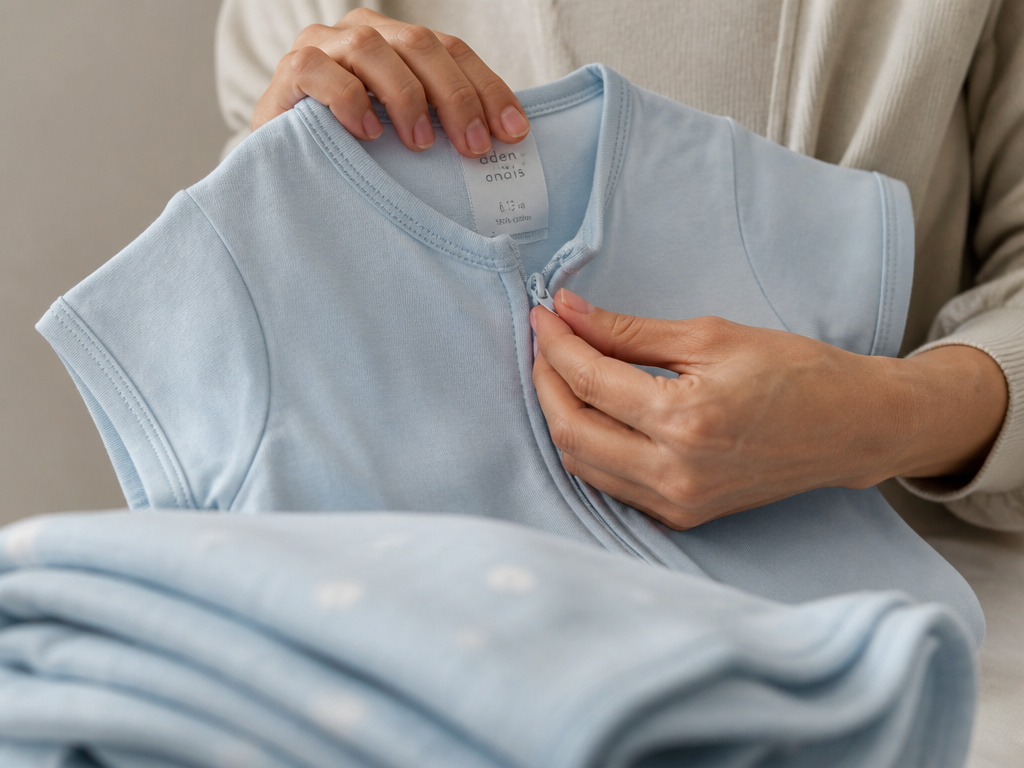 In summer or any season, the safest choice is a wearable blanket. This is a zip-up or button-up sack with armholes and a fitted neck. It keeps your baby’s core warm while eliminating the risks that come with loose bedding.
Loose blankets can be kicked off, leading to a cold wake-up. Worse, they can be pulled over a baby’s face or become tangled. A well-fitting sleep sack prevents all of that. The baby stays covered, and you don’t have to worry about them wriggling under a blanket.
When choosing one, look for the BS EN 16781:2018 safety standard on the label. This British standard means the product has passed specific tests for things like tog accuracy, neck opening safety, and fabric durability. It’s your best guarantee you’re buying a real sleep sack, not a loosely regulated nursery accessory.
Where this goes sideways: Doubling up on sleep sacks. The Lullaby Trust warns that putting a baby in two 1.0 TOG sacks does not equal a 2.0 TOG sack. Air gets trapped between the layers, creating unpredictable and excessive insulation. This significantly increases overheating risk.
Navigating Heatwaves and High Humidity
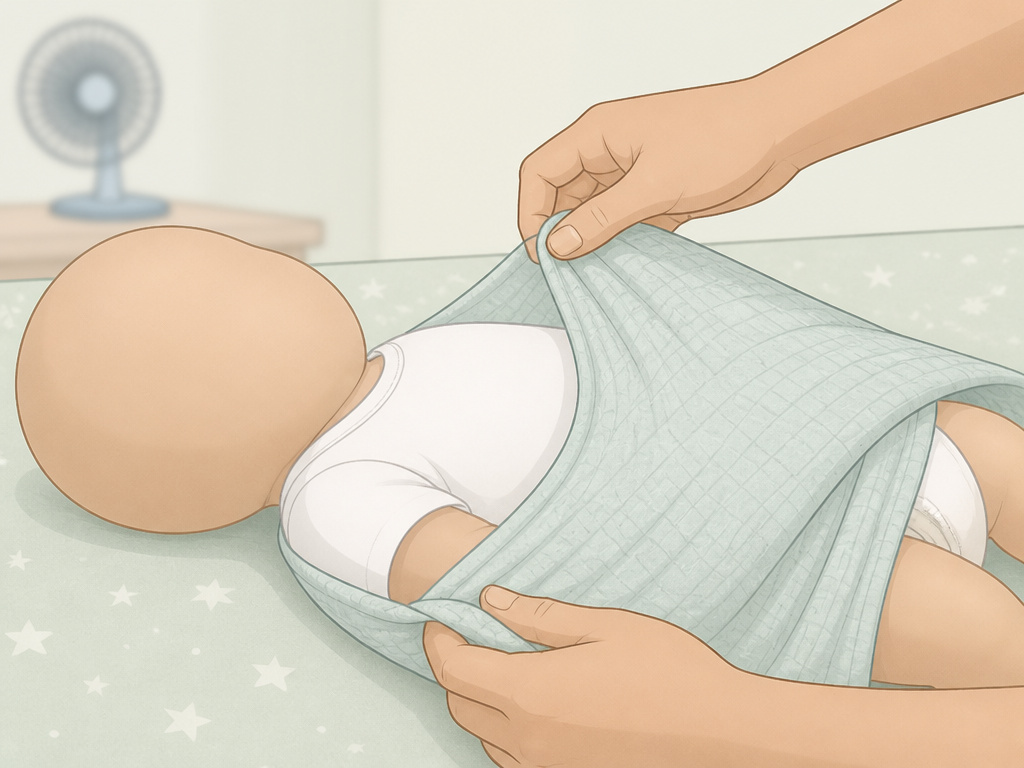 A standard summer night is one thing. A heatwave where the room won’t drop below 25°C (77°F) is an emergency for a baby’s sleep. Your goal shifts from comfort to active cooling.
First, cool the room itself. Use air conditioning if you have it. If not, a fan is essential, place it across the room, pointed at a wall, to circulate air without blowing directly on the baby. Keep blinds and curtains closed all day to block solar heat.
For dressing, go minimal. A diaper alone is acceptable in extreme heat. If you want a layer for moisture absorption, a single, lightweight short-sleeve cotton onesie is the maximum. You can skip the sleep sack entirely if the room is truly oppressive. A very lightweight, muslin swaddle blanket used for a swaddle (if the baby isn’t rolling) can be a cooler alternative to a sack, but it must be securely wrapped and stop at shoulder-level.
Watch for dehydration. Offer extra breastfeeds or formula bottles. They might not take a full feed, but small, frequent sips help. A lukewarm bath before bed can also lower core body temperature gently.
Frequently Asked Questions
What should a newborn wear to sleep in summer?
Newborn needs the same core rule: prevent overheating. In a 16–20°C room, a cotton footed sleeper or a onesie under a lightweight 0.5 TOG wearable blanket is perfect. Newborns can’t regulate temperature well, so err on the side of slightly cooler and check their chest frequently.
Is it okay for a baby to sleep in just a diaper?
Yes, but only in genuinely hot conditions where the room temperature is consistently above 24°C (75°F). In most air-conditioned or moderately warm rooms, a thin cotton layer helps absorb sweat and provides a barrier against minor drafts. The diaper-only rule is for heatwave scenarios.
How can I tell if my baby is too hot at night?
The signs are physical. Feel their chest or back, it should be warm, not hot or sweaty. Flushed cheeks, rapid breathing, damp hair, or heat rash are also red flags. A baby who is too hot will often be restless or sleep fitfully. Trust the touch test over any guess.
Are weighted sleep sacks safe for summer?
No. Major safety organizations, including the Public Health Agency of Canada, advise against weighted swaddle blankets, sleep sacks, and blankets for babies under one. They pose risks of overheating and can restrict breathing. In summer, this risk is amplified. Stick to standard, unweighted sleep sacks.
Can I use a fan in my baby’s room?
Absolutely. A fan is an excellent tool for circulating air and preventing a room from becoming stagnant and hot. Ensure the fan is placed securely, out of reach, and is not blowing air directly onto the baby. Indirect airflow is safe and beneficial.
The Bottom Line
Summer sleep is about heat management, not warmth. Your toolkit is simple: a room thermometer, a selection of lightweight cotton onesies, and a couple of low-TOG sleep sacks. The 16–20°C range is your target, but your baby’s chest is your guide.
Skip the blankets, avoid fleece, and never double-bag. When a heatwave hits, prioritize cooling the room itself. The right crib sheets and a breathable sleep environment matter as much as the pajamas. It’s not about finding a perfect chart, it’s about watching, checking, and choosing the safest, simplest layer for the night ahead.
