
Why Do Babies Twitch in Their Sleep? The Science Explained
This post contains affiliate links. As an Amazon Associate we earn from qualifying purchases.
Babies twitch in their sleep primarily due to myoclonic twitches, which are sudden, involuntary muscle jerks linked to sensorimotor development. These movements activate brain circuits, helping the infant’s brain map its body. A key shift occurs around three months, when twitches synchronize with quiet sleep brain waves called sleep spindles, marking a major leap in neural organization.
This spindle synchronization is a measurable signal of the brain wiring itself for coordinated movement. Before this point, twitching is more scattered.After it, the twitches become part of a structured internal rehearsal.
What follows is a breakdown of the two types of sleep twitches, the exact timeline of that three-month shift, and how to spot the one pattern that means you should call a pediatrician. By the end, you’ll watch those little jerks not with worry, but with an understanding of the hard work happening behind closed eyes.
Key Takeaways
- Twitches are normal myoclonic jerks; they spike around three months as the brain begins synchronizing them with quiet sleep brain waves.
- The critical sign it’s harmless: twitching stops immediately when your baby wakes up. Ongoing movements while awake need a doctor’s evaluation.
- Twitch location often hints at developing skills—neck twitches precede head control, wrist twitches align with early reaching.
- Differentiate between active sleep (dreaming phase) twitches and the more organized quiet sleep twitches that emerge later.
- Trust the research: studies from the University of Iowa and others confirm this is a universal, healthy part of infant brain development.
What Causes Baby Sleep Twitching?
Sleep twitching, formally called sleep myoclonus, is a universal part of infant development. The cause is a feedback loop. When a muscle twitches during sleep, it sends sensory signals back to the brain.This process literally teaches the brain where the limb is and how to control it.
Think of it as the brain running its internal wiring checklist. Each twitch provides data. This is why twitching is most pronounced in early infancy when the sensorimotor system is under construction. The University of Iowa lab findings frame these movements as essential practice for the awake world.
There are two primary sleep states where this happens, and they tell different stories.
Active Sleep Twitching vs. Quiet Sleep Twitching
Not all twitches are the same. The sleep state they occur in points to different stages of brain maturity.
- Active Sleep (AS) Twitching: This is the REM sleep phase. Twitches here are plentiful from birth, involving the whole body in a more random pattern. They’re linked to basic brainstem activity and are thought to provide foundational sensory input.
- Quiet Sleep (QS) Twitching: This is the non-REM, deep sleep phase. Here’s where the big developmental action happens. QS twitches are synchronized with brief bursts of brain activity called sleep spindles. These spindles are fast brain waves (12-14 Hz) that help consolidate learning and forge connections between distant brain regions.
The part nobody mentions: You can’t reliably tell AS from QS just by watching. An EEG reads brain waves; your eyes see jerks. But the research is clear: the organized, spindle-synced twitches of quiet sleep are the developmental powerhouse.
The shift from mostly AS twitching to QS twitching is one of the clearest physical signs of a maturing nervous system. It’s why the pattern changes around the three-month mark.
The 3-Month Shift: When Twitching Gets Organized
If you notice the twitching seems different as your baby gets older, you’re right. Around three months of age, a major neurological transition occurs. This is when quiet sleep twitches emerge and become synchronized with sleep spindles.
Before this age, less than 20% of all twitches happen during quiet sleep. By four months, that number jumps to nearly 80%. This change represents a developmental switch being flipped.
The synchronization is precise. Sleep spindles occur about once every 10 seconds in infants. The twitches begin to lock into this rhythm, meaning the brain is now coordinating sensory feedback (the twitch) with specific, structured brainwave activity. This sleep spindle synchronization study suggests this timing is crucial for linking the motor cortex with other brain areas.
What the Twitch Location Tells You
The body part that twitches isn’t random. It often telegraphs the next motor skill your baby is mastering. This connection between sleep and wake behavior is a core finding from ongoing observation.
| Twitch Location | Linked Awake Skill | Typical Onset Window |
|---|---|---|
| Neck & Head | Head control & lifting head during tummy time | 1-3 months |
| Arms & Shoulders | Reaching out and swiping at objects | 3-5 months |
| Wrists & Fingers | Grasping toys and bringing hands to mouth | 4-6 months |
| Legs & Feet | Kicking, bearing weight on legs, preparing to roll | 3-6 months |
This table shows a pattern observed in research settings. When your baby starts working on head control, you might see more neck jerks during sleep.As reaching begins, the twitches often localize to the hands. It’s the brain practicing offline.
This is why a safe, firm sleep surface is non-negotiable. A baby practicing these movements needs a firm crib mattress for safety that doesn’t conform to their face or pose a suffocation risk. The same logic applies to a safe infant mattress in a bassinet.
How to Tell Normal Twitching from a Problem
The rule is simple: normal sleep myoclonus stops when the baby wakes. If you gently rouse your baby and the jerking ceases immediately, it’s almost certainly benign. The movements are confined to sleep.
Here is the actionable checklist to run through if you’re unsure.
- Check the State: Is your baby truly asleep? Twitching during drowsiness or while falling asleep is common. Full wakefulness is the key test.
- Try Gentle Intervention: Lightly hold the twitching limb. Normal myoclonic jerks will typically stop or lessen with restraint. A seizure-related movement often persists.
- Observe the Pattern: Benign twitches are often asymmetric, bilateral, and erratic. They might involve the arms more than the legs. They are not rhythmic or repetitive in a strict, metronomic sense.
- Look for Other Signs: Normal twitching has no associated crying, eye-rolling, change in breathing, or skin color (like turning blue). The baby otherwise sleeps peacefully.
When this goes sideways: Confusing intense myoclonus with a seizure. Parents of perfectly healthy infants have sometimes rushed to the ER only to be reassured. The wakefulness test is your first and best tool.
Red Flags: When to Contact Your Pediatrician
You should make a call or send a video to your doctor if you observe any of the following. Don’t wait.
- Twitching or stiffening that continues when your baby is fully awake.
- Movements that are strictly rhythmic and repetitive, like a steady jerking every few seconds.
- Episodes accompanied by eye deviation, chewing motions, or apnea (pauses in breathing).
- Clusters of jerks followed by stiffening, especially if the baby seems distressed or unaware afterward.
- Any noticeable regression in achieved skills alongside new movement patterns.
These could indicate conditions like benign neonatal sleep myoclonus (which is still usually harmless but worth diagnosing) or, more seriously, infantile spasms or other seizure disorders. The peer-reviewed infant sleep movement study emphasizes that context—especially state of consciousness—is the primary differentiator.
Supporting Your Baby’s Developing Sleep System
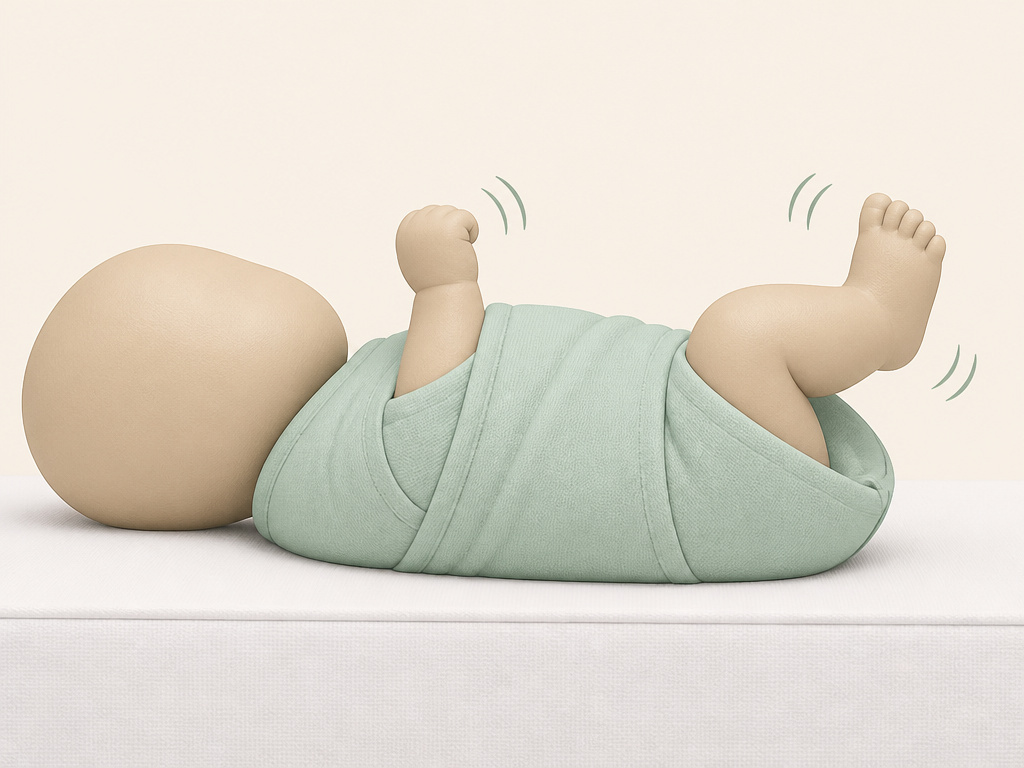
You can’t control the twitches, nor should you try. But you can create an environment that supports the healthy neural development they represent. It starts with prioritizing safe sleep fundamentals.
First, always place your baby on their back to sleep on a flat, firm surface. This is the single most important step for safety and for allowing free movement. Avoid soft bedding, pillows, and loose swaddling blankets once your baby shows signs of rolling. For young infants, a properly fitted swaddle blankets for infants can suppress the startle reflex and promote longer sleep cycles, but transition to a wearable blanket when rolling begins.
Second, embrace the noise and movement. It’s okay if your baby grunts, squeaks, and jerks in their sleep. Constantly checking or picking them up can actually disrupt these important sleep cycles. If they’re in a safe space like a bedside sleeper bassinets, you can observe without intervention.
Finally, connect sleep to wakefulness. Provide plenty of supervised tummy time and free movement when awake. This gives the brain the “live” data to match against the “simulation” it runs during sleep. The spatiotemporal myoclonic twitching analysis shows development is a continuous loop between sleep and wake states.
Frequently Asked Questions
Is it normal for a newborn to twitch constantly in sleep?
Yes, it’s very common. Newborns spend about 50% of their sleep in active sleep (REM), where twitching is frequent and whole-body. The twitch rate is high but should be erratic and stop when they are awakened or during quiet, deep sleep periods.
Do baby sleep twitches mean they are dreaming?
No, the current science does not support the idea that these twitches are dream-related. In infants, especially young ones, the brain regions associated with complex dreaming narratives are not yet developed. The twitches are linked to sensorimotor development, not dream enactment.
Should I wake my baby if they are twitching a lot?
Absolutely not. Twitching is a sign of active, healthy brain development during sleep. Waking your baby interrupts this important process and can lead to overtiredness. Only intervene if you have a genuine, specific concern that the movements are not normal (using the red flag guidelines).
Can swaddling help reduce sleep twitching?
Swaddling can dampen the startle reflex and the resulting large jerks, which may help some babies sleep more soundly. However, it does not stop the essential myoclonic twitches themselves. Always use safe swaddle blankets and stop swaddling as soon as your baby shows any signs of attempting to roll.
When do babies outgrow sleep twitching?
Twitching diminishes gradually as the sensorimotor system matures. You’ll likely notice a significant decrease in frequency and intensity by 6-9 months, as major motor milestones like sitting and crawling are mastered. Some subtle twitching, similar to the hypnic jerks adults experience, can persist indefinitely but is less noticeable.
The Bottom Line
Watch those sleep twitches with curiosity, not anxiety. They are a visible sign of the invisible, incredible work of building a brain. The shift around three months, when jerks sync up with quiet sleep brain waves, is a milestone worth noting—it’s the nervous system getting organized.
Your job is to ensure the sleep environment is safe for that activity to unfold. That means a firm mattress, a clear crib, and placing your baby on their back.Use the simple “does it stop when awake?” test to quiet your worries, and trust that those little jerks are paving the way for the first reach, the first grasp, and the first step.
