
Why Your Baby Grunts During Sleep and What It Really Means
This post contains affiliate links. As an Amazon Associate we earn from qualifying purchases.
Your baby grunts in his sleep because his nervous and digestive systems are still developing, he’s learning to breathe and swallow, and he transitions between short sleep cycles every 45 to 50 minutes. This noisy adjustment period, often called the “fourth trimester,” is normal for most newborns and typically quiets down between 6 and 12 weeks.
That 45-minute cycle is the engine for most of the noise. Newborns don’t drift smoothly from deep sleep to light sleep the way adults do. They jolt between stages, and the shift often comes with a grunt, a moan, or a cry. It’s less about distress and more about a brain that hasn’t yet built the pathways for quiet transition.
What follows breaks down the five mechanical reasons behind the grunting, the exact timeline for when it usually stops, and the specific cluster of symptoms that means the noise is a medical red flag. You’ll learn to listen for the difference between a sleepy gurgle and a sign of respiratory distress.
Key Takeaways
- Newborns cycle between REM and non-REM sleep every 45 to 50 minutes, and the transition between these short cycles is a primary source of grunting and noise.
- Most babies start sleeping more quietly between 6 and 12 weeks as their digestive muscles strengthen and sleep cycles lengthen.
- A pause in breathing for more than 10 seconds, or grunting paired with blue lips, chest retractions, or flaring nostrils, requires immediate medical attention.
- Grunting from digestion, often called infant dyschezia, is a normal developmental phase where babies strain to coordinate muscles for a bowel movement.
- Keeping your baby’s sleep environment safe, with a firm mattress and no loose bedding, is non-negotiable, even when they’re a noisy sleeper.
The 45- to 50-Minute Sleep Cycle (and Why It’s So Noisy)
For the first three to four months, a baby’s sleep architecture is built on short, rapid intervals. They swing between active REM sleep and quieter non-REM sleep about every 45 to 50 minutes.
A newborn’s sleep cycle lasts approximately 45 to 50 minutes, far shorter than an adult’s 90-minute cycle. During these frequent transitions between REM and non-REM stages, which are neurologically disruptive, infants often vocalize. Grunting, crying, or moaning at the cycle’s end is a common byproduct of an immature nervous system learning to self-soothe.
You’ll hear the grunt or cry right at the seam between one cycle and the next. It’s the sound of a system rebooting. This doesn’t mean they’re waking up fully. Often, they’ll settle back down on their own if given a minute. Jumping in at every sound can accidentally teach them to rely on you to bridge every cycle, which is how sleep associations form.
The part nobody mentions: This cycle length is why the “drowsy but awake” put-down is so hard before 4 months. Their sleep drive is shallow and their cycle is brief. Expecting them to connect cycles quietly is asking for a maturity their brain hasn’t developed.
Learning to Breathe, Swallow, and Digest
Breathing air is a brand-new skill. In the womb, the lungs were fluid-filled and the placenta handled oxygen exchange. Now, a baby’s brainstem has to manage the intricate rhythm of inhalation and exhalation while sleeping.
They’ll practice. You’ll hear panting, followed by a stretch of slow breaths. You might count several seconds without breathing at all, a 5- or 7-second pause is common as they find their rhythm. The Cleveland Clinic baby sleep guide notes these brief pauses are normal unless they exceed 10 seconds or the baby shows distress.
Swallowing is another learned coordination. If milk pools in the back of the throat after a feed, it can create wet, gurgly sounds during sleep. Then there’s digestion. The grunting you hear is often infant dyschezia, a fancy term for the strain of learning to poop. They haven’t figured out how to relax their pelvic floor while pushing with their abdomen. The result is a red-faced, grunting struggle that looks painful but is usually just inefficient.
| Common Sound | Likely Cause | What’s Happening |
|---|---|---|
| Grunting & Straining | Infant Dyschezia / Gas | Learning to coordinate muscles to pass stool or gas. |
| Gurgling / Wet Sounds | Swallowing Coordination | Residual milk in the throat; learning to clear the airway. |
| Snorting / Whistling | Nasal Congestion | Tiny nasal passages are blocked by mucus or dry air. |
| Pause, then Gasp | Breathing Practice | Brain and lungs syncing; resetting the respiratory rhythm. |
When Grunting Isn’t Normal: The Red Flags
Normal grunting is intermittent and happens alongside otherwise comfortable sleep. The baby’s color is good, and the noises come and go. Problem grunting is persistent, effortful, and part of a bigger picture of distress.
Where this goes sideways: Dismissing persistent grunting as “just noisy sleep” when it’s paired with other symptoms. A 2007 case study in the Archives of Disease in Childhood documented a newborn whose grunting and shifting heart sounds within hours of birth signaled a congenital diaphragmatic hernia, a life-threatening condition requiring immediate surgery.
The symptoms below are your cue to call your pediatrician or seek emergency care. Don’t wait.
- Breathing Changes: Rapid breaths (tachypnea), flaring nostrils, or the skin pulling in between the ribs or under the neck (retractions). The grunt here is a hard, end-of-breath sound as they try to force air out.
- Color Changes: Bluish tint to the lips, tongue, gums, or skin (cyanosis). Pale or dusky color is equally serious.
- Prolonged Pauses: Any pause in breathing longer than 20 seconds, or a shorter pause that leaves the baby limp, pale, or unresponsive.
- Fever & Lethargy: Grunting with a fever in a newborn under 3 months is an automatic medical emergency. Pair it with vomiting, a bulging soft spot, or extreme lethargy, and it points to serious infection like meningitis.
- Feeding Trouble: Refusing feeds, choking during feeds, or showing extreme fatigue while eating. This can indicate reflux, aspiration, or a cardiac issue.
If you see these signs, trust your gut. It is always the right move to get it checked.
The Timeline: When Do Babies Outgrow the Grunting?
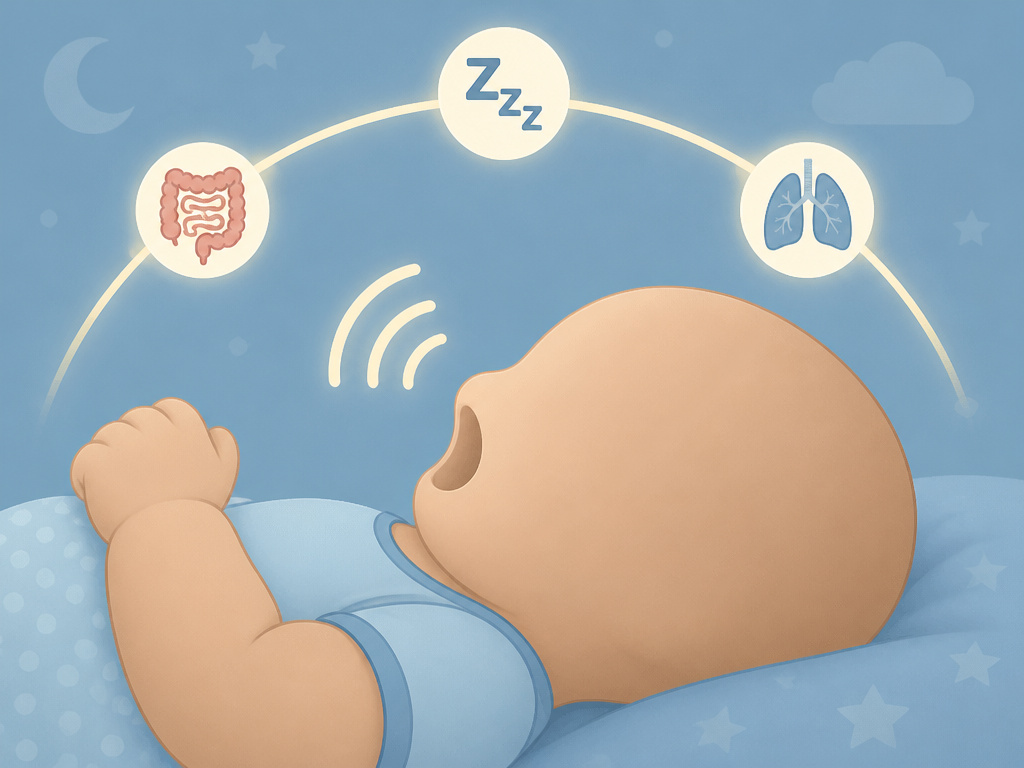 The first three months are often called the “fourth trimester” for a reason. Massive development is still happening outside the womb. The grunting phase has a fairly predictable arc for most healthy infants.
Most babies begin to turn a corner between 6 and 12 weeks. This isn’t magic. Three things mature: 1. Digestive muscles get stronger and more coordinated, making pooping less of an Olympic event. 2. Sleep cycles start to lengthen, meaning fewer jarring transitions per night. 3. Breathing control becomes more automatic and regular.
By 3 to 4 months, many parents notice a significant drop in nighttime noise. The sleep is deeper, the digestion is smoother, and the breathing is quieter. If your baby is still an extremely noisy grunter past 4 months, it’s worth a conversation with your pediatrician to rule out underlying issues like persistent reflux or sleep apnea.
Creating a Safe Sleep Space for a Noisy Sleeper
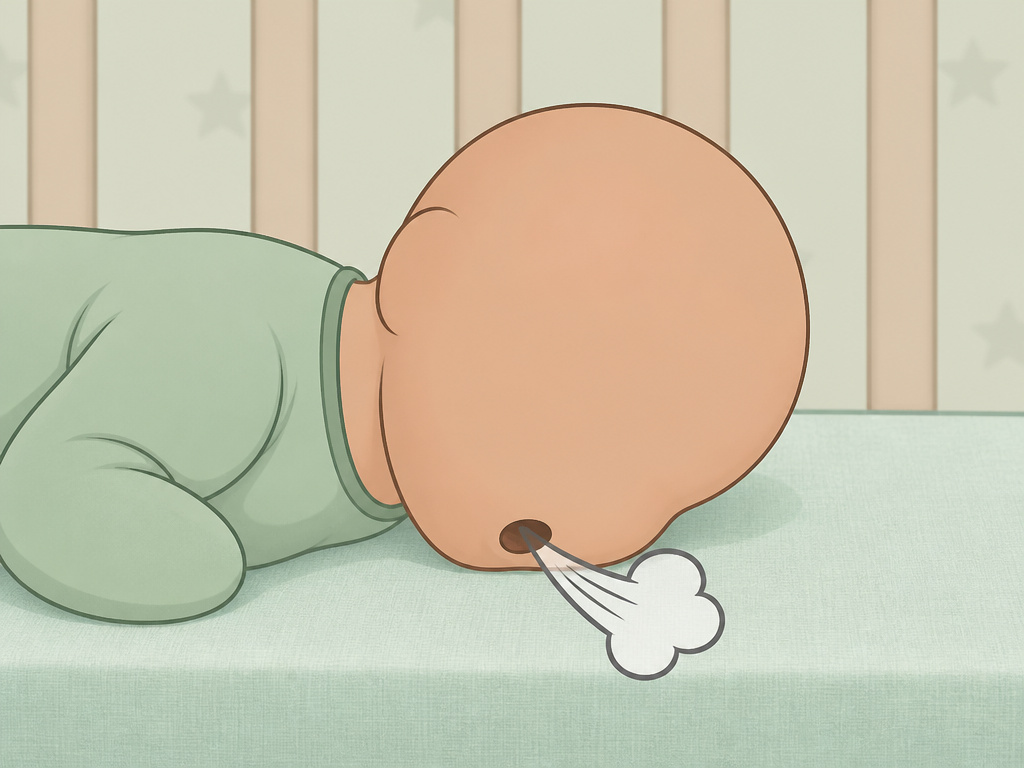 Your baby’s noise level doesn’t change the safety rules. In fact, a grunting baby who moves a lot needs a safe environment even more.
The foundation is a firm, flat crib mattress with a tight-fitting sheet. Avoid any soft bedding, pillows, or crib bumpers. These are suffocation risks, and a grunting, squirming baby can easily press their face against them. For peace of mind, many parents opt for a breathable mattress designed to allow air to pass through even if a baby rolls face-down.
Room-sharing for the first 6-12 months is recommended. Having your baby in a bedside bassinet right next to you lets you hear and check on them easily without the risks of bed-sharing. You can quickly distinguish a normal sleep grunt from a cry that needs a feeding.
I won’t recommend a specific white noise machine, but I will say this: use one if the grunting keeps you awake. The consistent sound masks the little snores and grunts, allowing you to rest while still hearing a true cry. Just keep it at a reasonable volume (below 50 decibels) and place it across the room, not in the crib.
Frequently Asked Questions
Is it normal for a baby to grunt all night long?
Intermittent grunting throughout the night is normal, especially in the first 8-12 weeks. Constant, non-stop grunting with every breath, especially if the baby seems unsettled, is not. That pattern suggests they are working too hard to breathe and need evaluation.
Should I wake my baby if he’s grunting?
No. If the grunting is part of normal sleep and the baby is otherwise comfortable, let them sleep. Waking them interrupts their sleep cycles. Only intervene if the grunting is accompanied by the red flags like prolonged pauses, distress, or color changes.
Can reflux cause grunting in sleep?
Yes. Gastroesophageal reflux (GERD) can cause grunting, gurgling, coughing, or throat-clearing noises. Stomach acid irritating the esophagus can make a baby uncomfortable and noisy. If you suspect reflux, especially with frequent spit-ups, arching of the back, or feeding aversion, talk to your pediatrician.
Do baby monitors help with a grunting baby?
Basic audio monitor lets you listen from another room. However, some parents find that hearing every little grunt amplifies their anxiety. A video baby monitor can be more helpful because you can see if your baby is sleeping peacefully or showing signs of distress, without having to go into the room.
How can I help my grunting baby sleep better?
Ensure a clear nasal passage with saline drops and a bulb syringe if needed. Hold them upright for 20-30 minutes after feeds to help digestion. Provide a firm, safe sleep surface like a certified infant bedside sleeper. Most importantly, give them time. Their system will mature on its own schedule.
Before You Go
Baby grunting is usually a sign of a hard-working newborn, not a problem. The 45-minute sleep cycle is the biggest culprit, and it’s a phase that passes as their brain matures. Your job is to provide a safe sleep environment, a firm mattress in a bedside sleeper free of loose bedding, and to watch the baby, not just listen to the noise. Know the red flag symptoms cold. When you can spot the difference between developmental noise and medical distress, you can worry less about the grunts and focus on the fact that your baby is, in their own noisy way, learning how to be.
