
How to Safely Stop Your Baby from Rolling Over During Sleep
This post contains affiliate links. As an Amazon Associate we earn from qualifying purchases.
You cannot physically stop a baby from rolling in their sleep once they start, and trying to do so with restraints or positioners is dangerous. The safe approach is to stop swaddling by 3 months and transition to a wearable blanket or sleep sack on a firm, bare mattress in a crib that meets current safety standards. If your baby can only roll one way, gently return them to their back. If they roll both ways independently, you can leave them in their chosen position.
That 3-month swaddle cutoff isn’t a suggestion. It’s the point where the risk of suffocation overtakes any calming benefit, because a swaddled baby who rolls onto their stomach cannot use their arms to push up or reposition their head. The mechanics are simple: restricted arms plus a face-down position equals a blocked airway.
What follows is the evidence-backed transition plan. We’ll cover the exact signs that mean “stop swaddling now,” the safe sleepwear that replaces it, and how to set up a crib that minimizes rolling risks without using a single unsafe product. By the end, you’ll know the three changes to make tonight.
Key Takeaways
- Stop all swaddling, including arms-out methods, as soon as your baby shows any sign of attempting to roll, which typically happens around 3 months of age.
- Replace the swaddle immediately with a well-fitting, sleeveless wearable blanket or sleep sack that allows full arm and leg movement.
- If your baby can only roll from back to stomach but not back again, reposition them onto their back if you find them on their front. Once they roll both ways independently, you do not need to move them.
- Never use aftermarket crib positioners, wedges, rolled towels, or straps designed to keep a baby on their back, as these pose entrapment and suffocation hazards.
- The only safe sleep surface is a firm, flat mattress with a tight-fitting sheet and no other bedding, toys, or bumpers. The gap between the mattress and crib sides must be less than 3 centimetres.
Why You Can’t (and Shouldn’t) Stop the Roll
Rolling is a critical motor milestone, not a sleep problem to solve. Your baby’s brain and muscles are developing on a schedule you can’t pause. Attempting to restrain them interrupts that development and introduces serious physical risks.
A swaddled infant has an increased risk of death when they roll or are placed prone. This risk is tied to the inability to use the arms for repositioning, which can lead to airway obstruction.
The public health guidance is unanimous on this. The official New Jersey DOH safe sleep booklet states that swaddling increases the risk of suffocation and strangulation once a baby starts to roll over. This usually happens around the 3-month mark. The takeaway is non-negotiable: rolling means the swaddle era is over.
The 3-Step Safe Transition Plan
Your goal isn’t to prevent rolling. It’s to make rolling safe. This three-step plan removes hazards and adds appropriate safeguards.
Step 1: Recognize the “Stop Now” Signs
Don’t wait for a full roll. The first attempts are your cue. These signs typically appear between 2 and 4 months: * Rocking onto their side during diaper changes or floor time. * Lifting their hips and shoulders off the mattress while on their back. * Consistently turning their head far to one side while lying down. When you see any of these, transition out of the swaddle that same week. Procrastination is the real danger.
Step 2: Swap the Swaddle for a Sleep Sack
A wearable blanket, or sleep sack, is the direct, safe replacement. It keeps your baby warm without restricting their arms or hips.
| Feature | Swaddle (Pre-Rolling) | Wearable Sleep Sack (Post-Rolling) |
|---|---|---|
| Arm Position | Snugly wrapped at sides | Completely free |
| Hip & Leg Movement | Restricted, legs together | Free, allowing natural frogging |
| Risk if Baby Rolls | High – cannot reposition | Low – full mobility to push up |
| Best For | Newborn Moro reflex | Rolling babies & older infants |
Choose a sleeveless or armless design for optimal airflow and movement. Ensure it’s the correct size—too large creates a fabric hazard, too small restricts movement. A good wearable blanket is a non-negotiable piece of safe baby bedding.
Step 3: Audit the Sleep Environment
A safe crib is your final layer of protection. Every element must pass this checklist: * Mattress: Must be firm and flat. Press your hand down—it should spring back immediately without conforming to your hand’s shape. A true firm mattress is the foundation. * Fitted Sheet: Use only a tight-fitting, elasticized crib sheet. Loose fabric is a suffocation risk. Crib sheets should be smooth and taut. * Gap Check: Measure the space between the mattress and the crib sides. It must be less than 3 centimetres (about two finger widths) to prevent entrapment. * Empty Crib: Remove all pillows, quilts, stuffed toys, bumper pads, and loose blankets. The crib should contain only the baby in their sleep sack.
What to Do When You Find Your Baby Rolled Over
Your response depends entirely on your baby’s skill level. This decision tree is based on guidance from Red Nose Australia and the AAP.
| Baby’s Rolling Ability | What You Do at Night | Why This is the Rule |
|---|---|---|
| One-way roller (e.g., back to front only) | Gently reposition them onto their back if you find them on their stomach or side. | They lack the skill to return to a safe back position on their own. |
| Two-way roller (back to front AND front to back) | Leave them in the position they choose. No need to reposition. | They have the motor control to move their head and body to maintain an open airway. |
The key is observation during awake playtime. Can they get back over? If not, they’re a one-way roller, and your gentle hand is still part of the safety system. This phase usually lasts a few weeks.
What NOT to Do: The Dangerous “Shortcuts”
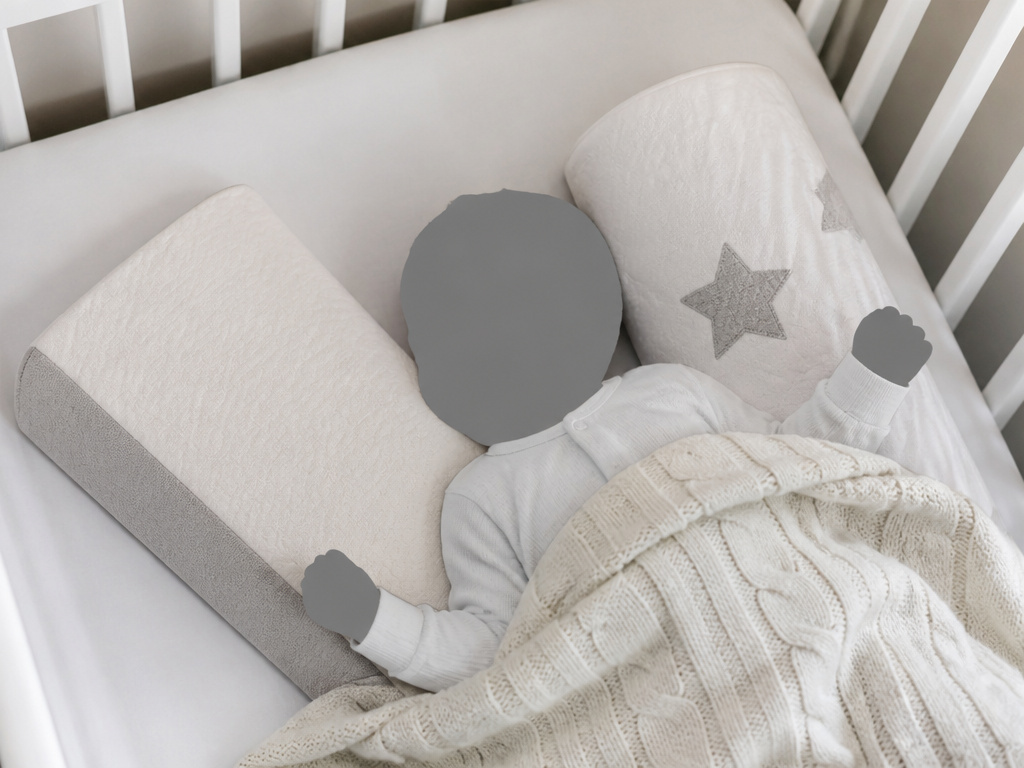 Desperation leads to dangerous products. The market is full of items that claim to solve the rolling “problem,” and every major health authority says to avoid them.
Common mistake: Using a crib positioner or wedge to keep a baby on their back. These products do not meet federal safety guidelines and are linked to infant deaths from entrapment and suffocation.
Here is the full ban list—do not use any of these: * Crib positioners, wedges, or nests: These create soft, inclined surfaces where a baby can become trapped face-down. * Anti-roll pillows or towel rolls: Placed beside the baby, these can shift and cover the face or cause neck entrapment. * Swaddles with “transitional” arm restraints: Any product that restricts arm movement after rolling begins is just a swaddle by another name. * Weighted sleep sacks or blankets: The added weight can impair breathing and make it harder for a baby to move. * Soft mattresses or mattress toppers: Memory foam, pillow-tops, or egg-crate layers conform to a baby’s face and can block airflow.
Safety standards exist for a reason. Always verify that your crib and any mattress for crib use meet current CPSC regulations.
Long-Term Safe Sleep Foundations
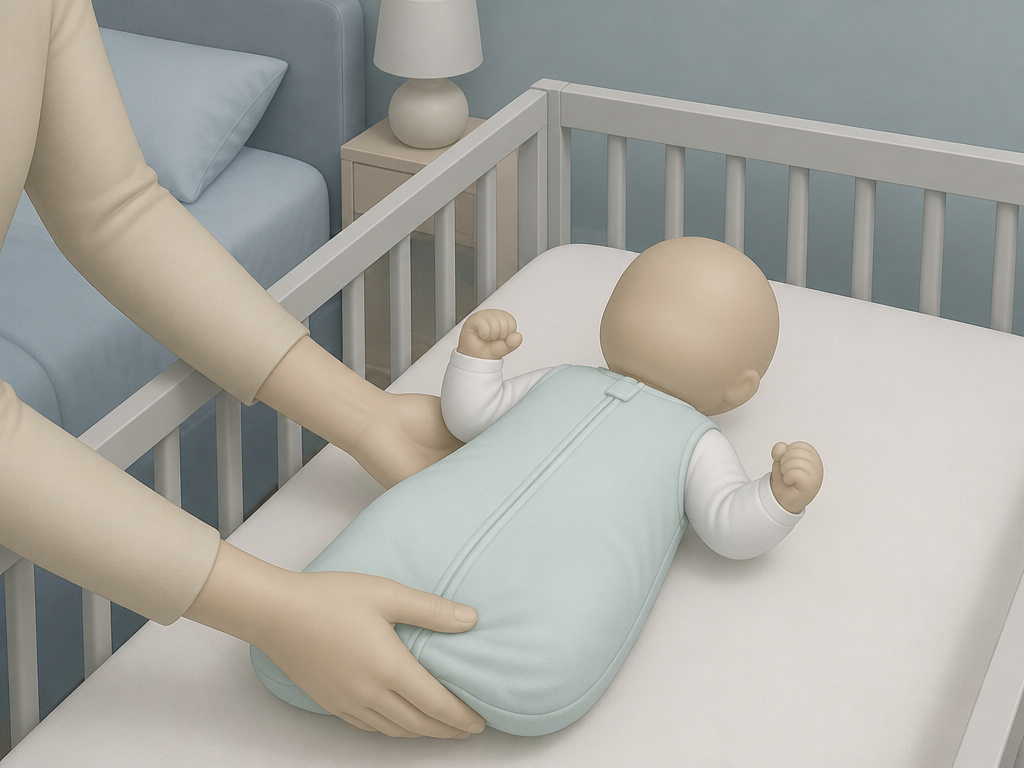 Managing rolling is one chapter. The entire book is about maintaining an evidence-based sleep environment until your child is at least one year old.
Back to Sleep, Every Time.
Always place your baby on their back to sleep, for naps and nighttime. This is the single most effective SIDS risk-reduction step. Even after they can roll, starting on the back is the rule.
Share a Room, Not a Bed.
Keep your baby’s crib, bassinet, or play yard in your room for at least the first 6 months. Room-sharing can halve the risk of SIDS. Adult beds, couches, and armchairs are unsafe for infant sleep due to soft surfaces, loose bedding, and entrapment risks.
Keep It Cool and Smoke-Free.
Overheating is a risk factor. Dress your baby in light layers appropriate for the room temperature—a sleep sack is often enough. A smoke-free environment, during pregnancy and after birth, is one of the strongest protective factors against SIDS.
Your crib setup is the final piece. A certified breathable crib mattress can offer additional airflow peace of mind, but it never replaces the fundamentals: firm, flat, and bare.
Frequently Asked Questions
What if my baby rolls over super early, like at 2 months?
The rule is based on ability, not age. If your 2-month-old is showing clear signs of attempting to roll, you must stop swaddling immediately. Transition to a sleep sack. Early rollers need a safe environment sooner, not restraint.
Can I do arms-out swaddling?
No. Once the signs of rolling appear, discontinue swaddling entirely. An arms-out swaddle still wraps the chest and can restrict breathing and hip movement if the baby rolls. Move directly to a wearable sleep sack.
My baby only rolls onto their side. Is that okay?
Baby who can independently get to their side and maintain that position has enough strength and control. You do not need to reposition a side-sleeper who got there on their own. Ensure the crib is empty so they can’t roll into a soft object.
Are sleep sacks safe for rolling babies?
Yes, properly fitted sleep sacks are the recommended safe alternative. They keep your baby warm while allowing full use of their arms and legs to push up, roll, and reposition freely. This is why they are endorsed in the AAP safe sleep recommendations.
How do I know if my crib mattress is firm enough?
Conduct the press test. Push down firmly on the mattress and in the corners. It should snap back immediately and not conform to the shape of your hand. It should feel hard, not cushiony. If it fails, it’s time for a new, certified infant mattress.
Before You Go
You can’t stop the roll, and you shouldn’t try. The safe path is clear: ditch the swaddle by 3 months, switch to a sleeveless sleep sack, and double-check that the crib is a firm, empty fortress. Your job shifts from preventing movement to ensuring the environment is safe for movement. Trust the milestones, follow the evidence from sources like the Stanford Children’s NIH safe sleep PDF, and let your little roller practice their new skills in a secure space. That’s how they grow, and how you both rest easier.
