
Why New Mattress for Each Baby is a Crucial Safety Requirement
This post contains affiliate links. As an Amazon Associate we earn from qualifying purchases.
A new, certified crib mattress for each baby is a mandatory safety requirement, not just a hygiene tip. Federal law (16 CFR § 1241.2) mandates specific firmness, size, and fit tests, like a maximum 3.15-inch corner gap, that a used mattress cannot reliably pass due to material breakdown and compression from prior use.
That 3.The 15-inch gap rule is the line between a safe sleep surface and an entrapment hazard, measured with a twice-washed cotton test sheet to simulate real-world use. A mattress that passed when new can fail after one child’s weight has permanently compressed its core.
What follows: the three federal specs that decide mattress safety, the two material changes that happen invisibly over time, and the one type of “new” mattress you should actually avoid.
Key Takeaways
- Federal law sets a maximum 3.15-inch corner gap; a used mattress compressed by a prior child’s weight can exceed this limit, creating a suffocation risk.
- Mattress firmness degrades permanently from compression and moisture exposure; a soft surface increases rebreathing and suffocation danger for infants.
- ASTM F2933-25 now requires 24+ hours of preconditioning before testing, acknowledging that mattresses (especially foam) can take a full day to reach their true, safe firmness.
- Memory foam and adjustable-firmness mattresses are explicitly warned against by the AAP due to their risk of forming dangerous indentations.
- An after-market mattress must be at least the same size as the original and lay completely flat on the crib’s support structure, generic “fits all” mats often don’t.
The 3.15-Inch Corner Gap Rule
Look at the corner of any crib. The space between the mattress and the wooden slat is a regulated measurement. The federal crib mattress specifications state the corner gap shall not exceed 3.15 inches (80 mm) when tested with a specific 100% cotton sheet that’s been washed and dried twice on high heat.
The test measures the shortest gap between the mattress and the projected crib corner after the sheet is installed. The mattress cannot be moved during measurement, this accounts for real-world sheet compression.
This rule exists because a shrunken, tight sheet can pull a mattress away from the crib’s sides. A gap wider than 3.15 inches is large enough for an infant to roll into and become trapped, leading to positional asphyxia. A new mattress from a reputable brand is engineered and tested to stay within this limit with a proper sheet.
A used mattress fails here silently. The core materials, whether innerspring or foam, have been compressed by 20-30 pounds of sleeping baby for a year or more. This permanent “set” reduces the mattress’s height and fullness. When you put a tight sheet on it, the compressed mattress can’t press back against the crib wall with the same force. The gap widens. You can’t see this change with your eyes, but the test fixture would record a violation.
The Firmness Factor
Firmness is a non-negotiable safety feature to prevent suffocation and Sudden Infant Death Syndrome (SIDS). A firm surface ensures an infant’s airway stays open if they roll onto their stomach; a soft surface can conform to their face, creating a pocket that leads to rebreathing carbon dioxide.
The American Academy of Pediatrics (AAP) is blunt: soft mattresses, including those with memory foam or adjustable firmness, are dangerous. The materials can create a permanent indentation that cradles an infant’s head.
Where this goes sideways: Using a mattress that feels “broken in.” That soft spot in the middle from your first child’s sleep position is a collapse of the internal support structure. It will not recover.
New mattresses are tested for firmness under specific conditions. The latest standard, ASTM F2933-25, added a critical change: preconditioning. Where old rules required 8 hours at room temperature before testing, the new standard requires at least 24 hours, or the time specified in the manufacturer’s instructions, for the mattress to fully inflate or recover.
| Mattress Type | Primary Risk of Reuse | Timeline for Degradation |
|---|---|---|
| Innerspring | Permanent coil compression, leading to uneven support and larger corner gaps. | Noticeable after 6–12 months of use. |
| Foam (Polyurethane) | Loss of resiliency; foam cells collapse and do not spring back, creating soft spots. | Can begin within weeks, accelerates with heat/moisture. |
| Dual-Density Foam | Top comfort layer compresses faster than the base, creating a dangerous hammock effect. | Varies, but the mismatch in wear creates instability. |
Why does the 24-hour rule matter? It means a mattress that feels firm straight out of the box might not be at its true, safe firmness. If a testing lab only waited 8 hours, a slow-recovering foam mattress could pass when it shouldn’t. Your used mattress isn’t just softer, its material science has shifted.
Microbial and Allergen Buildup
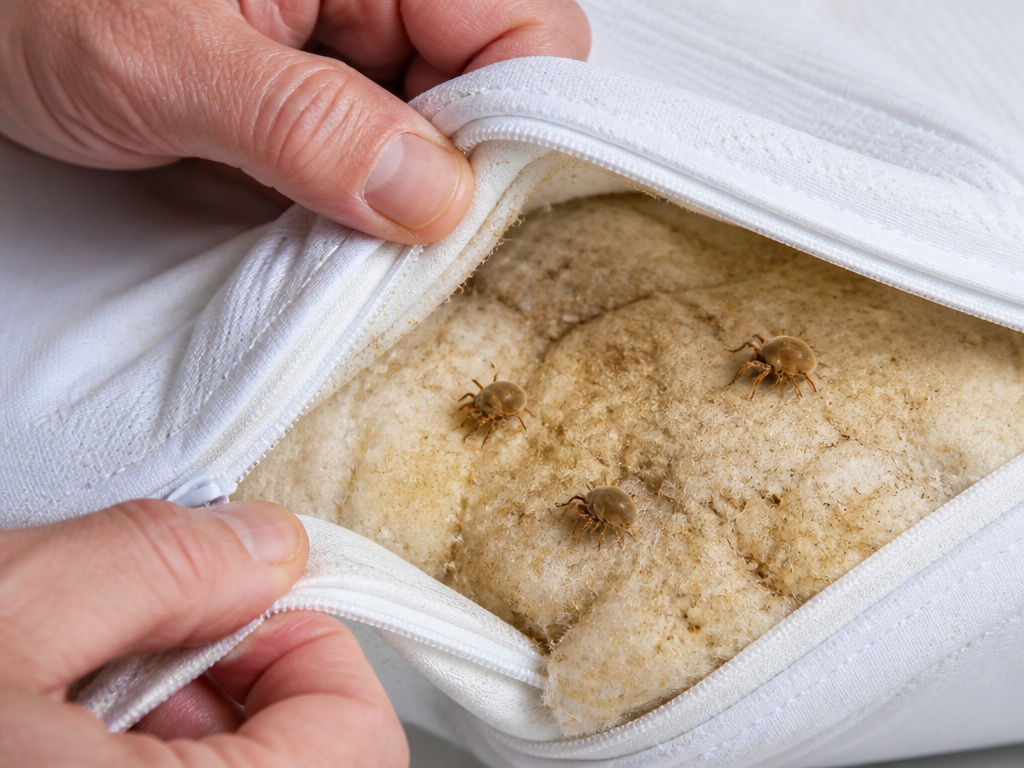
Hygiene is the secondary, but still critical, reason. You can wipe a cover. You cannot sanitize a mattress core.
Spit-up, milk, diaper leaks, and sweat don’t always stay on the waterproof protector. Moisture wicks through seams, zipper tracks, and tiny punctures. Once inside, it feeds mold, mildew, and dust mites. The average mattress can double its weight in dust mites and their debris over a few years.
For a child with allergies, asthma, or eczema, this is a direct trigger. For a healthy newborn, it’s an unnecessary immune system challenge. A breathable crib mattress with a waterproof cover is designed to manage moisture away from the core, but its integrity degrades with use and washing.
I learned this the hard way with a hand-me-down crib. The mattress looked pristine under its cover. When we finally replaced it, the old mattress had a faint, sweet-sour smell when unzipped, the telltale sign of mildew deep in the batting. That odor was the proof I couldn’t argue with.
When “New” Doesn’t Mean Safe

Buying a new mattress isn’t a guaranteed pass. You must buy the right kind of new.
First, avoid mattresses not designed for safe sleep. The AAP warns against using pillows, cushions, or sofa beds as substitutes. This also applies to memory foam toppers or any soft, conforming material added on top of a firm mattress. They create the same deadly pocket.
Second, understand “after-market” versus “OEM.” An OEM (Original Equipment Manufacturer) mattress is the one sold with the crib. An after-market mattress is any replacement you buy separately.
The law treats them differently. For a non-full-size crib (like a mini-crib), an after-market mattress must be at least the same size as the original and lay completely flat on the crib’s floor support. It cannot be smaller, and it cannot curl at the edges. A poorly sized mini crib mattress is a gap hazard waiting to happen.
| Purchase Scenario | What To Verify | The Legal Requirement |
|---|---|---|
| New crib + included mattress | Ensure it meets ASTM F2933-25 and has a firmness certification label. | The manufacturer is responsible for compliance. |
| Replacement for a full-size crib | Match exact dimensions (27 1/4″ x 51 5/8″ min), check for firmness and corner-gap compliance. | Must comply with all sections of 16 CFR § 1241.2. |
| Replacement for a playard/portable crib | Must be specifically marketed for your model. Never use a makeshift pad. | Must meet stability and vertical displacement tests per ASTM F406. |
Third, certifications are your guide. Look for a label stating compliance with ASTM F2933-25 and the CPSC crib mattress safety standard. For an organic crib mattress, look for GOTS or GOLS certification on the core materials, not just the cover.
The One-Child Lifespan
How long is a crib mattress actually good for? The safety data points to one child.
Between 2010 and 2021, the CPSC recorded 494 incidents related to crib mattresses, including 139 fatalities. The hazard patterns cited design issues and mattress compression leading to asphyxiation. This is a documented, recurring failure mode tied to product integrity over time.
A mattress is a wear item, unlike a solid wood crib that can be handed down. Its job is to provide unchanging, rigid support for roughly 24 months per child.The stress of that duty, constant load, moisture vapor, thermal cycles, alters its physical properties in ways that are measurable (corner gap, firmness) but often invisible.
The financial logic of reusing a $150 mattress evaporates against the cost of a $2000 emergency room visit, or worse. This is why the AAP recommends new cribs and new mattresses. The safe mattress for newborns you choose is a consumable safety device, not an heirloom.
TL;DR: A mattress must pass three tests: size (no gap >3.15″), firmness (rigid, not soft), and integrity (flat, no compression). A used mattress fails all three from hidden wear.
The Practical Swap
You need a plan, not just a rule. Start with the crib. If it’s a hand-me-down crib, verify it hasn’t been recalled and that all hardware is present. Then, budget for a new mattress as a non-negotiable line item.
When shopping, bring your crib’s exact interior measurements. Don’t guess. A proper nursery mattress will fit with less than two fingers’ width of space on any side. Pair it immediately with a new, well-fitting crib mattress protector. The protector is your first line of defense and can be washed or replaced; the mattress cannot.
For a bassinet or cradle, the same rule applies. Use only the mattress it came with, or purchase an exact model-specific replacement like a certified bassinet mattress. Never stuff a folded blanket or extra crib mattress pad underneath to take up space.
What about the old mattress? Recycle it if your municipality offers bulky item pickup. Do not donate it to a thrift store, give it to a friend, or repurpose it as a toddler play mat. Its safe life is over.
Frequently Asked Questions
Can I just use a mattress topper to make an old mattress firm again?
No. Adding a topper, even a firm one, changes the sleep surface’s geometry and can create gaps at the edges. It also does not address the core compression and corner-gap issue of the original mattress. The mandatory mattress standard code applies to the complete sleep system, not add-ons.
What if the used mattress is from my own older child and looks perfect?
Appearance is irrelevant. The compression that breaks down internal support happens at a microscopic level in the foam cells or coil system. The “set” is permanent. The mattress has already completed its safety-service life for one child.
Are there any safe “hand-me-down” sleep items?
Yes, but the mattress isn’t one of them. You can safely pass down a solid, non-upholstered crib (after verifying its recall status and stability), tight-fitting cotton sheets, and breathable mesh bumpers (if used at all). The sleep surface itself, mattress, cradle mattress, bassinet pad, must be new.
How do I know if a new mattress is firm enough?
Use the “hand test.” Press firmly on the center and edges of the mattress. Your hand should spring back immediately without leaving an indentation. There should be no “give” or cushioning feel. Refer to the peer-reviewed mattress safety analysis for the biomechanical reasoning behind this requirement.
Is a more expensive mattress safer?
Not necessarily. Safety is a pass/fail benchmark defined by ASTM F2933-25. A $100 mattress that passes is as safe as a $400 mattress that passes. The extra cost often goes toward organic materials, dual-stage waterproofing, or extended warranties. The safety certification label is what matters most.
The Bottom Line
This is a physics and physiology problem with a legal answer. A crib mattress has one job: to provide an unyielding, gap-free surface for about two years.The materials that do that job degrade under load, moisture, and time in ways you cannot see or feel until it’s too late.
The federal corner-gap measurement, the updated 24-hour preconditioning rule, and the AAP’s stark warnings against soft surfaces all point to the same conclusion. The safest choice is the only choice that complies with the evidence: a new, certified-firm mattress for every child who uses the crib.
