
Bedtime Dressing Guide for a Baby with a Fever: One Layer
This post contains affiliate links. As an Amazon Associate we earn from qualifying purchases.
Dress your feverish baby for bed in one layer of lightweight, breathable clothing, like a cotton onesie, and use one lightweight blanket if needed. The room should be comfortable, not hot or cold. Bundling them up, even if they have chills, traps heat and can make the fever worse.
That temperature trap is the whole problem. A fever is the body’s defense mechanism, and overdressing interferes with its ability to release heat. This isn’t a comfort issue; it’s a heat-transfer equation. The goal is to let their body do its job without adding insulation it can’t shed.
What follows: the exact clothing layers NHS trusts recommend, the fabrics that help or hurt, how to handle nighttime chills, and the one sign that means you should call a doctor immediately.
Key Takeaways
- Use one layer of lightweight clothing (like a cotton vest and nappy) and one lightweight blanket for sleep. More layers trap heat.
- Never bundle a baby with extra clothes or blankets, even if they feel cold or are shivering. This can raise their core temperature.
- Avoid all sponging, cool baths, or fanning directly on the child. These cause shivering, which generates more internal heat.
- Check for dehydration every few hours: look for a dry mouth, no tears when crying, and fewer wet diapers.
- Medication like paracetamol (Calpol) is for comfort, not for lowering the temperature to normal. A fever that drops by even one degree can help them feel better.
The One-Layer Rule for Bedtime
Forget everything you’ve heard about “sweating out a fever.” The medical guidance is unanimous and specific.
Common mistake: Adding layers when your baby feels cold to the touch. Shivering is the body’s way to generate heat. Adding a blanket on top of that process is like closing the windows while the furnace is running, the internal temperature only climbs higher.
The Royal Berkshire NHS Trust states it clearly: “Children with a fever should not be over- or under-dressed. Keep your child cool by keeping the room cool and leave them covered with only light clothing, such as a vest and pants / nappy.” This is your baseline. For sleep, that translates to a single layer, a short or long-sleeve cotton onesie, and one lightweight, breathable baby blanket.
The MedlinePlus guide from the U.S. National Institutes of Health uses the same wording: “Try one layer of lightweight clothing, and one lightweight blanket for sleep.” The keyword is lightweight. A thick sleepsack or a fleece pajama set counts as multiple layers in terms of insulation.
| Safe Choice | Why It Works | Risk If You Choose Wrong |
|---|---|---|
| Cotton onesie | Breathable, wicks moisture, allows heat to escape. | Synthetic fabrics (polyester, fleece) trap heat and sweat against the skin, raising temperature. |
| Muslin or light cellular blanket | Loosely woven fabric promotes air circulation. | A thick, quilted comforter or weighted sleep sack creates an insulating cocoon. |
| Well-ventilated room | Allows the body’s excess heat to dissipate into the environment. | A stuffy, overheated room negates the effect of light clothing. |
The goal is thermal equilibrium. Your baby’s body is working to fight an infection by raising its set-point temperature. Your job is to not add external barriers that make it harder for that excess heat to leave.
Why Bundling Is Dangerous (Even When They Shiver)
It goes against every parental instinct. Your baby is warm to the touch but complaining of being cold, maybe even shivering. The instinct is to wrap them up. That instinct is wrong, and here’s the mechanical reason why.
Shivering is a muscular reflex that generates heat. It’s the body’s attempt to reach the new, higher temperature “set point” caused by the fever. If you add insulation, extra clothes or a heavy blanket, you are helping the body achieve that higher set point faster and then trapping all that generated heat. The MedlinePlus guide is blunt: “Do not bundle up a child with blankets or extra clothes, even if the child has the chills. This may keep the fever from coming down, or make it go higher.”
The Irish College of General Practitioners (ICGP) advises caregivers to “Dress your child normally – children with fever should not be under dressed or over wrapped.” “Normally” means what they would wear on a comfortable spring day indoors, not what they’d wear on a cold winter night.
That’s the counterintuitive pivot. Comforting a shivering child with a blanket provides temporary sensory relief but prolongs the fever’s intensity. The kindest thing is to offer comfort through holding, gentle words, or a lukewarm (not cold) drink, while maintaining that single layer of clothing.
Choosing the Right Fabrics and Layers
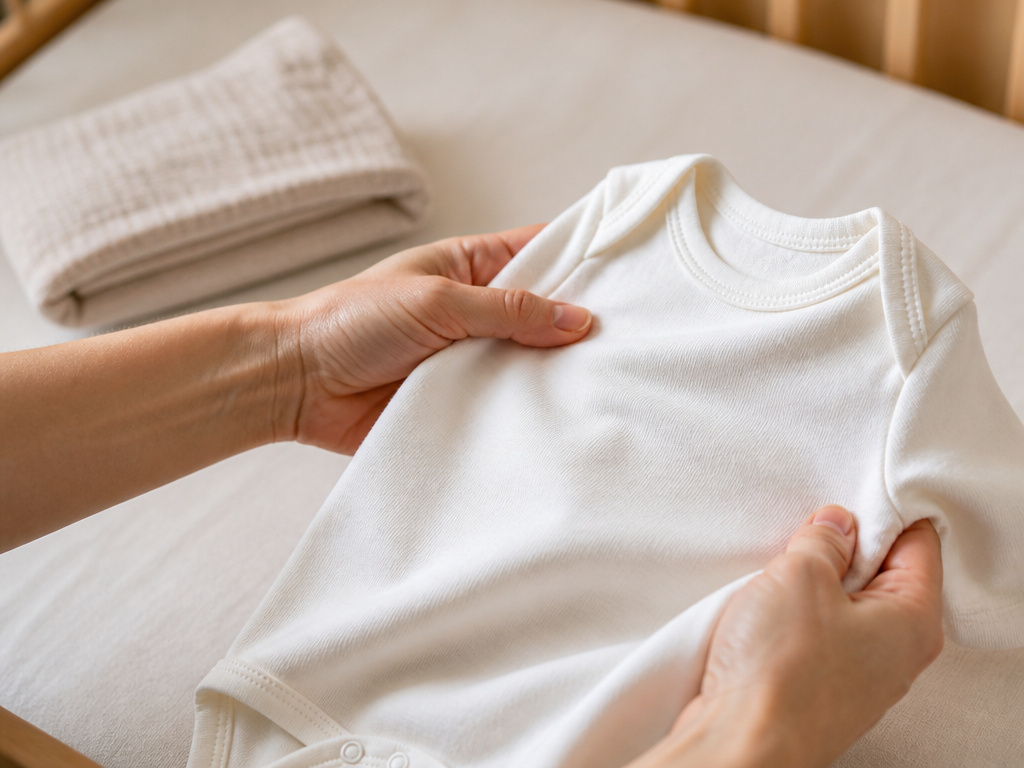
Not all lightweight fabrics are equal. The material next to your baby’s skin dictates how well heat and moisture move away from their body.
Cotton is the default for a reason. Its natural fibers are breathable and absorbent. A simple cotton short-sleeve bodysuit or a long-sleeve cotton pajama set provides the minimal barrier you need. For a younger infant, a cotton vest and nappy is the standard hospital recommendation.
Bamboo or muslin are excellent choices for that single lightweight blanket. Both are loosely woven and promote significant air flow. A muslin swaddle blanket, often used as a swaddle blanket, is perfectly sized for this job.
Avoid these completely: * Fleece: It’s a heat trap. Designed for insulation, it will hold in all the body heat you’re trying to release. * Polyester or Nylon Sleepwear: Unless specifically labeled as “breathable” or “moisture-wicking,” these synthetics can trap sweat and heat. * Weighted Sleep Sacks or Blankets: These are designed for deep pressure, not temperature regulation. They add substantial insulating weight.
The same principle applies to their sleeping surface. A breathable, firm baby mattress with a simple fitted crib sheet is ideal. Avoid padded mattress covers or plush pads that retain heat.
What to Do During the Night
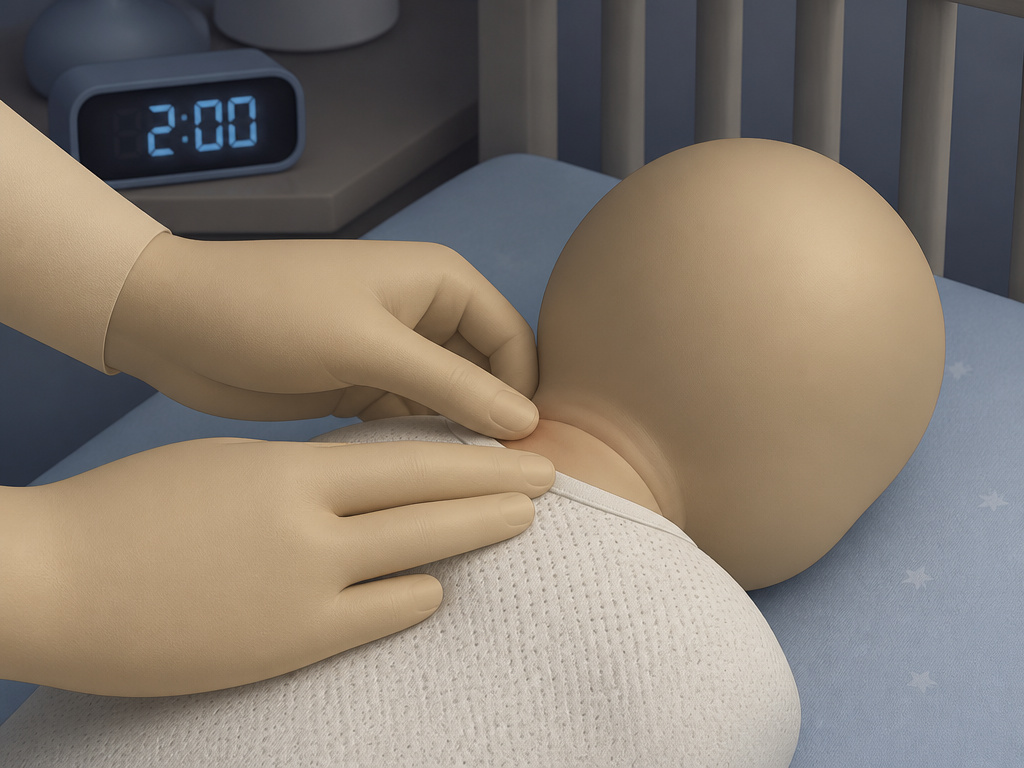
Night is when anxiety peaks. You’re not watching them, and their condition can change. A structured check-in routine replaces worry with a plan.
First, the room. Keep it at a comfortable temperature, generally between 68-72°F (20-22°C). Use a fan if the room is stuffy, but point it at the wall or ceiling to circulate air, not directly at your child.
Second, the checks. Set an alarm for every 3-4 hours. Your mission is quick and observational: 1. Feel the back of their neck or chest. Are they hot and sweaty, or cool and clammy? 2. Check for dehydration. Gently feel inside their mouth for moisture. Look for tears if they stir and cry. 3. Count wet diapers. One good wet diaper every 6-8 hours is a reasonable minimum.
Where this goes sideways: Letting a feverish baby sleep through the night without a check. In infants under six months, their condition can change very quickly. Missing the early signs of dehydration means you lose hours of intervention time.
If you need to give medicine, time it so a dose doesn’t wear off in the middle of the night. If you give paracetamol at 8 PM (which lasts 4-6 hours), a 2 AM check is the perfect time to see if they need another dose or a switch to ibuprofen (if they’re over 6 months old).
Medications, Sponging, and When to Worry
This is where old advice meets new guidelines. Your parents might have told you to give a cool bath. Every major health authority now says not to.
The University Hospitals Plymouth NHS Trust states: “Don’t bathe them in cool baths or sponge them down with cool water: it doesn’t work and can raise their temperature.” The Gloucestershire Hospitals NHS trust agrees: “Fanning your child, cold bathing and tepid sponging can cause discomfort so it is not advised.”
Why? Cold water on the skin causes blood vessels to constrict and can trigger intense shivering. That shivering generates more internal heat than the cold water removes. It’s a net loss.
Medication has a specific purpose. Paracetamol (Calpol) and ibuprofen (Nurofen for Children) are for relieving distress and discomfort, not for chasing a normal temperature. The ICGP guideline is explicit: “The only purpose for treating fever in children must be to relieve the child’s discomfort and not to lower the body temperature.”
| Symptom | Action to Take | When to Escalate |
|---|---|---|
| Fever (38°C/100.4°F+) but baby is alert, drinking, and has wet diapers. | Implement the one-layer rule. Offer fluids. Monitor. | If fever lasts >5 days, or if baby is under 3 months old (call immediately). |
| Baby is distressed, crying, unable to settle. | Consider a dose of paracetamol or ibuprofen (by weight, not age). Focus on comfort. | If distress continues after medication, or if you cannot console them. |
| Signs of dehydration: dry mouth, no tears, sunken soft spot, fewer than 3 wet diapers in 24 hrs. | Encourage small, frequent sips of breast milk, formula, or an oral rehydration solution like Pedialyte. | If they refuse all fluids, appear lethargic, or you see no improvement within a few hours. Call your doctor or 111. |
| Non-blanching rash (doesn’t fade when pressed with a glass), stiff neck, difficulty breathing. | This is an emergency. Call 999 or go to A&E immediately. | Do not wait. |
Always dose medication based on your baby’s current weight, not their age. The instructions on the bottle are a fallback, but a doctor’s weight-based calculation is more accurate. Keep a log of what you gave and when to avoid accidental double-dosing.
Frequently Asked Questions
Should I use a fan in the room?
Yes, but indirectly. Point the fan at a wall or toward the ceiling to circulate air and keep the room from becoming stuffy. Do not aim it directly at your feverish baby, as the direct draft can cause chills and shivering.
What if my baby kicks off the blanket?
That’s a good sign. It means they are effectively self-regulating and are too warm. Do not re-cover them. A single layer of clothing is enough. If the room is a comfortable temperature, they will be fine.
Can I use a sleep sack instead of a blanket?
Only if it is a very lightweight, breathable, and thin sleep sack rated for warm weather. Most standard sleep sacks are designed for warmth and provide too much insulation. A simple cotton onesie is often safer and more effective.
How often should I take their temperature at night?
Once during your scheduled check-in (every 3-4 hours) is sufficient if they are sleeping. Constant temperature-taking wakes them and prevents rest. Focus on observable signs: how they feel to the touch, their state of hydration, and their breathing.
Is it okay to co-sleep with a feverish baby?
Extreme caution is required. Your own body heat can make them overheated. If you do co-sleep, ensure they are in their own light layer on a separate, firm surface beside you, not in your arms or under your blankets. The safest place for a sick infant is always their own crib or bassinet.
My baby is sweating a lot. Is that bad?
Sweating is the body’s cooling mechanism in action. It’s a sign the fever may be breaking. Gently pat them dry with a soft towel and change them into a fresh, dry cotton onesie to prevent clamminess and chills. Do not cool them down further.
Before You Go
The rule is simple but hard to follow: one layer, one light blanket. Your instinct will beg you to add more when they shiver. Remember, the shiver is the problem, not the solution. Bundling fuels it.
Stick to cotton or bamboo. Check for dehydration every few hours by feeling for a dry mouth and counting wet diapers. Throw out the old advice about cool sponging, it does more harm than good. Medicine is for comfort, not for making the number on the thermometer go away.
When in doubt, the official MedlinePlus infant fever care guide is the source most pediatricians trust. Keep it bookmarked. And trust that by not wrapping them up, you’re giving their immune system the best conditions to do its job.
