
What Is a Duvet Used For? A Guide to Bedding Comfort & Safety
This post contains affiliate links. As an Amazon Associate we earn from qualifying purchases.
A duvet is a thick, padded blanket filled with down, wool, or synthetic fibers, used as the primary top-layer bedding for warmth, comfort, and hygiene. Its core job is to manage the ‘bed cave’ microclimate, trapping enough body heat to prevent cooling while allowing 80% of the moisture you produce at night to escape, keeping the sleep surface dry and within a stable temperature range.
That moisture transport is the part most product descriptions gloss over. A duvet that only insulates turns the space under it into a damp, clammy pocket by morning, which is why kids kick it off. The right one balances two measured specs: thermal resistance (how well it holds heat) and water vapor resistance (how well it breathes).
What follows is the breakdown most bedding sites skip: the sourced physics of the bed cave, the real failure rates from consumer labs, and the three-choice framework that actually matches a duvet to a child’s sleep instead of a generic season.
Key Takeaways
- A duvet’s primary function is managing the ‘bed cave’ microclimate, not just providing warmth. It must release about 80% of the body’s nighttime moisture to prevent a damp, uncomfortable sleep surface.
- Look beyond the TOG rating. Two critical, measurable specs are thermal resistance (Rc) for heat retention and water vapor resistance (Re) for breathability; a good summer duvet has a low Rc and a low Re.
- Documented failures are common: some duvets labeled “100% wool” contained as little as 23% wool, and others shrank 7% in width after five washes or leaked filling after standard rubbing tests.
- For children, prioritize breathability and verified safety certifications over maximum warmth. An over-warm duvet is a bigger risk for discomfort and overheating than a slightly cool one.
- Always use a duvet covers for protection. It’s the washable barrier that preserves the duvet itself and makes seasonal style changes simple.
The Core Job: More Than Just Warmth
A duvet is not a decorative throw. It is a sleep system component engineered for a specific physical task. During sleep, your body lowers its core temperature and releases heat and moisture through the skin. About one-fifth of that goes into the mattress.
The majority, roughly 80%, of the heat and moisture produced during sleep is released to the duvet. This makes its breathability the single most important factor for preventing a humid, sticky bed cave.
If that moisture cannot pass through the duvet’s fill and casing, it condenses in the layers closest to the body. The relative humidity in that microclimate climbs. Sleep studies using a thermal manikin in a climate-controlled chamber show the bed cave humidity can range from 54% to over 67%. For comfort and to avoid a damp sensation, clothing physiology research indicates it should stay below 60%.
A duvet that fails this turns into a damp trap. Your child isn’t kicking it off because they’re restless; they’re kicking it off because their skin feels clammy. The duvet’s use case, therefore, splits into three simultaneous jobs: insulation, moisture management, and acting as a protective, hygienic barrier for the mattress below.
Decoding the Specs: TOG, Rc, and Re
You will see TOG ratings everywhere. Thermal Overall Grade (TOG) is a measure of thermal resistance, borrowed from British Standard BS4745. A higher TOG number means warmer insulation. An IKEA cot duvet, for example, has a TOG of 3.5 and is intended for room temperatures of 16–20°C (61–69°F).
But TOG is an incomplete picture. It tells you about heat retention but nothing about breathability, the moisture side of the equation. For that, you need to look at the two metrics used in ergonomic testing: Thermal Resistance (Rc) and Water Vapor Resistance (Re).
- Thermal Resistance (Rc): Measured in m²K/W, this quantifies insulation. A winter duvet needs a high Rc (0.75 – 1.00). A summer duvet, like the tested model M28, has a low Rc of 0.56.
- Water Vapor Resistance (Re): Measured in m²Pa/W, this quantifies breathability. A lower Re value means better moisture vapor transmission. The same summer duvet (M28) had a low Re of 51.89, while less breathable models measured over 104.
| Metric | What It Measures | Good for Summer | Good for Winter | Why It Matters |
|---|---|---|---|---|
| TOG | Thermal insulation (heat retention) | Low (3.5–7) | High (10.5–13.5) | Simple warmth guide, but doesn’t address moisture. |
| Rc (m²K/W) | Precise thermal resistance | Low (~0.56) | High (0.75–1.00) | Scientifically comparable insulation value across all fills. |
| Re (m²Pa/W) | Water vapor resistance (breathability) | Low (~51) | Can be higher, but <70 is ideal | Determines if moisture escapes or gets trapped near the skin. |
Most brands do not publish Rc and Re values. Instead, look for certifications like the Hohenstein Quality Label ‘Sleep Comfort’, which uses a sweating thermal manikin to test the complete duvet construction for both heat and moisture management. This is a more reliable signal than a TOG rating alone.
The Documented Failure Modes: What Can Go Wrong
Not all duvets perform as advertised. The Hong Kong Consumer Council’s test of 20 models is a master class in what to audit before you buy. Their findings, which referenced EU regulations and ISO standards, reveal where real-world performance cracks.
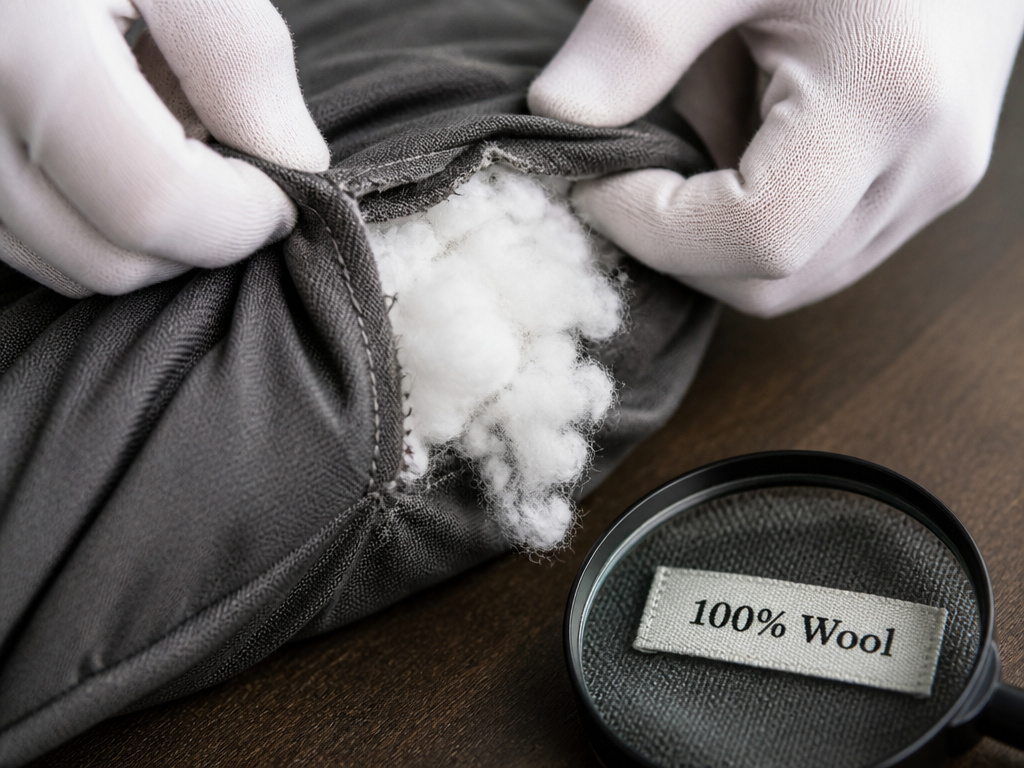
Where this goes sideways: Filling composition fraud. Two duvets labeled “100% wool” actually contained only 50.5% and 23.1% wool, the rest was polyester. Another labeled 40% soybean fiber had only 24.6%.
This isn’t a minor discrepancy. For a child with sensitive skin or wool allergies, that mislabeling is a direct health concern. The lesson is to purchase from brands that adhere to strict traceability standards and can provide test certificates for natural fills like down (EN12934), wool, or silk.
The second major failure is durability under care.
- Shrinkage: After five washes following care labels, one down and one synthetic model shrank in width by approximately 7%. That is a dramatic change that affects fit and coverage.
- Leakage: Using European Standard EN 12132-1 (for down) and EN 15586 (for other fills), testers performed 2,700 rubbing cycles. Two down and two synthetic models showed significant leakage of filling particles through the casing.
- Seam Breakage: One synthetic model experienced seam breakage after repeated washing.
These failures underscore why the protective duvet covers is non-negotiable. It takes the brunt of washing and wear, preserving the integrity and hygiene of the more expensive duvet inside. It also makes updating a child’s bedding theme as simple as changing a pillowcase.
Choosing the Right Duvet for a Child’s Bed
Adult preferences do not translate to kids’ beds. Children, especially infants and toddlers, have less mature temperature regulation systems. The priority shifts decisively from maximum warmth to managed breathability and safety.
First, match the fill to need and care:
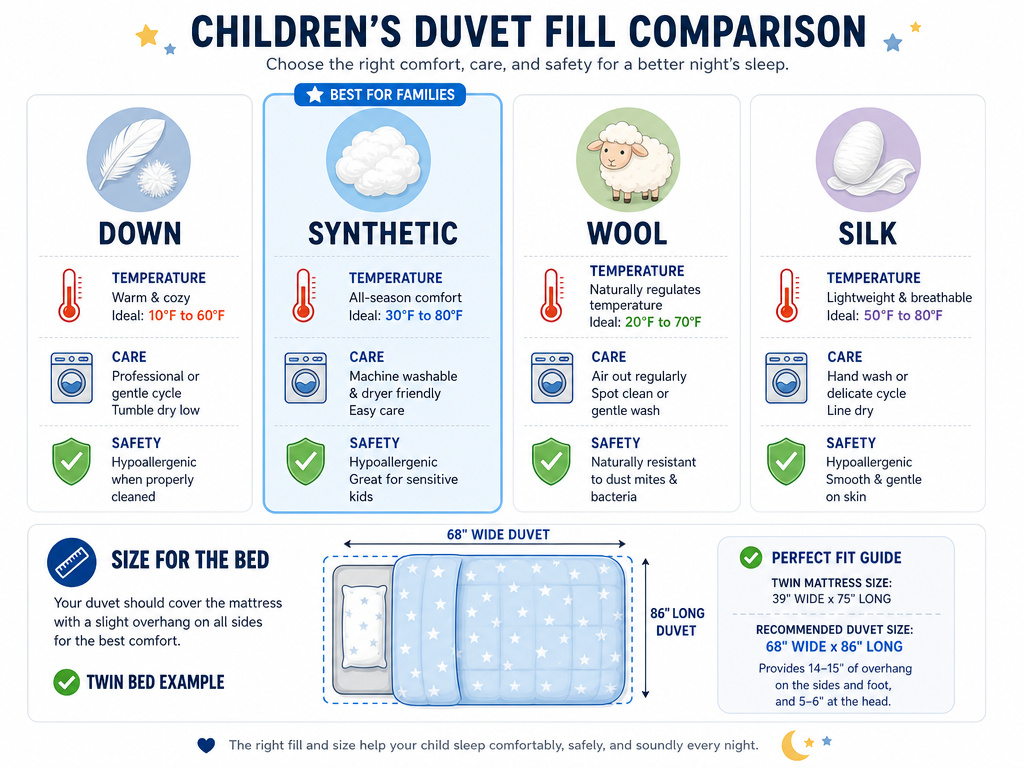
- Down: Excellent warmth-to-weight ratio and breathability if high-quality. Requires careful washing and thorough drying to prevent clumping. Check for the EN12934 standard and a high fill power.
- Synthetic (Polyester): Hypoallergenic, machine-washable, and affordable. The best choice for kids with allergies or asthma. Look for continuous filament fiber (like Primaloft) for better durability than short-staple.
- Wool: Naturally temperature-regulating and moisture-wicking. A great year-round option, but verify the wool content is genuine and be mindful of dry-cleaning requirements.
- Silk: Lightweight, hypoallergenic, and breathable. Often requires professional cleaning, which may not be practical for frequent kid-related spills.
Second, size it for the bed, not the child.
A duvet should cover the mattress adequately, with a little overhang. For a standard twin kids beds, that’s typically 66″ x 86″. For a toddler bed or the space under a loft bed, you may need a custom or smaller size to ensure it doesn’t become a tangled hazard.
Third, and most critical, is the safety check.
- Avoid Overheating: For infants and young children, err on the side of lighter warmth. Use the “back of the neck” test, if skin is hot or sweaty, remove a layer.
- Secure the Sleep Space: In a bunk bed or toddler bed, ensure the duvet is not so large it can bunch up around the rails or be easily pulled over a face. A well-fitted duvet cover helps here too.
- Flame Retardancy: While most modern duvets pass smouldering cigarette tests (BS EN ISO 12952-1), never place any heat source near the bed. The Consumer Council found one silk model performed poorly in this test.
Care and Maintenance: Making It Last
A duvet is a long-term investment. How you care for it determines its lifespan and performance.
- Use a Cover, Always. This is the single most effective maintenance step. It protects the duvet from spills, stains, and body oils. Wash the cover weekly or bi-weekly.
- Wash Infrequently and Correctly. Follow the label exactly. Down and silk require gentle cycles and low-heat drying with tennis balls to re-fluff. Synthetic fills are more forgiving. High heat damages all natural fibers.
- Air and Fluff Regularly. Between washes, air the duvet outside on a dry, breezy day (out of direct sunlight for down, silk, and wool). Give it a good shake to redistribute the fill and restore loft.
- Store It Breathably. In off-seasons, store the duvet in a large cotton storage bag, never a plastic compactor bag. Place it in a cool, dry place.
Easy to miss: Removing the duvet from the washing machine promptly after the cycle ends. Letting it sit wet, even for an hour, encourages mildew at the core of the fill, which creates a musty smell that is nearly impossible to remove.
Frequently Asked Questions
What’s the difference between a duvet and a comforter?
Duvet is designed to be used with a removable, washable cover. A comforter is a standalone, often decorative, bedspread that is washed as a whole unit. The duvet-and-cover system is more hygienic and versatile for families, as you can wash the cover frequently without damaging the duvet’s fill.
How often should I replace my child’s duvet?
Replace a duvet when it no longer regains its loft after airing, when filling has clumped or shifted creating cold spots, or if it shows signs of wear like persistent odors or casing tears. With proper care using a duvet covers, a quality duvet should last 5-10 years.
Can a duvet be too warm for a child?
Absolutely. Overheating is a recognized risk for infant sleep and a common cause of discomfort for older children. Choose a duvet with a moderate TOG (4.5-7.5 for most climates) and prioritize breathability (look for natural fibers or advanced synthetics). Dress your child in light pajamas and monitor the room temperature.
What type of duvet is best for a child with allergies?
Tightly woven, hypoallergenic synthetic duvet is often the best choice. It is resistant to dust mites, machine-washable in hot water to kill allergens, and contains no animal dander. Ensure any toddler pillows used alongside it are also hypoallergenic.
Do I need different duvets for summer and winter?
For optimal comfort, yes. A low-TOG, high-breathability duvet for summer prevents sweating. A high-TOG duvet for winter provides necessary insulation. A year-round alternative is a medium-weight wool duvet, which naturally adapts to temperature changes, or a layered system using a summer duvet with a added blanket in winter.
The Bottom Line
A duvet is used to create a stable, dry, and warm microclimate for sleep, a science-driven task that goes far beyond a simple blanket. The right choice for your child’s bedding sets balances verified warmth (TOG/Rc) with proven breathability (Re) and comes from a brand that transparently meets material and safety standards. Always pair it with a quality cover, care for it gently, and let its performance, not just its pattern, guide your choice. The goal is a sleep space where comfort is consistent, and the only thing your child is kicking off is the morning alarm.
