
Does Formula Help Babies Sleep Longer? The Data Gap Explained
This post contains affiliate links. As an Amazon Associate we earn from qualifying purchases.
Formula does not universally help babies sleep longer, but specific ingredients in some formulas can extend the time between nighttime feeds. The most direct evidence comes from a clinical trial where a formula with added alpha-lactalbamin increased the mean time between feeds by 32 minutes at 16 weeks. However, a separate longitudinal study found each step toward more breastfeeding was linked to 52 more minutes of night sleep in the first year.
That 32-minute number is the cleanest finding in the research. It’s not about total sleep. It’s about a longer stretch of quiet before the next feed. The rest of the picture is messy, contradictory, and hinges on three things: whether you count total sleep or night wakings, the baby’s age, and the specific bioactive components in the milk.
What follows is a breakdown of the clinical trial data, the surprising long-term study that favors breastmilk, the emerging science of “chrononutrition,” and what you can actually do with this information tonight.
Key Takeaways
- A specialized formula with added alpha-lactalbamin increased the time between nighttime feeds by an average of 32 minutes in a controlled trial.
- A large longitudinal study found that more breastmilk was associated with longer night sleep, about 52 extra minutes per step toward exclusive breastfeeding.
- Breastfed infants typically wake more often but don’t necessarily sleep less total time than formula-fed infants.
- “Chrononutrition” formulas, which vary ingredients like tryptophan between day and night, show promise for improving sleep efficiency in small studies.
- The sleep difference tied to feeding mode diminishes as babies age, especially after starting solid foods.
What Does the Most Recent Clinical Trial Show?
Look for the alpha-lactalbamin. This is the protein that carries the strongest signal in recent research. A 2026 clinical trial published in a pediatric nutrition journal zeroed in on it.
The researchers took 128 full-term infants and split them into two groups. One group got a standard control formula. The other got a study formula with added alpha-lactalbamin. They tracked everything for 16 weeks.
The result wasn’t about total sleep. It was about the interval of peace. At 16 weeks, the babies on the alpha-lactalbamin formula had a longer mean time between nighttime feeds, 32 minutes longer than the control group. The 95% confidence interval ran from 5 to 60 minutes. The number of nighttime feeds was also lower by 0.3 on average.
The Technical Snippet: Alpha-lactalbamin is a whey protein that increases the ratio of tryptophan to other large neutral amino acids (LNAA) in the blood. This ratio matters because tryptophan is the precursor for serotonin and melatonin, neurotransmitters central to sleep regulation. In the trial, the study formula group had a tryptophan:LNAA ratio of 0.146 versus 0.130 in the control group.
The takeaway is precise. This specific ingredient, in this specific formulation, led to a measurable, clinically relevant extension of the nighttime feeding interval. It’s a proof of concept that formula composition can directly influence a sleep-related behavior.
The Contradiction: Why Some Big Studies Find the Opposite
Now for the mess. While that trial showed a formula benefit for sleep continuity, a major longitudinal study published in a government archive tells a different story about total duration.
This study followed infant feeding mode and night sleep for a full year. Its core finding is counterintuitive at first glance. Each step toward more breastfeeding, from exclusive formula feeding, to mixed feeding, to exclusive breastfeeding, was associated with an additional 52 minutes of night sleep.
The study’s authors propose a mechanism. Breast milk acts as a “zeitgeber,” a time-giving cue. Its composition changes throughout the day, carrying hormones like melatonin and cortisol that help set the infant’s developing circadian clock. Formula, until very recently, has been static, the same blend at 2 p.m. As at 2 a.m. That stable melatonin supply from breast milk, especially from milk expressed at night, may support longer consolidated sleep blocks.
| Study Focus | Key Finding | What It Actually Measures |
|---|---|---|
| Alpha-lactalbamin Trial | +32 minutes between nighttime feeds | Sleep continuity, interval length |
| Longitudinal Feeding Mode Study | +52 minutes of night sleep per step toward breastfeeding | Total nocturnal sleep duration |
| Systematic Review (under 6 months) | No clear difference in total sleep duration | Aggregate of multiple studies |
The contradiction dissolves when you separate the metrics. One study measured the clock between feeds. The other measured the clock from bedtime to morning. They are related but not the same thing. A baby can wake twice, feed quickly, and go back down, still logging 10 hours of night sleep. Another baby can sleep one solid 6-hour stretch and be done. Which parent feels more rested? Usually the one with fewer interruptions.
The Chrononutrition Concept: Day and Night Formulas
This brings us to the cutting edge: chrononutrition. The goal is to make formula act more like breast milk by changing its ingredients to match the time of day. A night formula is designed to promote sleep. A day formula is designed to support wakeful activity.
A prospective study on 30 infants with sleep problems tested this. It used a system like the Blemil Plus 1 line, where the “Night” formula is high in tryptophan and carbohydrates but lower in protein. The “Day” formula reverses that profile. The infants on the synchronized day/night system showed measurable improvements.
Where this goes sideways: Giving a high-tryptophan “night” formula during the day. It can make an infant drowsy and disrupt the natural rhythm you’re trying to build, potentially leading to more fragmented sleep at night.
The improvements were in specific, measurable parameters: increased actual sleep hours, better sleep efficiency (less time awake in bed), and shorter sleep latency (time to fall asleep). This isn’t just adding melatonin; it’s engineering the entire nutritional profile to nudge the baby’s biochemistry toward sleep at the right time.
| Formula Type | Tryptophan Level | Carbohydrate Level | Primary Goal |
|---|---|---|---|
| Standard Formula | Consistent | Consistent | General nutrition |
| Night Formula (e.g., Blemil Plus 1 Night) | High (e.g., 3.4g/100g protein) | High | Promote sleep onset & maintenance |
| Day Formula | Lower | Lower | Support alertness & activity |
The research here is still young and the products are not universally available. But the principle is solid: not all formula is the same, and its composition can be optimized for sleep in a way that mimics nature’s design.
How Age Changes Everything
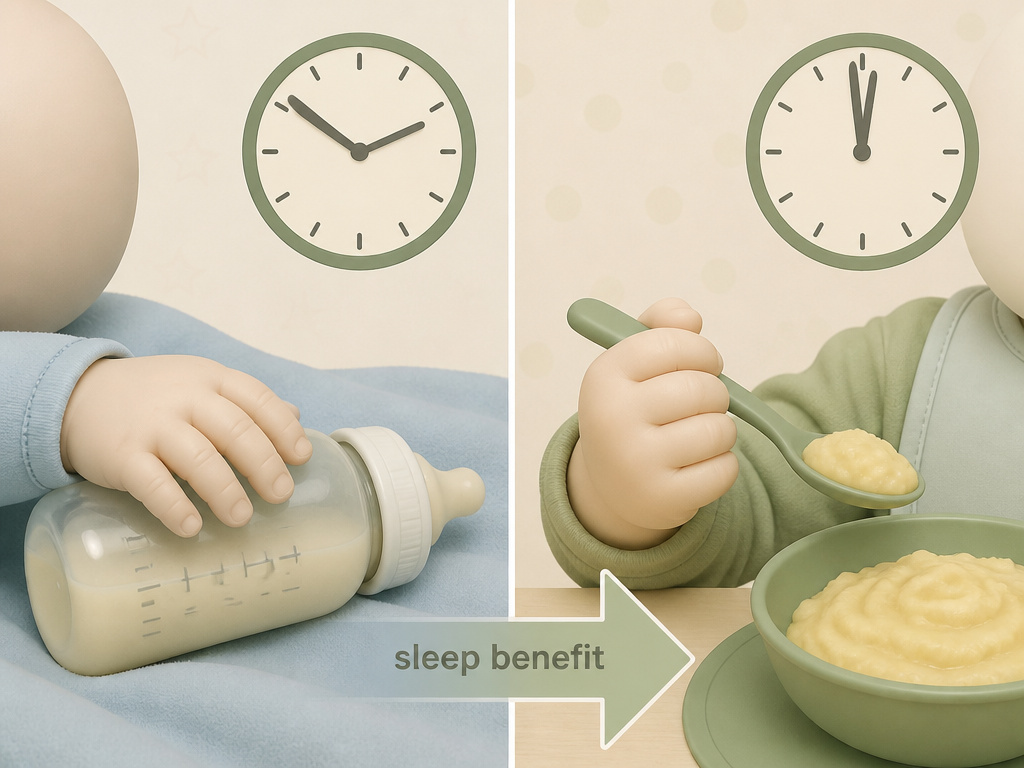
The relationship between what a baby eats and how they sleep is not static. It evolves dramatically over the first year. That longitudinal study which found a 52-minute benefit for breastfeeding also found that this benefit shrank as the baby got older, by about 4 minutes per month.
By the time an infant is heavily into solid foods, the relative contribution of milk, whether formula or breastmilk, to their overall nutrition and sleep architecture diminishes. Their own circadian rhythm matures. They start producing their own melatonin reliably around 3-4 months of age. External factors like bedtime routines, room darkness, and the comfort of their safe infant mattress become much more powerful drivers of sleep than the amino acid profile of their milk.
This is why asking “does formula help babies sleep longer?” needs a follow-up: “How old is your baby?” The answer for a 6-week-old is buried in biochemistry. The answer for an 8-month-old is more about behavioral patterns and a consistent sleep environment, starting with a firm, flat surface like a top-rated crib mattress.
What You Can Do Tonight (Beyond the Binary)
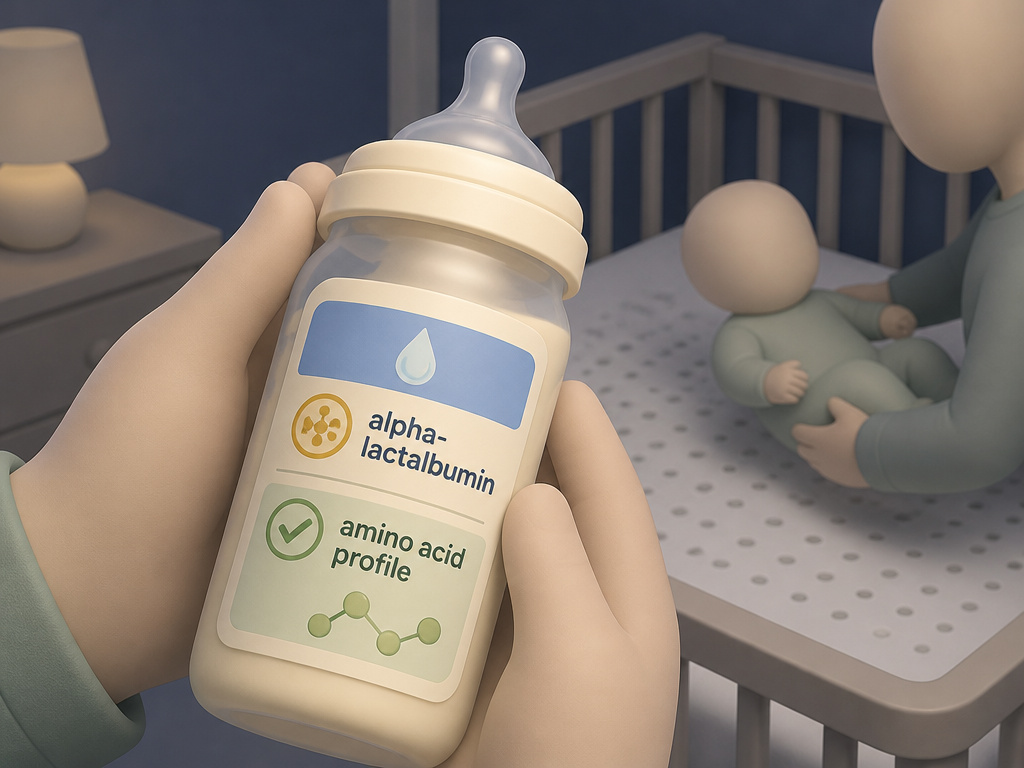
The formula versus breastfeeding debate is a false dichotomy for sleep. Your choice is about nutrition, bonding, and practicality first. Sleep is a secondary outcome you can influence within either path.
If you formula feed: * Ask about ingredients. Look for formulas that mention alpha-lactalbamin or discuss their amino acid profile. Not all do. * Consider the routine. A consistent, calming pre-bed ritual is more impactful than any ingredient. A final feed in a dim room, followed by being placed down drowsy but awake on their breathable crib mattress, teaches independent sleep. * Don’t chase “heavy” feeds. Adding extra powder to the bottle to make a more concentrated, calorie-dense feed is dangerous and does not lead to better sleep. It leads to dehydration and kidney stress.
If you breastfeed: * Understand the waking is normal. More frequent night wakings are typical and may even be protective. They don’t mean your baby is sleeping “worse.” * Leverage the circadian cue. If you pump, label and use your “night milk” for evening feeds. That melatonin-rich milk is a natural sleep aid. * Optimize the sleep space. Ensure the sleep environment is perfect. A comfortable organic crib mattress with a snug-fitting crib sheet and appropriate newborn blankets for warmth can help maximize sleep quality between feeds.
For all parents: Your mental model matters. The goal isn’t an uninterrupted 12-hour block. Infant sleep is supposed to be fragmented. The goal is a baby who gets enough total sleep for healthy development and who can cycle between sleep states effectively. Focusing solely on the clock between feeds misses the bigger picture of sleep health covered in the PMC longitudinal infant research.
Frequently Asked Questions
Does formula-fed babies sleep longer than breastfed?
It depends on what you mean by “longer.” Formula-fed babies, especially on certain specialized formulas, may sleep in longer stretches between feeds. However, breastfed babies often log more total night sleep duration when measured over a full night, despite waking more often. The NIH systematic review on milk feeding concluded that under 6 months, there is generally no difference in total 24-hour sleep duration.
What formula is best for baby sleep?
Formulas with added alpha-lactalbamin have the strongest clinical evidence for extending the time between nighttime feeds. Emerging “chrononutrition” formulas, which have different day and night versions (like some European brands), are designed to support the sleep-wake cycle. There is no “best” universal answer; it depends on your baby’s tolerance and needs.
Why do breastfed babies wake up more at night?
There are several linked reasons. Breast milk is digested more quickly than formula, so hunger returns sooner. The act of breastfeeding promotes closeness and comfort, making babies more likely to seek that connection. Furthermore, as noted in the alpha-lactalbumin formula study, the different protein composition may affect sleep regulation. These wakings are a normal, healthy part of infant physiology and development.
How can I get my formula-fed baby to sleep longer stretches?
Focus on environment and routine before switching formulas. Ensure the room is dark, cool, and quiet. Use a consistent bedtime routine. Make sure the last feed is full and the baby is burped well. Place them down on a safe, flat surface like a firm crib mattress while drowsy but awake. If you are considering a formula change for sleep, discuss options with your pediatrician.
Does warm formula help baby sleep?
Anecdotally, many parents find a warm bottle calming, similar to a warm bath. There is no biochemical evidence that warm formula digests differently or contains sleep-inducing properties. The warmth is likely a sensory cue that helps the baby relax, which can ease the transition to sleep. The safety of your baby bassinets and sleep setup is far more critical than the temperature of the milk.
Before You Go
The search for longer baby sleep is universal. The answer isn’t in a single ingredient or feeding method. It’s in the nuance.
The 32-minute finding from the alpha-lactalbamin trial is real, but it’s a modest gain in a specific metric. The 52-minute link to breastfeeding is also real, but it fades with time. The most promising frontier is chrononutrition, designing food to work with biology, not against it.
Your immediate power lies in the basics. A dark room. A predictable routine. A comfortable, safe sleep surface like a certified organic crib mattress. Those factors outweigh any marginal difference between two types of milk after the first few months.
Feed your baby. Love your baby. Make their sleep space safe. The rest is details that matter less with every passing week.
