
A Guide to Helping Your Child Sleep with Enlarged Adenoids
This post contains affiliate links. As an Amazon Associate we earn from qualifying purchases.
To help a child sleep with enlarged adenoids, you need a two-part plan: immediate bedside adjustments to open the airway tonight, and a medical strategy to address the root cause. Start with elevating the head of the bed, encouraging side-sleeping, and using a cool-mist humidifier. The first-line medical treatment is a daily intranasal corticosteroid spray, which clinical guidelines state can reduce adenoid size after 6-12 weeks of consistent use.
That 6-12 week window is the pivot point. Medication doesn’t work overnight. If you don’t see improvement in snoring and breathing after three months, the obstruction is likely structural enough to require an ear, nose, and throat (ENT) evaluation. The goal is to bridge the gap between tonight’s restless sleep and next month’s specialist appointment.
What follows: the specific pillow angles that work, the one humidifier mistake that makes congestion worse, the medical options ranked by evidence, and the exact symptoms that mean it’s time to call the doctor instead of waiting.
Key Takeaways
- Elevate the head of the bed 30-45 degrees with a firm wedge under the mattress, not just stacking pillows, which can kink the neck and worsen obstruction.
- A daily prescription intranasal steroid spray (like fluticasone) is the primary medical treatment; it requires 6-12 weeks of consistent use to potentially shrink adenoid tissue.
- If your child has persistent loud snoring, observed breathing pauses longer than 10 seconds, or daytime sleepiness, they need an ENT evaluation for possible sleep-disordered breathing.
- Avoid sedating antihistamines or cold medicines; they can relax throat muscles too much and deepen obstruction during sleep.
- Creating a cool, humidified sleep environment with a clean humidifier reduces nasal inflammation and makes breathing easier.
What You’re Actually Dealing With
Enlarged adenoids are a mass of lymphoid tissue at the very back of the nasal passage, right where air turns the corner to go down the throat, which causes more than just a stuffy nose. When they swell, they don’t just cause congestion, they create a physical dam.
Common mistake: Treating adenoid-related snoring like a cold. Decongestants dry out secretions but don’t reduce lymphoid tissue. Overusing them can lead to rebound congestion, making the underlying obstruction feel worse after a few days.
The blockage has direct consequences. It forces mouth breathing, which dries the throat and can lead to a sore throat by morning. It can trap fluid in the middle ear, leading to recurrent ear infections and even hearing loss. Most critically, it narrows the airway to a point where the soft tissues at the back of the throat can collapse during sleep. That collapse is what turns simple snoring into obstructive sleep apnea, where breathing actually stops.
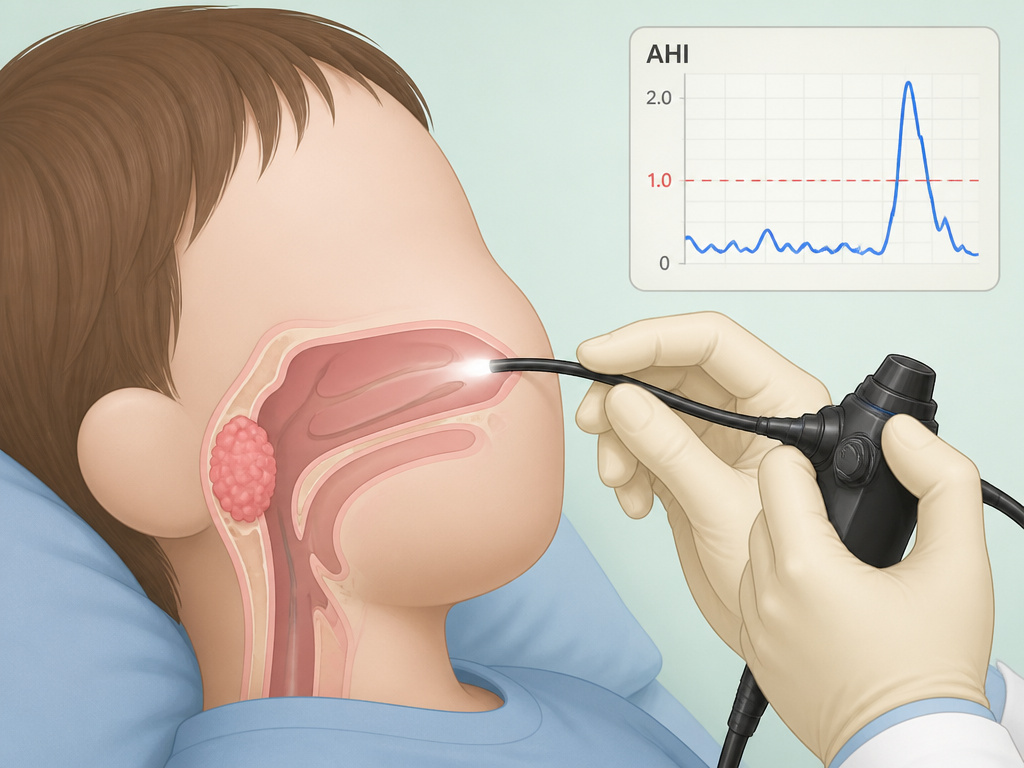
The standard for diagnosing this in a doctor’s office is flexible nasopharyngoscopy, a tiny camera threaded through the nose. For assessing sleep impact, a polysomnography (sleep study) measures events like the apnea-hypopnea index (AHI). An AHI score classifies severity as mild, moderate, or severe obstructive sleep apnea.
| Symptom | Primary Snoring | Sleep-Disordered Breathing / Apnea |
|---|---|---|
| Sound | Consistent, rhythmic snoring | Loud snoring punctuated by silence, then gasps/chokes |
| Breathing | Uninterrupted flow | Observed pauses (>10 seconds) |
| Sleep Quality | May be restless | Very restless, frequent waking, night sweats |
| Daytime Effect | Minimal | Hyperactivity, fatigue, poor focus, bedwetting |
The Bedside Toolkit for Better Sleep
You can’t shrink adenoids with a pillow. But you can change the geometry of the airway to give your child the best chance at an open breath tonight. This is about mechanics, not medicine.
First, elevation. Tilt the entire sleep surface. Use a firm foam wedge placed under the mattress itself, creating a gentle slope from hips to head. Aim for a 30-45 degree angle. Stacking pillows only flexes the neck forward, pinching the airway at the throat. A wedge keeps the spine straight and uses gravity to pull the tongue and soft tissues slightly forward, off the back of the throat.
Second, position. Encourage side-sleeping. The simplest method is the “tennis ball trick”: sew a pocket onto the back of their pajama top and put a tennis ball inside. When they roll onto their back, the discomfort prompts them to roll back to their side without fully waking. A supportive child’s pillow that maintains neck alignment in this position is critical.
Third, environment. Run a cool-mist humidifier every night. Dry air irritates swollen nasal and adenoid tissue. Keep it clean, empty the tank daily and disinfect it weekly with white vinegar. A humidifier spewing mold or mineral dust into the air inflames the very tissues you’re trying to soothe. Keep the room cool, between 68-72°F (20-22°C). A hot room increases blood flow to all tissues, including adenoids, making them swell more.
The short version: Wedge the mattress, train for side-sleeping, humidify and cool the air. This trio reduces the work of breathing immediately.
Medical Paths: From Sprays to Surgery
When bedside care isn’t enough, medicine offers a stepped approach. The timeline here is measured in weeks and months, not days.
The first-line pharmaceutical treatment is a daily intranasal corticosteroid spray. Fluticasone (Flonase) or mometasone (Nasonex) are common prescriptions. They work by reducing local inflammation in the nasal passages and adenoid tissue itself.
Daily intranasal corticosteroids for 6-12 weeks may reduce adenoid size. The response to treatment should be monitored and adverse effects considered. . ENT UK Global Health Guidelines for Pediatric Snoring & Obstructive Sleep Apnoea
You must use it consistently. One missed day doesn’t just pause progress; the inflammation can rebound. This medication is a long-term anti-inflammatory strategy, not a rescue medication for a bad night. Improvement in snoring and congestion might start in 2-3 weeks, but maximum effect on adenoid size takes the full 6-12 weeks.
For children with allergy components, a leukotriene receptor antagonist like montelukast (Singulair) may be added. It can improve symptoms like mouth breathing and snoring. However, it carries an FDA boxed warning for potential neuropsychiatric side effects (like mood changes), which must be discussed thoroughly with your pediatrician.
If a bacterial infection is suspected, often signaled by persistent bad breath (halitosis) alongside other symptoms, a course of antibiotics may be prescribed. This treats acute adenoiditis, not the chronic hypertrophy.
| Treatment | Mechanism | Typical Timeline for Sleep Effect | Key Consideration |
|---|---|---|---|
| Intranasal Steroid | Reduces tissue inflammation | 6-12 weeks for full effect | Consistency is mandatory; not an “as-needed” spray. |
| Montelukast | Blocks inflammatory pathway | 4-8 weeks | Requires discussion of boxed warning for behavior/mood changes. |
| Antibiotics | Treats bacterial infection | 7-10 days | Only for acute infection (adenoiditis), not for chronic enlargement. |
| Adenoidectomy | Surgical removal of tissue | Immediate relief post-recovery | Reserved for OSA, recurrent infections, or failure of medical therapy. |
When this goes sideways: Using over-the-counter decongestant nasal sprays (like oxymetazoline) for more than 3 days. They cause rebound swelling that can be worse than the original congestion, creating a cycle of dependency and worsening obstruction.
When Is It Time for an ENT?
The decision to see a specialist isn’t always clear. Watch for the cluster of symptoms that shift the problem from annoying to consequential.
Schedule an ENT consultation if you observe: * Loud, habitual snoring on most nights, regardless of colds. * Witnessed breathing pauses during sleep that last 10 seconds or more. * Gasping, choking, or snorting sounds as breathing resumes. * Unusual sleep positions like hyperextending the neck or kneeling. * Daytime signs: hyperactivity, irritability, declining school performance, or paradoxically, excessive daytime sleepiness. * Other complications: recurrent ear infections, persistent nasal speech, or the development of “adenoid facies” (a long, narrow face with an open-mouth posture).
The ENT will likely perform a flexible nasopharyngoscopy to visually grade the adenoid size. For quantifying sleep disruption, they may order a polysomnography. This sleep study generates an Apnea-Hypopnea Index (AHI), which measures breathing interruptions per hour. An AHI over 1.0 in a child can be significant and is a strong indicator for treatment.
The NCBI adenoidectomy book chapter notes surgery is an evidence-based treatment for obstructive sleep apnea and persistent middle ear fluid. It’s not a first step, but it is a definitive one when medicine and time haven’t worked.
Creating a Supportive Sleep Sanctuary
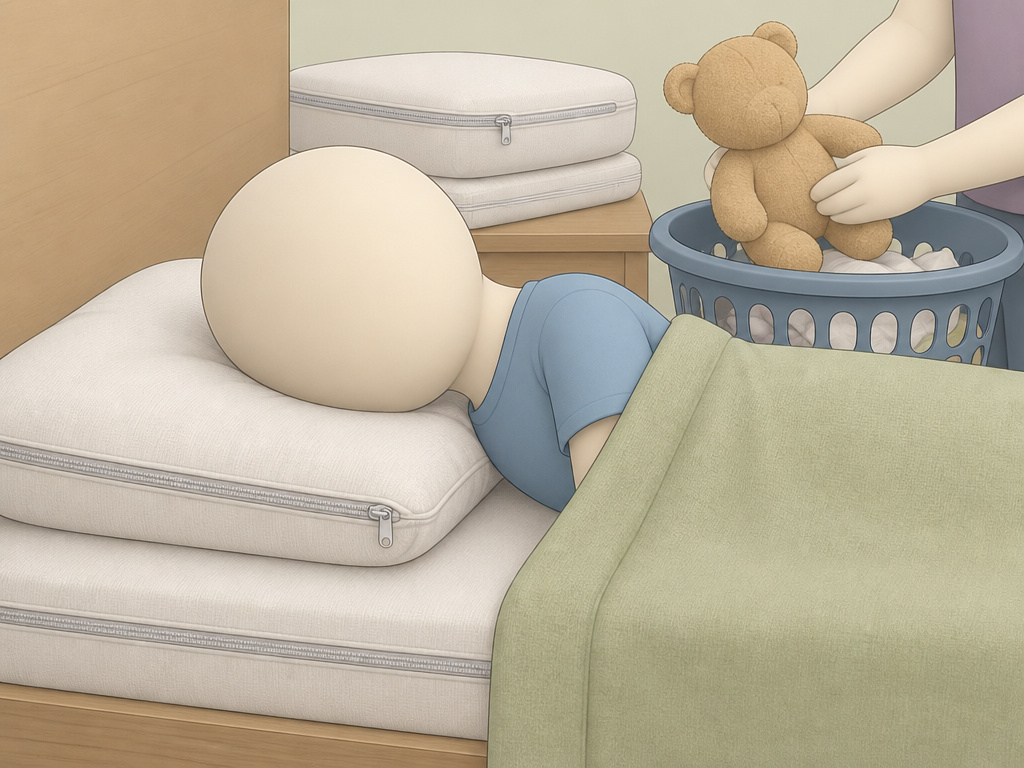
The right sleep environment does more than comfort, it supports the physical interventions. Your choices in bedding can either help or hinder breathing.
Start with the pillow. The goal is to keep the head in neutral alignment with the spine when side-sleeping. A pillow that’s too high or too firm will tilt the head forward. A pillow that’s too flat will tilt it back. Look for a pillow for a toddler or an older child’s pillow designed for proper support. Avoid large, fluffy adult-style pillows that can envelop the head and limit air movement.
Consider a weighted blanket for children over 5 who are restless sleepers. The deep pressure input can promote calm and reduce the frequency of waking, which is especially helpful for kids whose sleep is fragmented by breathing struggles. Always follow safety guidelines: choose one that’s no more than 10% of the child’s body weight.
Allergen control is non-negotiable. Enlarged adenoids are often aggravated by chronic inflammation from allergens. Use dust-mite-proof encasements on mattress and pillows for kids. Wash all toddler bedding, including sheets and blankets, in hot water weekly. Remove stuffed animals from the bed or wash them frequently.
TL;DR: Match the pillow to the child’s size for alignment, consider a weighted blanket for calm, and wage war on dust mites. The bed should be a tool, not an obstacle.
Frequently Asked Questions
Can a child outgrow enlarged adenoids?
Yes, often. Adenoids typically peak in size around ages 3-5 and begin to shrink after age 7, often resolving by the teen years. The problem is the “meanwhile.” If enlarged adenoids are causing sleep apnea, recurrent infections, or affecting facial growth, waiting years for natural regression is not a safe or recommended strategy. Treatment manages the negative impacts during the growth period.
What is the difference between tonsils and adenoids?
Tonsils are two masses of tissue you can see at the back of the throat on either side. Adenoids are a single mass of tissue higher up, behind the nose and above the roof of the mouth. You cannot see them by looking in the mouth. Both are part of the immune system, but adenoids are more directly linked to nasal breathing and ear function.
Are there any home remedies that work?
The proven home strategies are mechanical and environmental: head elevation, side-sleeping, and humidification. Saline nasal rinses or sprays can help clear mucus from the nasal passages, making breathing easier temporarily, but they do not shrink adenoid tissue. There is no strong evidence for dietary supplements, essential oils, or other home remedies reducing adenoid hypertrophy.
How successful is adenoidectomy surgery?
For the correct indications, like obstructive sleep apnea, adenoidectomy is highly successful. The ENT UK pediatric OSA guidelines cite surgery as a first-line treatment for apnea caused by large tonsils and adenoids. Relief from breathing obstruction is often immediate after recovery. It is one of the most common and safest pediatric surgeries, but it is still surgery and requires a clear diagnosis.
Can allergies cause enlarged adenoids?
Absolutely. Chronic allergic rhinitis (hay fever) is a common cause of persistent adenoid inflammation and hypertrophy. The constant immune response and post-nasal drip keep the adenoid tissue stimulated and swollen. This is why intranasal steroids (which treat allergy inflammation) are a first-line medical treatment and why controlling environmental allergens in the bedroom is so important.
Before You Go
Helping a child sleep with enlarged adenoids is a process of matching the solution to the severity. Tonight, that means a wedge, a side position, and cool, humid air. For the next three months, it means consistency with a prescribed nasal spray if your doctor recommends it.
The line in the sand is sleep-disordered breathing. Loud snoring with pauses, gasping, or daytime behavioral changes means it’s time for a specialist. Use the public adenoid health information from Healthdirect as a reliable reference, but let an ENT make the final call.
Your goal is ensuring every breath is easy, every sleep cycle is complete, and the day that follows is spent thriving, not just coping, which goes beyond a quiet night. Start with the geometry of the bed, follow the medical timeline, and don’t hesitate to seek the scan that shows exactly what you’re dealing with.
