
Guide: How to Use a Security Blanket for Baby Comfort & Sleep
This post contains affiliate links. As an Amazon Associate we earn from qualifying purchases.
To use a security blanket for a baby, introduce a single, small, breathable blanket around 3-4 months old, during calm moments like feeding or cuddling. Never place it in the crib for sleep until the child is old enough to move it freely—typically after 12 months and with pediatrician approval. The goal is to create a positive association, not a sleep hazard.
The 3-month mark is the sweet spot before separation anxiety peaks but after the newborn reflex phase settles. You’re building a bridge before the child needs it.The blanket becomes a stand-in for your comfort during minor upsets, not a substitute for you during genuine needs.
What follows: the specific safety line that pediatric guidelines draw, the step-by-step method to build the association, what to do if your child gloms onto something unsafe, and the one modification that turns a blanket from a risk into a safer lovey.
Key Takeaways
- Introduce a single, specific blanket around 3-4 months, pairing it with your comfort during calm, positive routines.
- A security blanket must never be in the crib for sleep until a child can consistently move it away from their face—this rule overrides all convenience.
- Choose a small (roughly 12×12 inch), breathable fabric like cotton or a cotton-polyester blend with no detachable parts.
- If a child attaches to an unsuitable object, work with it; tying a knot can transform a blanket into a more manageable, safer “object.”
- The blanket is a tool for emotional coping, not a sleep aid. Its value is in providing comfort during the day and transitions, not in the crib at night.
The One Rule That Overrides Everything Else
Safety is the only step that matters. Every technique for how to use a security blanket collapses if this isn’t clear.
The American Academy of Pediatrics (AAP) and Health Canada are unambiguous: nothing soft belongs in a sleeping baby’s crib. That includes pillows, stuffed animals, bumper pads, and loose blankets. The risk of suffocation and Sudden Infant Death Syndrome (SIDS) is real and well-documented. A security blanket, by definition, is a soft object.
Where this goes sideways: Putting the blanket in the crib before a child has the motor skills to remove it. An infant cannot reliably push fabric away from their nose and mouth. The hazard isn’t theoretical; it’s a documented cause of sleep-related infant deaths.
So when is it safe? The consensus shifts from “never” to “maybe” only when a child can deliberately and consistently move the blanket themselves. Most pediatricians won’t green-light this until at least 12 months, and even then, with the understanding that a bare crib is safest. The blanket’s job is for comfort during wakeful moments, not for sleep.
This creates the central tension for parents. The blanket is meant to soothe, but its use is banned from the primary soothing environment: the crib. Your entire strategy must work around this wall.
When to Start: Hitting the 3-Month Sweet Spot
Most generic advice says 5-6 months, when separation anxiety kicks in. That’s reactive. You’re handing a child a life preserver after they’ve already fallen in the water. Start at 3-4 months.
At this age, babies are alert and forming strong associations but aren’t yet gripped by the fear that you’ve disappeared forever. You’re not introducing a crisis tool. You’re introducing a comfort companion during peaceful, positive moments. The blanket gets linked to the smell of milk, the sound of your heartbeat, the feeling of being held.
The research from Source 1 notes that introducing a sleep blanket early “encourage[s] your baby’s need for comfort to be transitioned from you to a blanket.The goal is to provide a second-best option for those midnight stirs where the child just wants to feel connected before drifting back off, not to replace you for real needs like pain or hunger.
Skip the 6-month start. By then, anxiety is high, sleep is often disrupted, and you’re introducing a strange new object during a storm. The child is less likely to accept it. Build the association in calm waters.
Choosing the Right Blanket: It’s a Tool, Not a Heirloom
This is where sentimentality causes practical problems. That beautiful, hand-knit blanket from grandma? It’s probably wrong. The perfect security blanket has specific, boring specs.
First, it must be replaceable. Buy two or three identical ones immediately. Rotate them in use and wash to keep wear even. The horror of a lost “lovey” is a real parenting milestone you can avoid.
Second, size and fabric are non-negotiable. Aim for small, roughly 12 inches by 12 inches. This is based on the described size of a “little security blankie” from our research. It’s big enough to clutch and rub, but small enough not to smother. The fabric must be breathable—cotton or a cotton-polyester blend. Avoid fuzzy, plush, or heavy materials like fleece or wool that can restrict airflow if pressed against a face.
| Feature | What to Look For | Why It Matters |
|---|---|---|
| Size | ~12″ x 12″ (30 cm x 30 cm) | Small enough to be manageable, large enough to provide tactile comfort. Limits smothering risk. |
| Material | Breathable cotton or cotton-polyester blend | Allows air passage if covering the face. Gentle on sensitive skin. |
| Construction | No ribbons, tags, buttons, or loose threads | Eliminates choking and strangulation hazards. Seams should be flat and secure. |
| Washability | Machine washable, colorfast | Will need frequent washing. Must hold up without shrinking or bleeding. |
| Count | 2-3 identical copies | Ensures continuity if one is lost, dirty, or needs repair. |
For a safe, breathable option, look for simple muslin swaddle blankets cut down to size or dedicated small lovey blankets from brands that specialize in baby bedding. Many organic baby blankets also come in this ideal small, breathable format.
The Step-by-Step Introduction Method
This is a conditioning process. You’re building a neural pathway that says “blanket equals calm and safety.” Rushing it breaks the pathway.
- Pick one blanket. From day one, use only this specific blanket for comfort. Don’t rotate different ones initially. Consistency builds recognition.
- Pair it with primary comfort. During calm, happy cuddles, feeding, or rocking, tuck the blanket between you and the baby. As Source 1 suggests, “place the blanket… On your shoulder so that as your baby cuddles in to you, she receives comfort from the object too.” The baby associates the blanket’s smell and texture with the ultimate comfort: you.
- Use it during minor distress. When the baby is fussy from overstimulation or slightly tired, offer the blanket while you soothe them. The blanket becomes part of the calming solution.
- Make it a bedtime buddy—outside the crib. Incorporate it into the pre-sleep routine: hold it during the last feed, include it in the goodnight kiss, then place it well outside the crib rails. The ritual includes it, but the sleep space does not.
- Be patient and consistent. This takes weeks, not days. The goal is for the child to eventually reach for the blanket themselves when seeking comfort.
Easy to miss: The blanket must stay smell-neutral. Avoid dousing it in perfume or detergent. Its primary scent should be you and the home, not a manufactured fragrance.
What If My Baby Chooses Something Else?
Children are democratic. They pick their lovey, and you have no vote. It might be a burp cloth, a specific receiving blanket, or the corner of a plush toy.
The expert advice from the research is clear: if an attachment forms, “go with it.” Trying to force a switch after the bond is made is a losing battle that creates more distress. Your job shifts from director to safety manager.
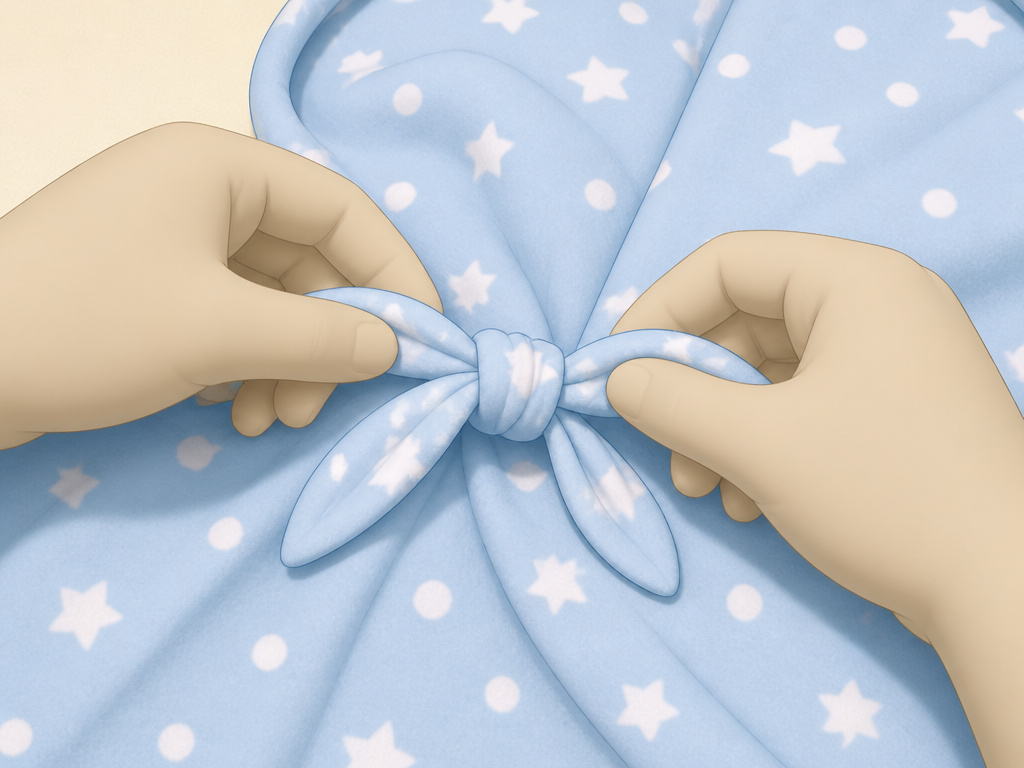
If the chosen object is a large blanket, you can modify it. The research mentions a clever trick: tying a knot in it. This transforms a large, smother-risk fabric into a smaller, lumpier “object” that’s easier for a child to handle and harder to completely cover their face with. It’s a pragmatic solution that respects the child’s choice while mitigating the biggest risk.
Security Blanket vs. Swaddle & Sleep Sack
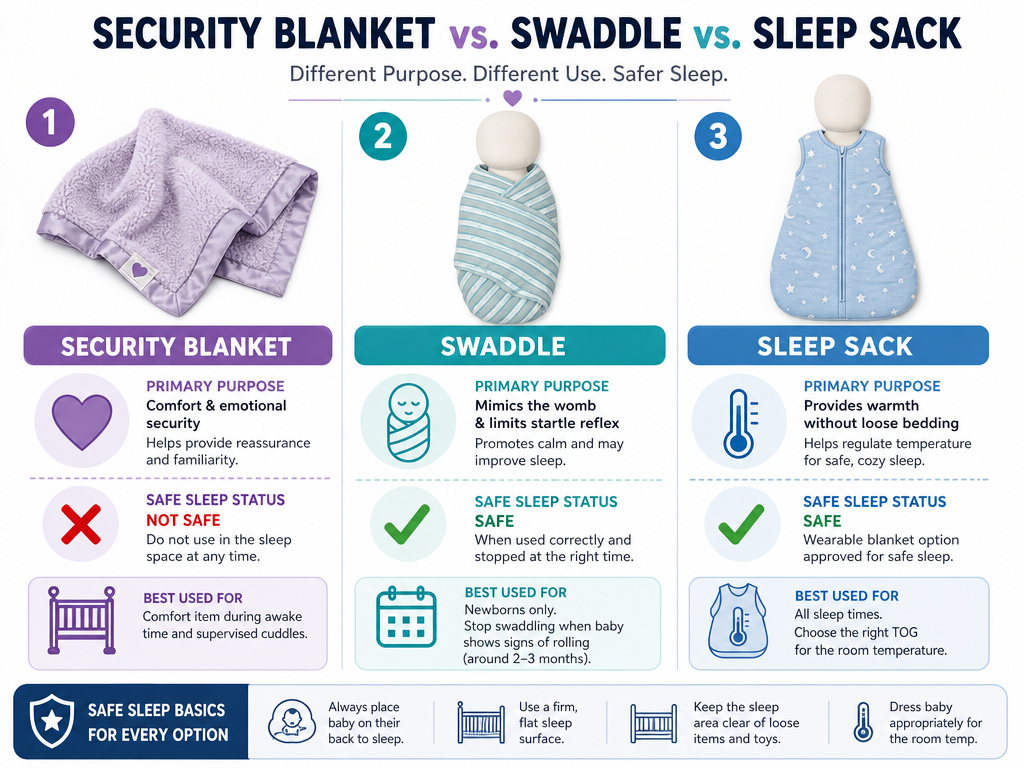
A security blanket is not a sleep aid or a wearable bedding item.
| Object | Primary Purpose | Safe Sleep Use? | Age Range |
|---|---|---|---|
| Security Blanket | Emotional comfort, transitional object | No. Not for unsupervised sleep. | 3-4 months+, for awake comfort. |
| Swaddle Blanket | Mimic womb, suppress startle reflex | Yes, when worn correctly. | Newborn to 2-3 months (or until rolling). |
| Sleep Sack | Provide warmth safely, replace loose blankets | Yes. A wearable blanket. | Newborn through toddlerhood. |
A swaddle blanket is for newborns and is wrapped securely around the body. A security blanket is a loose object for emotional support. A sleep sack is a safe alternative to loose blankets for warmth in the crib. Never substitute one for the other. For safe sleep, a wearable baby swaddle blanket or sleep sack is the correct tool, not a loose lovey.
The Psychology Behind the Scraps of Fabric
Why does this work? The blanket is a transitional object. This is a psychological term for an item that helps a child bridge the emotional gap between total dependence on a parent and a budding sense of self.
It’s a tangible piece of “home” and safety they can control. As noted in Source 3, it “reassures them that even in moments of separation, safety, and love are still present.” It’s not about the blanket. It’s about what the blanket represents: you, and the security you provide.
This is why forcing a specific blanket often fails. The child needs to feel ownership over the symbol. Your role is to provide safe candidates and let the child’s psychology do the rest.
Troubleshooting Common Problems
- The blanket is lost. This is why you bought three identical copies. Cycle them regularly so they wear evenly. If one is lost, the backup is already familiar.
- The baby shows no interest. You might have started too late, or the blanket’s texture is wrong. Try a different, breathable fabric like a silky-edged baby blanket. Don’t force it. Some children simply prefer a pacifier or thumb.
- It’s getting dirty and smelly. Wash it frequently. Use a mild, fragrance-free detergent. The goal is to have it smell clean and neutral, not like strong perfume or sour milk.
- We’re traveling and the routine is broken. The blanket is most valuable here. It’s a portable piece of home. Ensure it’s part of the travel routine to help with unfamiliar environments.
Remember, the ultimate authority on safe sleep for your individual child is your pediatrician. Always align your plans with their advice, and reference established UIowa safe sleep guidelines for the foundational safety principles.
Frequently Asked Questions
When can a baby have a security blanket in the crib?
Most experts recommend not before 12 months, and only after your pediatrician agrees your child has the motor skills to reliably push objects away from their face. Even then, a bare crib is safest. The blanket’s primary use is for comfort during awake times and routines, not for sleep.
What is the best fabric for a baby security blanket?
Breathable, natural fabrics like cotton or a cotton-polyester blend are best. They are gentle on skin and allow for airflow, which is the critical safety factor. Avoid thick, plush, or non-breathable materials like fleece or minky.
How many security blankets should I buy?
Buy at least two, ideally three, identical blankets. This lets you wash and rotate them so they wear evenly and provides an immediate backup if one is lost. Introducing identical copies from the start prevents rejection of a “new” blanket later.
My toddler is attached to a large blanket. What should I do?
Do not suddenly take it away. You can safely modify it. Try tying one or two knots in it to make it smaller and more object-like, which reduces smothering risk and makes it easier for your child to handle. This respects their attachment while managing the hazard.
Can a security blanket help with separation anxiety?
Yes, that’s one of its primary functions. As a transitional object, it provides a concrete source of comfort and familiarity when you are not physically present, helping a child manage feelings of separation during daycare drop-off, bedtime, or when with other caregivers.
The Bottom Line
A security blanket is a powerful tool for emotional development, not a shortcut to sleep. Use it intentionally: introduce a safe, small, replaceable blanket around 3-4 months during peaceful moments. Never let it compromise safe sleep practices. Its real value is in the confidence it gives your child to navigate small separations, carrying a piece of your comfort with them. Choose breathable fabrics, have backups, and let your child’s attachment guide you—then manage that choice with safety-first pragmatism.
