
How to Keep a Girl Warm in Bed: The Essential Safety Standard
This post contains affiliate links. As an Amazon Associate we earn from qualifying purchases.
To keep a girl warm in bed, match the heating method to her age and the room’s temperature. For children over 3, a certified heated underblanket used on a low, continuous setting is the most effective and safest option. Always verify it meets the IEC 60335-2-17 safety standard, which mandates automatic shut-off sensors to prevent overheating.
That standard isn’t a suggestion. It’s a technical requirement for any electric blanket, pad, or heated clothing sold for household use across most of the world. The clause about automatic shut-off sensors is the difference between a product that can fail safely and one that cannot.
What follows: the exact specs to look for on a label, how to layer ordinary bedding so it actually traps heat, and the one common mistake that voids every safety feature on a heated blanket.
Key Takeaways
- The IEC 60335-2-17 safety standard is non-negotiable; it requires automatic overheating protection.
- Heated underblankets are for children over 3 years old and must always be used on the lowest setting for overnight warmth.
- Layering works by creating dead air space; a tight-fitting sheet, a lightweight blanket, then a duvet beats one thick comforter.
- Never use a heated blanket if it is folded, rucked, or wet, this concentrates heat and can damage internal wires.
- A quality kids’ mattress and proper bedding are the foundational layers for any warmth strategy.
How a Heated Underblanket Works (The Physics)
It’s not just a wire that gets hot. A modern heated underblanket is a low-voltage flexible heating element sewn in a grid pattern, regulated by a control unit. The heat radiates upward through the mattress, the bottom sheet, and into the sleeper. Because the heat source is below, it warms the core body area first, the back and torso, which is more efficient than warming the air around the feet.
The international standard IEC 60335-2-17:2022 deals with the safety of electric blankets, pads, and clothing that heat the bed or human body. It mandates design and test requirements to address common hazards presented by these appliances in the home.
The control unit is the brain. It monitors resistance and, in compliant models, receives signals from temperature sensors woven into the blanket. If a sensor detects a localized hot spot, caused by a fold, a heavy object, or a fault, the system cuts power. This is the automatic shut-off required by the standard. Without it, a single point of failure could lead to sustained excessive heat.
Is a Heated Blanket Safe for a Child?
Yes, with strict, non-negotiable conditions. Manufacturer manuals and the IEC standard are explicit.
Age is the first gate. No heated blankets for infants under 3. Their inability to react to overheating or communicate discomfort makes it an unacceptable risk. For children aged 3 to 8, use is permitted only under direct supervision, with the control always set to the minimum temperature. For children over 8, they can operate it themselves only after being instructed on safe use.
The setting is the second gate. The highest settings (often 4-6 on a dial) are for pre-heating the bed only. They are not for all-night use. Extended use on high can lead to body overheating, skin irritation, or burns. The rule is simple: use the lowest setting (1 or 2) for continuous, overnight warmth. This maintains a consistent, gentle heat without risk.
The product’s certification is the final gate. You must verify the standard. Look for “EN 60335-2-17” (the European harmonized version) or the “BEAB Approved” mark, which indicates certification by a notified body like Intertek. This IEC electric blanket safety standard is what you are checking for.
| Safety Checkpoint | What to Look For | Why It Matters |
|---|---|---|
| Age Rating | Manual stating “not for under 3” and rules for 3-8 year olds. | Legal and safety liability limits. |
| Safety Standard | “EN 60335-2-17” or “BEAB Approved” on label or manual. | Guarantees automatic shut-off sensor technology. |
| Controller | Detachable, with clear settings. Label matches blanket model. | Prevents using wrong voltage or faulty controls. |
| Condition | No folds, creases, dampness, or visible wire damage. | Prevents hot spots and electrical shorts. |
Common mistake: Using a high setting overnight to compensate for a cold room. By hour three, the sleeper can become dehydrated and overheated, leading to restlessness. The blanket’s job is to take the chill off, not to simulate a sauna.
Choosing and Using a Heated Underblanket
If you decide this is the right tool, your choice is about specs and features, not colors. The wattage, control type, and warranty tell you more about quality than any marketing copy.
First, match the size. A single underblanket for a single bed, a double for a double bed. Do not let a larger blanket bunch up at the sides. Secure it using the fitted skirt or corner straps so it lies perfectly flat against the mattress. Any rucking or folding is forbidden.
Second, understand the power. A lower wattage often means safer, slower heat for all-night use. For example, the VonHaus heated underblanket runs at 55-60W. The Komfort model’s double dual-control version uses 2 x 50W. Higher wattage (like some 150W models) heats faster but is strictly for pre-heating; you must turn it down before sleep.
Here’s how key specs compare across two common models:
| Feature | Komfort Heated Underblanket (Double Dual) | VonHaus Heated Underblanket |
|---|---|---|
| Power | 2 x 50 W | 55-60 W |
| Voltage | 230–240 V | 220-240 V |
| Key Safety | BEAB Approved, auto shut-off | Auto shut-off (implied by standards) |
| Off-Mode Consumption | Not specified | 0.47W |
| Best For | Larger beds, individual side control | Smaller beds, low-energy overnight warmth |
That off-mode consumption figure matters. A blanket that uses 0.47W when plugged in but switched off is incredibly efficient. Older or non-compliant models can draw phantom power of 2W or more, which adds up over a season.
Plug it into a wall outlet, not an extension lead. Route the cable safely so no one trips. The control unit should sit on top of your bedding, never under a pillow or blanket where its ventilation is blocked.
The One Step Nobody Skips (But Should)
Read the manual. Every time. It contains the specific warranty timeline, like Silentnight’s 36-month warranty that only kicks in after the first 28 days, and the exact procedure for your model. It also states the consequences of misuse.
Washing is the other critical step. Most require the control unit to be detached. Hand wash in lukewarm water is the gentlest method. Never wring it out. Lay it flat to dry, stretching it gently back to shape. A machine wash on a gentle cycle might be allowed, but it ages the internal wires faster. A damaged wire inside the bedding is a hazard you cannot see.
The Layered Bedding Method
When electricity isn’t the answer, or for younger children, layering is your science project. The goal is to trap body heat within pockets of still air. Still air is an excellent insulator; moving air (a draft) carries heat away.
Start with the foundation: a well-fitting, warm base. A flannel or brushed cotton bed sheet makes a significant difference over cool percale. Next, add a thin, natural-fiber blanket like wool or a wool-cotton blend. Wool wicks moisture and retains heat even when damp. Tuck this layer in securely at the sides and foot of the bed.
The top layer is your seal. A duvet with a high tog rating (10.5 to 13.5) or a thick comforter. The duvet should be in a cover, which adds another thin layer of air insulation. For a child in a kids’ bed or bunk bed, ensure the top layer isn’t so heavy it feels restrictive.
Where this goes sideways: Using one massive, heavy comforter directly on the sheet. This compresses under the child’s weight, leaving less insulating air space. It also makes it harder for them to move or kick it off if they get too warm. Light and layered always wins.
This system also protects the mattress. A waterproof mattress cover or a bed protector is a smart base layer. It guards against spills and adds a thin, often slightly insulating, barrier.
Other Warmth Solutions and Their Trade-Offs
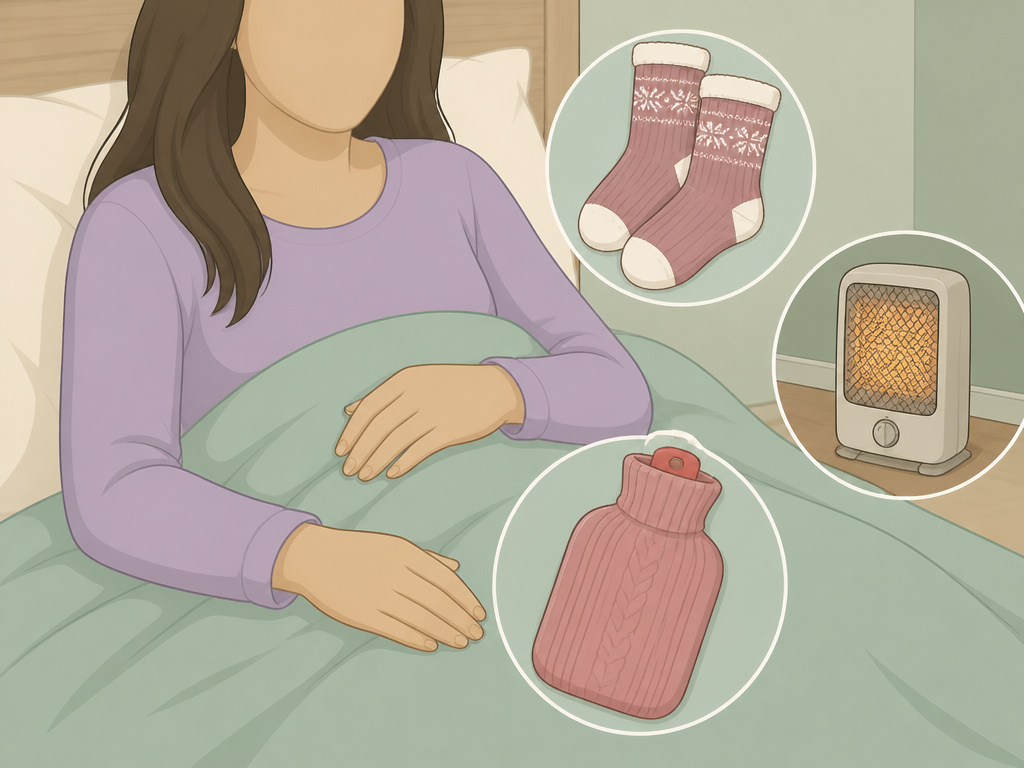
Heated blankets and layering are the top contenders, but other options exist. Each has a specific use case and a drawback.
Warm Pajamas and Socks. This seems obvious, but the material is everything. Cotton pajamas absorb nighttime sweat and can feel clammy. Opt for thermal pajamas made from merino wool or moisture-wicking polyester blends. Avoid socks that are too tight, as they can restrict circulation and make feet colder.
Hot Water Bottles. A classic, but with strict rules. Use a bottle designed for beds, with a soft cover. Fill it with hot, not boiling, water. Place it at the foot of the bed to warm the sheets before the child gets in, and remove it before she settles down. Never leave it in the bed with a sleeping child, it can leak or remain hot enough to cause a burn for hours.
Space Heaters. This is a room-level solution, not a bed-level one. If the bedroom is chronically cold, a small, modern radiator with a thermostat and tip-over switch is safer than a fan heater. Set it to a modest temperature (18-19°C) and turn it off before sleep. The dry air they produce can be irritating, so monitor humidity.
The trade-off is always between targeted warmth and general room comfort, and between convenience and risk. A heated underblanket is targeted and convenient but requires vigilance. Layering is low-risk but requires more bedding management.
Before You Go
Keeping a girl warm in bed is a function of physics and safety protocols, not just goodwill. The most reliable path is a certified heated underblanket used correctly on its lowest setting, or a meticulously layered bedding system that traps body heat.
Your first action is to check the label on any existing heated product for the EN 60335-2-17 standard. If it’s not there, retire it. Your second is to audit your child’s bedding and pillows, a supportive children’s mattress and proper kids’ pillows are the baseline for any comfort.
Warmth should promote rest, not introduce worry. Pick one method, apply it precisely, and let her sleep.
Frequently Asked Questions
Can a 4-year-old use a heated blanket?
4-year-old can use a heated blanket only under direct adult supervision, and the control must always be set to the minimum temperature setting. The blanket must comply with safety standard IEC 60335-2-17. Never leave a child this age to operate the controls independently or use the blanket unsupervised.
What is the safest way to heat a child’s bed?
The safest method is a certified heated underblanket used on its lowest continuous setting, secured flat to the mattress. The second-safest is the layered bedding method using a warm fitted sheet, a lightweight wool blanket, and a duvet. Both methods avoid creating intense, localized heat spots.
Do heated blankets use a lot of electricity?
Modern, efficient heated underblankets use very little electricity. A typical model like the VonHaus consumes 55-60 watts on its low setting. Running for 8 hours would use about 0.48 kWh. Compared to a 2000W space heater running for an hour, the blanket is far more energy-efficient for bed warming.
How can I tell if my electric blanket is safe?
Check for a label or manual citing “EN 60335-2-17” or “BEAB Approved.” Inspect the blanket for any folds, creases, dampness, or visible wire damage. Ensure the control unit is the one supplied with the blanket. If the blanket is more than 5-7 years old or lacks a clear safety standard mark, replace it.
Why is layering better than one thick comforter?
Layering creates multiple pockets of still air between fabric layers, which are excellent insulators. One thick comforter compresses under body weight, reducing its insulating air pockets. Layers also allow for finer temperature control, a child can remove one lightweight blanket if too warm rather than kicking off a single heavy one.
Can I put a heated blanket under a mattress protector?
Yes, but the order is critical. The heated blanket must lie directly on the mattress, perfectly flat. Then place a mattress protector over it, followed by the fitted sheet. Do not put any layer between the heated blanket and the mattress, as this can insulate the heat downwards and cause overheating.
