
Baby Receiving Blanket Explained: Vital Hospital Specs & Uses
This post contains affiliate links. As an Amazon Associate we earn from qualifying purchases.
A baby receiving blanket is a small, rectangular blanket, typically 30 by 40 inches and made of 100% cotton, designed for wrapping a newborn during supervised awake time, burping, changing, or as a general-purpose cloth. It is not for crib sleep. Hospital-grade versions must meet flammability standards and withstand 80 to 100 commercial hot-wash cycles.
The “receiving” part of the name comes from its original hospital use, nurses literally receive the baby in it moments after birth. That origin dictates its entire design: a specific size for easy handling, a durable weave for industrial laundry, and a safety-certified fabric for close contact. Most parent guides stop at “it’s a versatile blanket,” but that misses the engineering behind a true hospital-grade piece.
What follows is a breakdown of the specs that separate a receiving blanket from every other baby blanket, the safety rules that are non-negotiable, and the real-world lifespan you can expect before it frays.
Key Takeaways
- A true hospital-grade receiving blanket is 30 x 40 inches, made of 100% cotton in a birdseye or muslin weave, and weighs between 130 and 160 GSM.
- It is not safe for cribs or bassinets. Placing any loose blanket in a sleeping infant’s sleep space raises the risk of suffocation and SIDS.
- With proper care (hot water, no bleach or softener), a quality cotton receiving blanket lasts 80 to 100 commercial wash cycles before showing significant wear.
- Its primary uses are for supervised swaddling in your arms, a burp cloth, a changing pad liner, or a light cover during feeding or travel.
- For a secure, arms-down swaddle for sleep, you need a larger swaddle blanket (typically 47 x 47 inches), not a standard receiving blanket.
The Technical Definition: Size, Weight, and Weave
Forget the vague “small, soft blanket” description. A receiving blanket has a precise technical definition born from bulk hospital procurement. If you’re evaluating quality, these are the numbers that matter.
A hospital-grade receiving blanket measures 30 by 40 inches, is constructed from 100% cotton in a birdseye or muslin weave, and has a fabric weight (GSM) between 130 and 160. It must meet CPSC flammability standard 16 CFR Part 1610 and withstand washing at 160°F (71°C).
The 30 x 40 inch rectangle isn’t random. It’s large enough to wrap a full-term newborn securely in your arms with fabric to tuck, but small enough for a nurse or parent to manage with one hand. The 30-inch square is a common variant, but the rectangle offers more versatility for wrapping a growing baby.
Material is almost always 100% cotton. Birdseye weave is a tight, flat pattern that resists pilling. Muslin is a looser, more breathable weave. Both are hypoallergenic and soften with washing. A 50/50 cotton-polyester blend exists for facilities wanting longer wear, but it sacrifices the superior softness and breathability of pure cotton.
GSM (grams per square meter) is the spec that tells you if a blanket is substantial or flimsy. Below 130 GSM feels thin and won’t hold a swaddle well. Above 160 GSM makes the blanket too heavy for a newborn and slows drying. The sweet spot, 140 GSM, provides the ideal balance of heft, warmth, and laundry efficiency. A blanket at this weight runs about 3.3 pounds per dozen.
| Specification | Hospital-Grade Standard | What Happens If It’s Off |
|---|---|---|
| Dimensions | 30 x 40 inches (76 x 101 cm) | Smaller than 30×30: too small to swaddle after 2-3 weeks. Larger: becomes unwieldy for its intended hand-held uses. |
| Material | 100% Cotton (birdseye or muslin) | Polyester blends are less breathable. Synthetic fabrics can overheat a newborn and don’t withstand high-heat sanitizing as well. |
| Fabric Weight (GSM) | 130 – 160 GSM (140 is ideal) | <130 GSM: feels flimsy, lacks durability. >160 GSM: too heavy for infant, increases drying time and overheating risk. |
| Binding | Hemmed edges, double-needle stitching | Serged or raw edges fray quickly. Single-stitch hems split after 20-30 washes. |
These specs aren’t just for hospitals. They guarantee a blanket that will last through your baby’s first few months of constant use. A retail blanket missing these markers might look similar, but it will pill, shrink, or fray long before you’re done with it.
What Is a Receiving Blanket Used For? (The Supervised, Awake Jobs)
A receiving blanket is a multi-tool for the first three to four months. Its jobs all happen while your baby is awake and in your care, or while you’re actively holding them. This is its core purpose.
Swaddling in Your Arms. This is the classic image. The blanket provides a snug, womb-like feeling that can calm a fussy newborn. Remember, this swaddle is for comfort while you’re holding or soothing the baby, not for unsupervised sleep. A 30×40 inch blanket is perfect for this in the early weeks.
The Ultimate Burp Cloth. Its absorbent cotton is ideal for draping over your shoulder. It protects your clothes from spit-up and milk during feeding. It’s the right size to catch a mess without being as bulky as a dedicated burp cloth.
An Instant Changing Pad. No clean changing table in sight? Spread the blanket on any surface, a bed, a floor, a public restroom counter, for a hygienic layer between your baby and the world. It’s a standard practice detailed in many guides on blankets for newborns.
A Nursing or Feeding Cover. Draped over your shoulder or a nursing pillow, it provides a little privacy and blocks distractions. The light fabric won’t overheat you or the baby.
A Stroller or Car Seat Cover. Use it as a light layer to shield your baby from drafts, wind, or sun during outings. It’s not a substitute for a proper weather-appropriate cover, but it’s a great backup you likely already have in the diaper bag.
Post-Bath Warm-Up. While not as absorbent as a hooded towel, a receiving blanket is a soft, warm wrap for drying off and cuddling after a bath.
Having six to ten on hand is practical. They cycle through the wash constantly, and you’ll want a clean one within reach at all times. For specific product recommendations that fit this multi-use role, our roundup of the best receiving blankets highlights durable, well-made options.
Safety First: What a Receiving Blanket Is NOT
This is the most critical section. The versatility of a receiving blanket leads to its most dangerous misuse: placing it in a crib.
Common mistake: Using a receiving blanket as crib bedding. A loose blanket in a sleep space can cover an infant’s face and restrict breathing. This is a documented suffocation hazard and a risk factor for SIDS.
A receiving blanket is not a crib blanket. Full stop. Health Canada, the American Academy of Pediatrics, and the Canadian Paediatric Society all state that a safe sleep environment is a firm, flat surface with a fitted sheet and nothing else, no loose bedding, pillows, bumper pads, or soft toys.
The blanket is for use when the baby is being held and supervised. The moment you lay your baby down to sleep, the blanket comes out. This rule applies until at least 12 months of age. For safe sleep warmth, use a wearable sleep sack or swaddle sack that leaves the arms free once the baby shows signs of rolling.
It is also not a long-term swaddle blanket for sleep. While you can swaddle a newborn with it while holding them, a 30×40 inch blanket is usually too small to achieve a secure, arms-down swaddle for sleep once a baby is older than 2-3 weeks. For that technique, you need a larger, purpose-built swaddle blanket (typically 47×47 inches).
The safety specs, like the CPSC flammability standard, are for when the blanket is in use near people, not because it’s intended for a crib. It’s about preventing a fire hazard if it were to accidentally contact a flame while in a hospital setting or your home.
Lifespan and Care: How to Make It Last 100 Washes
Hospital buyers need to know how long a blanket will last under industrial conditions. That tells you everything about its home durability. A well-made 100% cotton birdseye blanket at 140 GSM has a predictable lifespan.
80 to 100 hot wash cycles. That’s the benchmark. One “cycle” means a commercial wash at 160°F (71°C), a rinse, and a tumble dry. In your home, washing in hot water and drying on a high heat setting approximates this. After about 80 cycles, expect some edge fraying and a slight loss of softness. After 100 cycles, the center may thin from repeated folding.
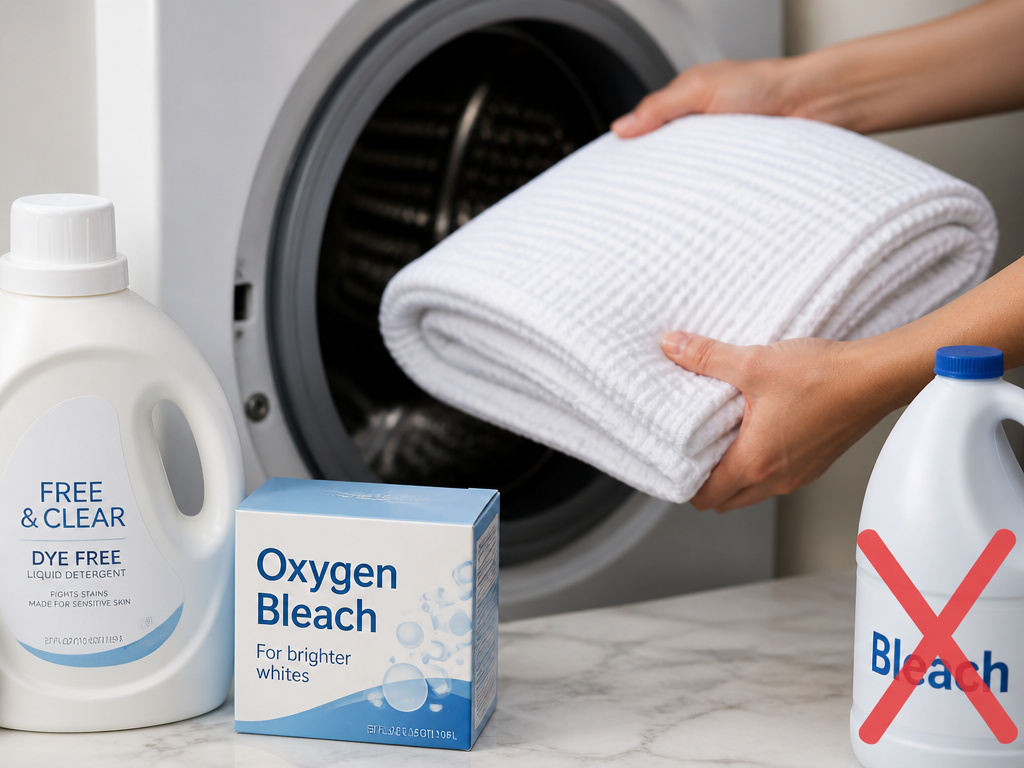
Where this goes sideways: Using chlorine bleach or fabric softener. Bleach weakens cotton fibers, causing early holes and tears. Fabric softener coats the fibers, reducing absorbency and leaving a residue that can irritate sensitive skin.
To hit that 100-wash potential, follow this care routine: 1. Wash in hot water. This is key for sanitization, especially for burp cloths and changing pads. 2. Use a mild, dye-free detergent. 3. Avoid chlorine bleach. If you need to disinfect or remove stains, use an oxygen-based bleach (like OxiClean). 4. Never use liquid fabric softener or dryer sheets. 5. Tumble dry on high heat. This ensures the blanket is fully dry and helps fluff the fibers.
Store clean blankets in a dry place. Humidity can promote mildew, which weakens fabric. Following these steps means your baby blankets will remain serviceable long after the swaddling days are over, ready to be used as cleaning rags or doll blankets.
Receiving Blanket vs. Swaddle Blanket: Picking the Right Tool
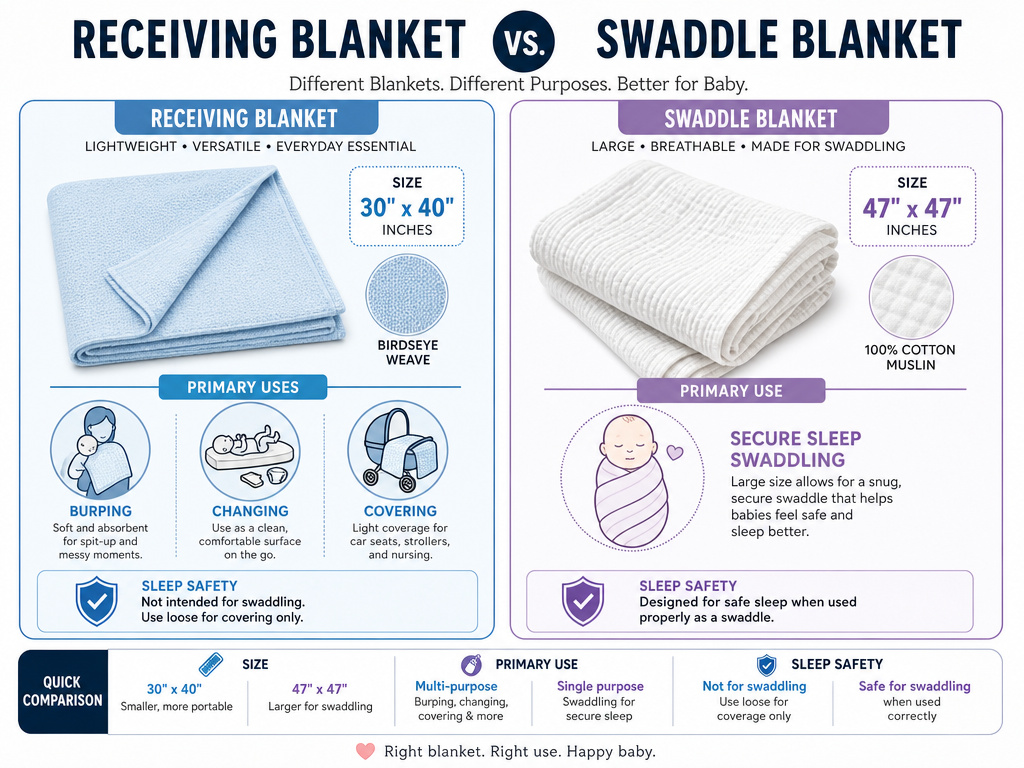
Many stores use the terms interchangeably. They are different tools for different jobs. Choosing wrong leads to frustration and compromises safety.
| Feature | Receiving Blanket | Swaddle Blanket |
|---|---|---|
| Primary Use | Multi-purpose: burping, changing, covering, supervised swaddling. | One purpose: securing a snug, arms-down swaddle for sleep. |
| Typical Size | 30 x 30 in or 30 x 40 in (76 x 76 cm or 76 x 101 cm). | 47 x 47 in (120 x 120 cm) or larger. |
| Why Size Matters | Small enough for easy handling during awake-time tasks. | Large enough to wrap, tuck, and secure the swaddle firmly so it won’t come loose. |
| Material | Often a tighter weave (birdseye) or flannel. | Often a stretchy jersey knit or lightweight, large muslin swaddle blankets. |
| Safe for Crib Sleep? | No. Never. | Only if used correctly to create a secure swaddle, and only until the baby shows signs of rolling (2-4 months). |
The short version: Buy receiving blankets for everything except sleep swaddling. Buy larger swaddle blankets specifically for that sleep-swaddle technique. Most parents benefit from having a stash of both. For a deep dive into the fabrics that work best for secure swaddling, see our guide on swaddle blanket materials.
Frequently Asked Questions
What’s the difference between a receiving blanket and a regular baby blanket?
“Regular baby blanket” is a broad category that can include crib blankets, loveys, and toddler throws. A receiving blanket is a specific type: a smaller, rectangular, multi-purpose workhorse used in the first few months for supervised tasks, not for crib sleep. Its size and durability are tailored to this role.
How many receiving blankets do I actually need?
Start with six to ten. They are used and soiled multiple times a day. Having a full week’s supply means you’re not doing laundry daily. If you use them heavily as burp cloths, lean toward ten.
Can a receiving blanket be used as a swaddle?
For a newborn being held in your arms, yes. For a secure, sleep-safe swaddle in a bassinet, usually no. A standard receiving blanket is too small to properly secure the swaddle on a baby older than a few weeks, increasing the risk of it coming loose and covering the face. Use a purpose-built baby swaddle blanket for sleep.
Are there organic receiving blanket options?
Yes. Many brands offer receiving blankets made from organic cotton or bamboo blends. These are an excellent choice if you’re prioritizing natural fibers for your newborn’s sensitive skin. We cover specific brands in our review of organic baby blankets.
What material is best for a receiving blanket?
100% cotton is the standard for a reason. It’s breathable, durable, softens over time, and withstands repeated hot washing. Within cotton, birdseye weave offers great durability, while muslin is more breathable. For a curated look at the top options in this category, check out our list of baby blankets for newborns.
The Bottom Line
A receiving blanket is a defined piece of gear, not a generic soft square. Its 30×40 inch, 140-GSM cotton construction is a direct result of its hospital origin, built for durability and specific hand-held tasks. Its most important feature is what it is not: crib bedding. Use it freely for swaddling in your arms, mopping up messes, and creating clean surfaces. The moment your baby is laid down to sleep, remove it.
For the first three months, it will be your most-used baby item. Choose one that meets the hospital-grade specs, care for it without softeners or bleach, and it will last through your baby’s entire receiving-blanket phase and beyond. If you’re looking for one blanket to do it all, focus on the multi-purpose receiving blanket; if you need a tool for sleep, invest in a proper, larger swaddle.
