
Understanding Why Your Newborn Sleeps with Her Mouth Open
This post contains affiliate links. As an Amazon Associate we earn from qualifying purchases.
A newborn sleeping with her mouth open is usually a sign her nose is blocked, forcing her to breathe through her mouth. This is common because newborns under 3-4 months are obligate nasal breathers, their anatomy makes mouth breathing difficult. The most frequent cause is simple congestion from a cold or dry air, but it can also signal sleep apnea from enlarged adenoids or a structural issue like a deviated septum.
That “obligate nasal breather” label is the key. It’s not a preference; it’s a mechanical setup. The newborn’s tongue fills the mouth and presses against the palate, and the larynx sits high in the throat. This design lets a baby nurse and breathe simultaneously, but it also means a stuffy nose has nowhere else for air to go. The jaw drops open as a last resort.
What follows is a breakdown of why this happens, anchored in a clinical study of 130 newborns. You’ll get the safe, pediatrician-backed steps to clear congestion at home, learn the exact red flags that demand a doctor’s visit, and understand the long-term risks if chronic mouth breathing goes unchecked. The goal is to move from worry to a clear action plan.
Key Takeaways
- A 2023 study of 130 newborns found 30% of mothers reported breathing difficulty, and those babies were significantly more likely to have a low tongue position and asymmetrical nasal airflow.
- Never prop, wedge, or incline your baby’s sleep surface to address mouth breathing. The American Academy of Pediatrics states this increases suffocation risk and is more dangerous for a stuffy baby.
- The most effective at-home fixes are saline nasal drops and a bulb syringe used before feeds and sleep, paired with a cool-mist humidifier in the nursery.
- Call your pediatrician same-day for mouth breathing paired with loud snoring, sweating during feeds, or pauses in breathing longer than 20 seconds.
- Long-term, untreated mouth breathing can affect facial development and is linked to sleep deprivation symptoms that mimic ADHD in older children.
The “Obligate Nasal Breather” Explained
Newborns are engineered for nose breathing. Their upper airway anatomy makes it the default and safest path for air.
A clinical review notes the neonatal tongue sits in contact with the soft and hard palate, which obstructs oral breathing. The larynx is higher, separating the nasal breathing passage from the pathway for milk. This is why a blocked nose is such a big deal, the backup system is clunky and inefficient.
The nasal passages themselves are only a few millimeters wide. A tiny bit of dried mucus or swelling from a virus can cut airflow by half. When resistance gets too high, the baby’s jaw relaxes open in sleep, and air finally sneaks in through the mouth. This is work for them. Mouth breathing doesn’t filter, warm, or humidify air like the nose does, and it delivers less oxygen to the lungs per breath. It’s a survival override, not a restful state.
Why does this matter for sleep safety? Because the instinct is to “help” by propping up the head. This violates the ABCs of safe sleep. Alone, on their Back, in a Crib that is flat and firm. Inclined sleepers and wedges are linked to infant deaths. A stuffy baby needs a clear nose, not a tilted bed.
The Most Common Cause: Simple Nasal Congestion
For the vast majority of babies, an open mouth during sleep starts and ends with a stuffy nose. This is a short-term, fixable problem.
Congestion can come from a common cold, dry winter air, or even dust and mild allergies. Newborns can’t blow their noses, so mucus sits there. They also have a reflex called nasal cycle, where one nostril swishes shut for a few hours to rest its membranes. If you catch them during that cycle and the other nostril is even slightly clogged, the mouth may drop open. This is normal and transient.
The study published in the Journal of Applied Oral Science provides a clear link. Researchers found that newborns with greater or absent nasal expiratory flow in one nostril were strongly associated with open lips and a low tongue position at rest. In plain terms: uneven airflow from blockage correlates directly with the physical signs of mouth breathing.
Where this goes sideways: Assuming it’s “just a cold” and ignoring it for weeks. While the congestion itself is benign, the resulting mouth-breathing habit can linger after the virus is gone. The jaw muscles get used to the open position. This is why consistent nasal care during a cold is crucial, it helps the baby return to nose breathing faster.
| Cause of Congestion | Typical Signs | How Long It Usually Lasts |
|---|---|---|
| Viral Cold | Clear or milky mucus, mild cough, possible low-grade fever. | 7-14 days for the virus; congestion may linger a few days longer. |
| Dry Air | No other sick symptoms, worse at night or after naps in a dry room. | Resolves within a day or two of using a humidifier. |
| Nasal Cycle (Normal) | One nostril seems completely blocked, switches sides every few hours. | A few hours at a time; this is a permanent, healthy reflex. |
| Mild Allergy/Irritant | Clear, watery mucus, sneezing, possibly itchy eyes. | As long as the allergen (dust, pet dander) is present in the environment. |
When It’s More Than a Stuffy Nose: Red Flags
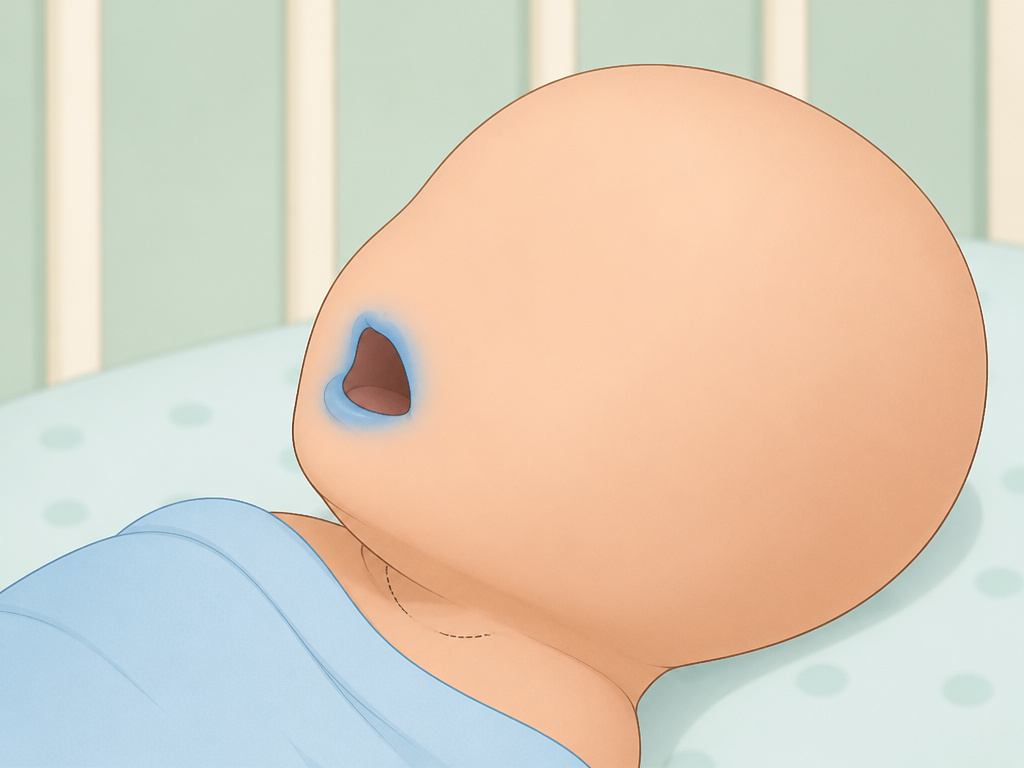 Most cases are simple. A small percentage are not. Knowing the difference is what turns anxiety into appropriate action.
The red flags are about pattern and pairing. Occasional mouth breathing during a deep sleep cycle is fine. Mouth breathing every single night, paired with other symptoms, is a signal to call your pediatrician.
The part nobody mentions: Babies who can’t breathe through the nose often can’t eat efficiently either. They’ll unlatch repeatedly, sweat at the forehead during feeds, or fall asleep exhausted after just a few minutes. This “feeding plus breathing” struggle is a major clinical sign.
Here are the specific combinations that need a professional look:
- Loud, nightly snoring or gasping. Newborn snores should be soft and infrequent. A consistent, loud rumble or snort suggests a physical obstruction.
- Pauses in breathing longer than 20 seconds, or shorter pauses followed by a gasp or choke. This is a potential sign of sleep apnea.
- Retractions. Look for the skin pulling in between the ribs or at the base of the throat with each breath. This means they’re working too hard.
- Poor weight gain due to feeding struggles, as mentioned above.
- Blue tint around the lips or face. This is a call-911 emergency.
For less urgent but persistent cases, your doctor might discuss a polysomnogram (a sleep study). This test measures breathing effort, oxygen levels, and brain waves during sleep. As noted in a clinical guide on nasal obstruction, a normal sleep study can reassure parents that observation is safe, while an abnormal one provides clear data for intervention.
Safe and Effective Home Remedies
 Your toolkit for a stuffy newborn is small, specific, and highly effective. The goal is to clear the nasal passages mechanically and keep the air moist.
Saline Spray or Drops: This is step one. Saline loosens thick mucus. Use it before every feed and before bedtime. Tilt the head back slightly, give one or two drops per nostril, wait 30 seconds, then use the suction.
Bulb Syringe or NoseFrida: Gentle suction removes the loosened mucus. Don’t go deep, just at the nostril opening. Squeeze the bulb before inserting it, place it at the edge of the nostril, then release to create suction. Clean it with soapy water after every use. This is the single most effective thing you can do.
Cool-Mist Humidifier: Run it in the baby’s room, especially in dry climates or winter. Place it at least three feet from the crib and use distilled or filtered water to minimize mineral dust. The moisture prevents mucus from drying into crusts.
Keep Them Hydrated: Ensure regular breast milk or formula feeds. Fluids keep mucus thin and moving.
Position for Comfort. Not Sleep: While awake and supervised, holding your baby upright can help drainage. For actual sleep, the only safe position is flat on the back in a bare crib. This non-negotiable rule protects against SIDS.
What doesn’t work? Vapor rubs, essential oils in the humidifier, or any medication not specifically prescribed by your pediatrician. Phenylephrine or oxymetazoline sprays are sometimes used under strict medical guidance for severe cases, but never as a parent-initiated treatment.
The Long-Term View: Why Nose Breathing Matters
Addressing mouth breathing isn’t just about a quiet night. It’s about supporting healthy development for years to come.
Chronic mouth breathing changes how the face grows. The tongue sits low, failing to provide the outward pressure needed to shape a wide dental palate. This can lead to a long, narrow face, crowded teeth, and a “gummy” smile, a pattern sometimes called long face syndrome. It also dries out the mouth, increasing the risk of cavities and gum inflammation even in baby teeth.
The sleep quality difference is profound. Mouth-breathing babies and children spend more time in light sleep and less in restorative deep sleep. The resulting sleep deprivation can manifest as hyperactivity, irritability, and poor focus. A body of research notes a link between sleep-disordered breathing and symptoms that are often mislabeled as ADHD. Treating the breathing problem can, in some cases, resolve the behavioral challenges.
This is why creating a safe sleep environment from the start is an investment. A firm, flat crib mattress is fundamental. Pair it with a fitted crib sheet and skip all pillows, loose blankets, and stuffed animals. For warmth, use a wearable blanket or a securely wrapped swaddle blanket for younger infants. This setup supports safe nose breathing by keeping the airway clear.
Frequently Asked Questions
Is it normal for a newborn to always sleep with an open mouth?
No, “always” is the key word. Occasional, soft mouth opening during deep sleep is normal. Consistent, nightly mouth breathing is a sign of ongoing nasal obstruction that should be evaluated. The study of 130 newborns linked persistent open-mouth sleep to measurable asymmetries in nasal airflow.
Could it be a tongue-tie?
The American Academy of Otolaryngology states tongue-tie is not a recognized primary cause of mouth breathing or sleep apnea in newborns. While a severe tie can affect feeding, it doesn’t typically block the airway. The root cause is almost always further back in the nasal passages or throat.
When should I worry about sleep apnea?
Worry enough to call your doctor if you see the red flag combinations: loud snoring plus pauses in breathing, or mouth breathing plus feeding difficulties. Sleep apnea in infants is often caused by enlarged tonsils or adenoids, which can be managed by a pediatric ENT.
Are there any pillows or devices that can help?
No. The AAP is explicit: pillows, positioners, wedges, and inclined sleepers are not safe for infants and increase the risk of suffocation. The only safe “device” is a firm, flat sleep surface. Products like newborn pillows or flat head pillows are for supervised, awake time only, not for unsupervised sleep.
How can I tell if her nose is blocked?
Listen for noisy, snuffly breathing when she’s at rest. Look for visible dried mucus at the nostril openings. Try the “mirror test”: hold a cool, small mirror under her nose. Fog should form evenly from both nostrils. If it’s faint or only on one side, there’s a blockage.
Before You Go
Most open-mouth sleep boils down to a stuffy nose. Your first line of defense is simple: saline and suction. Remember the safe sleep rules are absolute, even for a congested baby. Watch for the pattern, consistent mouth breathing paired with feeding trouble or noisy sleep is your cue to call the pediatrician. Addressing this early supports not just peaceful nights, but healthy breathing and development for the long road ahead. Trust your instincts, use the tools you have, and don’t hesitate to seek professional guidance when the picture isn’t clear.
