
Is It Ok for Newborn to Sleep Through Night? Safe Timeline
This post contains affiliate links. As an Amazon Associate we earn from qualifying purchases.
A newborn sleeping 6 to 8 hours straight is not typical or safe in the first few months. Most babies are physically unable to sleep through the night until at least 3 months of age or until they weigh 12 to 13 pounds, and waking to feed is a critical, protective reflex for their growth and safety.
That weight and age threshold is tied to stomach capacity and the developmental window where the risk of Sudden Infant Death Syndrome (SIDS) is highest. Before that point, a long, uninterrupted stretch of sleep can signal a problem, not a victory.
What follows is a breakdown of the why behind those numbers: the mechanics of newborn hunger, the SIDS risk timeline that makes back-sleeping non-negotiable, and the precise moment when letting them sleep longer becomes both safe and a milestone worth celebrating. You’ll know exactly what to watch for and when to relax.
Key Takeaways
- “Sleeping through the night” for an infant means 6–8 hours, a milestone most don’t reach until at least 3 months or 12–13 pounds.
- Newborns have tiny stomachs and need to feed every 2–4 hours; letting them sleep too long can lead to dehydration, poor weight gain, and low blood sugar.
- The peak risk period for SIDS is between 2 and 4 months of age, which is why strict safe sleep practices (alone, on the back, in a crib) are essential even if your baby starts sleeping longer.
- You should wake a newborn to feed if they sleep longer than 4–5 hours in the first few weeks, especially if advised by your pediatrician for weight gain.
- The goal isn’t to force longer sleep but to follow your baby’s cues while ensuring their sleep environment is safe above all else.
The Short Answer on Newborn Sleep Duration
The phrase “sleeping through the night” sets an unrealistic expectation. In pediatrics, it’s defined as a 6 to 8 hour stretch. A two-week-old is not built for that.
Their stomach is about the size of a cherry. It empties quickly. The biological drive to wake and feed is a survival mechanism, not a sleep flaw. Letting a very young newborn sleep for a long stretch means they’re missing crucial calories and fluids. They can become dehydrated. Their blood sugar can drop.
Most babies do not begin sleeping through the night (6 to 8 hours without waking) until at least 3 months of age, or until they weigh 12 to 13 pounds. Some may not achieve this until closer to 1 year.
This timeline comes from pediatric sleep observations. The 12–13 pound weight is a key marker. It usually indicates enough reserve and stomach capacity to sustain a longer fast. Before that point, frequent waking is normal, necessary, and good.
Where this goes sideways: Comparing your 6-week-old to a friend’s 4-month-old who sleeps 7 hours. They are in different physiological universes. Pushing for longer sleep too early often backfires, creating an overtired, fussy baby who actually sleeps worse.
Why Newborn Sleep Looks the Way It Does
Newborn sleep is chaotic by design. They sleep in short bursts because they must eat often. They haven’t yet developed a circadian rhythm—the internal clock that tells adults to be awake in daylight and asleep in darkness. This rhythm starts to emerge around 6–8 weeks and is influenced by exposure to natural light and dark.
Their sleep cycles are also shorter, about 50-60 minutes compared to an adult’s 90 minutes. They spend more time in light, active sleep (REM), which is neurologically stimulating but easy to wake from. This lighter sleep pattern may even be protective.
The drive to feed overrides everything. A hungry signal will wake them from the deepest sleep. If it doesn’t, that’s when parents need to step in. In the first few weeks, if your newborn sleeps longer than 4–5 hours, you should wake them for a feeding. This is especially true in the first two weeks, when establishing feeding and ensuring weight gain is critical.
| Newborn Age | Typical Total Sleep (Hours/Day) | Longest Typical Sleep Stretch | Feeding Frequency at Night |
|---|---|---|---|
| 0-2 Months | 14-17 | 2-4 hours | Every 2-4 hours |
| 3-5 Months | 12-15 | 4-6 hours | 1-3 times |
| 6+ Months | 12-14 | 6-8+ hours | 0-2 times |
The table serves as a map of the territory. A baby at the lower end of total sleep but gaining weight well is fine.One at the upper end but feeding vigorously during awake times is also fine. The numbers that matter most are on the scale at the pediatrician’s office.
The SIDS Risk and Safe Sleep: The Non-Negotiables
This is where the question “is it ok?” carries life-or-deouth weight. Sudden Infant Death Syndrome (SIDS) is the leading cause of death for infants one month to one year old. The risk peaks between 2 and 4 months of age—exactly when some babies might start sleeping longer stretches.
This timeline is why safe sleep practices are not optional, even for a baby who seems to be a good sleeper. The StatPearls SIDS overview notes that up to 95% of SIDS cases are associated with at least one risk factor, and 78% with at least two. Your job is to eliminate every one you can control.
The evidence-based rules are clear, and they work. Following the “Back to Sleep” campaign that started in 1992, SIDS rates in the U.S. Fell by over 50% within a decade.
Common mistake: Letting a baby who is starting to sleep longer nap in a swing, car seat, or on an adult bed. These inclined or soft surfaces increase the risk of airway obstruction and suffocation. The safe sleep surface is always a firm, flat crib, bassinet, or play yard.
The ABCs of safe sleep are your mantra: – Alone: No toys, pillows, blankets, or bumper pads in the sleep space. – Back: Always place your baby on their back for every sleep. – Crib: Use a firm, flat mattress in a safety-approved crib or bedside bassinet.
This applies for naps and nighttime, at home and away. A longer-sleeping baby spends more uninterrupted time in their sleep environment. That environment must be hazard-free.
When to Wake a Sleeping Newborn
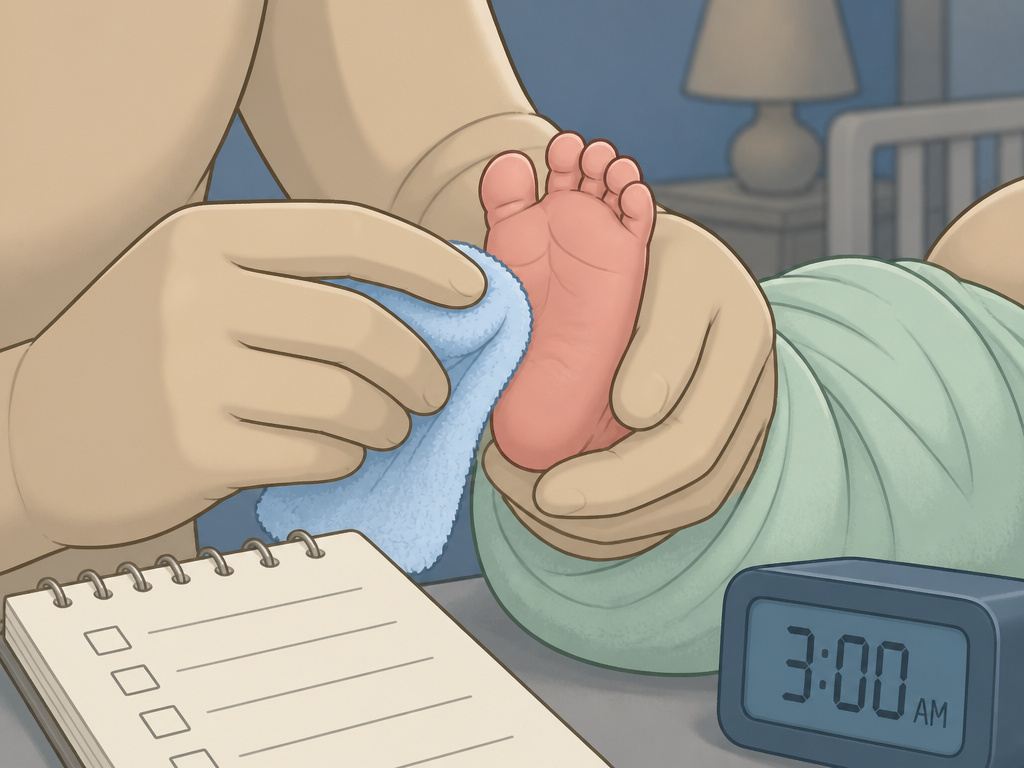
The rule of thumb reverses after the first few months. Initially, you wake them. Later, you let them sleep.
Here is your checklist for when to gently rouse your baby for a feed: * In the first 2 weeks, especially if weight regain after birth is slow. * If they sleep longer than 4-5 hours in any 24-hour period during the first month. * If your pediatrician has expressed concern about weight gain or jaundice. * If your baby is preterm or had low birth weight—always follow your doctor’s specific guidance.
How do you wake a sleepy newborn? Undress them down to their diaper. Wipe their face and hands with a cool, damp cloth. Try a diaper change. Hold them upright and talk to them. The goal is a full, active feeding, not just a few sleepy sucks.
Once your baby has surpassed their birth weight and is gaining steadily (usually by 2 weeks), your pediatrician will often give the green light to let them wake you on their own schedule at night. The Cleveland Clinic infant sleep article confirms that after the early weeks, you generally no longer need to wake a healthy, growing baby to feed.
Creating a Safe Sleep Environment for Longer Stretches
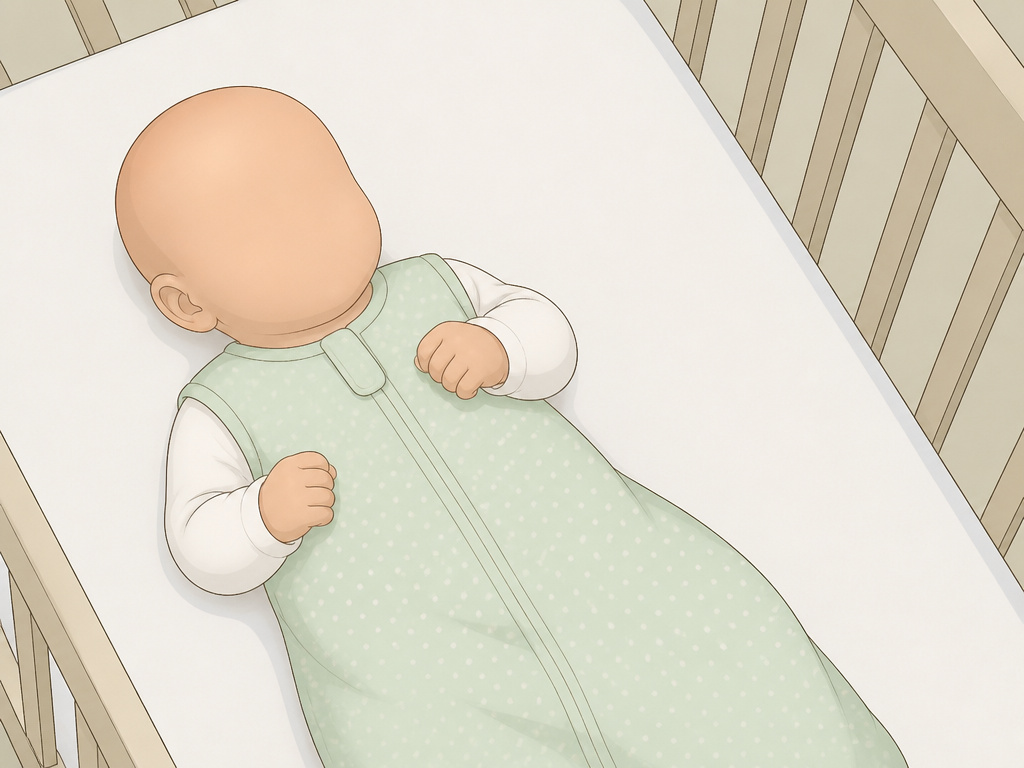
When your baby does start consolidating sleep, their environment matters more than ever. The right gear supports safety without sacrificing comfort.
The foundation is a certified safe crib mattress that is firm and fits snugly in the crib with only a fitted sheet. Soft, memory-foam toppers or pillow-top mattresses are dangerous. For the bedding, think minimalist: a fitted sheet and nothing else in the crib.
Since loose blankets are a suffocation hazard, a wearable blanket or sleep sack is the safe way to keep them warm. It can’t ride up over their face. Choose one appropriate for the room’s temperature—lightweight cotton for summer, fleece or thermal for winter.
Swaddling can help young newborns sleep better, but it introduces a new risk as they grow. You must stop swaddling as soon as your baby shows any signs of attempting to roll, which can happen as early as 2 months. A swaddled baby who rolls onto their stomach cannot use their arms to push up or reposition their head, creating an extreme suffocation risk. Transition to a safe swaddle alternative like a sleeveless sleep sack at that first sign.
| Sleep Product | Safe Use Window | Critical Safety Rule |
|---|---|---|
| Swaddle Blanket | Birth to first roll attempt | Must be snug on chest, loose at hips; discontinue immediately upon rolling signs. |
| Wearable Blanket | Birth to 2-3 years | Ensure correct TOG rating for room temp; neck and arm holes must not be loose. |
| Bassinet | Birth to ~15 lbs or rolling | Must have a firm, flat bottom; keep away from adult bedding and cords. |
| Crib | Birth to toddlerhood | Mattress must be firm; slats ≤ 2-3/8″ apart; no drop-side mechanics. |
A bedside sleeper that attaches securely to your bed allows for easy feeding and comforting while maintaining a separate, safe sleep surface for the baby. Room-sharing for at least the first 6 months is itself a factor shown to reduce SIDS risk.
Navigating Sleep Progressions and Regressions
Just when you think you have a pattern, it changes. This is normal.
Around 4 months, a baby’s sleep cycles mature to become more adult-like. This “4-month sleep regression” is actually a progression. They wake more fully between cycles and may need help learning to connect them. A baby who was sleeping a 5-hour stretch might suddenly wake every 2 hours. This doesn’t mean they’re hungry each time—they’re learning a new skill.
At 6-9 months, separation anxiety can cause night wakings. They now understand you exist when you’re not visible, and that can be scary. Comforting them without fully removing them from their infant sleep space is key.
The Mayo Clinic baby sleep guide emphasizes consistency and a calming bedtime routine. A predictable 20-30 minute sequence (bath, book, lullaby) helps signal that sleep is coming. Put them down drowsy but awake when possible, so they learn the feel of falling asleep in their own crib.
The part nobody mentions: Sometimes, a baby who suddenly sleeps much longer or is harder to wake could be getting sick. If a change in sleep pattern is accompanied by lethargy, fever, or refusal to eat, call your pediatrician immediately.
Frequently Asked Questions
What if my newborn sleeps 5 hours straight?
In the first few weeks, wake them. After they’ve regained their birth weight and are gaining well, a single 5-hour stretch might be okay, but confirm with your pediatrician. It’s still on the long end for a young infant.
Is it dangerous for a newborn to sleep too much?
Yes, if it means they aren’t feeding enough. Insufficient feeding can lead to dehydration, jaundice, and poor weight gain. If your newborn is consistently sleeping longer than 4-5 hours and is difficult to rouse for feeds, you need to discuss it with your doctor.
When can I stop worrying about SIDS?
The risk declines significantly after 6 months, but safe sleep practices (back sleeping, empty crib) are recommended for the entire first year. The peak vulnerability is 2-4 months, so vigilance is highest during that period.
Can I let my baby sleep on their stomach if they roll there themselves?
Once a baby can roll from back to front and front to back independently, you can leave them in the position they choose. However, you must always start every sleep on their back, and ensure their sleep space is free of loose bedding or soft objects.
Do breastfed babies wake more than formula-fed babies?
Often, yes. Breast milk digests faster than formula, so breastfed babies may get hungry sooner. This is normal and beneficial for establishing milk supply. It doesn’t mean they are less capable of sleeping well long-term.
Before You Go
The question concerns biology and safety. A newborn sleeping through the night is not a realistic goal, and chasing it can lead you to overlook their real needs.Focus on full feedings, consistent weight gain, and an impeccably safe sleep setup in a firm crib mattress inside a certified crib or bassinet.
The long stretches will come. They usually arrive around the same time the SIDS risk begins to drop. That timing is nature’s way of telling you that when your baby is developmentally ready to sleep longer, they are also becoming more physiologically resilient. Until then, those frequent night wakings, while exhausting, are a sign that your baby’s protective instincts are working just as they should.
