
Learn How to Help Baby Connect Sleep Cycles & Sleep Better
This post contains affiliate links. As an Amazon Associate we earn from qualifying purchases.
To help a baby connect sleep cycles, you work with their developing biology and teach self-soothing. The core strategy matches three things: wait until after the 4-month sleep regression when circadian rhythms mature, optimize the sleep environment to prevent arousals, and use a consistent behavioral method like graduated extinction or bedtime fading to bridge the gap between cycles. The American Academy of Sleep Medicine reports these methods produce clinically significant improvement in 94% of cases.
This isn’t about forcing a schedule onto an immature nervous system. Newborn sleep is chaotic by design, short, frequent cycles that ensure feeding. The 4-month mark is the biological pivot where sleep architecture reorganizes into longer, adult-like cycles. That’s when the gaps between cycles become noticeable wake-ups.
What follows is the map through that shift: the science of why babies wake, the physical sleep space changes that cut night wakings by half, and the two training methods with the strongest evidence for helping babies learn to link those cycles on their own.
Key Takeaways
- Wait until at least 4 months old. Before this, babies lack the mature circadian rhythms and sleep cycle length needed to consistently connect cycles. Sleep training earlier often fails.
- The sleep environment is a non-negotiable foundation. A study from the University of Colorado found that suboptimal conditions (too bright, loud, or hot/cold) directly cause shorter sleep and later bedtimes in preschoolers. The principle starts in infancy.
- Graduated extinction (Ferber) and bedtime fading are the two methods with the highest level of research support for reducing night wakings and helping with cycle connection.
- Self-soothing is the skill you’re teaching. A baby who can self-soothe at bedtime can use that same skill to drift back to sleep during a natural cycle transition at 2 a.m.
- Consistency in your response is more important than the specific method. Inconsistent reinforcement, soothing sometimes, ignoring other times, teaches a baby to cry longer, not to sleep longer.
The 4-Month Sleep Shift and How Cycles Work
You can’t fix a problem you don’t understand. A baby’s sleep consists of a series of cycles, like train cars linked together. Between each car is a brief, partial awakening.As adults, we roll over and fall back asleep without remembering. Babies, especially newborns, haven’t learned that skill yet, and their sleep “cars” are much shorter.
A newborn’s sleep cycle lasts about 50 minutes, with sleep onset occurring through REM (active sleep). By 5 months, the cycle lengthens and matures to the adult 90-minute pattern, with sleep beginning through NREM (quiet sleep). This neurological maturation is the prerequisite for longer sleep stretches.
The infamous 4-month sleep regression is actually a progression. It’s the messy, noisy sign that your baby’s brain is rewiring to this more mature sleep pattern. This is why attempting serious cycle connection before 4 months is often an exercise in frustration. The hardware is still updating.
Why do they wake fully between cycles?
Three reasons usually collide: sleep associations, environment, and hunger. If a baby falls asleep while being rocked or fed, they need that same condition to reconnect cycles. If the room is too stimulating, the brief arousal becomes a full alert. And in the early months, hunger is a legitimate, frequent cycle-breaker.
The realistic goal is to help them navigate those natural night wakings without needing your intervention every time. The table below shows what you’re working with as they develop.
| Age Range | Typical Sleep Cycle Length | Key Developmental Sleep Change |
|---|---|---|
| Newborn | ~50 minutes | Sleep begins with REM (active sleep). Cycles are short and numerous; no day-night rhythm. |
| 3–4 Months | ~50–60 minutes | Circadian rhythm emerges. Sleep begins to shift to starting with NREM (quiet sleep). |
| 5–6 Months+ | ~90 minutes | Cycle matures to adult length. This is the biological foundation for sleeping through the night. |
The Role of the Sleep Environment
You can do everything right with timing and technique, but if the sleep space is working against you, progress will stall. Think of the environment as the track the sleep train runs on. Bumps and noise derail it.
Research from the University of Colorado is blunt: children sleeping in “too bright,” “too loud,” or “too hot/cold” environments have objectively shorter sleep duration and later bedtimes. This isn’t about preference; it’s about physiology. Light inhibits melatonin. Noise triggers startle. Discomfort prevents deep sleep.
Optimizing the track means controlling four variables:
- Darkness: Pitch black. Use blackout curtains and cover any LED lights. Even a dim nightlight can be enough to fully arouse a baby between cycles.
- Sound: Consistent, low-volume white noise. It masks household bumps and street sounds that could jar them awake during a light sleep phase. Keep it on all night.
- Temperature: Cooler is better, between 68–72°F (20–22°C). Overheating is a risk factor for poor sleep and SIDS. Feel the back of their neck, not hands or feet.
- Safety & Comfort: A firm, flat baby mattress with a tight-fitting crib sheet is non-negotiable. Replace loose blankets with a wearable blanket (sleep sack). This removes a suffocation hazard and becomes a safe, consistent sleep cue.
Where this goes sideways: Using a loose blanket for warmth. It can shift over a baby’s face during the active REM portion of the cycle, causing a full arousal from air hunger or becoming a true hazard. The switch to a wearable blanket eliminates this variable.
These are the prerequisites. A dark, cool, quiet room with safe baby bedding doesn’t teach a baby to self-soothe, but it removes every possible external reason for them to wake up.Now you’re left with the core skill to teach.
Teaching the Core Skill: Self-Soothing
Self-soothing is the ability to fall asleep without external help. A baby who masters this at bedtime already possesses the tool they need at 2 a.m. The gap between cycles is a miniature bedtime. If they need a bottle or a rock to bridge it, they’ll need it every 90 minutes.
The official guide to sleep training from the American Academy of Sleep Medicine categorizes methods by the strength of evidence. For helping babies connect cycles and reduce night wakings, two approaches stand as “Standard” and “Guideline” recommendations.
Graduated Extinction (The Ferber Method)
This is the most researched method. You put the baby down awake after a calm routine. If they cry, you check in at progressively longer intervals (e.g., 2, 5, 10 minutes), offering brief, minimal comfort without picking them up. The intervals teach delayed response; the baby learns the space to practice settling.
- Why it works for cycle connection: It directly targets the night waking. The baby learns that the conditions at bedtime (alone in crib) are the same conditions at 2 a.m., so the same self-soothing skill applies.
- The commitment: It requires consistency. Changing the intervals or caving and rocking to sleep teaches the baby that longer crying eventually works.
Bedtime Fading
This is a gentler, more gradual approach. You push bedtime later in 15-minute increments until the baby is so tired they fall asleep quickly with minimal fuss. Once they master falling asleep quickly at that later hour, you slowly move bedtime earlier, preserving the quick-sleep skill.
- Why it works for cycle connection: It builds sleep pressure to overcome anxiety or resistance. A baby who falls asleep faster experiences less frustration and associates the crib with success, not struggle.
- The commitment: It takes longer, often a week or two of adjustment. It’s excellent for babies who fight bedtime with long, angry crying sessions.
I won’t recommend one over the other universally. For a baby who wakes angry and takes an hour to be rocked down, try bedtime fading first. For a baby who goes down easily but wakes frequently, graduated extinction often fits better. The choice is less about philosophy and more about which pattern you need to break.
The common thread is putting the baby down awake. Feeding to sleep, rocking to sleep, or holding until fully asleep builds a dependency. That dependency is the wall between sleep cycles.
The Two Biggest Mistakes That Prevent Cycle Connection
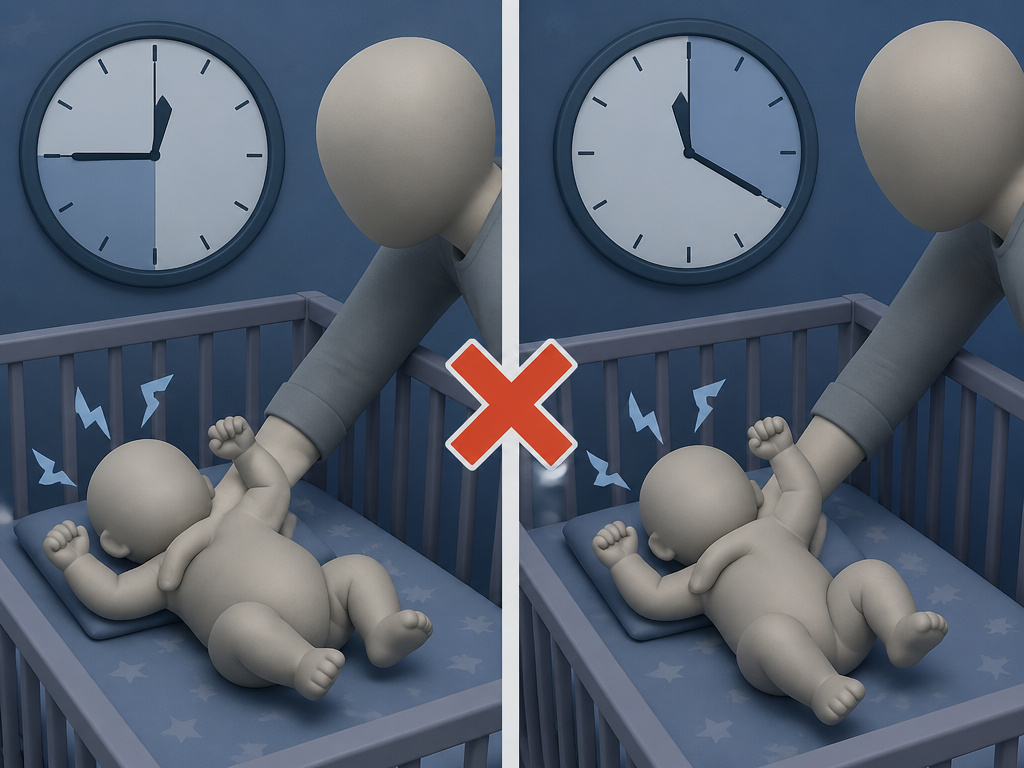
Knowing what to do is half the battle. Knowing what not to do, and why it backfires, is the other half. These mistakes are so common because they offer short-term relief while building long-term problems.
Mistake 1: Inconsistent Response at Night
This is the cycle-connection killer. It’s when a parent tries to let the baby “cry it out” one night, but after 45 minutes of screaming, they go in and rock the baby to sleep. The next night, they try again but give in after 20 minutes.
The baby learns a clear lesson: Sometimes crying makes mom come, and sometimes it doesn’t. I’d better cry longer and harder to be sure. You haven’t taught self-soothing; you’ve taught persistent crying. The behavioral treatment practice guidelines stress that consistency is the active ingredient, not the specific time interval.
Mistake 2: Ignoring Drowsy But Awake
“Just put them down drowsy but awake!” can sound like useless advice when your baby screams the second their back touches the crib. The problem is often timing. “Drowsy” is the sweet spot right before heavy eyelids close, not after a full feed when they’re milk-drunk and unconscious.
Missing this window means you’re either putting down an overtired, wired baby or an already-asleep one. Both fail. Practice during easier naps first. Start the routine, put them down at that first eye-rub, and give them a minute. It’s a skill they learn through repetition, not a magic trick.
| Mistake | What It Teaches the Baby | Result for Sleep Cycles |
|---|---|---|
| Inconsistent Night Response | “Crying longer increases my odds of being rescued.” | Longer, more intense night wakings. No self-soothing practice. |
| Skipping “Drowsy But Awake” | “I fall asleep in arms/on bottle. I wake up alone in crib.” | Confusion and panic at every cycle transition. |
| Changing Methods Too Quickly | “The rules are always shifting. I don’t know what to expect.” | Erratic sleep with no pattern, exhausting everyone. |
Choosing Your Tools: Products That Support the Process
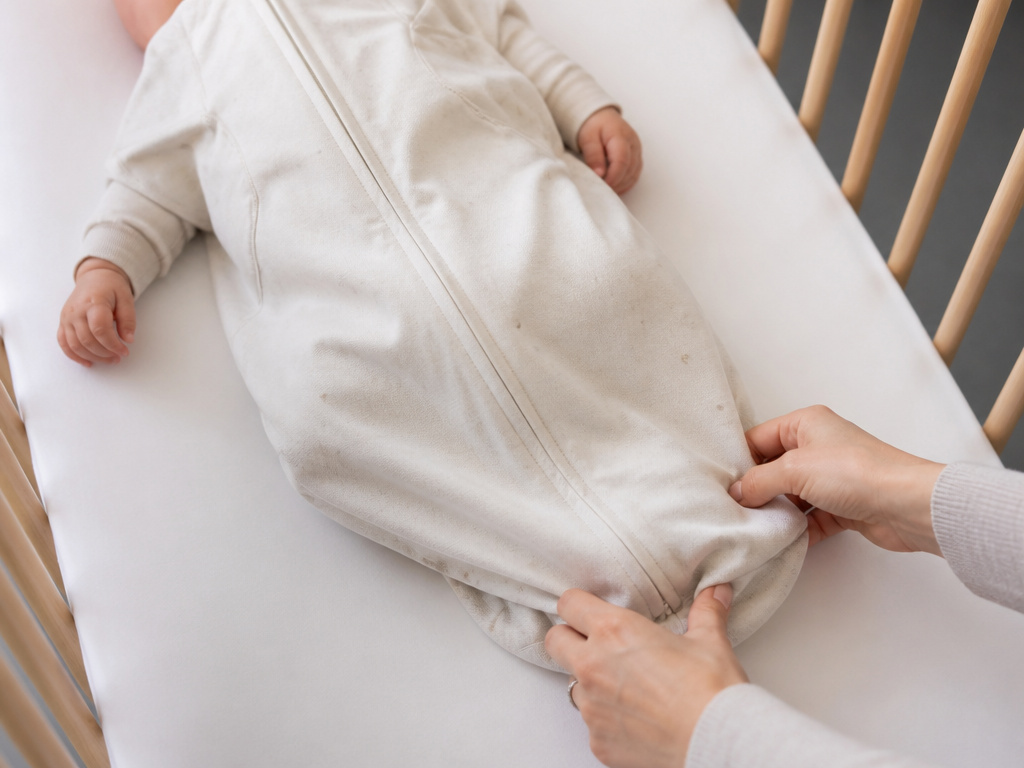
The right gear doesn’t solve the problem, but it creates a safe, consistent container for the learning to happen. Your goal is to eliminate variables. Is the wake-up due to a draft, a lost blanket, or a hard mattress? Or is it a cycle transition? You need to know.
The Non-Negotiables:
- A Firm Crib Mattress: This is a safety mandate. A soft mattress increases re-breathing risk. From a sleep quality perspective, a firm, supportive surface like those in our crib mattress guide promotes better spinal alignment and deeper sleep.
- Wearable Blankets (Sleep Sacks): This is the single best replacement for loose blankets. A wearable sleep sack provides warmth without suffocation risk, becomes a powerful sleep cue, and prevents a baby from using a blanket to pull up on or get tangled in.
- Blackout Shades & White Noise: As covered, these are environmental essentials, not luxuries.
Where to Save Your Energy:
Skip any product that promises to “teach” your baby to sleep magically. No pillow, positioner, or gadget can impart the skill of self-soothing. In fact, avoid any pillows designed for infant safety until your child is at least 18-24 months old and has transitioned to a toddler bed. In a crib, they are an unnecessary risk.
The best infant sleep setup is boringly simple: a bare crib with a firm mattress, a tight sheet, a sleep sack, darkness, and white noise. Everything else is decoration or a potential hazard. That simplicity makes the baby’s job, and yours, much clearer.
Frequently Asked Questions
What age can babies connect sleep cycles?
Babies begin to physically be capable of connecting sleep cycles around 4-6 months, once their sleep cycle lengthens toward 90 minutes and their circadian rhythm is established. However, the skill of connecting them independently depends on learning self-soothing, which can be taught from around 4-5 months onward.
Is it normal for a 6 month old to not connect sleep cycles?
Yes, it’s common, but it’s also the prime age to gently teach them. At 6 months, the biological capacity is there (90-minute cycles, reduced need for nighttime calories), but they may still depend on a feed, rock, or pacifier to bridge the gap. This is the classic scenario where behavioral methods like graduated extinction or bedtime fading are most effective.
How long does it take to teach a baby to connect cycles?
With a consistent method and an optimized environment, most babies show significant improvement within 3-7 nights. “Significant improvement” means fewer wakings and shorter crying durations, not necessarily sleeping 12 hours straight. The full consolidation of skill can take 2-3 weeks of consistent practice.
Will sleep training harm my baby’s attachment to me?
No. The research is clear on this. Multiple studies, including those cited in the scientific review of child sleep, find no negative effects on attachment or long-term emotional health when sleep training is done in the context of otherwise responsive, loving care. Well-rested parents and babies often have better interactions.
What if my baby is waking between cycles because of hunger?
This is a critical distinction. Before 4-6 months, night hunger is real and necessary. After 6 months, most healthy, growing babies can get enough calories during the day. If you’re unsure, talk to your pediatrician. A common strategy is to gradually reduce the amount in the night bottle (if bottle-feeding) or shorten the nursing duration over a week, pairing it with your chosen sleep training method.
Before You Go
Helping a baby connect sleep cycles is a blend of biology and behavior. You wait for the 4-month neurological shift, you engineer a sleep environment that doesn’t sabotage you, and you pick one consistent method to teach self-soothing. The evidence points to graduated extinction or bedtime fading as the most reliable paths.
The goal isn’t a silent, unmoving baby all night. That’s not how human sleep works. The goal is a baby who, upon rousing slightly between cycles, can sigh, shift, and drift back down without a cry for help. That skill, self-soothing, is the real gift. It turns disjointed sleep into restful sleep, for them and for you.
Start with the environment. Make it dark, cool, and safe with a wearable blanket on a firm crib mattress. Then, choose your method and stick with it for at least a full week. The connection will come.
