
How to Dress Newborn for Sleep in Summer | The One Layer Rule
This post contains affiliate links. As an Amazon Associate we earn from qualifying purchases.
Dress your newborn for summer sleep in one single layer of lightweight, breathable clothing, like a cotton vest or onesie, and use a 0.5 TOG sleep sack or a single, well-secured sheet if the room is between 16 and 20°C. The old “one more layer than you” rule does not apply in the heat; overheating is a documented SIDS risk factor.
That 16–20°C range isn’t a suggestion. It’s the evidence-based safe sleep temperature cited by the NHS and the Lullaby Trust. In summer, your goal is to hit that sweet spot with the minimum insulation possible, because a newborn’s temperature regulation is primitive. They cool through their head and face, which is why keeping those uncovered is non-negotiable.
What follows is the breakdown of that single layer: why cotton beats everything else, when a sleep sack is safer than a blanket, and the three physical signs your baby is already too hot. We’ll also cover the common cultural practice that directly contradicts safe sleep guidelines and the one product category you should skip entirely.
Key Takeaways
- The safe sleep room temperature is 16–20°C (60–68°F). Use a room thermometer.
- In summer, dress your newborn in one single layer of lightweight cotton or muslin. The “one more layer than you” rule is for cooler weather.
- A well-fitting, low-TOG (0.5 or 1.0) sleep sack is safer than loose blankets.
- Never double up sleep bags or use weighted swaddles/blankets; trapped air increases overheating risk.
- Check for warmth on the chest or back of the neck. Cool hands and feet are normal.
The Safe Summer Sleep Setup
Forget guessing. The first step is knowing your room’s actual temperature. The NHS and the Lullaby Trust both define the safe range as 16 to 20°C (60 to 68°F). A simple room thermometer is the most important tool you’re not using.
A room temperature of 16 to 20°C is comfortable and safe for sleeping babies. Your baby just needs light bedding or a lightweight, well-fitting baby sleep bag. If it is very warm, your baby may not need any bedclothes other than a sheet.
If your nursery reads 22°C or higher, that single layer might be just a nappy. The goal is to prevent overheating, a confirmed risk factor for Sudden Infant Death Syndrome (SIDS). Babies lose heat through their head, so hats for sleep are a hazard, not a help.
The “one more layer” rule is for winter. The Washington State health department’s DSHS infant safe sleep guidelines advise one extra layer than an adult to be comfortable. In a 75°F (24°C) summer room, you’re comfortable in a t-shirt. Your newborn needs the equivalent: a vest.
Fabric is Everything
Breathability is the mechanism. A fabric that traps moisture and heat against the skin disrupts a baby’s attempt to self-regulate. This is why material choice isn’t about comfort alone, it’s a safety spec.
Lightweight cotton is the NHS’s explicit recommendation for hot weather because its open weave allows air circulation. Muslin is a close second for its loose, gauzy weave. Avoid synthetic fleece, thick knits, or any fabric that feels warm to the touch in your hand.
| Fabric | Best For | Risk If Used in Heat |
|---|---|---|
| Lightweight Cotton | All summer sleep, day and night. | Minimal if chosen as a single layer. |
| Muslin | Swaddling, light blankets, single-layer clothing. | Can become too warm if layered or doubled over. |
| Synthetic Fleece | Cool winter naps outdoors. | Traps heat and moisture dramatically, high overheating risk. |
| Terry Cotton | Post-bath robes, absorbent burp cloths. | Too thick and insulating for sleep in warm rooms. |
Choosing Between a Sleep Sack and a Blanket
This is the core decision. Both can be safe, but one is inherently less risky in a warm room.
A certified sleep sack, a wearable blanket, eliminates the chance of bedding covering a baby’s face. It also stays put. A lightweight blanket can kick off, leading to repeated re-covering and potential over-bundling in the middle of the night when you’re half-asleep.
Where this goes sideways: Doubling two 1.0 TOG sleep sacks. This does not create a 2.0 TOG rating. Air gets trapped between the layers, amplifying warmth unpredictably and raising the SIDS risk. If your baby is cold, add a clothing layer underneath or switch to a higher-TOG sack.
If you use a blanket, it must be lightweight, cellular (holey), and firmly tucked in under the mattress, no higher than the baby’s chest. A folded blanket counts as two layers. For most parents, a 0.5 TOG sleep sack over a cotton onesie is the simplest, safest summer combo.
Look for the British Safety Standard BS EN 16781:2018 on the label. This means the sleep sack has passed tests for things like neck and armhole dimensions to prevent slipping inside.
The Weighted Bedding Warning
This is non-negotiable. Weighted swaddles, weighted blankets, and weighted sleep sacks are marketed for calming. For babies under one year, they are not safe for sleep.
The Lullaby Trust explicitly advises against them due to risks of overheating and restricted breathing. The added weight can press on a baby’s chest, making the work of breathing harder, and the extra insulation can cause core temperature to rise dangerously. Stick to unweighted, breathable swaddle blanket options.
How to Check if Your Baby is Too Hot
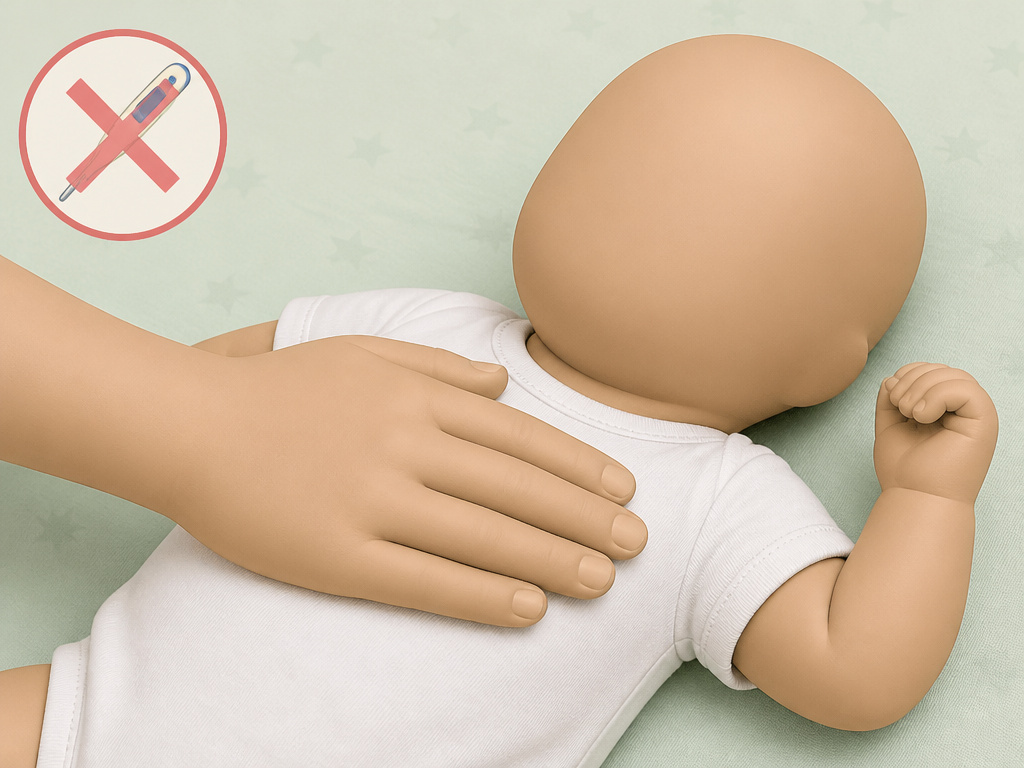
Your hands are the best monitor. Forget the cheeks or forehead.
Place your hand on the back of their neck or their chest. If the skin feels hot, clammy, or sweaty, they are overheating. Remove a layer immediately. Cool hands and feet are normal and not a sign of being cold; a baby’s circulation is still developing.
Other red flags include flushed cheeks, rapid breathing, or damp hair at the scalp. A baby who is too hot may also be unusually restless or lethargic.
| Sign | What to Check | Immediate Action |
|---|---|---|
| Sweaty Neck/Chest | Skin under clothing feels damp or hot. | Remove one layer of clothing or bedding. |
| Flushed Skin | Face or torso is red. | Move baby to a cooler room, offer fluids if awake. |
| Rapid Breathing | Breathing seems faster than usual. | Remove covers, check room temperature. |
| Lethargy | Unusually sleepy, difficult to rouse. | This is a medical emergency. Seek help immediately. |
Daytime Sun and Nap Safety
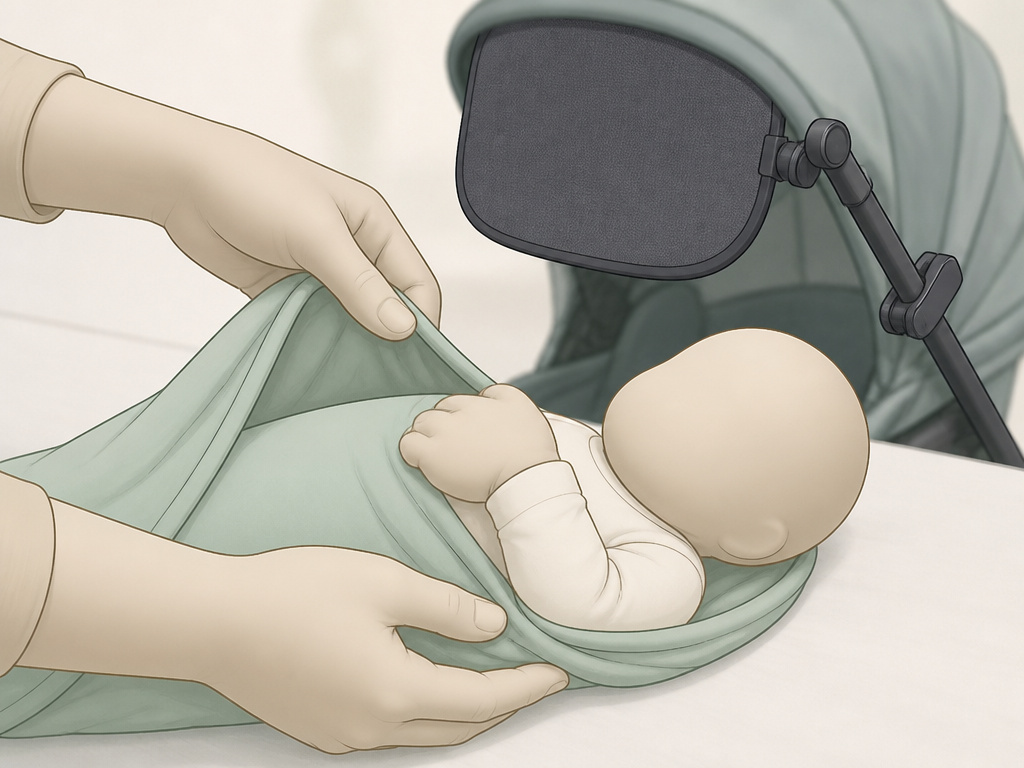
The rules tighten outside. Babies under six months have very little melanin, the pigment that provides sun protection. The NHS states they should be kept out of direct sunlight entirely.
This means seeking shade under trees, canopies, or a pram sunshade that clips on, never drape a muslin or blanket over the pram to create shade. That act traps heat like a greenhouse, and temperatures inside can skyrocket in minutes.
For naps on the go, dress them as you would indoors. A cotton onesie in a stretchy swaddle or sleep sack is fine, but always check for overheating more frequently. Car seats are not designed for safe, flat sleep; never let a nap there extend beyond the car journey.
Cultural Practices and Safe Sleep
Some cultural traditions involve wrapping babies in multiple layers for protection or comfort. The New South Wales clinical guideline GL2021_013 notes this practice can conflict with safe sleep advice, as multiple layers significantly increase overheating risk.
The conversation here is about risk reduction. If multiple layers are important, ensure the innermost layer is breathable cotton, the room is at the cooler end of the safe range (16-18°C), and you are vigilant in checking the baby’s core temperature. The safest path is adopting a single-layer organic blanket or sleep sack that honors the intent of comfort without the thermal danger.
Frequently Asked Questions
Can I use a fan in my newborn’s room in summer?
Yes. A fan circulating air in the room can help maintain a comfortable temperature and reduce the risk of overheating. Ensure it is not pointed directly at the baby and is out of reach. It also helps disperse carbon dioxide, which some studies suggest may be beneficial.
What should my newborn wear for sleep in air conditioning?
Follow the same 16-20°C rule. If the AC brings the room to 20°C, a cotton onesie and a 1.0 TOG sleep sack is appropriate. Use a thermometer. The goal is consistent, moderate temperature, not a cold blast.
How many layers is a sleep sack?
Sleep sack replaces a blanket; it is not a clothing layer. So, a baby in a vest and a sleep sack is wearing one clothing layer plus their sleep “bedding.” Do not count the sack as a layer when using the “one layer” rule.
When should I stop swaddling my newborn for sleep?
Stop swaddling at the first sign of attempted rolling, which can start as early as 2-3 months. Rolling while swaddled is a high-risk scenario. Transition to a safe sleep sack that allows arm movement.
Are there any safe blankets for a newborn in summer?
Single, lightweight, cellular cotton or muslin blanket, firmly tucked in, can be safe if the room is at the cooler end of the range and you are confident it will stay secured. For most, a sleep sack is a safer, simpler choice. See our guide on best blankets for newborn infants for safe options.
Before You Go
Summer sleep is about subtraction, not addition. Stick to one breathable layer, target 16-20°C, and use a certified sleep sack instead of loose blankets. Always check for heat on the chest, not the hands. And remember, the safest newborn sleep setup is simple: a firm mattress, a fitted sheet, and a comfortably cool baby.
