
Can Two People Sleep on a Twin Bed? The Critical 5″ Rule Guide
This post contains affiliate links. As an Amazon Associate we earn from qualifying purchases.
Two people can sleep on a standard twin bed only under specific, safe conditions, but sleeping together on the upper bunk of a twin bunk bed is prohibited by every manufacturer manual we reviewed. The deciding factors are the bed’s design, its certified weight limit, and strict safety rules like the 5-inch guardrail clearance.
That 5-inch rule is a measured gap between the mattress surface and the top of the guardrail on a bunk bed, designed to prevent a child from rolling out. Put two people on a twin upper bunk, and the combined weight and movement risk pushing the mattress higher, closing that gap to zero.The manuals are unanimous: “Prohibit more than one person on upper bunk.” For a standalone twin bed, the question shifts from prohibition to physics and comfort, governed by the bed’s maximum weight rating.
What follows breaks down the manufacturer specs that make this a yes-or-no answer. We’ll look at the hard safety numbers from bunk bed manuals, the real weight limits of popular kids’ beds, and the one type of twin bed actually designed for two.
Key Takeaways
- Upper bunk twin beds are a hard “no” for two sleepers. Every manual we checked explicitly prohibits more than one person on the upper bunk due to entrapment and fall risks.
- The 5-inch guardrail rule is non-negotiable. The mattress surface must be at least 5 inches (127mm) below the guardrail’s top edge; a second person can compress the mattress and eliminate this safety gap.
- Check the printed weight limit, not just size. A Step2 twin bed holds 300 lbs; an Activity Toys Direct toddler-to-twin bed holds 200 lbs. Two adults often exceed these limits.
- Daybeds are the main exception. Models like the IKEA BRIMNES use two twin mattresses side-by-side when pulled out, creating a designed double sleeping surface.
- Comfort is a separate issue. Even if weight limits allow it, a standard 38″x75″ twin mattress offers less personal space than a single airline seat per person.
The Hard Safety Numbers That Say No
Start with the upper bunk of a twin bunk bed. This is a documented entrapment and fall hazard with a specific measurement at its core.
Manufacturer instructions are not vague. The warning is direct and repeated. For example, the manual for a Quick Lock Twin over Twin Metal Bunk Bed states: “Prohibit more than one person on upper bunk.” Another assembly sheet for a different twin bunk bed includes the same line as its 18th safety warning. They don’t say “not recommended” or “discouraged.” They use “prohibit.”
Common mistake: Assuming bunk bed guardrails make the upper bunk safe for two. The guardrail height is calculated for one sleeper’s mattress thickness. A second body compresses the mattress, raising the sleep surface and negating the safety gap.
Why is this so strict? The answer is in the geometry dictated by standards like the GSA bunk bed test requirements. These federal safety performance standards outline tolerances for how beds must be built and tested.
The key is the guardrail-to-mattress height. Multiple manuals, including those from major retailers, specify: “Surface of mattress must be at least 5″ (127mm) below the upper edge of guardrails.”
| Safety Specification | Required Measurement | Purpose |
|---|---|---|
| Mattress-to-Guardrail Clearance | At least 5 inches (127 mm) | Prevents a child from rolling over the rail. |
| Maximum Mattress Thickness (Upper Bunk) | 6 inches (combined mattress + foundation) | Ensures the 5″ clearance is maintained. |
| Mattress Length for Twin Bunk | 74″ – 75″ | Prevents dangerous gaps at the bed ends. |
| Minimum User Age (Upper Bunk) | 6 years old | Reduces risk of falls due to less developed coordination. |
That 5-inch buffer is your margin of safety. Add a second person, and their weight sinks the mattress deeper into the support slats. The sleeping surface moves upward. A mattress that was 5 inches below the rail can quickly become 3 inches below, then 1 inch. The guardrail becomes decorative. All it takes is one forceful roll during sleep.
The international bunk bed requirements covered in standards like ISO 9098-2:2023 exist to prevent exactly this. They define test methods for strength and durability, ensuring the structure can handle the intended load, which is defined as one person per sleeping surface. Designing for two on an upper bunk would require a completely different guardrail height and structural reinforcement, which you won’t find in consumer twin bunk beds.
Weight Limits: The Physics of “Maybe”
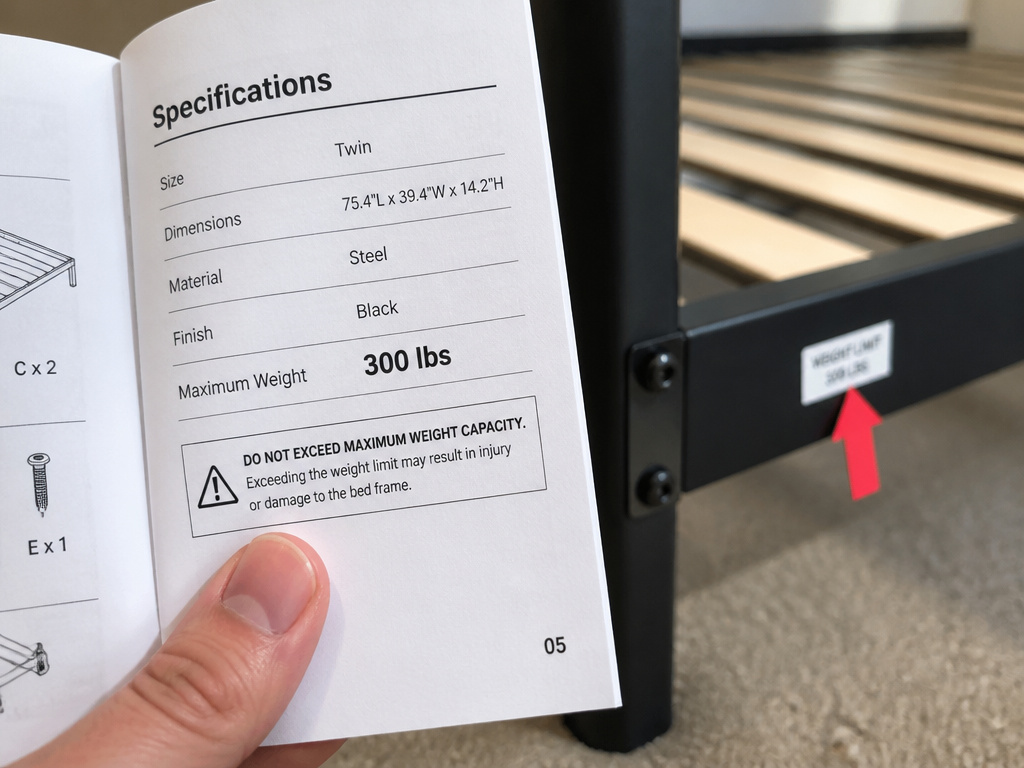
For a standalone twin bed, not a bunk, the safety question changes from entrapment to load capacity. Can the frame handle two people? The answer is in the manual, not a guess.
Manufacturers rate their beds for a maximum weight. This is a structural limit, not a comfort guideline. Exceeding it stresses joints, bolts, and slats, leading to premature failure, broken components, and a potential collapse.
Let’s look at real numbers from product manuals:
- Step2 Contemporary Twin Bed: Maximum weight is 300 lbs. (Source: Step2 manual 4430_4644).
- Activity Toys Direct Roadster Toddler-to-Twin Bed: Maximum weight in twin configuration is 200 lbs. (Source: Activity Toys Direct manual 2268).
A bed’s weight limit is for the entire structure in its intended use. It’s not an average per leg. Exceeding it voids any warranty and turns a simple piece of furniture into a liability.
Two average adults can easily surpass 300 lbs. Two teenagers might fall under it. The point is you must check. This limit is often on a label on the bed frame or in the assembly guide PDF online. If you can’t find it, assume a conservative limit and don’t risk it.
There’s also the issue of dynamic load. A weight limit is calculated for a static, distributed weight, someone lying still. Two people moving, shifting, or getting in and out creates more force. A frame at its rated limit for static weight may fail under this dynamic use. This is why even if two lighter individuals are under the weight limit, it’s often too close for long-term safety.
When a Twin Bed Can Sleep Two (The Exceptions)
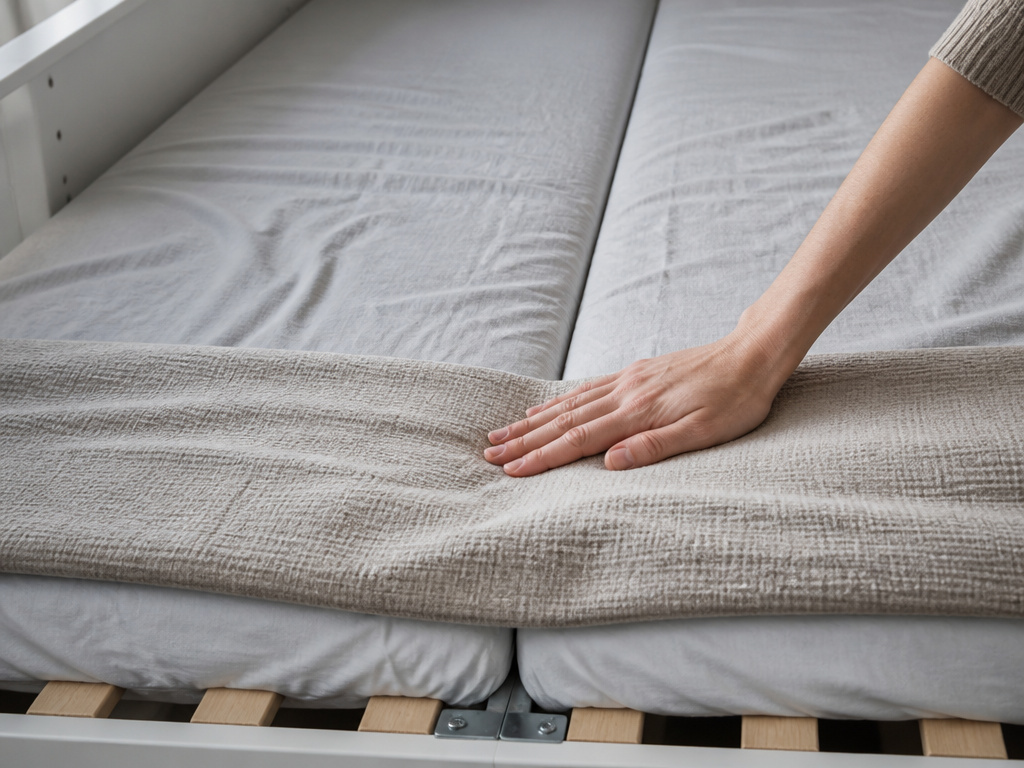
There are legitimate scenarios where two people can share a twin-sized sleeping surface. They all involve products specifically designed for it.
The most common is the daybed. Take the IKEA BRIMNES daybed. It’s sold as a package with two twin mattresses. The product details are explicit: “The daybed must be combined with two twin mattresses. They are placed on top of each other when you use the daybed as a single bed, and next to each other when you use it as a double bed.“
This is a engineered exception. The bed frame pulls out to create a wide base that supports two 38″ wide mattresses side-by-side, creating a ~76″ wide sleeping surface. It’s a space-saving design that turns a twin into a double on demand. Crucially, IKEA also states: “The daybed is not to be used as two single beds.” This means you shouldn’t try to use the two mattresses on separate frames; the double-bed function is part of the integrated design.
The other exception is for very young children. A parent comforting a scared toddler for a short period is different from two people sharing a bed nightly. The weight and movement are minimal. Even here, caution is needed with twin beds for toddlers that have guardrails, the same compression issue can apply, though the risk is lower with an adult present.
For regular, nightly use by two people, the product must be designed for it. A standard twin bed frame and a single twin mattress is not that product.
Twin Bunk Beds vs. Loft Beds: Clarifying the Rules
It’s easy to confuse different types of elevated beds. The rules are not the same.
A twin bunk bed has two sleeping surfaces stacked. The prohibition against two on the upper bunk is absolute. The lower bunk of a bunk bed is, functionally, a standalone twin bed on the floor. The same weight limit rules apply as any other twin bed. Some twin over twin bunk bed manuals even specify a thicker mattress (e.g., 8″) for the lower bunk, acknowledging it may see different use.
A twin loft bed elevates a single sleeping surface to create space underneath for a desk or play area. Since there’s no upper bunk, the “two-person” question for the lofted bed is again just about the weight limit of that single structure. However, loft beds often have even stricter weight limits due to the elevated design and longer legs, and their guardrails must still comply with the 5-inch clearance rule.
Where this goes sideways: Using a loft bed’s guardrail as a backrest for two people sitting up. This concentrates weight on one section of the rail and can loosen fasteners or crack welds over time.
When choosing any elevated bed, the certification matters. Look for mention of testing against standards like the ISO bunk bed safety standard or the GSA loftable bed guidelines. These are your assurances that the guardrail strength and stability have been verified for one sleeper.
Practical Advice for Parents and Shared Rooms
You’re dealing with a real space crunch or a child who wants sleepovers. How do you navigate this safely?
First, if the goal is occasional sleepovers, a better investment is a good quality twin mattress on the floor or a low-profile bed frame for the guest. This removes all fall risks and respects the host bed’s weight limit. For frequent sharing, you need a larger bed.
Second, always prioritize a proper twin mattress for kids that offers good support edge-to-edge. Two people will use the entire mattress width, and a cheap mattress that sags heavily at the edges will make one person feel like they’re rolling off.
Third, understand the progression. A toddler twin bed with guardrails is for one small child. A standard twin bed for a teenager is also for one person, though its 300-lb limit might accommodate two lighter teens in a pinch, check the manual. The true solution for two is a full, queen, or a daybed designed for doubling.
Here’s a simple decision flow:
- Is this for an upper bunk? → No. Never two people.
- Check the weight limit on the bed’s manual or label. → Are both sleepers’ combined weights under 80% of that limit? If no, stop.
- Is the bed a daybed designed with two mattresses? → If yes, follow the manufacturer’s pull-out instructions for double use.
- Is this for nightly, long-term use? → If yes, upgrade to a larger bed size.
The bottom line is that furniture is engineered for specific use cases. Trust the engineering.
Frequently Asked Questions
Can two adults fit on a twin bed?
They can physically lie on it, but it is not safe or comfortable for sleeping. A standard twin mattress is 38 inches wide. That’s 19 inches of width per person, less than the seat width on most airplanes. It also likely exceeds the bed’s weight capacity, risking damage to the frame.
Why is the top bunk of a bunk bed only for one person?
The guardrail height is calibrated for a specific mattress thickness to maintain a 5-inch fall-prevention gap. A second person’s weight compresses the mattress, raising the sleep surface and eliminating this safety buffer. The bed’s structure is also tested and certified for a single person’s load.
My twin bunk bed manual says the top bunk holds 175 lbs. Can two 80 lb kids use it?
No. The weight limit is one part of the safety equation. The manual also explicitly states “prohibit more than one person on upper bunk.” This is due to the entrapment and guardrail clearance hazard, not just weight. The rule is one person, regardless of total weight.
Are there any twin beds made for two people?
Traditional twin bed frames are not. However, twin daybed systems like the IKEA BRIMNES are designed to use two twin mattresses side-by-side when pulled out, effectively creating a double bed. This is the only common twin-based product intended for two sleepers.
What size bed should I get if two kids will share a room?
For shared, nightly use, opt for separate twin beds for kids or a bunk bed where each child has their own defined, safe sleeping surface. Using a single twin bed for two children nightly is impractical, uncomfortable, and unsafe if it’s a bunk bed upper.
Before You Go
The question “can two people sleep on a twin bed” has a split answer. For the upper bunk of any twin bunk bed, it’s a firm no, a rule backed by measured safety standards and unanimous manufacturer warnings. For a standalone twin bed, it becomes a calculation of weight limits and an acknowledgment of extreme discomfort.
The safe path is always to match the bed to its intended use. Use bunk beds as designed: one person per bunk. Respect the printed weight limits on all frames. And for regular double occupancy, invest in a larger mattress or a clever daybed system built for the job. Sleep safety isn’t about making do; it’s about knowing the numbers and trusting them.
