
The Reasons Why Girls Wear Bonnets to Bed for Hair Care
This post contains affiliate links. As an Amazon Associate we earn from qualifying purchases.
Girls wear bonnets to bed primarily to protect their hair from friction, lock in moisture, and preserve hairstyles. The practice draws from a long history of hair care, particularly within Black culture, and has gained wider acceptance as a practical, protective measure for all hair types. Modern discussions also include safety, informed by incidents like the 2021 CPSC recall of children’s cotton nightgowns that failed federal flammability standards.
That last point about safety isn’t just a footnote. When we talk about what our kids wear to bed, the conversation has to include what could go wrong. A bonnet made from the wrong material near a nightlight, or a nightgown that doesn’t meet code, turns a simple bedtime routine into a risk.
What follows is a breakdown of the three mechanical reasons bonnets work, the cultural context that gives the practice its weight, and the safety specs you need to check before you buy one. By the end, you’ll know exactly what to look for, and what to avoid.
Key Takeaways
- Bonnets physically shield the hair’s cuticle from friction against cotton pillowcases, which lifts scales and causes breakage, frizz, and moisture loss.
- The tradition is deeply rooted in Black culture as a method of protective styling and a symbol of identity, making discussions around its wider use nuanced.
- Safety is non-negotiable; look for bonnets made from inherently flame-retardant fabrics like silk or treated satin, and be aware of recalls like the 2021 La Paloma nightgowns.
- A proper fit is more important than style; a bonnet that’s too tight can cause headaches and break hair at the hairline.
- Pairing a bonnet with the right bedtime prep, like a light braid or a leave-in conditioner, multiplies its benefits.
The 3 Core Reasons Girls Wear Bonnets to Bed
The answer isn’t about fashion. It’s about physics and biology. A cotton pillowcase acts like sandpaper on a microscopic level against hair. A bonnet inserts a slick, protective layer.
Wearing a bonnet creates a low-friction environment for the hair and scalp. The smooth interior of a silk or satin bonnet allows hair strands to glide during sleep, preventing the cuticle scales from being lifted and broken. This mechanical protection directly reduces split ends, tangles, and the need for aggressive morning detangling.
Friction is the enemy of healthy hair. Every toss and turn rubs the hair cuticle, the outer protective layer of each strand, against your child’s pillowcase. Cotton fibers are rough at a microscopic level. This friction literally lifts the cuticle scales, making the hair shaft porous, weak, and prone to snapping. You see the result as morning frizz, knots, and breakage. A silk or satin bonnet eliminates that abrasive contact.
Moisture retention is the second win. Dry hair is brittle hair. At night, moisture from hair and scalp oils can wick away into absorbent bedding. A bonnet acts as a barrier, sealing that natural hydration close to the hair shaft where it can be reabsorbed. This is especially critical for curly or textured hair types that are naturally drier, but it benefits straight hair by preventing static and flyaways.
Style preservation is the practical bonus. If your daughter has braids, twists, or curls you spent time on, a bonnet is the best insurance policy. It keeps the style contained and intact, preventing unraveling and flattening. This extends the life of the hairstyle by days, which means less manipulation, less heat styling, and more peace for everyone in the morning.
A Short History: From Practicality to Cultural Significance
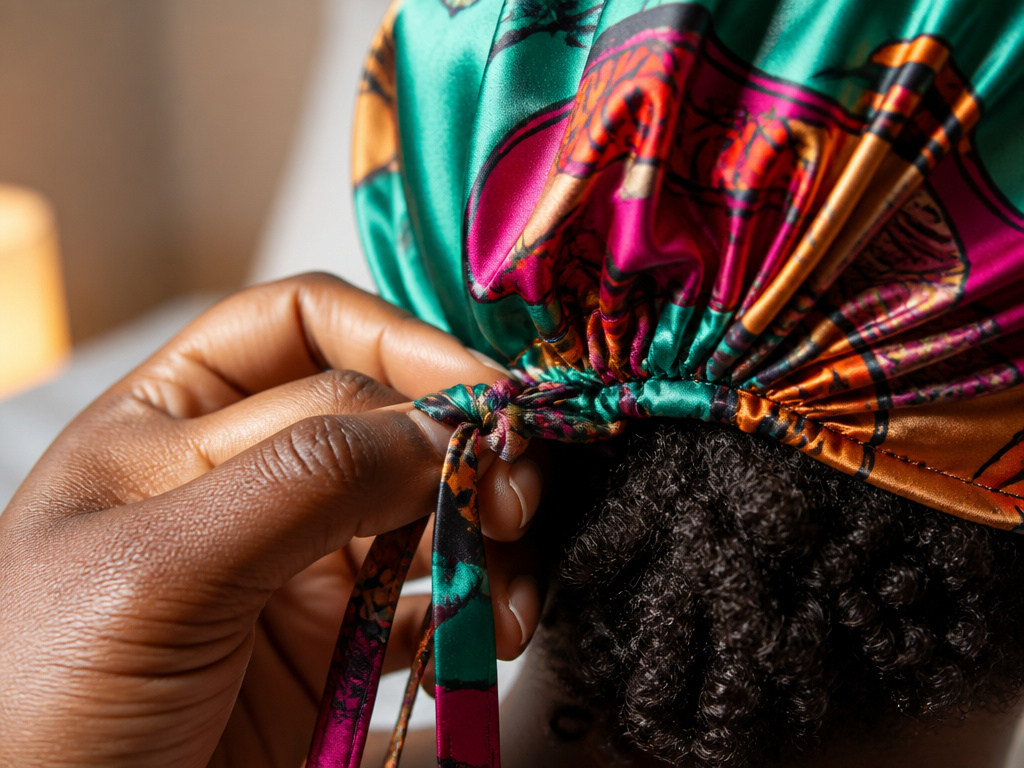 To understand the modern bonnet, you have to look back. Its story is one of practicality, adaptation, and deep cultural meaning.
The Wikipedia entry on bonnets details their evolution from general women’s headgear in the 17th and 18th centuries to specialized indoor caps for keeping hair tidy during work. For centuries, head coverings were a standard part of dress, often tied to modesty or social status. The modern sleep bonnet is a direct descendant of these practical “house bonnets.”
The practice took on profound significance within Black communities. During slavery, head wraps were imposed as a tool of control and dehumanization. In resistance, Black women transformed them into expressions of identity, using color and style to reclaim autonomy. The bonnet evolved from this history as a specific tool for protective styling, a way to care for textured hair that requires meticulous maintenance to retain length and health. It became, and remains, a symbol of cultural pride, sisterhood, and practical self-care.
This history is why the sight of a bonnet in public can be charged. For some, it’s a deeply personal cultural symbol worn outside the home in solidarity. For others, it’s strictly private sleepwear. This context matters when the practice crosses cultural lines. Appreciation starts with understanding its roots, not just its utility.
How to Choose a Safe and Effective Bonnet
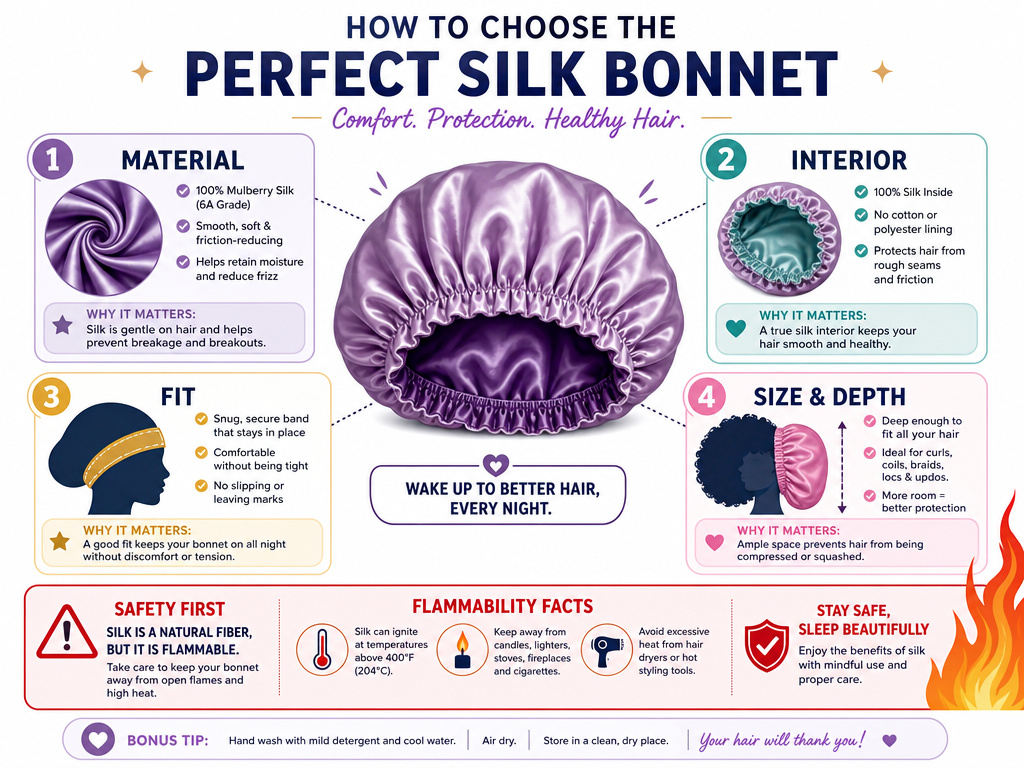 Not all bonnets are created equal. The right choice balances material, fit, and safety. The wrong choice can be ineffective or, in rare cases, unsafe.
| Feature | What to Look For | Why It Matters |
|---|---|---|
| Material | 100% Silk (mulberry silk is best) or high-quality, tightly woven satin (charmeuse). | Silk is naturally temperature-regulating and less porous. Satin is a more affordable synthetic weave; quality determines slickness. |
| Interior | Must be as smooth as the exterior. No rough seams inside. | The interior touches the hair. Any texture defeats the purpose of reducing friction. |
| Fit | Snug but not tight elastic band. Adjustable drawstrings are a plus. | A tight band causes headaches and breaks hair at the temples. Too loose, and it falls off. |
| Size & Depth | Choose based on hair volume. “Puff” or “large” styles for thick, curly, or styled hair. | Hair needs room to move without being crushed, which can cause tangles and flatten styles. |
Where this goes sideways: Choosing a bonnet based on cute prints over fabric quality. A polyester satin with a loose weave will still create friction and cause static. The print fades after a dozen washes, but the bad hair days continue.
The safety conversation is critical. While bonnets themselves are not typically flagged, the broader category of children’s sleepwear is heavily regulated. This brings us to the CPSC children’s sleepwear recall of 2021. La Paloma recalled girls’ cotton nightgowns because they violated federal flammability standards. Cotton, unless treated, is highly flammable. This is a stark reminder that what our children wear to sleep matters.
Silk is inherently somewhat flame-retardant. High-quality satin (polyester) is also less flammable than untreated natural fibers like cotton. When selecting a bonnet or any sleepwear, think about material safety in the environment. Keep all sleepwear, bonnets included, away from space heaters, nightlights, or any open flame.
Bonnets vs. Silk Pillowcases: Which is Better for Kids?
This is a common question. Both aim to reduce friction, but they work differently and suit different scenarios.
A silk pillowcase benefits the hair and skin on whatever side of the head is lying on it. If your child is a restless sleeper, their hair may still rub against a cotton sheet or blanket. A pillowcase also needs to be washed frequently as part of your regular bed sheets rotation. It’s a passive solution.
A bonnet is an active solution. It fully encloses the hair, protecting it regardless of sleep position and from other bedding. It’s also more portable for sleepovers or travel. For a child with specific, high-maintenance hairstyles or very dry, fragile hair, a bonnet offers more complete protection. For general hair health, a silk pillowcase might be sufficient and simpler.
The best choice often depends on your child’s tolerance. Some kids won’t keep a bonnet on all night. In that case, a silk pillowcase is a fantastic fallback that still provides about 70% of the benefit. You can find quality options that coordinate with their bunk bed bedding or other kids’ bedding sets.
Step-by-Step: How to Put on a Bonnet Correctly
Doing it wrong can create tangles. Follow this sequence.
- Prep the Hair: For curly or thick hair, apply a small amount of leave-in conditioner or hair oil to the ends. For straight or fine hair, this may not be necessary and can weigh hair down.
- Skip this, and dry hair can still knot inside the bonnet from movement.
- Gather and Loosely Contain: Gently gather all hair at the crown of the head. For long hair, a loose, low ponytail or a single loose braid works well. Do not make it tight.
- A tight ponytail or braid puts stress on the hair roots all night and can cause traction alopecia over time.
- Open and Position: Open the bonnet wide. Have your child tilt their head slightly forward. Place the center of the bonnet’s opening at the nape of the neck.
- Pull Forward and Settle: Pull the bonnet up and over the gathered hair, covering it completely. The elastic band should sit comfortably around the hairline, just above the ears and across the forehead.
- Adjust and Secure: Let the gathered hair fall naturally into the bonnet’s pouch. Adjust the band so it’s even and not twisting. If there’s a drawstring, tie it loosely. The goal is security without pressure.
The whole process should take less than a minute. If it’s a struggle, the bonnet might be too small or the pre-bed hairstyle too complex.
Addressing the Cultural Conversation
As bonnets become mainstream, a sensitive question arises: is it cultural appropriation? There’s no single answer, but there is a respectful path forward.
The key is acknowledgment and intention. Using a bonnet purely as a convenient hair tool without understanding its history in Black culture is shallow. Teaching your daughter about its origins as a tool of protection and pride for textured hair adds a layer of respect. It transforms the object from a commodity to something with a story.
The goal should be appreciation, not appropriation. This means purchasing from Black-owned businesses when possible, understanding why the tool was necessary, and speaking about it with context. It also means recognizing that for many, the bonnet is not just a product but a part of cultural identity. This nuanced understanding is what separates a thoughtful choice from a trend-following one.
Frequently Asked Questions
Are bonnets only for Black girls?
No. The physical benefits of reduced friction and moisture retention apply to all hair types. However, the cultural practice of wearing bonnets for protective styling is deeply rooted in Black communities. Anyone using a bonnet should understand and respect this history.
What age can a girl start wearing a bonnet?
There’s no specific age, but practicality is the guide. Once a child has enough hair to tangle or a hairstyle you want to preserve, usually around toddlerhood, you can introduce one. For very young children, focus on comfort and safety, ensure the bonnet has no loose parts and fits without being tight. It’s part of building a healthy hair care routine, just like choosing the right toddler pillows or pillows for 2-year-olds.
Can a bonnet damage hair?
Yes, if used incorrectly. A bonnet that is too small or has a tight, non-stretch elastic band can put constant tension on the hairline, leading to breakage or even traction alopecia. Always prioritize a comfortable, non-constricting fit.
How often should you wash a bonnet?
Wash it at least once a week, or more often if your child sweats at night. Scalp oils, product residue, and sweat transfer to the interior fabric. A dirty bonnet can harbor bacteria and simply re-deposit dirt onto clean hair. Follow the care label, most silk or satin bonnets require hand-washing in cool water and air-drying.
Is a satin bonnet as good as a silk one?
High-quality satin bonnet is a very good, more affordable alternative. “Satin” refers to the smooth weave, not the fiber (usually polyester). Silk, from silkworms, is a natural protein fiber that is temperature-regulating and exceptionally smooth. For most hair protection purposes, a good satin works well. For the utmost in hypoallergenic and natural fiber benefits, silk is the premium choice.
The Bottom Line
Girls wear bonnets to bed because the science is sound: they protect hair from mechanical damage. The choice is also layered with cultural history that deserves recognition. As a parent, your job is to find a bonnet made from safe, smooth material that fits your child comfortably. Use it as a tool to teach gentle hair care habits. And always remember that safety extends beyond hair, be mindful of sleepwear materials and their environment, a lesson underscored by real regulatory actions. It’s a small piece of fabric that, when chosen wisely, can make a big difference in your child’s routine and your peace of mind.
