
How to Stop Baby From Sitting Up in Bed | The 10-Degree Rule
This post contains affiliate links. As an Amazon Associate we earn from qualifying purchases.
Stop a baby from sitting up in bed by using a wearable blanket or sleep sack, ensuring the sleep surface is firm and flat (never inclined more than 10 degrees), and consistently placing them back down on their back without engaging. The goal is safe containment, not restraint, and the phase typically passes within a few weeks as the skill becomes less novel.
This is a motor milestone, not a behavioral problem. Your baby has discovered a new physical skill and is practicing it, day and night. The sitting-up reflex is hardwired once the core muscles engage, so you cannot un-teach it. Your job shifts from prevention to management, creating an environment where the new skill is safe and doesn’t derail sleep.
What follows: the federal safety standard that makes inclined sleepers illegal, the difference between safe containment and dangerous restraint, a step-by-step response plan for 2 a.m., and the gear that actually helps versus the products that introduce risk.
Key Takeaways
- The federal 10-degree rule (16 CFR Part 1236) makes any inclined sleep surface over 10 degrees unsafe for infant sleep. This outlawed many old-style sleep positioners.
- Wearable blankets or sleep sacks are the only safe form of “restraint.” They limit leg mobility enough to make sitting up much harder, without restricting breathing or hip movement.
- Never use pillows, wedges, or mesh barriers to prop or block your baby. These create entrapment and suffocation risks that far outweigh the sleep disruption.
- This phase has a predictable timeline: intense for 3-7 nights, then fading as the novelty wears off. Consistency in your response is the only shortcut.
- The milestone means it’s time to lower the crib mattress to its absolute bottom setting if you haven’t already. A sitting baby can become a falling baby.
Why Do Babies Start Sitting Up in Bed?
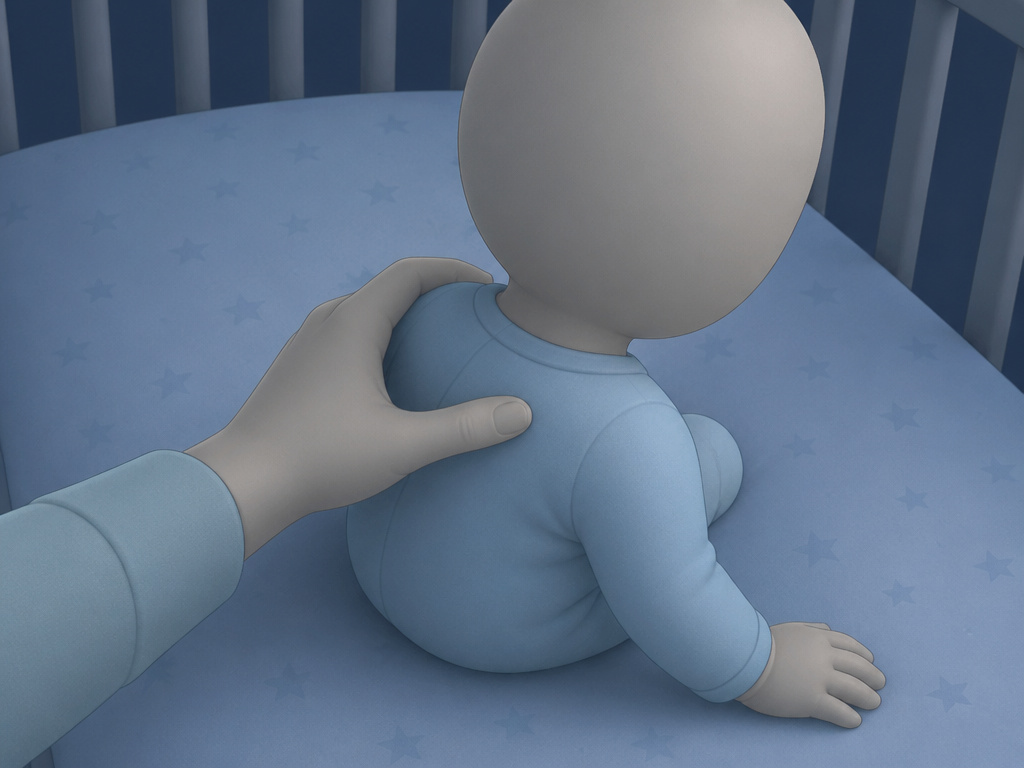
They practice. Rolling over, crawling, sitting up, these skills represent massive neurological leaps. When a baby’s brain is wiring these circuits, the drive to rehearse is overwhelming, and it doesn’t switch off at bedtime. It’s pure developmental momentum.
You’ll see it most during periods of light sleep or at sleep cycle transitions, around 45-90 minutes after they first drift off. They half-awaken, the new skill fires, and suddenly they’re upright and confused. They often don’t know how to lie back down.
The sitting-up reflex is a motor program, not a choice. You can’t reason it away any more than you could stop them from blinking. The phase ends when the brain integrates the skill into its background map of the body.
This is why punitive methods or “crying it out” at this stage are misguided and ineffective. The baby isn’t refusing sleep; they’re obeying a developmental imperative they don’t understand. Your response must be mechanical and calm.
The 10-Degree Sleep Surface Rule (And Why It’s Non-Negotiable)
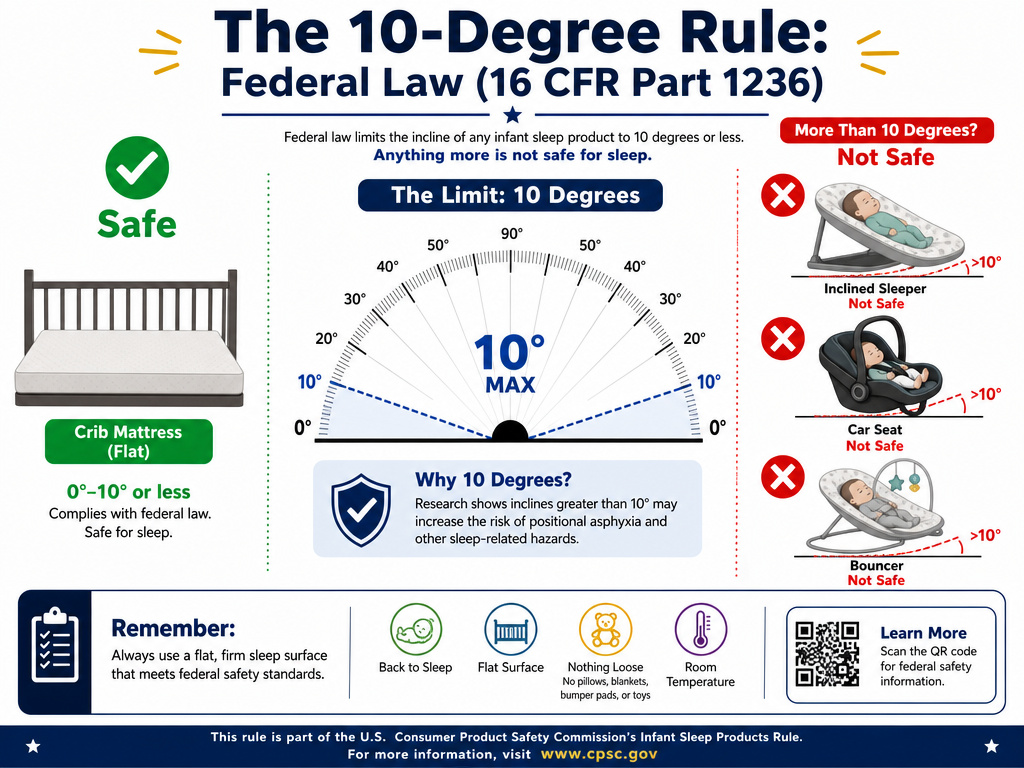
Any sleep surface that inclines more than 10 degrees along the infant’s head-to-toe axis is not safe for sleep. This isn’t a suggestion; it’s federal law.
The regulation 16 CFR Part 1236, which incorporates the ASTM F3118-17a standard, was enacted to eliminate dangerous inclined sleepers. These products, often marketed for reflux, were found to position infants in a way that could compress their airway and cause positional asphyxiation. The 10-degree maximum is the line the Consumer Product Safety Commission (CPSC) drew.
| Product Type | Safe for Sleep? | The Critical Reason |
|---|---|---|
| Flat, firm crib mattress | Yes | Allows unimpeded breathing and easy head movement. |
| Inclined sleeper >10° | No | Can cause chin-to-chest positioning and airway restriction. |
| Car seat (outside the car) | No | Same chin-to-chest risk; not designed for unsupervised sleep. |
| Rocker/bouncer | No | The angle is almost always greater than 10 degrees. |
This rule directly impacts your options. It means:
* Do not try to wedge your baby in place. Pillows, rolled towels, or foam positioners to prevent sitting are illegal for a reason. They create suffocation pockets.
* Check all sleep surfaces. This includes bassinet attachments on playards and travel cribs. If it slopes, it’s out.
* The law is your ally. It removes bad products from the market. If a product claims to help keep your baby lying down, check its angle first. If it’s not listed, assume it’s non-compliant.
Safe Containment vs. Dangerous Restraint
Your goal is to make sitting up so physically awkward that your baby usually won’t bother, while leaving their airway and hips completely free. That’s containment. Restriction is anything that holds them in a specific position or could block their face.
Common mistake: Using a mesh bumper or crib liner to block the baby from pulling up on the crib rails. These can detach, creating a strangulation hazard, and give a false sense of security. The only safe use of mesh is as a permanent, structural part of a crib side.
Safe Containment Tools:
- Wearable Blankets (Sleep Sacks): The gold standard. A well-fitting sleep sack with enclosed arms but loose leg room limits the ability to draw the knees up and rock forward into a sit. It adds just enough friction.
- Transitional Products like Merlin’s Magic Sleepsuit: These padded suits inhibit fine motor movements without overheating. They are for pre-rolling infants only. Once your baby can sit, they can likely roll in the suit, which is a suffocation risk. Check the weight limit.
- A Firm, Flat Mattress: This is the foundation. A soft surface lets a baby sink and get leverage. A firm one gives nothing to push against.
Dangerous Restraint Tools (Never Use These):
- Swaddles (once rolling starts): A swaddled baby who rolls onto their stomach cannot push up to breathe.
- Sleep Positioners/Wedges: Illegal under the 10-degree rule and a proven suffocation risk.
- Pillows or Crib Bumpers: Can be used as a step to climb or can cover the face.
- Tethering or Strapping: Any device that ties the baby to the mattress is an immediate strangulation hazard.
The line is physical safety, not convenience. A safe tool makes the action difficult; a dangerous tool makes it impossible, until it fails catastrophically.
Step-by-Step: Your Nighttime Response Plan
When you hear the rustling and see the silhouette sitting up, follow this sequence. It’s designed to be boring, repetitive, and effective.
- Wait 60 seconds. Do not rush in immediately. Sometimes they will fuss, then flop back down on their own. Intervening too fast teaches them that sitting up guarantees your appearance.
- Enter calmly, with minimal light and no talking. Do not make eye contact. Your energy should be that of a maintenance robot, not an engaging parent.
- Lay them down gently on their back. Place one hand firmly on their chest for a slow count of three. This physical pressure helps reset their posture.
- Walk out immediately. Do not linger to pat or shush beyond that three-second chest hold.
- Repeat as necessary. The first few nights, this could be 10-15 times. It is exhausting. It is also the only way through.
What happens if you skip the wait? You become part of the sleep cycle. The baby learns that sitting up is the button that summons you, and the phase will last weeks longer.
What if they cry hysterically when laid down? Ensure they are not hurt, hungry, or wet. If needs are met, the crying is frustration. The response is the same: lay them down, hand on chest, leave. Consistency is the comfort.
Gear Check: Is Your Sleep Space Still Safe?
Sitting up is a safety milestone that demands a re-inspection of the entire sleep environment. Use this checklist.
- Crib Mattress Height: Is it at the absolute lowest setting? If the crib rail is below your baby’s nipple line when they stand, it’s too high. Lower it today.
- Everything Out of the Crib: No lovies, no pillows, no padded bumpers. A stuffed animal can become a step stool.
- Monitor Cord Safety: Ensure the baby monitor cord is 3 feet away from the crib and secured. A sitting baby can grab and pull.
- Firmness Test: Press on the mattress. It should snap back immediately with no indentation. A soft, sagging mattress makes pushing up easier.
- Bassinet Limits: If you’re still using a bassinet, stop. The Silver Cross Sleep&Go manual, like most, states to discontinue use when an infant begins to push up on hands and knees or reaches 20 lbs. A sitting baby has exceeded this limit.
This is also the moment to evaluate the crib itself. If it’s a converted toddler bed without sides, a sitting baby can easily roll out. Consider adding certified bed rails for a first big bed. For younger infants still in a crib, the focus is on a certified, firm crib mattress.
How Long This Phase Lasts (And When to Worry)
The intense, nightly sit-up party typically lasts 3 to 7 nights. The brain integrates the skill, the novelty fades, and sleep returns. You might see resurgences during other developmental leaps (like pulling to stand) but they’re usually shorter.
Red flags that warrant a pediatrician call:
- The phase continues with no decrease in frequency after two full weeks.
- Your baby seems genuinely distressed, not just fussy, when sitting up.
- You notice signs of discomfort or pain when they move.
- It’s accompanied by a significant loss of already-established sleep skills (like suddenly waking every hour when they previously slept through).
Otherwise, trust the timeline. Your consistency is the drumbeat that helps their brain settle into the new normal. Ensure their safe sleep bedding is simple, a fitted sheet over a firm nursery mattress, and that the room is dark and cool.
Frequently Asked Questions
Is it OK to let my baby sit up in the crib until they fall asleep?
No. An infant who falls asleep sitting up is at high risk for positional asphyxia. Their heavy head can fall forward, chin to chest, and block their airway. They lack the muscle tone to correct this position. You must always lay them down on their back on a flat surface.
What sleep sack is best for preventing sitting up?
Look for a sack with a snug armhole and torso but a roomy, hip-healthy leg area. Brands like Halo, Woolino, and Kyte BABY make well-designed ones. The key is the fit, it should be snug enough not to ride up but loose enough at the hips to allow natural leg movement. Avoid sacks with extra bulk between the legs that could help them get leverage.
My baby sits up and then screams because they can’t lie down. Help?
This is the core of the phase. They haven’t learned the reverse motor plan. Your job is to be their external motor cortex. Go in, lay them down with minimal interaction (the chest-hand hold), and leave. You are not teaching them to lie down; you are providing the physical reset while their brain learns the pathway. It clicks faster than you think.
Are weighted sleep sacks or blankets safe to prevent sitting?
The AAP and the official infant safe sleep guidelines advise against weighted products for infants under 12 months. The weight can impair breathing and make it harder for a baby to reposition themselves if they roll. The risk of respiratory depression outweighs any potential sleep benefit.
Could this mean my baby is ready for a toddler bed?
Not by itself. Sitting up is a motor skill, not an indication of readiness to transition out of a crib. The main reasons to switch to a bed for a 3-year-old are climbing out or exceeding the crib’s height/weight limit. If they are not attempting to climb, the crib, with the mattress lowered, is the safest place. Adding safety bed rails is for when you make that switch, not before.
The Bottom Line
You stop a baby from sitting up in bed by managing the environment, not the baby. Anchor your strategy in the federal mandatory sleep product regulations: a firm, flat surface and no added gear. Use a sleep sack for safe containment, lower the crib mattress, and respond at night with boring consistency.
This phase is short. The safety rules are not. Prioritize a certified firm cot mattress over a temporary fix, and remember that the Consumer Product Safety Commission guidance exists to filter out dangerous products so you don’t have to. Your job is the calm, repetitive reset. Their growing brain will handle the rest.
