
Will Newborn Sleep If Hungry? Critical Data on Stomach Size
This post contains affiliate links. As an Amazon Associate we earn from qualifying purchases.
A hungry newborn will often sleep instead of cry. This is not peaceful rest, it’s a depletion response and a major red flag for hypoglycemia, which can cause brain injury if not corrected. You must wake a newborn to feed every 2-3 hours, day and night, for the first two weeks minimum, regardless of whether they signal hunger.
That answer contradicts every instinct about letting a sleeping baby lie. The reason is mechanical: a newborn’s stomach holds about 20 mL at birth, the size of a cherry tomato. Breast milk empties in roughly an hour. Their tiny fuel tank runs dry fast, and their immature brain can’t sustain the energy to cry. Sleep becomes a last-ditch energy-saving mode.
What follows breaks down the physiology that makes scheduled feeds non-negotiable, the specific hypoglycemia thresholds from pediatric guidelines, and how to spot the subtle cues that come before a baby shuts down.
Key Takeaways
- A newborn’s stomach capacity is approximately 20 mL, dictating a feeding interval of about 1-2 hours, not 3-4.
- Hypoglycemia (low blood sugar) is a silent emergency; lethargy and excessive sleep are primary symptoms, not just crying.
- The American Academy of Pediatrics recommends intervention if blood glucose falls below 45 mg/dL in the first 24 hours.
- “Cluster feeding” (several short feeds over a few hours) is a normal, healthy pattern and helps establish milk supply.
- Never wait for crying. Early hunger cues include stirring, mouthing, and hand-to-mouth movements.
The Science Behind the Sleep: Stomach Capacity & Hypoglycemia
The rule “never wake a sleeping baby” is dangerous for newborns. Their sleep-wake cycles and hunger mechanisms aren’t developed yet. The driving force isn’t calendar age; it’s stomach size and metabolic rate.
Gastric emptying time for a 20 mL breast milk feed is approximately one hour in a term neonate, and the normal neonatal sleep cycle is also about one hour. This suggests feeding intervals should align with these one-hour biological rhythms, not arbitrary three- to four-hour schedules.
This insight comes from a 2013 analysis in Acta Paediatrica that reviewed decades of anatomical data. The 20 mL stomach capacity is a fixed, mechanical limit. Think of it like a car with a one-gallon gas tank, you wouldn’t expect it to drive for four hours on a single fill. A baby’s brain is the engine, and glucose is the fuel. When the fuel gauge hits empty, the engine sputters. Crying takes substantial energy. A starving baby conserves the last of its glucose for basic organ function by becoming lethargic and sleeping.
This is the direct path to neonatal hypoglycemia. The Brigham and Women’s Hospital clinical guideline states that hypoglycemia can cause “hypoglycemic neurologic injury,” and that the first 48 hours are a period of particularly high risk. The brain’s only fuel is glucose; without it, cells start to malfunction.
Where this goes sideways: Assuming a sleepy, “good” baby is a well-fed baby. By the time a newborn is listless and difficult to rouse, their blood sugar may already be in a danger zone that requires immediate medical intervention.
The Hypoglycemia Thresholds You Need to Know
Protocols exist for a reason. Here are the numeric thresholds that trigger intervention in hospital settings, based on the American Academy of Pediatrics and the British Association of Perinatal Medicine (BAPM).
| Time After Birth | Blood Glucose Threshold for Intervention | Source / Guideline |
|---|---|---|
| First 4 hours | < 40 mg/dL | AAP / NCBI Bookshelf |
| 4 to 24 hours | < 45 mg/dL | AAP / Brigham & Women’s |
| First 72 hours (for at-risk infants) | Feed if >3 hours since last feed until glucose > 36 mg/dL (2.0 mmol/L) | BAPM Guideline |
These aren’t abstract numbers. A reading below 45 mg/dL means the baby’s brain is not getting enough fuel. The treatment is immediate feeding, either breast, formula, or, in severe cases, dextrose gel or IV sugar. The UCLA Health newborn feeding handbook is blunt: “Newborns need to grow quickly… They require feedings at nighttime, so wake them every three hours at night to feed at first.”
How to Read Your Newborn’s True Hunger Cues (Before They Crash)
Crying is a late-stage hunger cue. It’s the equivalent of a gas light flashing on your dashboard, you’re already on fumes. To prevent the metabolic slump that leads to excessive sleep, you need to watch for the early signals.
The sequence typically follows three stages: 1. Early Cues: Stirring, stretching, turning head side-to-side (rooting), smacking lips, bringing hands to mouth. 2. Active Cues: Squirming, increased physical movement, trying to latch onto anything near the cheek. 3. Late Cue: Crying, agitated movement, turning red.
Your goal is to respond during the early phase. A baby who starts feeding while calm and alert will latch better, feed more effectively, and take in more milk than a frantic, crying infant. This is the core of “responsive feeding” recommended by pediatric hospitals.
The part nobody mentions: That hand-to-mouth motion isn’t just random. It’s a hardwired newborn reflex to find food. If you see it, offer the breast or bottle even if it’s only been an hour. This might mean 10-12 feedings in a 24-hour period for a breastfed baby. It’s normal, not a sign of low supply.
What “Cluster Feeding” Really Is (And Isn’t)
You’ll have evenings where your baby seems to feed constantly, fussing at the breast or bottle every 30 minutes for hours. This is cluster feeding, and it serves two critical purposes: * It boosts your milk supply by providing frequent stimulation. * It helps the baby “tank up” before a longer sleep stretch (which, for a newborn, might mean 3 hours).
It is not a sign your baby is starving or that your milk is “insufficient.” It’s a biologically normal pattern. The key is to ensure the baby is actually transferring milk during these sessions, you should hear swallows and see rhythmic jaw movement.
The Critical First Two Weeks: Why Scheduled Feeds Are Non-Negotiable
Before your baby regains their birth weight (usually by 10-14 days), you are their external regulator. Their body cannot afford a calorie deficit. The MedlinePlus guide to infant feeding patterns states clearly: “Your baby should not sleep more than 4 hours at night without feeding.”
Here is the bare-minimum schedule for the first 14 days:
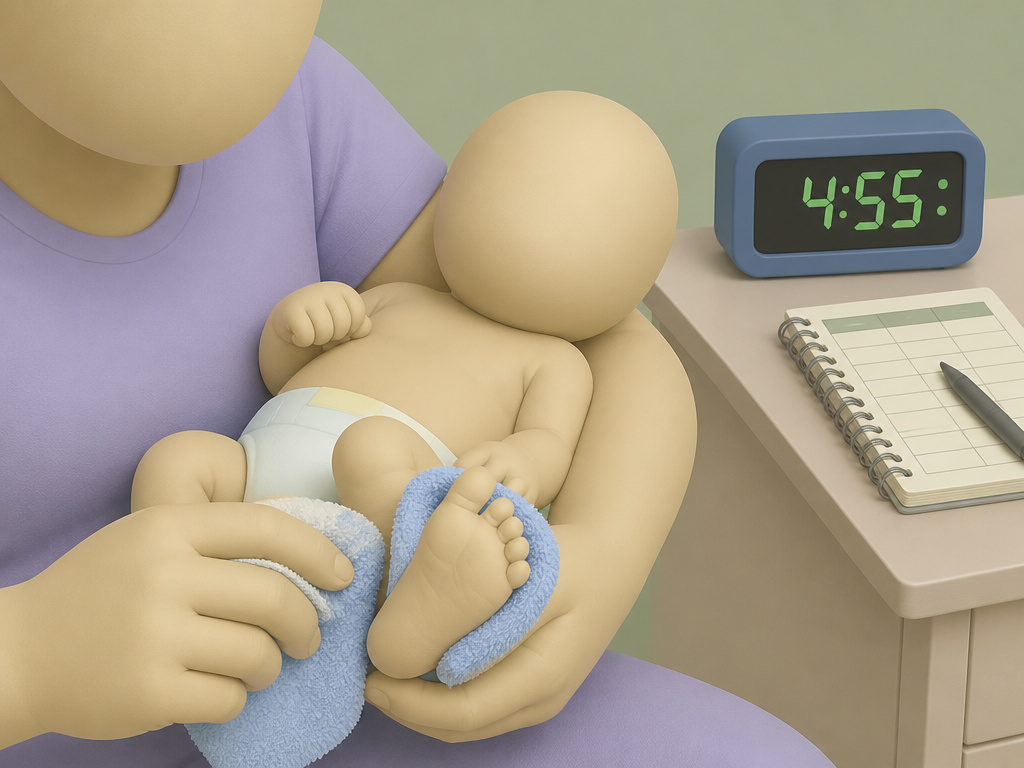
- Set an alarm. Feed at least every 3 hours from the start of one feed to the start of the next. That means if a feed begins at 2:00 AM, the next must begin by 5:00 AM.
- Wake them gently. Undress them to a diaper, change their diaper, use a cool washcloth on their feet or back. Be persistent until they are awake enough to feed.
- Ensure effective feeding. A sleepy feed doesn’t count. For breastfed babies, ensure active sucking and swallowing for at least 10-15 minutes per side. For bottle-fed babies, watch for a steady pace without dribbling.
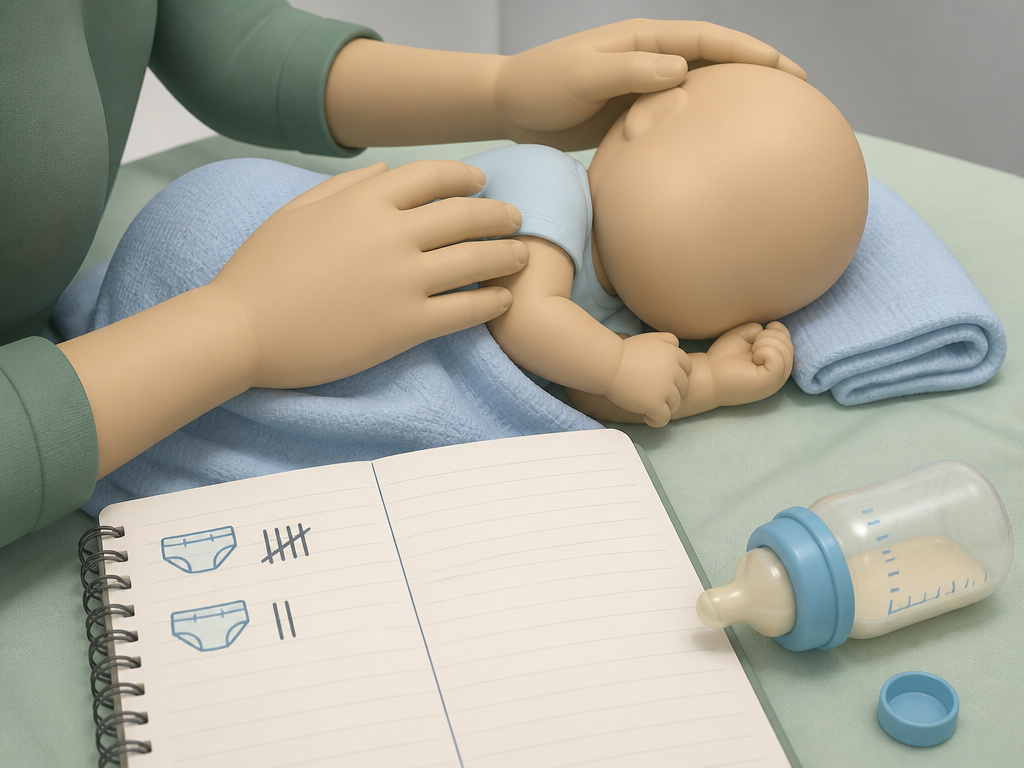
- Track output. This is your data. By day 4, you should see at least 6 wet diapers and 3-4 yellow, seedy stools every 24 hours.
This schedule protects against hypoglycemia and ensures steady weight gain. Once your pediatrician confirms good weight gain, you can switch to feeding on demand, but you must still watch the clock. “On demand” for a newborn still shouldn’t exceed 4 hours between feeds at night.
When Excessive Sleepiness Signals a Problem Beyond Hunger
Sometimes, a baby who is hard to wake and feeds poorly has an underlying issue. It’s vital to know the difference between a normally sleepy newborn and one in distress.
Normal Newborn Sleepiness: Babies are often very sleepy in the first 24-48 hours. They should still be rousable enough to feed 8-12 times in 24 hours. After a good feed, they fall into a deep, satisfied sleep.
Red-Flag Sleepiness (Contact Your Pediatrician Immediately):
- The baby is difficult or impossible to rouse for feeds.
- Feeds are extremely short (less than 5 minutes) and the baby falls asleep at the breast or bottle immediately.
- There are fewer than 4 wet diapers in 24 hours after day 3.
- The baby is floppy, has a weak cry, or shows signs of jaundice (yellowing of skin or eyes).
- You note fever or labored breathing.
Stanford Medicine’s hypoglycemia guideline notes that symptoms like sleepiness and jitteriness “occur in many infants who do not have hypoglycemia as part of normal newborn transition.” This is why correlation with feeding and diaper output is essential. If the sleepiness is paired with poor intake, it’s an urgent concern.
Creating a safe, conducive sleep environment is part of the solution. A proper newborn bedside sleeper allows for safe close contact, making these frequent night feeds more manageable. Similarly, using a safe wearable blanket instead of loose bedding reduces SIDS risk without overheating your baby, who needs energy for feeding, not temperature regulation.
Frequently Asked Questions
How long can a newborn sleep without feeding?
Healthy, gaining newborn should not go longer than 4 hours between feeds in the first two weeks, as per MedlinePlus guidelines. Most will need to feed every 2-3 hours. Letting them sleep longer risks hypoglycemia and inadequate weight gain.
What are the signs of hypoglycemia in a newborn?
The signs are often subtle: lethargy (excessive sleep), difficulty waking, floppiness (hypotonia), weak suck or feeding difficulties, low body temperature, and jitteriness or tremors. Crying is a late sign.
My newborn falls asleep while feeding. What should I do?
This is common. To keep them awake, try stripping them to a diaper, tickling their feet, rubbing their back, or burping them mid-feed to reposition. Alternate breasts or pause the bottle to provoke a rooting reflex. The goal is active, awake feeding.
Is it okay to give a pacifier if my newborn seems hungry but sleepy?
No. In the early weeks, a pacifier can mask hunger cues and lead to inadequate feeding. Sucking for nutrition should always be prioritized over non-nutritive sucking until feeding and weight gain are well-established. Focus on waking them for a real feed first.
Before You Go
The image of a sleeping newborn is peaceful, but silence isn’t always golden. In the first critical weeks, you are the guardian of their glucose levels. Feed by the clock, not just by the cry. Watch for the early hand-to-mouth signals, and trust that the exhausting cycle of two-hour feeds is protecting their developing brain. Once weight gain is steady, you can follow their lead. Until then, wake that sleeping baby. Their long-term health depends on those small, frequent meals you provide, even in the middle of the darkest night. For their primary sleep space, always choose a certified infant bed designed for safe sleep, keeping the environment as risk-free as the feeding schedule is vigilant.
