
Do Newborns Sleep All Day? The 14-18 Hour Sleep Reality Explained
This post contains affiliate links. As an Amazon Associate we earn from qualifying purchases.
Newborns do sleep most of the day, but not in one long stretch. They sleep 14 to 18 hours total across a 24-hour period, broken into short 1-4 hour segments because their tiny stomachs need frequent feeding. A newborn spends roughly two-thirds of each day asleep. This pattern is normal, not lazy, and it’s driven by biological needs for growth and brain development before their internal clock matures.
That “two-thirds of the day” figure from the Agency for Healthcare Research and Quality isn’t just a statistic. It’s the mechanical reason your days and nights blend together during the first weeks. Newborns lack a mature circadian rhythm, the internal body clock that aligns sleep with darkness. Their sleep is governed by hunger and growth, not the sun.
What follows is a breakdown of the numbers, the biology behind the around-the-clock schedule, the critical safety rules that apply during all those sleep hours, and the realistic timeline for when longer night sleeps begin.
Key Takeaways
- Newborns sleep 14–18 hours daily, but in segments of 1–4 hours, not one long stretch.
- They spend about two-thirds of each 24-hour period asleep, a fact noted in government health materials.
- “Sleeping through the night” (6–8 hours) typically doesn’t happen until at least 3 months, when circadian rhythms emerge.
- Never try to keep a newborn awake during the day to promote night sleep, overtired babies sleep worse.
- Safe sleep practice (alone, on back, in crib) is non-negotiable for every single sleep session, day or night.
How Many Hours Do Newborns Actually Sleep?
The short answer is a lot, but the range is wide. According to the National Sleep Foundation, cited by KidsHealth, newborns should get 14–17 hours of sleep over 24 hours, with some sleeping up to 18–19 hours. Stanford Children’s Health notes a similar range of 16 to 17 hours per day.
A newborn infant spends 2/3 of each day asleep; by 6 months only half of each day is spent asleep. Sleep consolidation is an important aspect of the infant’s sleep development. . Agency for Healthcare Research and Quality, Sleep in Preterm Infants
This means out of every 24-hour period, your newborn is asleep for about 16 of them. The sleep isn’t continuous. It’s fragmented into chunks that last anywhere from 30 minutes to 4 hours, punctuated by feeding, diaper changes, and brief awake periods. A baby logging 17 hours of sleep might do so across 8 or 9 separate sleep sessions.
| Age | Total Sleep (Hours/24hr) | Typical Sleep Segment Length | Primary Driver |
|---|---|---|---|
| Newborn (0-3 months) | 14 – 18 hours | 1 – 4 hours | Hunger & growth |
| 4 – 12 months | 12 – 16 hours | 4 – 8+ hours (night) | Developing circadian rhythm |
| 1 – 2 years | 11 – 14 hours | 10 – 12 hours (night) | Established sleep-wake cycle |
This fragmentation is the feature, not a bug. A newborn’s stomach is about the size of a cherry, holding only 1-2 teaspoons of milk. They physically cannot go long without eating, and their rapid brain development demands constant fuel. Sleeping in short bursts ensures they wake to feed.
The Science Behind the Round-the-Clock Sleep
Why don’t newborns just sleep 8 hours at night and take a long nap? The answer is in their undeveloped neurology and sleep architecture.
Newborns are born without a functional circadian rhythm. This internal clock, which uses light cues to regulate sleep-wake cycles, begins to emerge only around 10–12 weeks of age, according to a systematic review in Sleep Medicine Reviews. Until then, sleep is distributed evenly across day and night. This is why many newborns have their longest awake periods in the middle of the night, a phenomenon often called “night-day confusion.”
Their sleep stages are also different. Adults cycle through light, deep, and REM (dream) sleep. Newborns spend nearly half their sleep time in Active Sleep, which is similar to REM. This is a lighter sleep state where you’ll see fluttering eyelids, irregular breathing, and small movements. It’s easier for them to wake from this state, which again ties back to frequent feeding needs. Quiet Sleep, their deeper state, is shorter.
Where this goes sideways: Trying to “fix” night-day confusion by limiting daytime sleep. An overtired newborn has a harder time falling asleep and staying asleep. Their nervous system becomes overloaded, making those short night wakings even more frantic.
The goal in the first months isn’t to train for the night. It’s to follow their lead, feed on demand, and provide a safe place for all those sleep hours to happen. The rhythm will come with biological maturity.
Safe Sleep: The Non-Negotiables For All Those Hours
With a newborn sleeping two-thirds of the day, their sleep environment is their primary environment. Safety isn’t a sometimes rule. The American Academy of Pediatrics guidelines apply to every nap and every night sleep, without exception.
The ABCs of safe sleep are your constant checklist: * A is for Alone. The crib or bassinet should contain nothing but the baby and a fitted sheet. This means no pillows, blankets, stuffed animals, crib bumpers, or positioners. The use of a firm, approved infant mattress is critical. * B is for Back. Always place your baby on their back to sleep. This single practice has reduced SIDS rates by over 50% since the 1990s. * C is for Crib. Use a safety-approved sleep surface: a crib, bassinet, or portable play yard. Couches, armchairs, and adult beds are not safe for infant sleep. A bedside bassinet allows for safe room-sharing, which is recommended for the first 6-12 months.
Other mandatory rules include avoiding overheating, offering a pacifier at sleep time once breastfeeding is established, and ensuring no one smokes around the baby. Products that claim to reduce SIDS risk, like special monitors or positioners, are not recommended and can be dangerous.
Before you start: Never fall asleep with a baby on a couch or armchair. The risk of suffocation is extremely high. If you’re feeding in bed and feel drowsy, place the baby back in their bassinet for newborns immediately, then rest.
Newborn Sleep vs. “Sleeping Through the Night”
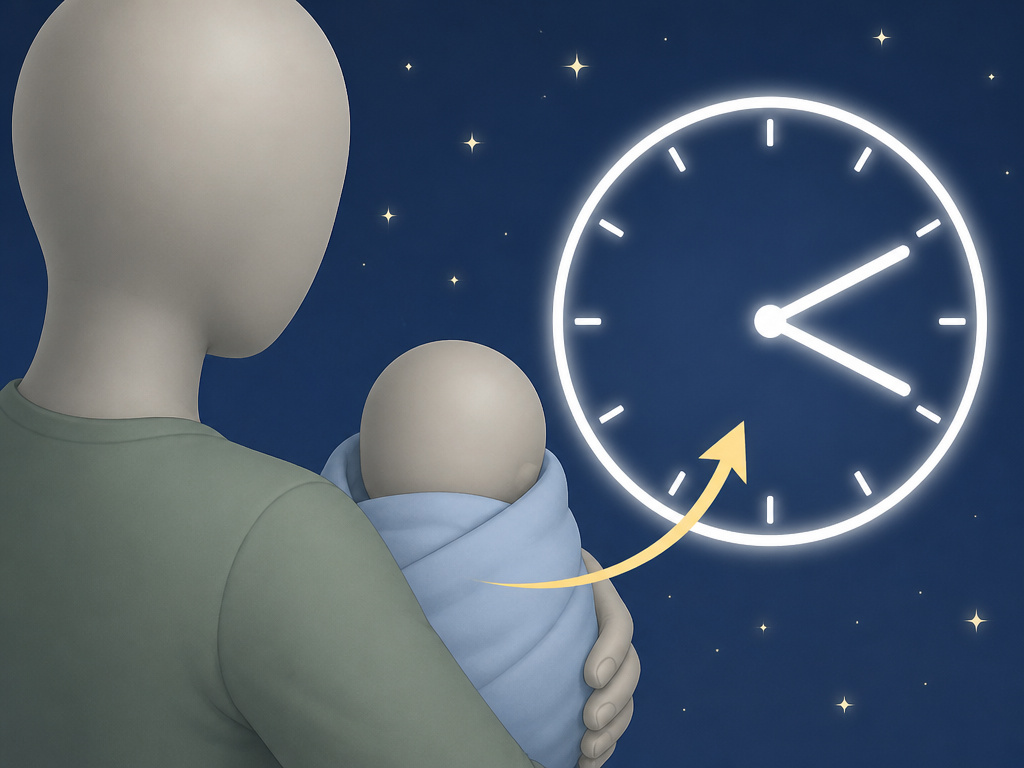
This is where parental expectations often crash into biological reality. In pediatric terms, “sleeping through the night” means a 6-8 hour stretch without waking to feed. Most newborns are incapable of this.
Their nutritional needs and sleep cycles simply don’t allow for it. As the Stanford Medicine infant sleep overview notes, most babies don’t start sleeping through the night without waking until they are about 3 months old, and some not until closer to 1 year. The milestone is usually tied to reaching a weight of around 12-13 pounds, which allows for longer metabolic reserves.
Until your baby shows good weight gain (typically after the first couple of weeks), you should wake them to feed every 3-4 hours. After that, you can let them wake you. The long night stretches will gradually lengthen as their stomach capacity grows and their circadian rhythm kicks in.
| Sign It’s Just Normal Newborn Sleep | Sign to Discuss With a Pediatrician |
|---|---|
| Waking every 2-4 hours to feed | Difficulty waking for feeds, extreme lethargy |
| Noisy, irregular breathing during active sleep | Pauses in breathing longer than 10 seconds, turning blue |
| Grunting, stirring, and brief fussing between cycles | Inconsolable crying for hours, especially with fever |
| Longer awake periods at night (night-day confusion) | No weight gain or weight loss over several days |
How to Support (Not Force) Better Sleep Patterns

You can’t make a newborn’s brain mature faster, but you can create conditions that support the natural development of their sleep-wake cycles. Think of it as setting the stage for when their internal clock is ready to take over.
First, differentiate day from night without keeping baby awake. During daytime feeds and wake windows, keep things bright and lively. Engage with them. For night feeds and changes, keep the lights dim and interactions quiet and boring. Use a soft voice and avoid play. This sends subtle cues about what time it is.
Second, watch for sleep readiness signs instead of waiting for a meltdown. Rubbing eyes, yawning, looking away, and mild fussing are your signals. Putting a baby down drowsy but awake helps them learn the skill of self-soothing, which is crucial for linking sleep cycles later on.
Third, use tools that soothe but don’t create unsafe dependencies. Swaddling can mimic the snugness of the womb and reduce the startle reflex. Once you see signs of attempting to roll, stop swaddling immediately. For many parents, a good set of swaddle blankets or a wearable sleep sack is a safer alternative to loose blankets. White noise can also dampen household sounds that might trigger a wake-up from light sleep.
Finally, accept help and sleep when you can. The “sleep when the baby sleeps” advice is cliché because it’s true. Letting others handle a feeding or a walk so you can rest is not a luxury, it’s a necessity for maintaining your own health and alertness.
Frequently Asked Questions
Is it normal for a newborn to be awake for 4 hours straight?
No, it is not typical. Newborns have very short wake windows, usually 45 minutes to 1.5 hours. A 4-hour awake stretch likely means they are overtired, which makes it harder for them to settle. Look for those earlier, subtler sleep cues like staring off or yawning.
Should I wake a sleeping newborn to feed?
Yes, in the early weeks. Follow your pediatrician’s guidance, but generally, you should wake a newborn to feed every 3 hours until they have regained their birth weight and are gaining steadily. After that, you can let them set the schedule and sleep longer stretches at night if they are able.
Why does my newborn make so much noise while sleeping?
The grunts, squeaks, and irregular breathing are normal. It’s often due to Active (REM) sleep and an immature digestive system. They also primarily breathe through their noses, which can sound noisy. True concerning sounds are long pauses, gasping, or a consistent wheeze.
When will my newborn’s sleep schedule become predictable?
Predictability in sleep patterns often begins around 3-4 months as the circadian rhythm solidifies. You’ll notice longer, more consolidated sleep at night and more regular nap times during the day. A set “schedule” is more common after 6 months.
The Bottom Line
Newborns do sleep all day, just not in the way we adults think of sleep. Their 14-18 hour total is a patchwork of short, nutrient-driven naps that pay no attention to the clock. This is normal, healthy, and temporary. Your job isn’t to train them out of it but to keep them safe and fed through it. Use the ABCs of safe sleep as your anchor, follow their hunger cues, and know that the long night sleeps will come when their biology is ready, not a minute sooner. In the meantime, a comfortable baby bassinet by your side and a stack of trusted blankets for infants for swaddling are your best tools. The foggy first months pass. The safe sleep habits you build now last a lifetime.
