
Can a Newborn Sleep in a Playpen? The 7° Angle Rule
This post contains affiliate links. As an Amazon Associate we earn from qualifying purchases.
A newborn can sleep in a playpen only if it is equipped with a manufacturer-approved, firm, flat sleep accessory that meets specific safety regulations. The playpen must be in perfect condition, the mattress must fit with less than a 30 mm gap, and the sleeping surface cannot tilt more than 7 degrees from horizontal. Using a playpen without its designated sleep accessory, or adding soft bedding, turns a safe space into a documented suffocation hazard.
That 7-degree limit isn’t a suggestion. It’s the line drawn by Canadian law in the Playpens Regulations (SOR-2018-186) between a safe sleep surface and an inclined sleeper, which the U.S. Consumer Product Safety Commission has linked to infant deaths. The difference between a safe playpen nap and a dangerous one comes down to three measurable things: the accessory, the angle, and the absence of anything soft.
What follows is a breakdown of those three non-negotiable rules, the specific product standards they reference, and the data on what happens when they’re ignored. By the end, you’ll be able to look at any playpen setup and know in thirty seconds whether it passes for safe sleep.
Key Takeaways
- A playpen is only safe for newborn sleep if it includes a specific, firm sleep accessory sold for that model. The playpen’s standard floor pad is not approved for sleep.
- Canadian law mandates the sleep surface be nearly flat, no more than a 7° angle from horizontal. Surfaces steeper than this are classified as hazardous inclined sleepers.
- The mattress must be firm and must fit the space tightly, with less than a 30 mm gap between the pad and any side to prevent entrapment.
- Never add pillows, blankets, or extra padding. A 2001 CPSC report found soft bedding was a factor in almost 100 playpen deaths over a 13-year period.
- The safest choice for dedicated, overnight sleep is still a certified crib or bassinet. A playpen with a proper sleep accessory is a safe alternative, not always an equal.
The Short Answer: Yes, With Critical Conditions
Can a newborn sleep in a playpen? The answer is conditional. It hinges on a piece of hardware most parents don’t know the name for: the sleep accessory.
A sleep accessory is a specific, removable bassinet-like insert designed by the playpen’s manufacturer to create a firm, flat, contained sleep surface high up in the playpen’s frame. It is not the playpen’s default floor pad. The floor pad is for play, not for sleep. This distinction is the first and most common point of failure.
The regulations are explicit. According to Canada’s Playpens Regulations, a sleep accessory must have sides to confine the child and provide sleeping accommodation. It must also pass a 24 kg load test on its sleeping surface without damage. If your playpen didn’t come with a specific, labeled bassinet insert, it is not rated for infant sleep. Using it as a crib is a violation of its safety certification and a known risk.
Where this goes sideways: Using the playpen’s main floor for sleep. That surface is too low, too soft, and lacks the required containment sides. An infant can roll into a corner or against the mesh wall, leading to positional asphyxia where their airway is blocked. This scenario accounts for a significant portion of the playpen-related fatalities documented by safety commissions.
The warning label on every compliant playpen states it directly: “Children can suffocate on soft bedding. Do not place pillows, comforters or an additional floor pad in this playpen.” That warning exists because people did it, and infants died.
The 7° Angle That Decides Everything
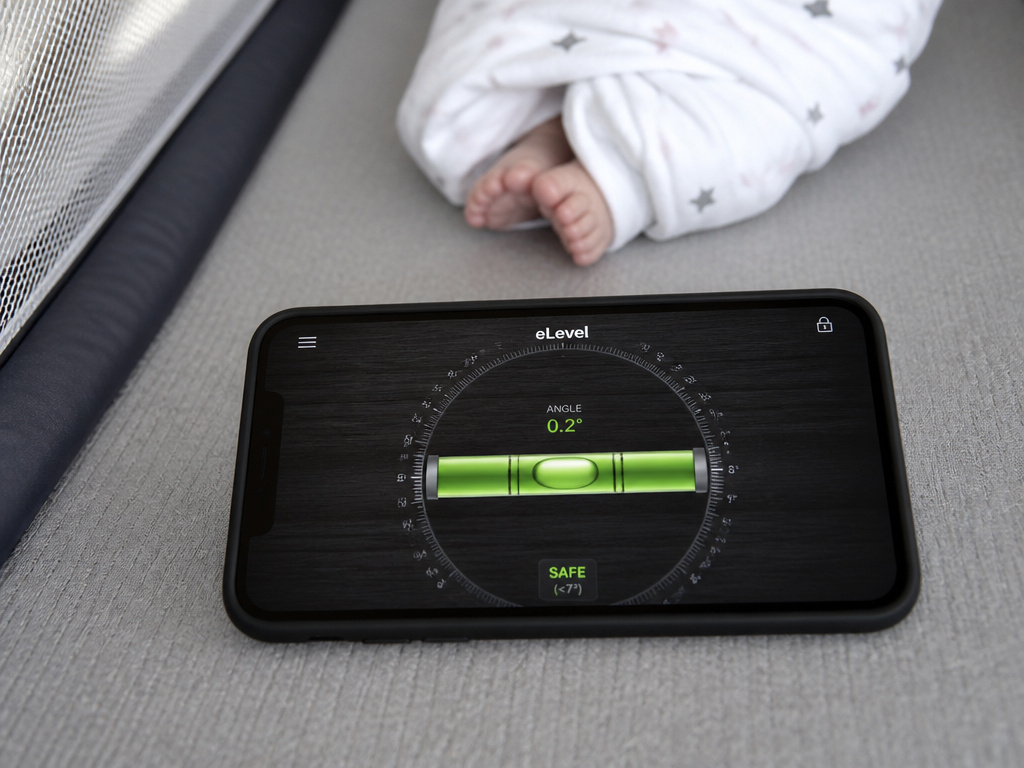
If the sleep accessory is the what, the angle is the how safe. The Playpens Regulations state that the angle of the sleeping surface of a sleep accessory must not exceed 7° from the horizontal.
Why that number? An incline beyond 7 degrees begins to mimic the design of “inclined sleepers,” a category of products that has been federally banned in the United States. The 2021 federal rule on infant sleep products was created after the CPSC tracked 451 incidents, including 59 fatalities, linked to these products. The mechanics are simple: an infant’s heavy head can slump forward in an inclined position, compressing their airway. They lack the muscle strength to reposition themselves.
| Sleep Surface Type | Maximum Allowed Angle | Primary Risk | Regulatory Status |
|---|---|---|---|
| Playpen Sleep Accessory | 7° from horizontal | Entrapment, falls | Mandatory (Canada SOR-2018-186) |
| Inclined Sleeper/Rocker | 10° from horizontal (old std.) | Positional Asphyxia | Banned (U.S. 16 CFR Part 1236) |
| Bassinet/Cradle | 10° from horizontal (U.S. Std.) | Containment failure | Must meet ASTM F2194 |
This is not a minor technicality. It is the difference between a product regulated as a safe sleep space and one that is legally considered a hazard. When you set up the sleep accessory, use a level app on your phone. If the surface tilts more than the slightest bit, it’s not set up correctly, or the product is defective. Do not use it.
Three Non-Negotiable Safety Checks
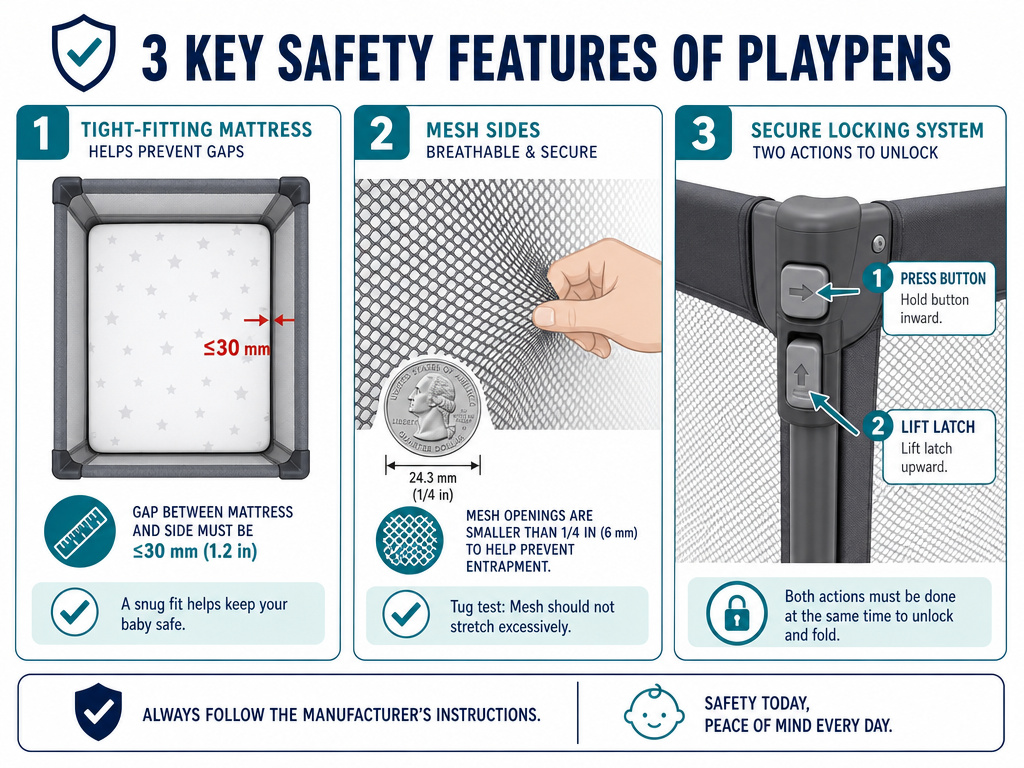
Before you place a newborn in a playpen for sleep, you must verify these three physical conditions. They are not optional best practices; they are the criteria that turn a playpen into a legally-compliant sleep space.
- The Mattress Fit: The 30 mm Gap Rule. The supplied floor pad or mattress must leave a gap of no more than 30 mm (about the width of two adult fingers) between itself and any side of the playpen or sleep accessory. A larger gap creates an entrapment hazard where an infant could roll and get stuck. This is why you should never use a mattress or pad from a different product.
- The Mesh Integrity: The ¼ Inch Test. If your playpen has mesh sides, the mesh openings must be smaller than ¼ of an inch. This prevents buttons on infant clothing from catching and, more critically, prevents a child from getting their head entrapped. You should also tug firmly on the mesh to ensure it is securely attached to the frame with no tears or loose stitching.
- The Locking Mechanism: The Two-Action Rule. For folding playpens, the latching mechanism must require either a single action with a strong force (at least 45 Newtons) to open, or at least two separate, simultaneous actions. This prevents a curious toddler or an accidental bump from collapsing the pen on a sleeping infant. Before every use, listen for a solid click when setting up.
Common mistake: Assuming a after-market or “perfectly fitting” mattress from a different brand is safe. Even a 35 mm gap is a violation of the standard and a real risk. The manufacturer’s pad is the only one tested and certified for that specific model.
These checks take two minutes. They address the physical failure modes that have actually harmed children. Skipping them because the playpen “looks fine” is how accidents happen.
Playpen vs. Bassinet: Which Is Safer for a Newborn?
This is the core question for parents choosing a sleep space. A certified bassinet or crib is designed and tested for one primary function: uninterrupted, safe sleep. A playpen is designed as a portable, multi-purpose containment area. The sleep accessory is an add-on to extend its functionality.
The Graco Pack ‘n Play Playard with the removable bassinet insert is a classic example of a playpen system that meets sleep accessory standards. A dedicated bassinet like the Halo BassiNest Swivel Sleeper is engineered solely for sleep, often with features like bedside height adjustment and wall-hugging swivel.
| Feature | Playpen with Sleep Accessory | Dedicated Bassinet/Crib |
|---|---|---|
| Primary Design | Multi-purpose (play, travel, change) | Single-purpose (sleep) |
| Portability | High (often folds compactly) | Low to Medium (bassinets are portable; cribs are not) |
| Sleep Surface Firmness | Must meet 24 kg load standard | Must meet crib/bassinet firmness standards |
| Longevity | Sleep accessory has low weight/height limit; child graduates to playpen floor | Bassinet outgrown by ~5 mos; crib usable for years |
| Best For | Travel, temporary sleeping space, multi-room use | Primary sleep space, bedside sleeping, long-term use |
The bassinet wins for dedicated, overnight sleep in your bedroom. Its standards, like the 7.5-inch side height requirement in the U.S. Bassinet rule, are specifically designed to prevent falls for non-mobile infants. A playpen with a proper sleep accessory is a safe, regulated alternative, ideal for grandparents’ houses or vacation. It is not inherently less safe if all rules are followed, but its design introduces more variables, like proper accessory installation, that must be checked every single time.
What Absolutely Does Not Belong in a Sleep Playpen
The list is short because the space should be bare. Every item added is a vector for risk.
- Pillows, Cushions, or Nap Nests. These create a soft, pliable surface that can conform to an infant’s face.
- Loose Blankets, Sheets (non-fitted), or Quilts. These are entanglement and suffocation hazards. Use a wearable sleep sack or swaddle instead.
- Stuffed Animals or Loveys. Even small ones can shift and block an infant’s nose and mouth.
- Weather Covers or Canopies. Unless they are made of rigid, breathable mesh and are officially part of the product, they can impair airflow or detach.
- Extra Mattresses or Padding. This violates the 30 mm gap rule and almost always creates a softer, unsafe sleep surface.
The evidence is historical and stark. The CPSC’s 2001 report on playpen deaths analyzed incidents over 13 years and found soft bedding was a factor in almost half of the fatalities. The agency’s subsequent campaign with Mattel wasn’t based on theory. It was a direct response to a repeated, tragic pattern.
I won’t recommend any after-market sleep positioners or head-shaping pillows, no matter the marketing claims. There is no safety standard that governs these for sleep in a playpen, and they often fail the basic “firm, flat, empty” rule. If your pediatrician recommends one for a medical reason, that’s a different conversation, but for typical safe sleep, the surface must be clear.
Before You Go
A playpen can be a safe sleep space for a newborn, but the word “can” is doing all the work. It requires the specific factory sleep accessory, a setup so level it passes the 7-degree test, and a mattress that fits with no more than a two-finger gap. It demands you ignore every instinct to make it “cozier” with a blanket.
For a primary sleep space, the simplest path is still a dedicated crib or bassinet. Its entire reason for existing is safe sleep. But for travel or a temporary setup, a playpen like the Graco Pack ‘n Play with its official bassinet insert, set up perfectly, meets the legal standard. Just know the standard, check the angles, and keep it empty. Your vigilance is the final, most important safety feature.
Frequently Asked Questions
What is the difference between a playpen and a pack and play?
There is no practical difference. “Pack and Play” is a trademarked brand name from Graco that became generic shorthand for a portable, foldable playpen. All pack and plays are playpens, but not all playpens are that specific brand. The safety regulations apply to all products defined as playpens.
How long can a baby sleep in a playpen bassinet?
You must follow the manufacturer’s weight and height limits for the sleep accessory, which are always stricter than the playpen’s overall limit. Most playpen bassinets have a maximum weight of 15-18 lbs or until the infant can push up on hands and knees, whichever comes first. The playpen itself must not be used for a child taller than 90 cm, as per the mandatory warning label.
Is it safe to put a playpen mattress on the floor for sleep?
No. This defeats every safety feature. The floor pad is not a certified sleep surface. It lacks containment sides, is often softer, and places the infant in a position where rebreathing exhaled carbon dioxide is a risk. Safe sleep requires an elevated, firm, contained surface.
Can I use a memory foam mattress in a playpen?
You should not. Safety standards for infant sleep surfaces require firmness to prevent suffocation indentation. Memory foam is designed to conform to body shape, which is the opposite of what is needed. The CPSC safe sleep guidelines emphasize a firm, flat surface free of soft bedding.
Are playpens safe for overnight sleep?
If all conditions are met, approved sleep accessory, correct assembly, firm flat surface under 7°, tight-fitting mattress, then yes, a playpen is regulated as a safe sleep space for overnight sleep. However, for long-term primary use, a traditional crib is often more durable and convenient. The best crib mattress for a newborn is designed for years of nightly use.
