
How to Dress Your Newborn for Bed | The Right Layers & TOG
This post contains affiliate links. As an Amazon Associate we earn from qualifying purchases.
Dress a newborn for bed in a fitted, single-layer sleepsuit and a correctly sized, season-appropriate sleep sack, never loose blankets. The room should stay between 16°C and 20°C (61°F–68°F). Overheating is a documented SIDS risk factor, so the goal is a comfortably warm baby, not a hot one. Check the back of their neck, not their hands or feet.
That temperature range is the threshold where a baby’s own thermoregulation works with their sleepwear, not against it. Below 16°C, they burn calories shivering; above 20°C, the risk of dangerous overheating climbs with every degree. Your job isn’t to guess. It’s to measure, dress, and verify.
What follows: the four physical signs of overheating, why two 1.0 TOG sleep sacks don’t make a 2.0 TOG, the specific products that meet safety certifications, and the one fabric claim that actually has charity backing.
Key Takeaways
- Overheating is a direct SIDS risk factor. Dress for the room’s measured temperature, not the season.
- Check the back of the neck or chest, not hands or feet. Hot or sweaty skin means remove a layer immediately.
- Never use weighted swaddles, blankets, or sleep sacks for infants under one year, they restrict breathing and increase overheating risk.
- A sleep sack (wearable blanket) is safer than loose bedding. It must fit snugly at the neck and shoulders so the baby cannot slip inside.
- TOG ratings are not additive. Two 1.0 TOG sacks trap air between layers, creating a dangerous, unpredictable microclimate.
The 4-Step Temperature Check (and What It Really Means)
Your thermostat is the first piece of safety equipment. The consensus guideline of 16–20°C (61–68°F) comes from decades of SIDS research compiled by organizations like The Lullaby Trust. This band represents the environment where a baby can maintain a stable core temperature with minimal effort.
A baby’s primary method of temperature control is through their head and face. This is why head coverings, hats, bonnets, hoods, must be removed for sleep. Blocking this heat-release pathway forces their body to overwork, directly raising the risk of overheating.
Your first step is to place a reliable room thermometer near the crib, away from windows and vents. Second, dress the baby in a simple, fitted layer like a cotton onesie or footed pajamas. Third, add the appropriate outer layer, a sleep sack rated for your measured room temperature. Fourth, perform the verification check.
The verification check is non-negotiable. Feel the back of the baby’s neck or their chest. Their skin should feel warm and dry. If it feels hot or clammy with sweat, they are too hot. Remove a layer. Their hands and feet will often feel cooler; that’s normal circulation, not a sign they are cold.
Sleep Sacks vs. Swaddles vs. Blankets: The Safety Hierarchy
This isn’t about preference. It’s about eliminating preventable hazards. Loose blankets, quilts, and duvets can cover a baby’s face and impair breathing. They are not safe for unsupervised sleep.
A wearable blanket or sleep sack is the safest choice. It wraps around the baby’s body and zips or snaps shut, leaving their arms free. It cannot ride up over their face. The fit is critical: the neck hole must be snug enough that the baby cannot slide down inside the bag, but loose enough not to press on their throat.
Swaddling is a technique for young newborns who still have the Moro (startle) reflex. It uses a swaddle blanket or a swaddle sack to wrap the baby snugly, arms at their sides. The safety rule here is firm but not tight across the hips, legs need room to bend up and out, and you must stop swaddling as soon as the baby shows any signs of rolling over, which can happen as early as 8 weeks.
| Sleep Layer | Best For | Critical Safety Rule |
|---|---|---|
| Wearable Sleep Sack | All infants from birth until transitioning to a toddler bed. | Must fit snugly at neck/shoulders. Match TOG rating to room temp. |
| Swaddle Sack (arms-in) | Newborns (0–8 weeks) with active startle reflex. | Discontinue immediately at first roll attempt. Hips must be loose. |
| Muslin/Cotton Blanket (swaddling) | Supervised daytime naps or as a multi-use blanket. | Never left loose in crib. For swaddling only, stopped at rolling. |
| Loose Blanket/Quilt | Not recommended for sleep under 12 months. | N/A. A safe crib mattress with a fitted sheet is the only bedding needed. |
The choice between a swaddle and a sleep sack often depends on your baby’s age and movement. For a safe transition, many parents use a wearable blanket from day one or switch to one after swaddling.
Decoding TOG Ratings and the Layering Trap
TOG (Thermal Overall Grade) is a standard measure of thermal insulation. A 0.5 TOG sleep sack is for warm rooms (24°C+), 1.0 TOG is for standard room temps (20–24°C), 2.5 TOG is for cooler rooms (16–20°C), and 3.5 TOG is for very cold rooms. Always follow the manufacturer’s chart.
Where this goes sideways: Dressing a baby in two 1.0 TOG sleep bags does not create a 2.0 TOG environment. Air becomes trapped between the layers, creating an unpredictable insulating pocket that can overheat a baby rapidly. This layering trap increases SIDS risk.
The physics are simple. Still air is an excellent insulator. By adding a second layer, you create a sealed pocket of air that the baby’s body heat warms up, but which cannot escape easily. The result is a microclimate around the baby’s core that can be several degrees warmer than the room.
Stick to one appropriately rated sleep sack over a single base layer. If you’re worried they’re cold, use a warmer sack (e.g., switch from 1.0 to 2.5 TOG), not multiple sacks. This principle also means you should not use a thick sweater under a sleep sack, the same air-trapping problem occurs.
What Not to Use: The Banned and Risky List
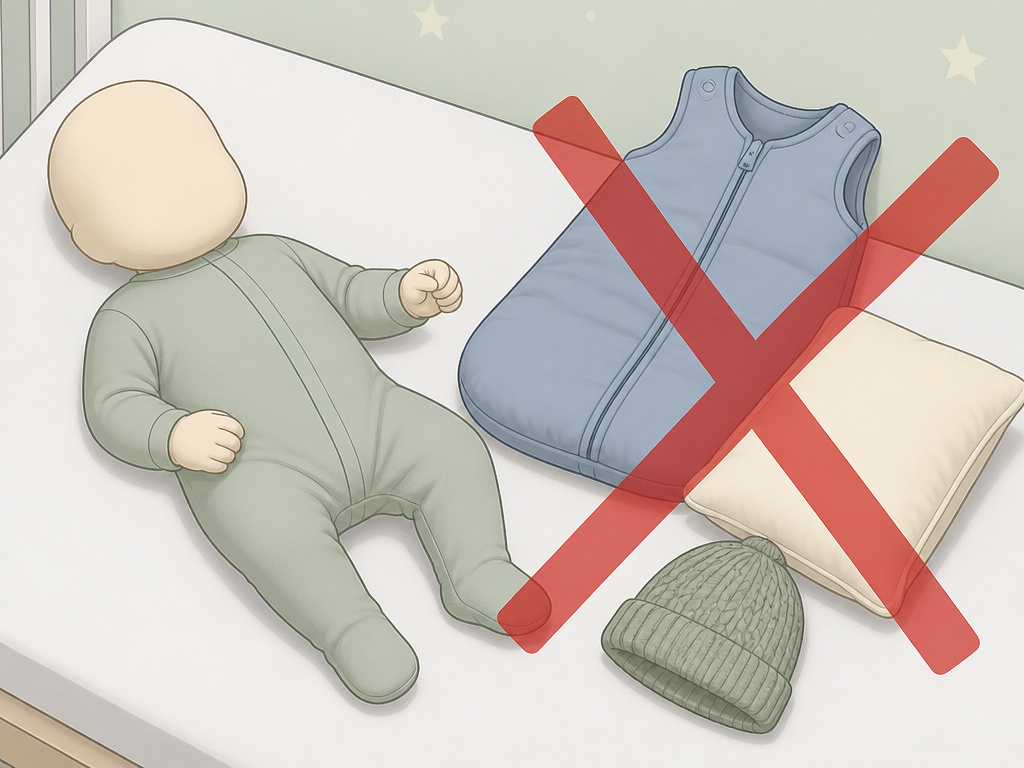
Safety standards exist because real babies have been harmed. The June 2021 CPSC rule in the U.S. Mandates that all infant sleep products meet strict federal standards, banning a host of dangerous items.
Weighted products are not safe for sleep. This includes weighted swaddles, weighted sleep sacks, and weighted blankets for any baby under one year. The weight can press on a baby’s chest, restricting the diaphragm’s movement and making it harder to breathe. It also drastically increases overheating risk.
Head coverings of any kind must be off for sleep. This includes hats, hoods attached to pajamas, and knit bonnets. As the NSW Health guideline notes, some cultural practices involve wrapping babies in multiple layers; while respectful of tradition, the medical advice is clear that this can lead to dangerous overheating.
Soft bedding like pillows, cot bumpers, stuffed animals, and loose sheets have no place in a newborn’s crib. The sleep surface must be firm, flat, and covered only by a tight-fitting sheet. This is a non-negotiable pillar of the American Academy of Pediatrics recommendations.
Older or second-hand sleep products must be scrutinized. For example, bedside cribs sold after 2020 must meet the BS EN 1130:2019 standard, which prohibits a fully drop-down side. An older model with a drop-side is a grave entrapment hazard.
How to Check Your Baby’s Temperature (And When to Worry)
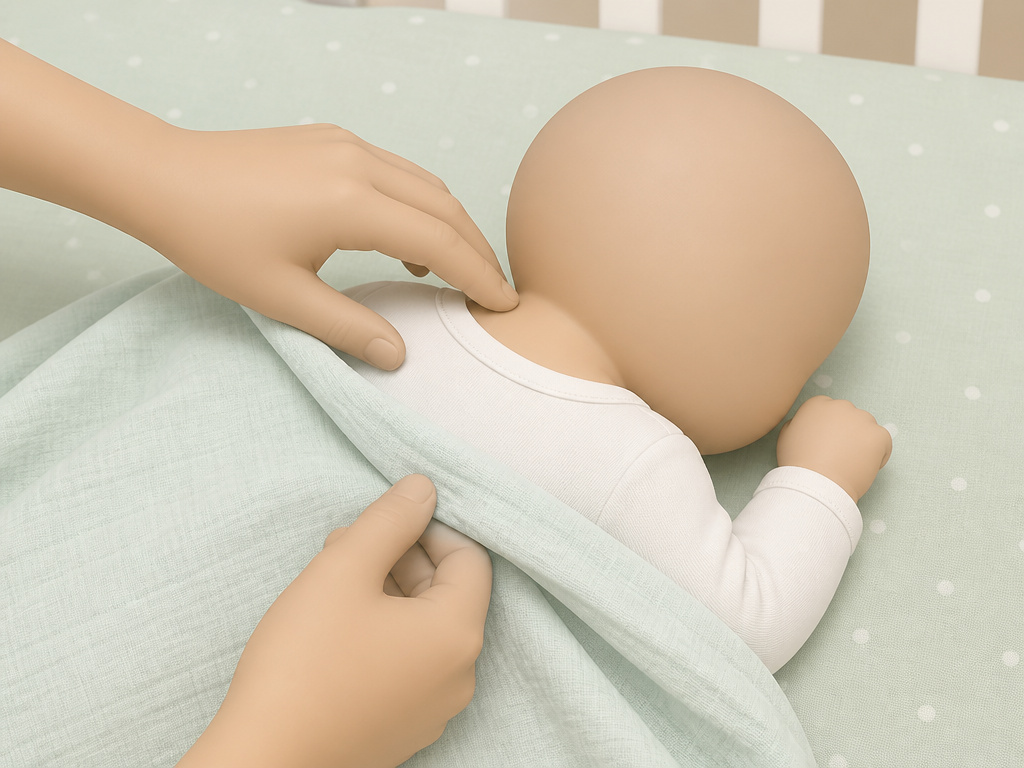
You check a baby’s temperature with your hands, not a thermometer (for comfort purposes). The correct spot is the back of the neck or the chest. The skin should feel warm. If it feels hot or sweaty, they are overheating.
Their hands and feet are poor indicators. It’s normal for a newborn’s extremities to feel cool because their circulatory system is still maturing. Dressing them until their hands are warm is a classic over-bundling mistake.
A baby with a fever or who is unwell may feel warmer than usual. The instinct is to bundle them up more. This is exactly wrong. A sick baby should be dressed normally for the room temperature. Over-wrapping a feverish baby can prevent their body from cooling down effectively. If your baby has a fever or you are worried, call your doctor.
Easy to miss: A baby who is too hot will often be restless, sleep fitfully, or have damp hair at the nape of the neck. They might also develop a heat rash (tiny red bumps) on their chest or neck. These are signs to adjust their clothing before they become sweaty.
Choosing Safe Products: Certifications and Specifics
When buying any sleep product, look for independent safety certifications. In the UK, products should meet relevant British Safety Standards. For online purchases, this is your guard against items that might fail basic tests for fabric strength or fire resistance.
Red Nose Australia specifically notes that Bonds Wondercool is “the only baby clothing approved by Red Nose for safer sleep.” This line is made from a breathable fabric designed to help regulate temperature. It’s a rare example of a brand receiving explicit charity endorsement for a safety claim.
For sleep sacks, key features are a fitted neck and armholes, a two-way zip for easy diaper changes, and a TOG rating clearly displayed. Brands like Halo, Woolino, and Ergobaby are consistently well-reviewed. The sack must be the right size, most are sized by weight, not age, to prevent the baby from slipping inside.
Your entire sleep environment matters. The safest place for a newborn to sleep is in a bassinet or crib in your room, on a firm, flat mattress. The NSW Health safe sleep practices document underscores that these physical conditions are as important as what the baby wears.
Frequently Asked Questions
What should a newborn wear to bed in a 72-degree room?
72°F is about 22°C. At this temperature, dress your newborn in a lightweight onesie or footed pajamas made of cotton, and a 1.0 TOG sleep sack. This combination usually provides the right amount of warmth without risk of overheating. Always check the back of their neck to confirm.
Can a newborn wear a onesie to sleep?
Yes, a fitted onesie or footed pajama suit is an ideal base layer. It should be made of breathable material like cotton and fit snugly without being tight. Avoid onesies with hoods for sleep. This base layer is then paired with an appropriate sleep sack, not additional blankets.
How many layers should a newborn wear at night?
Two-layer system is standard and safest: one fitted base layer (onesie/pajamas) plus one appropriately rated sleep sack. Never use more than one sleep sack or add cardigans or sweaters as extra layers. The air trapped between multiple clothing layers significantly increases overheating risk.
Is it OK for a newborn’s hands to be cold at night?
Yes, it is normal and expected. A newborn’s circulatory system is still developing, and blood flow is prioritized to their core and brain. Cool hands and feet are not a sign they are cold. Always assess their temperature by feeling the back of their neck or their chest.
What is the safest alternative to a blanket for a newborn?
The safest alternative is a wearable sleep sack. It provides warmth without the risks of loose fabric covering the face or becoming tangled. For young newborns who need the containment of swaddling, a swaddle sack with velcro or zip closures is safer than a traditional blanket swaddle, which can come loose.
When should you stop swaddling a newborn?
You must stop swaddling as soon as your baby shows any signs of attempting to roll over, which can occur as early as 8 weeks. Rolling while swaddled is an extreme suffocation risk, as their arms are pinned and they cannot use them to push up or reposition their head.
The Bottom Line
Dressing a newborn for bed is a straightforward protocol built on clear evidence. Measure your room temperature. Choose a single base layer and a sleep sack whose TOG rating matches that number. After they’re down, feel the back of their neck. Warm and dry is perfect; hot and sweaty means take a layer off.
Forget the old “one more layer than you” rule. It’s too vague. Your tools are a thermometer, a well-fitted sleep sack, and your own hand on their skin. The goal is a safe, stable temperature, not maximum coziness. Weighted products, loose blankets, and doubled-up layers fail that test every time.
Start with a simple cotton onesie and a 1.0 TOG sleep sack in a 68–72°F room. That setup works for most families most of the year. Watch your baby, not the clock. They’ll tell you what they need.
