
Why Use Wool for Baby Blanket | The 61% Weight Gain Data
This post contains affiliate links. As an Amazon Associate we earn from qualifying purchases.
Wool is the best fiber for a baby blanket because it actively regulates temperature, wicks moisture, and supports healthy development. Research shows underweight newborns sleeping in wool gained 61% more weight than those in cotton, and wool’s natural structure prevents overheating while improving sleep quality.
That 61% figure comes from a study cited by the International Wool Textile Organization. The mechanism is energy conservation: a baby wrapped in wool doesn’t burn calories trying to stay warm, so those calories go toward growth.This turns a blanket from a passive cover into an active participant in a child’s well-being.
What follows is a breakdown of wool’s unique properties, the science behind each benefit, and how to choose a blanket that uses wool correctly, not all wool is suitable for a newborn’s skin. We’ll cover micron counts, weave types, and the one common mistake that makes parents think wool is itchy.
Key Takeaways
- Wool’s temperature regulation is mechanical, not just insulating; it prevents both overheating and chilling by moving moisture vapor.
- A blanket made with wool finer than 18.5 microns (labeled Superfine or Extrafine) feels soft against skin; coarser wool triggers nerve endings and causes itch.
- The cited 61% higher weight gain in underweight newborns highlights wool’s role in conserving a baby’s energy for growth.
- Wool absorbs up to 35% of its weight in moisture vapor without feeling wet, outperforming cotton and synthetics dramatically.
- Always verify a blanket’s wool type and micron rating; “wool blend” often means scratchy, cheaper wool mixed with synthetics.
The Science-Backed Benefits of Wool for Babies
The commodity answer is wool keeps babies warm. The real answer is wool manages a microclimate. Its protein-based structure, primarily keratin, interacts dynamically with heat and moisture in ways plant or synthetic fibers cannot.
Wool can absorb up to 35% of its weight in moisture vapor due to its hydrophilic core, releasing it as vapour into the air. This built-in characteristic is permanent and is one reason wool is such a versatile fibre.
This breathability is the engine behind its top three benefits: thermoregulation, moisture management, and sleep support. A baby’s body is terrible at regulating its own temperature for the first few months. Wool compensates.
Thermoregulation Prevents Overheating. Overheating is a recognized risk factor for SIDS. Wool doesn’t just trap heat; it buffers against swings. When a baby gets warm, the wool fiber absorbs the moisture vapor from sweat, a process that pulls heat away from the skin. When the environment cools, the fiber slowly releases that vapor, providing gentle warmth. It’s a two-way system cotton lacks, cotton absorbs but holds moisture next to the skin, leading to clammy chills.
Moisture Management Is Unmatched. That 35% absorption rate is a concrete spec from the IWTO Wool Notes performance chapter. Polyester absorbs less than 1%. A wool blanket keeps a sleeping baby dry, which is critical for preventing heat rash and maintaining skin integrity. This is why wool is a cornerstone in our curated baby blanket list focused on health and comfort.
Sleep Quality Improves Measurably. Studies noted by AgResearch New Zealand found adults wearing wool and using wool bedding fell asleep significantly faster and had deeper sleep than with polyester or cotton. For babies, the principle is the same: maintained thermal comfort minimizes disruptive wake-ups from being too hot or cold. A settled baby is a baby who sleeps longer, giving crucial rest for development.
How Wool’s Structure Creates Safety and Comfort
Comfort is a mechanical interaction between fiber ends and nerve endings under the skin. Discomfort happens when coarse, rigid fiber tips press against the skin with enough force to trigger those nerves.This is not an allergy.
The single most important factor is fiber diameter, measured in microns (μ), or micrometers. One micron is one-millionth of a meter. The lower the number, the finer and softer the wool.
| Micron (μ) Range | Grade Name | Typical Use for Babies | Skin Feel |
|---|---|---|---|
| 14.5 & below | Extrafine | Premium next-to-skin wear, luxury baby blankets | Exceptionally soft, silky; no prickle |
| 16.6 – 18.5 | Superfine | High-quality blankets for newborns | Very soft; ideal for direct contact |
| 18.5 – 20.5 | Fine | Good-quality blankets, often in blends | Soft for most; may itch sensitive skin |
| Above 22 | Medium to Coarse | Outerwear, rugs, insulation | Noticeably scratchy; not for baby blankets |
The 18.5 Micron Threshold. Research from CSIRO indicates that for reliable next-to-skin comfort, the mean fiber diameter should be below 18.5 microns. Many recommended blankets for newborn infants use Superfine or Extrafine Merino wool, a breed known for consistently fine fibers. The blanket’s weave matters too, a tight, brushed knit will trap fewer protruding fiber ends than a loose, lofty one.
Where this goes sideways: Assuming “wool” means soft. A blanket made from coarser, broader wool (above 22μ) will feel prickly and can actually irritate a baby’s skin, leading parents to blame wool itself instead of the wrong grade.
The Scale Structure. Wool fibers are covered in overlapping cuticle scales. These create a slight friction that helps the fiber resist dirt and stains naturally, a self-cleaning effect. They also help wick moisture along the fiber. This structure is why wool is naturally flame-resistant and doesn’t melt or drip like synthetics, an added safety layer often overlooked in safe infant blankets comparisons.
Wool vs. Cotton vs. Synthetics: The Performance Breakdown
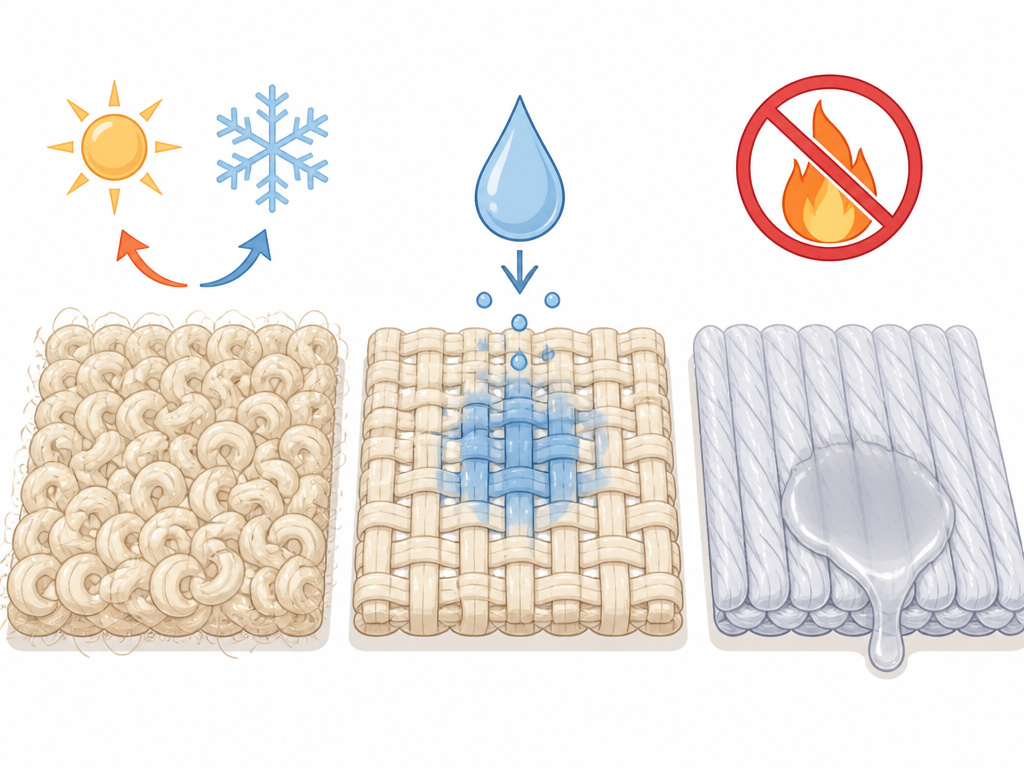 You have three main choices. One manages the environment, one reacts to it, and one ignores it.
Wool is Active. It responds to changes in temperature and humidity by absorbing and releasing water vapor. It’s breathable, temperature-regulating, and moisture-wicking. Its natural crimp creates insulating air pockets. The trade-off is it often requires more specific care (gentle wash, lay flat to dry) and a higher initial investment.
Cotton is Reactive. It’s absorbent, it can hold a lot of moisture. But it holds it. A wet cotton blanket stays wet and cold against the skin, pulling heat from the baby. It has no inherent temperature regulation. Its advantages are familiarity, easy care, and often a lower price point. For a simple, lightweight layer in a warm room, a muslin swaddle blanket made of cotton is a perfectly good tool.
Synthetics (Polyester, Acrylic) are Static. They are hydrophobic, meaning they repel moisture. Sweat pools on the skin or evaporates quickly, which can lead to chilling. They offer no breathability or buffering against temperature changes. The upside is durability, ultra-easy care, and low cost. The downside is a higher risk of overheating and a less healthy sleep environment.
| Property | Wool | Cotton | Synthetic (Polyester) |
|---|---|---|---|
| Moisture Management | Absorbs & releases vapor (35%) | Absorbs & holds | Repels; moisture sits |
| Thermoregulation | Excellent (active buffer) | Poor (gets clammy) | Poor (traps heat) |
| Feel on Skin | Soft (if <18.5μ), warm | Soft, can become cold/damp | Can feel slick or clammy |
| Care | Delicate wash, air dry | Machine wash & dry | Machine wash & dry |
| Safety | Flame-resistant, self-extinguishing | Flammable | Melts, can stick to skin |
For the core sleep blanket, wool’s active properties win. For a play mat or car seat cover, a durable synthetic might be pragmatic. For swaddling, a lightweight cotton or specific swaddle blanket products are often preferred for their drape and stretch. The IWTO newborn wool benefits guide provides a deeper dive into the comparative health aspects.
Choosing the Right Wool Baby Blanket
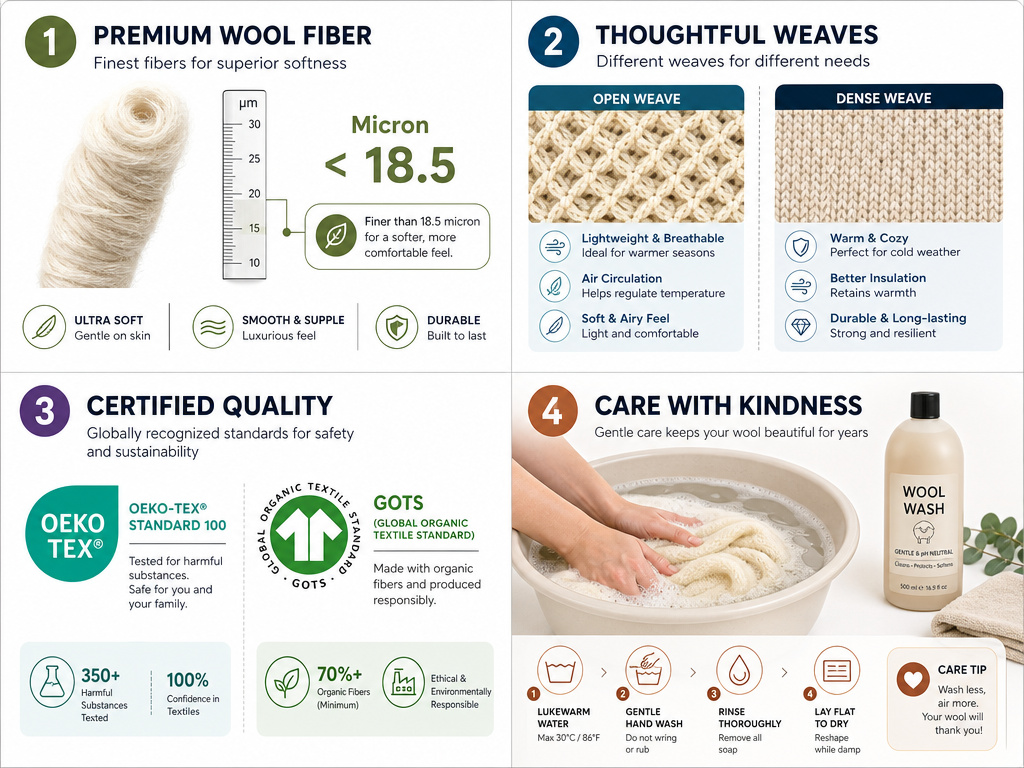 Not all wool blankets are created equal. You’re looking for a combination of material specs, construction, and safety design.
- Check the Micron Rating. Look for labels specifying “Merino,” “Superfine,” or a micron number under 18.5. If it’s not listed, assume it’s a coarser wool not meant for direct, prolonged skin contact. This is the first filter for any high-quality organic baby blankets.
- Prioritize Weave and Weight. A lightweight, open knit or gauze weave is ideal for swaddling and layered use. A denser, brushed weave is warmer for a top blanket in a cool room. Avoid heavy, felted wools meant for decorative throws.
- Look for Safety Certifications. OEKO-TEX Standard 100 certification means the blanket has been tested for harmful substances. GOTS (Global Organic Textile Standard) certification covers both organic material and ethical processing. These are more reliable markers than the word “natural.”
- Understand Care Instructions. Proper care preserves softness and function. Most fine wool blankets require a gentle, cold wash with a wool-specific detergent and must be laid flat to dry. Never wring or tumble dry on high heat.
Common mistake: Washing wool with standard detergent or fabric softener. Harsh detergents strip wool’s natural lanolin, making it brittle. Fabric softener coats the fibers, destroying their moisture-wicking ability. Use a wool wash like Eucalan or The Laundress Wool & Cashmere Shampoo.
When Wool Isn’t the Right Choice. If your baby has severe eczema with broken skin, any fiber, even superfine wool, might be irritating. Consult your pediatrician. In very hot, humid climates where temperature regulation is less of an issue, a lightweight cotton or linen might be more practical for daily use.
Frequently Asked Questions
Is wool safe for a newborn baby?
Yes, provided it is the correct type of wool. Blankets made from Extrafine or Superfine Merino wool (under 18.5 microns) are safe, soft, and beneficial for newborns. They help regulate temperature and reduce overheating risk. Always ensure the blanket is sized appropriately to avoid loose fabric in the crib and follow safe sleep guidelines.
Can wool baby blankets cause allergies?
True wool allergy is extremely rare. The discomfort some people call a “wool allergy” is usually a mechanical reaction to coarse fibers prickling the skin. Salts that could cause irritation in unprocessed wool are removed during scouring. For a baby, using fine Merino wool eliminates the prickly feeling, as confirmed by research in the scientific properties of wool document.
How do I wash a wool baby blanket?
Wash separately in cold water on a gentle cycle or by hand. Use a mild, wool-specific detergent. Never use bleach or fabric softener. Rinse thoroughly and press out water gently, do not wring. Reshape the blanket and lay it flat on a drying rack away from direct heat or sunlight. This preserves the fiber’s integrity and softness.
Is wool warmer than cotton?
Wool is not just warmer; it’s smarter. Cotton provides insulation only when dry. Once damp, it loses insulating value and draws heat away. Wool provides consistent warmth even when damp because its heat-generating absorption process works in tandem with its natural crimp, which traps insulating air. It’s a dynamic system versus a static one.
Why are some wool blankets itchy?
Itch is caused by coarse fiber ends (above ~22 microns) pressing on nerve endings in the skin. It is a function of diameter, not the wool itself. A blanket labeled “wool” but made from coarser, cheaper wool will be itchy. A blanket made from fine Merino wool will not. Always check the micron grade or look for terms like “baby-soft Merino.”
Are there good wool-blend blankets for babies?
Be cautious. A “wool blend” often mixes a small amount of fine wool with a larger amount of cheaper, coarser wool or acrylic to cut costs. This can result in a blanket that retains some itch. For a baby, a 100% fine Merino wool blanket or a blend with a known-soft fiber like silk is a better bet than a generic blend. Our selection of the best baby blankets highlights pure, high-grade options.
The Bottom Line
Wool’s case centers on measurable, mechanical advantages that align with a baby’s physiological needs: dynamic temperature buffering, superior moisture handling, and a structure that promotes restful sleep and growth. The 61% weight-gain statistic underscores that this is a material that does more than cover, it supports.
Choose a blanket that honors those properties. That means seeking out fine Merino wool with a verified micron count, a thoughtful weave, and responsible certifications. It’s the difference between a blanket that simply exists and one that actively contributes to a safe, comfortable, and healthy sleep environment. For a special gift that combines these principles with personal touch, a high-quality personalized baby blanket made from fine wool is an heirloom-quality choice.
