
Baby Sleep More When Teething? The Data-Driven Conclusion
This post contains affiliate links. As an Amazon Associate we earn from qualifying purchases.
Teething does not cause babies to sleep more or less on a measurable, population-wide scale. A landmark 2025 study using auto-videosomnography, computer analysis of crib camera footage, found no significant difference in total sleep time, nighttime awakenings, or parental crib visits between teething and non-teething nights in over 800 infants. When a teething baby seems sleepier, the cause is almost always a concurrent growth spurt or accumulated sleep debt from earlier disrupted nights, not the biological process of tooth eruption itself.
The data flips a century of parental assumption on its head. For decades, the narrative was simple: sore gums equal bad sleep. Now, objective measurement tools are separating the real signal from the noise of normal infant sleep variation and confirmation bias.
What follows is a breakdown of the new evidence, what actually correlates with teething discomfort, and a practical guide for responding to sleepy, or restless, phases without blaming the teeth. You’ll learn to spot the difference between a growth spurt and genuine pain, which remedies are backed by science versus regulation, and how to protect your hard-won sleep routines.
Key Takeaways
- Objective sleep tracking shows no link. Computer-vision analysis of over 800 infants found no measurable difference in sleep on teething versus non-teething nights, despite over half of parents reporting disturbances.
- Sleepiness points to a growth spurt. If your teething baby is unusually sleepy but otherwise content, the extra sleep is for physical development, not tooth-related fatigue. Teething itself does not induce drowsiness.
- Inflammation markers are real. Studies show elevated cytokines like TNFalpha in gums during eruption, correlating with fussiness and fever. The local discomfort is real, but its systemic sleep impact is minimal.
- Avoid numbing gels and homeopathic pellets. UK and EU regulators cite poor efficacy evidence and hundreds of adverse event reports for lidocaine gels. The FDA states there is no scientific evidence homeopathic teething tablets work.
- Stick to your routine. Introducing new sleep associations during a teething phase creates long-term habits that are harder to break than the short-term discomfort.
The Short Answer
A 2025 study in the Journal of Pediatrics used auto-videosomnography to track 849 infants over four weeks. It compared computer-measured sleep metrics, total sleep time, awakenings, parent visits, on nights parents reported teething versus nights they did not. The objective data showed no significant differences.
The answer to “can teething cause baby to sleep more?” is a definitive no, according to the latest high-fidelity evidence. The biological process of a tooth pushing through the gum does not trigger a sleep-inducing response. When extra sleep occurs, it’s a coincidence, not a causation.
The perception is powerful, though. Parents are primed to notice sleep changes during teething windows, a cognitive shortcut called confirmation bias. If the baby wakes up, you check the gums. If they sleep an extra hour, you credit the tooth. The data suggests we’re connecting dots that, for the average infant, aren’t actually linked.
What the Objective Data Shows
Why does every parent swear teething wrecks sleep if the cameras say it doesn’t?
The 2025 study is the clearest look yet because it removed human perception from the equation. Auto-videosomnography uses algorithms to analyze crib camera footage, counting awakenings and measuring sleep phases without a parent’s subjective interpretation. Over half the parents in the study believed teething disrupted sleep. The machines recorded no such pattern.
This doesn’t mean your experience is invalid. It means the culprit for a bad night is probably something else that coincides with teething timelines: an emerging skill like crawling, a minor illness, or a change in daylight hours. Teething gets the blame because it’s a visible, tangible milestone.
Where this goes sideways: Attributing every sleep change to teething for weeks on end. Objective studies define the “teething period” as a short 8-day window, 4 days before a tooth erupts through the gum, the day it emerges, and 3 days after. Discomfort outside that window likely has another source.
The Role of Confirmation Bias
Dr. Michal Kahn, a psychologist who co-authored the 2025 study, explained the parent mind perfectly: “When parents expect teething to disrupt sleep, they become more vigilant during these periods and are more likely to attribute awakenings to teething.” You’re listening for the cry, interpreting the fuss, and fitting the data to the expected story. It’s a natural, human response to the chaos of infant sleep.
The practical takeaway is liberating. If your baby’s sleep goes off the rails for a week, and a tooth isn’t visibly cutting through, you can stop scrutinizing the gums. Look for an ear infection, consider a sleep regression linked to a new motor skill, or evaluate the sleep environment in your baby’s crib. The solution is probably not in their mouth.
When Teething Does Correlate with Symptoms
While teething doesn’t commandeer sleep, it can create localized discomfort that makes settling harder. The mechanism is inflammation. As a tooth moves, it triggers the release of immune-signaling proteins called cytokines in the gum tissue.
A 2003 study published in Pediatric Dentistry measured these cytokines in the gingival crevicular fluid of erupting teeth. It found statistically significant elevations in TNFalpha during active teething periods. These same cytokines, IL-1beta and TNFalpha, showed correlation with parent-reported systemic symptoms like fever and sleep disturbances in the children studied.
| Symptom | Linked to Teething? | Notes & Timeline |
|---|---|---|
| Fussiness/Irritability | Yes, commonly | Peak during the 8-day eruption window; driven by gum inflammation. |
| Mild Temperature Elevation | Yes, slightly | Cytokine release can cause a slight rise; a true fever (>100.4°F) is not from teething. |
| Sleep Disruption | Inconsistently | Parent-reported often, but not borne out in objective sleep studies for the average baby. |
| Increased Sleep | No | Not a biological effect of teething. Coincides with growth spurts. |
| Drooling & Chewing | Yes, very commonly | Body’s response to gum sensation; can begin weeks before a tooth appears. |
The key is the “correlation” versus “causation” distinction. The inflammation is real and can make a child uncomfortable, which could lead to a restless night. But the objective sleep data suggests that for most babies, this discomfort doesn’t translate into statistically worse sleep across a large population. It might mean one extra wake-up, easily soothed, rather than a night of hourly screaming.
So, Why Does My Teething Baby Seem Sleepier?
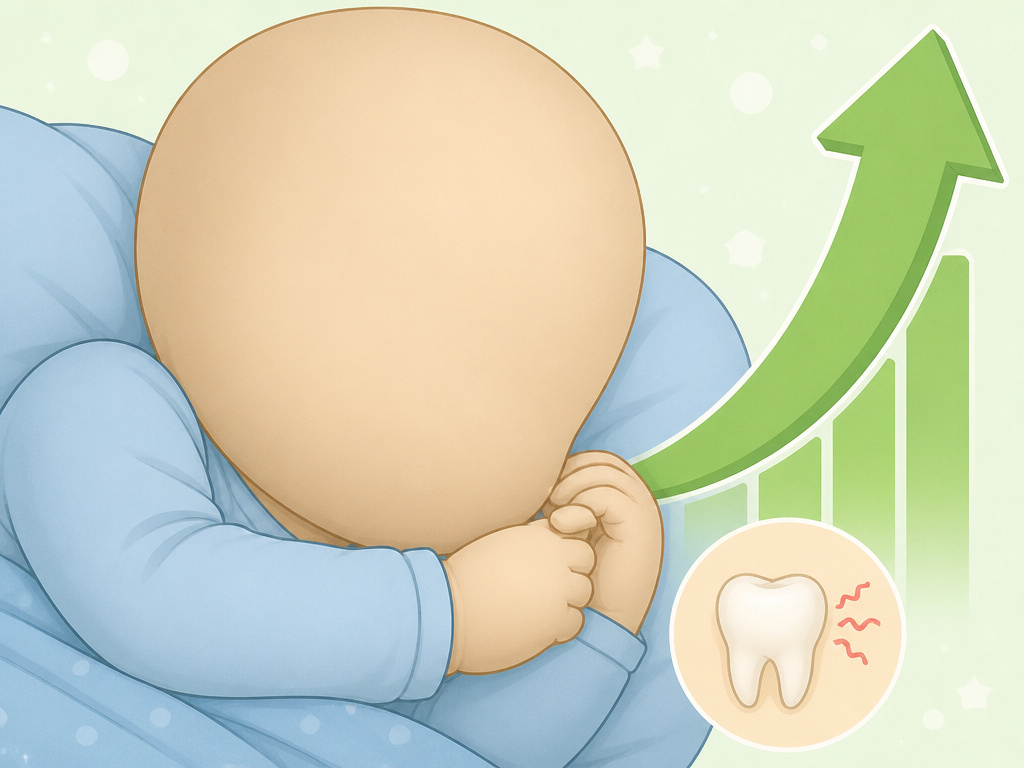
If teething doesn’t cause sleepiness, what explains the baby who naps for three hours when a molar is coming in?
You’re almost certainly witnessing a growth spurt. Sleep is the primary time the human body releases growth hormone and repairs tissue. During periods of rapid physical development, infants need more of it. These spurts often overlap with teething timelines, especially around the 6-month and 12-month marks when major teeth and major growth happen simultaneously.
- Growth Spurts Demand Sleep: The body’s need for deep, restorative sleep increases.
- Teething Can Cause Discomfort: This might make falling asleep initially harder.
- The Result: A baby who fights bedtime but then crashes into a long, deep sleep. The extra sleep is for growth, not tooth repair.
Another possibility is accumulated sleep debt. If the discomfort of the 4 days before the tooth erupts led to several fragmented nights, your baby might be catching up on lost sleep once the tooth breaks through and the discomfort eases. They’re not sleeping more because of teething; they’re sleeping more in spite of it being over.
Safe Soothing vs. Risky Remedies
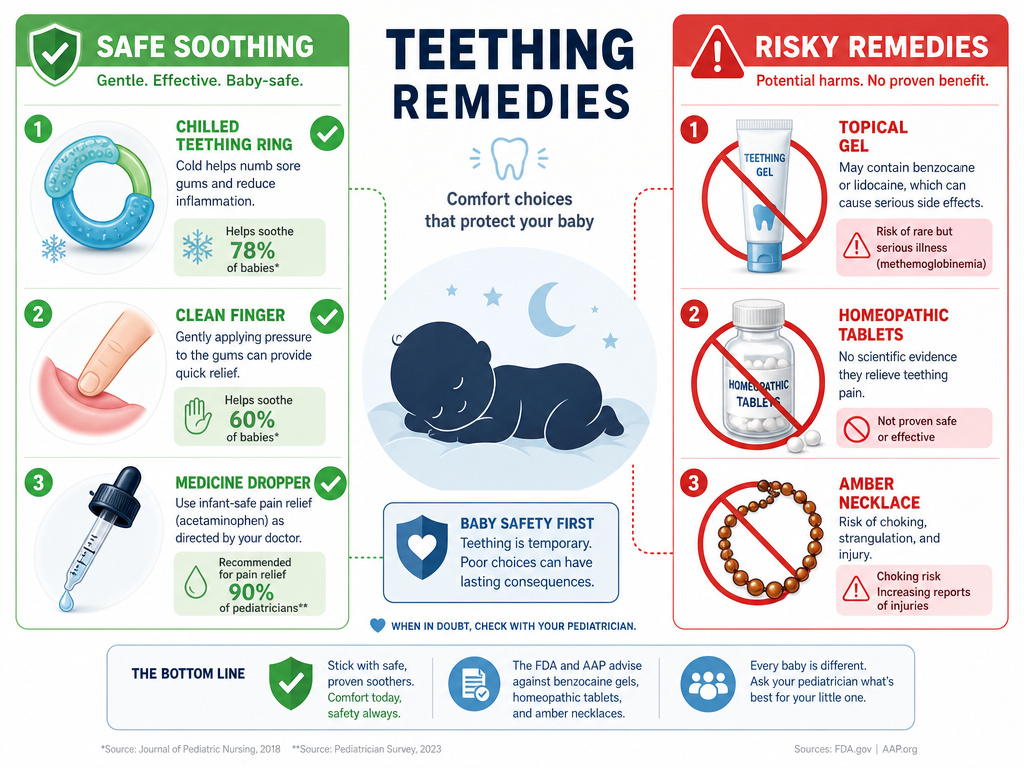
When you do suspect genuine gum pain, during that core 8-day window, your response matters. The goal is to soothe without introducing new risks or unsustainable sleep crutches.
What Works (Evidence-Based)
- Cold Pressure: A solid teething ring chilled in the refrigerator (not frozen) numbs gums through temperature and provides counter-pressure. This is the first-line recommendation from bodies like the UK’s National Institute for Health and Care Excellence (NICE).
- Clean Finger Massage: Gently rubbing a clean finger over the sore gum area can provide relief.
- Pain Relievers (As Needed): For significant discomfort, infant acetaminophen or ibuprofen (for babies over 6 months) is effective. The key is dosing by weight and using it strategically, such as one dose 30 minutes before bedtime to help with the initial settle, rather than on a continuous schedule.
What to Avoid (Evidence-Backed Risks)
| Remedy | The Problem | The Evidence |
|---|---|---|
| Topical Numbing Gels (e.g., Lidocaine) | Poor efficacy, risk of overdose, serious side effects. | A UK government review found 197 pediatric adverse events by 2017. Studies are small and show minimal benefit for teething specifically. |
| Homeopathic Teething Tablets (e.g., Humphreys) | No proven efficacy, potential for undisclosed ingredients. | The FDA states there is no scientific evidence to support homeopathy for teething. Labels list ingredients like Arabica coffee bean with no standardized dose. |
| Amber Teething Necklaces | Choking and strangulation hazard, no proven benefit. | Pediatric associations globally warn against them; the amber does not release a pain-relieving substance. |
Common mistake: Reaching for a numbing gel before bed. If the gel is swallowed, it can numb the throat and suppress the gag reflex, increasing the risk of choking. If over-applied, it can lead to systemic toxicity and seizures.
The NIH teething inflammation publication on cytokine levels confirms the local inflammatory process. It’s a pain best treated with systemic anti-inflammatories like ibuprofen (if age-appropriate) or physical counter-pressure, not topical agents that wash away in minutes and carry documented risks.
Protecting Sleep During the Teething Phase
Your number one job during a teething episode isn’t to cure it, it’s to prevent it from derailing your entire sleep routine for your infant’s sleep space.
Consistency is your anchor. Babies thrive on predictability, especially when they feel off. Stick to your calming bedtime routine: bath, book, lullaby, into the crib. This signals safety and normalcy.
If they wake crying, offer comfort. Check if a gum massage or a cold teething ring helps. But try to return them to their crib drowsy but awake, just as you would on any other night. The trap is bringing them into your bed for the first time or starting to rock them to sleep for hours because you assume the pain is unbearable. You create a new sleep association that will outlast the tooth by weeks.
I won’t recommend starting sleep training during an active teething window. The discomfort is a real variable, and it’s unfair to both of you. But if you were already in the process, a night of extra comfort won’t ruin your progress. Just return to your plan once the tooth is through.
Think of it like a brief weather event. You don’t rebuild your house because of a thunderstorm; you ride it out and then resume normal life. Provide the comfort, use safe medicine if needed, but hold the line on your overall sleep structure.
Frequently Asked Questions
Do babies sleep more when teething?
No, teething does not biologically cause increased sleep. If a teething baby sleeps longer, it is almost always due to a coinciding growth spurt, which demands more rest for physical development, or they are catching up on sleep lost during earlier, more uncomfortable nights.
What are the real signs of teething pain?
Look for signs localized to the mouth and immediate behavior: increased drooling, gnawing on everything, swollen or red gums, and fussiness that is soothed by gum pressure or cold. General lethargy or excessive sleepiness is not a typical sign of teething pain.
How long does teething disrupt sleep?
If it does cause disruption, it should be confined to a short window. Research defines the active “teething period” as the 4 days before a tooth erupts, the day it emerges, and the 3 days after, about 8 days total. Sleep disturbances that last for weeks are unlikely to be solely from teething.
Is it safe to give Tylenol every night for teething?
It is not recommended. Infant acetaminophen is for occasional, as-needed use. If pain seems severe enough to require nightly medication for more than 2-3 nights in a row, consult your pediatrician to rule out other causes of pain, like an ear infection. Continuous use masks other problems and is not intended for a process that can last months.
The Bottom Line
The old story that teething steals sleep, or grants it, is crumbling under the weight of objective data. Cameras and algorithms see what our tired, biased minds often miss: for the vast majority of babies, a tooth coming in doesn’t change the math of their night.
When your baby is extra fussy or clingy during those few days before a tooth appears, trust that the local discomfort is real. Offer a chilled ring, a cuddle, and a dose of pain reliever if it’s truly needed. But when they crash into a deep, long sleep, credit their growing body, not their gums.
Your most powerful tool is your routine. Keep the sleep environment in your baby’s crib consistent, offer comfort without creating new dependencies, and know that this phase, like all others, is temporary. The teeth will come in, the sleep will stabilize, and you’ll have navigated it without blaming every up and down on the wrong culprit.
