
How to Make a Colic Baby Sleep: Techniques & Safe Sleep Tips
This post contains affiliate links. As an Amazon Associate we earn from qualifying purchases.
To make a colic baby sleep, focus on a two-part strategy: immediate evidence-based soothing to reduce crying and a meticulously calm sleep environment to encourage rest. A 2023 meta-analysis found nonpharmacological methods like specific motion and sound can significantly lower crying time. The goal isn’t to “cure” the colic but to manage the episodes safely until they resolve, which typically happens by 3 to 4 months of age.
That reduction in crying time, documented in peer-reviewed research, is the bridge to sleep. Colic episodes create a cycle of exhaustion for the baby, making it harder for them to settle even when the acute discomfort passes. Breaking that cycle requires techniques that address the baby’s overwhelmed nervous system directly.
What follows is a breakdown of those techniques, the science behind them, and how to layer them with a safe sleep space. We’ll cover the specific motions and sounds that work, the one feeding adjustment with a 15-minute timer, and why your choice of crib mattress matters more during this phase.
Key Takeaways
- Colic has a predictable timeline: it peaks around 6 weeks and resolves spontaneously by 3 to 4 months. This end date is crucial for caregiver sanity.
- Nonpharmacological interventions like rhythmic motion and white noise are backed by research to reduce crying duration and intensity, creating a window for sleep.
- For bottle-fed babies, a feed that takes less than 15 to 20 minutes can contribute to gas and discomfort; using a slower-flow nipple can help.
- Swaddling is controversial for older infants due to SIDS and hip dysplasia risks; a wearable blanket is a safer alternative for sleep.
- The sleep environment must be boringly consistent: a firm, breathable mattress with tight-fitting crib sheets, cool temperature, and total darkness.
What Is Colic? The Why Before the How
Colic is defined by the classic Wessel’s “Rule of 3”: crying for more than 3 hours a day, for more than 3 days a week, for more than 3 weeks in an otherwise healthy, well-fed infant. The StatPearls clinical review on infantile colic confirms it’s a clinical diagnosis made after ruling out other causes.
The crying is often described as a pained scream, accompanied by a red face, clenched fists, and legs drawn up. Episodes frequently cluster in the evening.The exact cause is unknown, but theories point to gut immaturity, nervous system overload, or, in some cases, a cow’s milk protein intolerance.
Common mistake: Trying to solve colic with a new product or supplement every week. The constant change itself becomes a stressor for the baby’s system. Pick a few evidence-based methods and stick with them consistently for at least 3-4 days before assessing.
This situation involves a baby struggling with a developmental phase. Your job is to provide comfort and safety, not to magically stop the crying.That shift in mindset, from problem-solver to steady comforter, is the first step.
The Soothing Sequence That Lowers Crying Time
When an episode starts, the baby’s nervous system is in overdrive. Soothing techniques work by providing strong, rhythmic sensory input that helps override the distress signals. The systematic review on colic interventions found these methods can reduce crying time with a measurable effect.
Think of this as a sequence, not a menu. Start with the first step, and only move to the next if the baby remains inconsolable after 5-7 minutes of sincere effort.
- Contained Motion. Hold the baby snugly against your chest, supporting their head. Walk steadily around the room, adding a slight bounce or rock from your knees, not just your arms. The combination of your heartbeat, body warmth, and rhythmic movement is the primary stimulus.
- Deep Sound. Layer in a low, rumbling white noise. A dedicated white noise machine set to “brown noise” or the sound of a shower running is more effective than a quiet shush. The volume should be as loud as the baby’s crying to match their auditory field.
- Sucking Reflex. If motion and sound have taken the edge off but the baby is still awake and grizzly, offer a pacifier or a clean knuckle to suck on. This engages a powerful self-soothing mechanism.
“The 2023 meta-analysis of nonpharmacological treatments reported a standardized mean difference of 0.61 for reduced crying time. In plain terms, these interventions moved the needle significantly compared to no intervention.”
Where this goes sideways: Switching techniques every 30 seconds. It takes time for a baby’s nervous system to register and respond to a new sensory input. Commit to each step for a solid few minutes.
| Soothing Technique | Primary Sensory Input | Why It Works |
|---|---|---|
| Contained Walking | Vestibular & Tactile | Steady motion mimics the womb; pressure calms the startle reflex. |
| Low-Pitched White Noise | Auditory | Masks distressing internal sensations and external overstimulation. |
| Non-Nutritive Sucking | Oral | Triggers a natural relaxation response and can reduce gas-related discomfort. |
The goal of this sequence is to bring the crying down from a 10 to a 3 or 4. A calm-but-awake state is your victory.Then you can attempt to transfer to the sleep space.
Feeding Adjustments That Address Discomfort
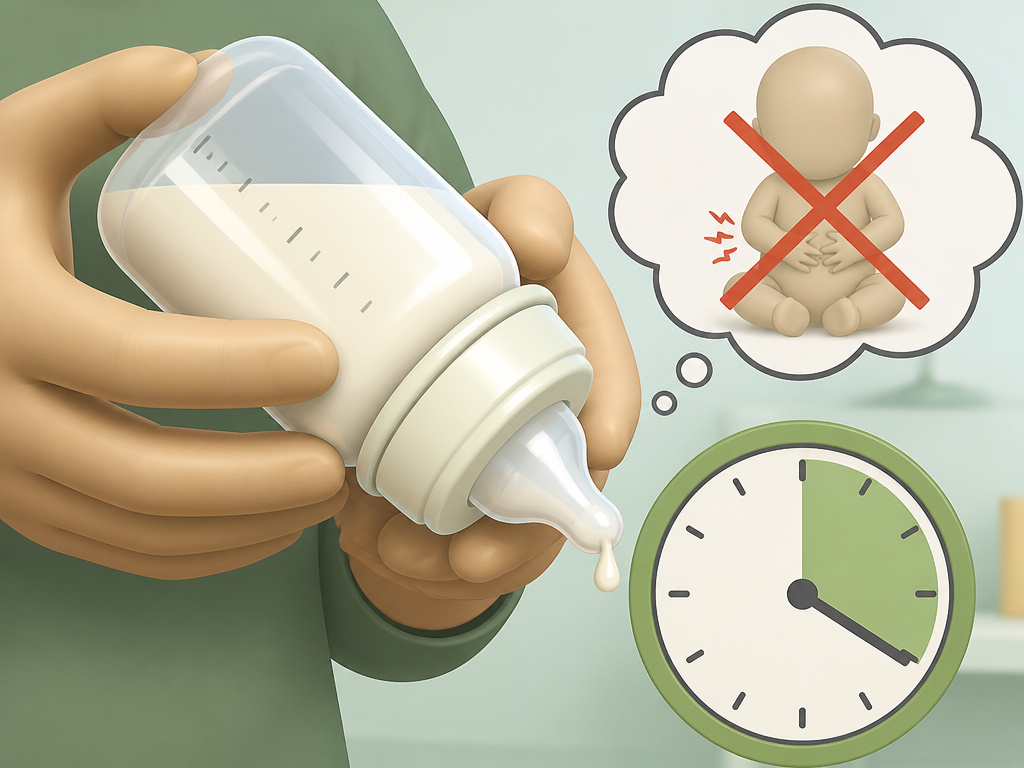 Digestive discomfort is a common feature of colic, even if it’s not the root cause. Two feeding adjustments can prevent adding fuel to the fire.
For bottle-fed infants: Time the feed. If a full feeding is consistently finished in less than 15 to 20 minutes, the baby is likely gulping too much air, leading to painful aerophagia (air swallowing). The fix is a slower-flow nipple. The baby should work actively to get the milk, with visible pauses for swallowing.
For all infants: Watch for signs of cow’s milk protein intolerance (CMPI). The clues are more than just fussiness: eczema, mucous or blood-streaked stools, and poor weight gain. For formula-fed babies, a pediatrician may recommend a trial of a hypoallergenic formula like Nutramigen or Alimentum. For breastfed babies, the mother may try eliminating all dairy from her diet for 2-3 weeks.
Easy to miss: The difference between hunger cues and gas pain. A colicky baby often roots and sucks vigorously immediately after a feed not because they’re hungry, but because sucking is comforting. Offering a pacifier instead can break the cycle of overfeeding and more gas.
Burping is non-negotiable. Try different positions: over the shoulder, sitting upright on your lap, or lying face-down across your knees. A burp can take several minutes of gentle patting or rubbing to emerge.
Building a Sleep-Conducive Environment
 A colicky baby has a lower threshold for overstimulation. Their sleep environment must be a sensory blank slate. This is where your choice of bedding and accessories shifts from comfort to necessity.
- The Sleep Surface: It must be firm and flat. A soft mattress or a padded lounger is dangerous and can worsen reflux. A firm, breathable crib mattress is the safest foundation, allowing for maximum airflow.
- The Bedding: Use only a tight-fitting fitted sheet on that mattress. No loose blankets, pillows, or stuffed animals. For warmth, use a appropriately sized wearable sleep sack. This eliminates the SIDS risk associated with loose blankets and the hip risk from tight swaddling once the baby starts rolling.
- Ambient Conditions: The room should be cool (68-72°F), very dark (blackout shades are worth the investment), and quiet aside from continuous white noise.
If you are room-sharing, a bedside sleeper that attaches securely to your bed is safer than bed-sharing. It keeps the baby on their own firm surface while keeping them within arm’s reach for quick comforting.
The Swaddling Debate and Safe Alternatives
Swaddling can be a powerful soothing tool in the first few weeks by containing the Moro (startle) reflex. However, the clinical overview of colic symptoms notes it becomes controversial as the infant ages.
The risks are twofold: an increased risk of Sudden Infant Death Syndrome (SIDS) if the swaddled baby rolls onto their stomach, and potential hip dysplasia if the legs are wrapped tightly straight down. Hip-healthy swaddling allows the legs to bend up and out.
The safer path: Use a swaddle only for supervised calming during an awake colic episode. For actual sleep, transition to a wearable blanket as soon as possible, or from birth. Products like the Halo SleepSack or the Woolino 4-Season Sack provide warmth and a slight feeling of containment without restricting leg movement.
Managing Your Expectations and Energy
Colic ends. The Merck Manual states it “reliably and spontaneously ends by age 3 to 4 months.” Mark that on your calendar. You are not failing; you are enduring a finite, intensely difficult phase.
- Tag-Team: If you have a partner, work in shifts. One person is “on duty” for a 2-3 hour block while the other sleeps or decompresses with headphones on, completely disconnected.
- It’s Okay to Walk Away. If you feel your frustration peaking, it is safest to place the baby on their back in the crib and leave the room for 5-10 minutes. The baby is safe in an empty crib. Call a friend or just breathe.
- Talk to Your Pediatrician. They need to rule out other causes like reflux or an infection. They also need to support you. Be honest about how you’re coping.
This phase will pass. The baby who screams from 7 PM to 10 PM will, in a matter of weeks, start smiling and cooing during that same window. Your resilience is the bedrock they can’t see but absolutely feel.
Frequently Asked Questions
Does colic mean my baby is in pain?
The crying suggests significant discomfort, but not necessarily acute pain from a disease. Think of it as a system-wide overwhelm, digestive, neurological, sensory, that manifests as intense distress. The baby is healthy but struggling to process their new world.
Should I switch formulas if my baby has colic?
Do not switch formulas randomly. Frequent changes can further upset the baby’s gut. Consult your pediatrician. If cow’s milk protein intolerance is suspected, they will recommend a single switch to a hypoallergenic formula for a proper 2-week trial.
Can a specific bedtime routine help a colic baby sleep?
Yes, but keep it ultra-simple and start it before the typical colic episode begins. A 15-minute routine of a dim-light diaper change, putting on a sleep sack, feeding, and gentle rocking with white noise can signal the nervous system that sleep is coming, even if the episode later interrupts it.
Is it safe to use a baby swing or car seat to soothe colic?
For supervised calming while the baby is awake, yes. The motion can be magical. But the baby should never sleep unattended in a swing, car seat, or lounger. These positions can allow the head to tilt forward and restrict airflow, posing a suffocation risk. Always transfer to a flat, firm crib mattress for sleep.
Will using a pacifier create a bad habit?
Not at this stage. The sucking reflex is a primary soothing mechanism. Using a pacifier at sleep times is actually associated with a reduced risk of SIDS. You can worry about weaning from the pacifier after the colic has resolved, around 4-6 months.
Before You Go
Helping a colic baby sleep is about stacking probabilities. You won’t find a magic off-switch, but you can deploy evidence-based soothing to lower crying, make careful feeding adjustments to minimize gas, and create a supremely boring sleep environment to capture any moment of calm. Trust the timeline, this will end. Your steady, repeated comfort is the medicine, even on the nights it doesn’t feel like it’s working. Prioritize safe sleep surfaces like a firm breathable mattress and a wearable blanket, and remember that your well-being is part of the prescription.
