
Help a Gassy Newborn Sleep: Soothing Techniques and Safe Tips
This post contains affiliate links. As an Amazon Associate we earn from qualifying purchases.
To help a gassy newborn sleep, match relief to the cause: trapped air needs movement and burping, while digestive gas needs time and gentle pressure. Focus on a three-step sequence, burp, move, position, right before sleep, and keep the nursery dark and quiet to signal it’s time for rest. Gas discomfort typically peaks around six weeks, so consistency with these methods is key.
The six-week mark is a predictable point where immature digestion and swallowed air from feeding reach a peak. Your baby’s system is simply learning on the job.The goal tonight isn’t to eliminate gas, that’s impossible, but to manage the bubbles well enough that sleep becomes possible.
What follows breaks down the physical why behind the fuss, a repeatable relief sequence you can run in five minutes, and how to layer that into a sleep routine that actually sticks. We’ll also cover the one over-the-counter option with clinical backing, and the specific signs that mean it’s time to call your pediatrician.
Key Takeaways
- Gas discomfort has a predictable timeline, typically peaking at six weeks and improving significantly by three months.
- Simethicone drops (like Little Remedies Gas Relief Drops) work best as a preventive measure, taken regularly; they’re less effective once gas pain has already set in.
- If gas is interrupting your baby’s ability to sleep or feed adequately, that’s the medical red flag to contact your pediatrician.
- A tight swaddle can restrict the leg movement needed to pass gas; consider a wearable blanket or a looser wrap for gassy nights.
- The most effective relief combines vertical burping, leg movement (bicycling), and tummy-down positioning, in that order.
Why Newborns Get Gassy and How It Wrecks Sleep
A newborn’s digestive system is brand new. The muscles and nerves that move food and air along are still figuring out the rhythm. This is a matter of developmental biology.
Swallowed air is the main culprit. It happens during feeding, crying, or even sucking on a pacifier. That air gets trapped, forming bubbles that press against the immature intestinal wall. For an adult, it’s a minor discomfort. For a baby, it’s a strange, pressing sensation they have no way to relieve on their own. The resulting fussiness directly collides with the quiet, still state needed for sleep.
Gas discomfort from burps and farts typically peaks at six weeks and improves immensely by 3 months of age. This timeline, noted by the Children’s Hospital of Philadelphia, means the strategies you use now have a built-in expiration date, you’re helping them through a phase, not managing a permanent condition.
The goal is a baby comfortable enough to surrender to sleep. Your tools are mechanical: you’re helping move the air up or down and out.
The Core 3-Step Relief Sequence (Do This Before Sleep)
This is a specific sequence that tackles gas from top to bottom. Run through it after the last feed of the evening, just before you begin your bedtime routine.
Step 1: Burp Strategically, Not Just Once
Burping isn’t just a post-meal courtesy. For a gassy baby, it’s a critical pressure-release valve. The standard “burp at the end” advice often fails because air has already settled.
Burp mid-feed and at the end. For bottle-fed babies, pause after every ounce or two. For breastfed babies, burp when you switch sides. The two most effective positions are over-the-shoulder or sitting on your lap, leaning slightly forward with your hand supporting their chest and chin. Pat or rub low on their back, in line with their diaphragm, not up by their shoulders.
Where this goes sideways: Skipping the mid-feed burp. The air swallowed in the first few minutes gets pushed down by the milk that follows, moving it past the point where a simple burp can help. You’ll be dealing with lower intestinal gas an hour later, right as they’re trying to drift off.
Step 2: Move Those Legs
If the air has moved down, burping won’t reach it. This is where physical movement takes over. Lay your baby on their back on a firm, safe surface.
Bicycle their legs gently. Hold their ankles and move their legs in a smooth, circular pedaling motion. Then, gently press their knees toward their belly, holding for a few seconds. This combination of motion and gentle abdominal pressure helps move gas through the colon. It’s not a myth, it’s basic mechanics.
Step 3: Use Gravity and Pressure
After moving the gas, help it exit. The best positions use gentle abdominal pressure.
Supervised tummy time on your chest or lap is excellent. The pressure of the surface against their belly can provide relief. You can also hold them face-down along your forearm, their chin in your hand and their legs dangling on either side of your arm (often called the “colic hold” or “football hold”). The combination of warmth, pressure, and a different orientation often triggers a satisfying release of gas.
| Relief Step | Targets Gas Where? | If You Skip It |
|---|---|---|
| Mid-feed burping | Upper stomach / esophagus | Air descends, causing lower gas pain later. |
| Leg bicycling | Lower intestines / colon | Gas stays trapped, leading to frantic squirming and crying. |
| Tummy-time pressure | Entire abdominal cavity | Baby lacks the final cue to release gas, remaining restless. |
Creating a Sleep-Conducive Environment
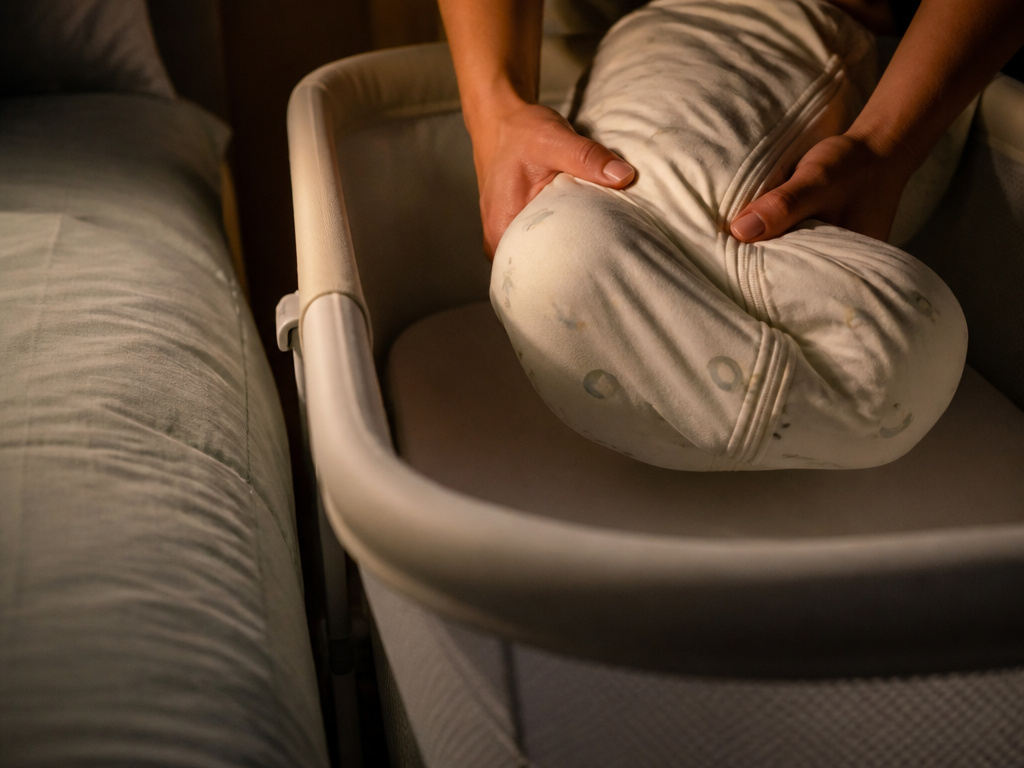 You can perfect the gas-relief routine, but if you then put the baby in a bright, stimulating room, sleep will still fail. The environment must signal that it’s time for stillness.
The NHS is explicit on this point: to help babies distinguish night from day, keep lights low, voices quiet, and interaction minimal during nighttime feeds and changes. This isn’t just about mood; it’s about conditioning their circadian rhythm. A gassy baby already has internal discomfort. Adding external stimulation (bright lights, playtime) tells their brain it’s time to be awake, fighting the drowsiness your relief routine created.
For at least the first six months, your baby’s safest sleep space is in your room. This clinical guide for infant gas and SIDS prevention guidelines align on that. A simple bassinet next to your bed lets you respond to early fussing before it builds into fully awake, pained crying where they swallow more air.
Consider your swaddle blankets. A tight, traditional swaddle can be wonderfully calming, but it also immobilizes the hips and legs. For a baby struggling with gas, the inability to draw their knees up for relief can be frustrating. On particularly gassy nights, a wearable blanket (sleep sack) allows for safer leg movement while still providing the cozy, contained feeling.
What About Gripe Water and Gas Drops?
The pharmacy aisle is full of promises. Let’s separate the options with evidence from the folk remedies.
Simethicone gas drops (like Little Remedies or Mylicon) are FDA-approved. They work by breaking down the surface tension of gas bubbles, merging them into larger bubbles that are easier to pass. The crucial detail from the Cleveland Clinic pediatric health article is that they are a preventive tool. Dr. Amy Sniderman notes they are “less effective after gas has already built up.” If you use them, give them at the start of the day, not in a panic at 2 AM.
Gripe water is a different story. It’s an herbal supplement, not an FDA-regulated medication. Its safety and efficacy aren’t well-established by research. Some pediatricians don’t recommend it simply because the data isn’t there. The potential for unlisted ingredients or allergens makes it a riskier choice than the inert, non-absorbed simethicone drops.
When Gassiness Is a Sign to Call the Doctor
Most baby gas is a normal, maddening part of infancy. But there are clear lines where it shifts from a nuisance to a symptom.
The rule is interference. Is the gas interrupting a core function? According to pediatric sources, you should reach out to your pediatrician if: * The fussiness prevents adequate sleep or feeding over a 24-hour period. * Your baby has forceful, projectile spit-up consistently. * You see blood or mucus in their stool. * They have a fever (100.4°F or higher rectally). * They are extremely lethargic or difficult to wake.
A baby who is gaining weight well, has wet diapers, and has periods of calm contentment between gas episodes is likely just going through the tough but normal developmental phase. The baby who is in constant distress, falling behind on feeds, or showing other symptoms needs a professional assessment to rule out issues like reflux, allergies, or other digestive problems.
Frequently Asked Questions
How can I prevent my newborn from getting so gassy at night?
Focus on feeding mechanics. Use a slow-flow nipple if bottle-feeding, and hold the bottle at an angle so milk fills the nipple. Feed your baby in a slightly upright position. Most importantly, try to feed them before they reach the frantic, crying stage of hunger, as crying gulps in a lot of air. For breastfed babies, ensure a good latch.
Is it safe to let my gassy newborn sleep on their stomach?
No. The American Academy of Pediatrics’ safe sleep guidelines are unequivocal: babies should be placed on their back for every sleep until they can roll over independently. The risk of SIDS outweighs any potential gas-relief benefit. You can provide supervised tummy time on your chest or lap while they are awake, but for unsupervised sleep, always place them on their back.
My baby passes gas but still seems uncomfortable. Why?
Passing gas requires coordination of abdominal muscles and the anal sphincter. Newborns are still learning this. They may be straining, pushing, and passing some gas while a larger bubble remains trapped further up. This is where the leg bicycling and knee-to-chest holds are most helpful, they manually assist the internal mechanics.
Do certain formulas or foods in my diet make gas worse?
Sometimes. Some babies find relief with a “sensitive” or partially hydrolyzed formula. If you’re breastfeeding, dairy in your diet is a common culprit. However, don’t drastically restrict your diet without consulting your pediatrician first. True milk protein allergies are less common than general infant gassiness, and you need to maintain your own nutrition.
Can a pacifier help a gassy baby sleep?
It can, but it’s a double-edged sword. Sucking is calming and may help them settle, but vigorous sucking can also cause them to swallow air. If you use one, opt for a simple, one-piece orthodontic pacifier and offer it after a feed and burping, not during active gas pain.
Before You Go
Helping a gassy newborn sleep is a puzzle with physical pieces. The gas has a source (swallowed air, immature digestion), a location (stomach or intestines), and a clock (peaking around six weeks). Your job is to match the remedy to the piece: burp the stomach air, move the intestinal gas, and create an environment where sleep is the obvious next step.
Trust the timeline. The intensity of this phase will fade. For now, your calm, repeated routine of burp, bicycle, and quiet is the most effective medicine you have. Keep those swaddling products handy for calm nights, and have the best infant blankets ready for cozy cuddles after the storm passes. You’re not just waiting it out, you’re actively helping their brand-new body learn how to work.
