
How Do Duvet Covers Work? Understanding Use, Fit, and Care
This post contains affiliate links. As an Amazon Associate we earn from qualifying purchases.
Duvet covers work as removable, protective shells for a duvet or comforter insert, functioning like a giant pillowcase. They shield the expensive, hard-to-wash insert from stains, spills, and daily wear, while allowing for easy aesthetic changes and weekly laundering to maintain sleep hygiene. The key components are a precise size match, a closure (zipper, buttons, or ties), and often internal corner ties to prevent the insert from shifting and bunching inside.
That protective layer isn’t just about looks. It’s a hygiene barrier. The insert inside, whether down, down-alternative, or wool, is bulky and difficult to clean frequently. Washing a king-size comforter weekly is a battle most machines lose. A duvet cover takes the hit instead.
What follows is a breakdown of the system: the three jobs a cover actually does, the specs that make it work (or fail), the one method that solves the insertion struggle, and how to choose materials that last through a child’s spills and washes.
Key Takeaways
- Duvet covers are washable armor for your comforter. They should be laundered every 1–2 weeks per NHS sleep guidelines to control bacteria and dust mites, while the insert may only need cleaning once or twice a year.
- Internal corner ties are non-negotiable for kids’ bedding. Without them, the insert slides into a lumpy pile at one end after two nights of sleep.
- Size matching is critical. An insert more than 2 inches smaller than the cover will shift constantly; an insert that’s too large creates compressed, flat spots.
- For breathability and durability with kids, target a cotton percale or linen cover with a thread count between 200 and 400.
- The “burrito roll” or “sushi roll” insertion method eliminates 90% of the frustration of changing a cover, especially for larger beds.
The Core Mechanism: Protection, Hygiene, and Customization
A duvet cover isn’t a decorative afterthought. It’s a functional part of a two-piece bedding system designed for easy maintenance. The insert provides the warmth; the cover provides the clean surface.
The primary job is protection. A quality duvet insert is an investment. It’s also a magnet for juice spills, pet hair, dust mites, and body oils. Dry-cleaning a down comforter every month is impractical. Throwing a duvet cover for kids in the wash is simple. This turns a high-maintenance item into a low-maintenance one.
Hygiene is the next layer. You wouldn’t use the same pillowcase for months. The logic applies to your duvet. The NHS sleep guideline advising a wash every 1–2 weeks exists because sweat and skin cells accumulate, creating an environment for bacteria and dust mites. A removable cover lets you follow this rule without destroying the insert.
The NHS sleep guidelines note duvet covers should be washed every 1–2 weeks to reduce bacteria, dust mites, and sweat accumulation that can disrupt sleep. The cover is the barrier that makes this frequency possible.
Finally, customization. Swapping a cover changes a room’s look instantly. This is a budget-friendly alternative to buying a new comforter set each season. For a child’s room, you can have a dinosaur cover for weekdays and a solid color for weekends without needing two bulky inserts.
Anatomy of a Duvet Cover: What Makes It Function
If you look past the pattern, a duvet cover is a simple piece of engineering. Three elements dictate whether it works well or drives you mad.
Closure System: This is how you seal the insert inside. Zippers are common and secure, but check for fabric guards to prevent pinching. Button closures offer a classic look but can pop if the insert is too full. A hidden envelope flap with ties is less common but very secure for active sleepers.
Internal Ties (or Loops): These are the secret to a tidy bed. Small fabric ribbons or loops are sewn into each corner of the cover’s interior. You tie these to corresponding loops on the corners of your duvet insert. This anchors the insert in place. Without ties, the insert will slide down to the bottom of the cover, leaving the top half empty and flat. For any bedding for kids, consider ties a mandatory feature.
Fabric and Construction: The material determines feel, breathability, and longevity. For children’s bedding, natural fibers are king. | Fabric Type | Best For | Compromise | |—————–|————–|—————-| | Cotton Percale | Hot sleepers, year-round use. Crisp, breathable, durable. | Can wrinkle; may feel “cool” to the touch. | | Cotton Flannel | Cold climates, winter months. Brushed surface traps warmth. | Too hot for summer; pills over time with frequent washing. | | Linen | Humid environments, allergy sufferers. Highly breathable, gets softer. | Expensive; wrinkles heavily (a lived-in look). | | Polyester Blends | Budget options, vibrant prints. Wrinkle-resistant, affordable. | Less breathable, can trap heat and feel clammy. |
Thread count matters, but only within a range. A count between 200 and 400 for cotton offers the ideal balance of softness, breathability, and durability. A number much higher often means thinner, weaker threads that wear out faster under weekly washing.
How Duvet Covers Differ From Comforters and Quilts
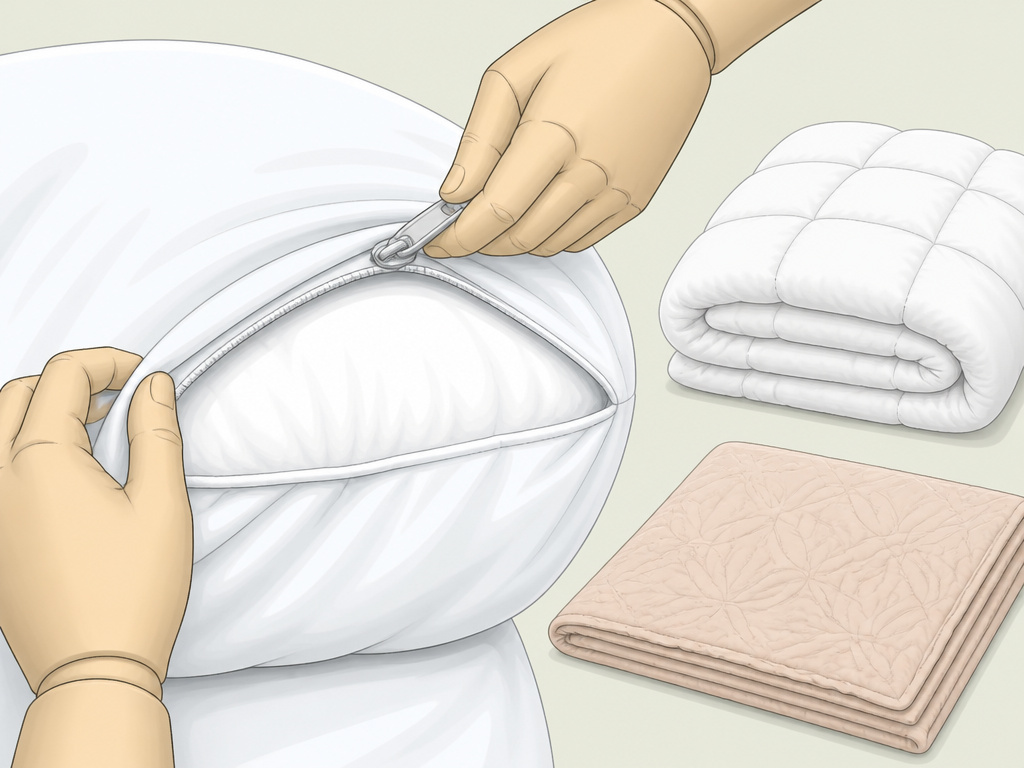 This is where confusion sets in. All three provide warmth, but their form and function differ.
A comforter is a single, finished product. It’s a fabric shell stitched together and filled with insulation. It’s meant to be used as-is, though you can put a duvet cover over it. Washing a full comforter is a major chore.
A quilt is typically a thinner, decorative top layer with patchwork or stitching, often used over a sheet or lighter blanket. It’s not designed to encase a thick insert.
A duvet cover has no filling. It is only the outer shell, part of a system. You must buy the insert separately. The advantage is modularity: one warm insert can be used with a lightweight cotton cover in summer and a cozy flannel cover in winter.
Where this goes sideways: Using a king-size duvet cover with a full/queen insert. The insert will swim inside, shifting into a ball every night and leaving cold, empty fabric corners. Always match the label sizes exactly.
Sizing and Fit: Why “Close Enough” Doesn’t Work
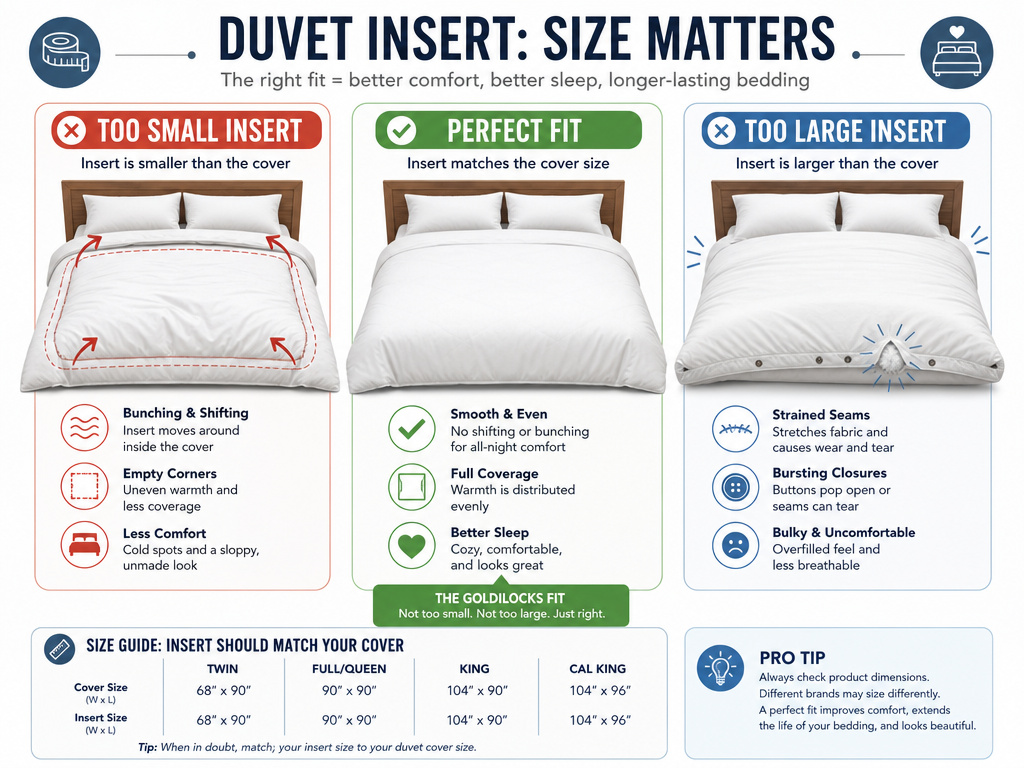 Manufacturers’ stated sizes are not perfectly standardized. A “Queen” duvet insert from one brand might be 88×94 inches, while another’s is 90×90. Your cover needs to match your specific insert.
The Consequences of a Mismatch:
- Insert Too Small for Cover: The insert will drift and bunch up, failing to fill the corners. The bed looks sloppy, and warmth distribution is uneven.
- Insert Too Large for Cover: The insert gets compressed, creating thin spots. It strains the cover’s seams, and the closure (zipper or buttons) will be under constant tension, often popping open.
Standard U.S. Duvet Cover Dimensions:
| Bed Size | Typical Duvet Cover Dimensions (inches) | Typical Insert Dimensions (inches) |
|---|---|---|
| Twin | 72 x 90 | 64 x 88 |
| Full/Double | 84 x 96 | 80 x 90 |
| Queen | 90 x 102 | 88 x 94 |
| King | 102 x 108 | 104 x 94 |
Always measure your insert before buying a cover. The cover should be within 1-2 inches of the insert’s dimensions for a snug, non-shifting fit.
The Step-by-Step Insertion Method That Actually Works
The classic struggle, fighting a fluffy insert into a limp cover, is solved by the burrito roll method (sometimes called the sushi roll). This technique uses the cover’s own fabric to guide the insert in smoothly.
The Burrito Roll Method
This works for any closure type and is a one-person job.
- Lay the duvet cover flat on your bed, inside out. Position it so the opening is at the foot of the bed.
- Place your duvet insert on top. Align all four corners and edges perfectly.
- Secure the internal ties. Reach inside the cover at each corner to tie the cover’s ties to the insert’s loops. Do not skip this.
- Roll from the head of the bed. Starting at the top (the closed end), tightly roll the duvet and cover together toward the foot of the bed. You’re creating a long, tight cylinder.
- Invert the opening. Once fully rolled, grab the open end of the cover (the fabric only) and pull it over the entire roll, like turning a sock right-side-out.
- Unroll and fasten. Hold the covered ends and unroll the bundle back up the bed. The insert will now be perfectly seated inside the right-side-out cover. Zip or button it closed.
The whole process takes under two minutes once you’ve done it twice. It eliminates the frantic arm-flailing inside a cover.
Choosing a Duvet Cover for a Child’s Bed
Kids’ bedding faces unique tests: frequent washing, spills, and sensitivity. Your criteria should shift from pure aesthetics to durability and safety.
Fabric is First: Prioritize natural, breathable fibers. A 100% cotton cover (percale or sateen weave) is the default for a reason. It’s durable, machine-washable, and less likely to irritate sensitive skin than synthetic blends. For a child with allergies or eczema, look for organic cotton or linen.
Closure Safety: Avoid large, decorative buttons that could pose a choking hazard for very young children. A sturdy zipper with a fabric guard or a robust snap closure is safer and easier for little hands to manage as they learn to make their bed.
The Tie-Down System: This is non-negotiable. Active sleepers turn a bed into a wrestling mat. Internal corner ties are the only thing keeping the insert from becoming a tangled mess. Verify they exist before purchasing.
Ease of Cleaning: Assume it will need a hot wash. Check the care label to ensure it’s machine washable and can tolerate bleach alternatives or strong stain removers. Darker colors or bold patterns can be more forgiving than light pastels.
A well-chosen toddler bedding set with a functional duvet cover teaches independence, kids can help change their own bedding when the system is simple and secure.
Maintenance and Care: Making the System Last
A duvet cover’s job is to be washed. Doing it correctly extends the life of both the cover and the insert.
Washing Frequency: Wash the cover every 1–2 weeks. This follows the NHS hygiene guideline and prevents body oils and sweat from breaking down the fibers. The duvet insert itself only needs cleaning 1-2 times per year, unless an accident warrants it.
Drying: Tumble dry on a low or medium heat setting. High heat can weaken elastic in closures and cause excessive shrinkage. Remove promptly to minimize wrinkles. For linen, remove while slightly damp and hang to dry the rest of the way for a softer finish.
Storage: Never store a duvet cover in a plastic bag, which can trap moisture and lead to mildew. Instead, fold it and place it in a cotton storage bag or a breathable linen closet. This also applies to out-of-season kids bedding or spare baby blankets.
Repair: Reinforce the stitching around buttonholes or zipper ends at the first sign of strain. A few minutes with a needle and thread can prevent a full seam failure after dozens of washes.
Frequently Asked Questions
Can you use a regular comforter inside a duvet cover?
Yes, you can. It functions the same way. The main challenge is that comforters often lack the corner loops needed to attach to a cover’s internal ties. This means the comforter may shift inside the cover more than a dedicated duvet insert would. For a steadier fit, you can hand-sew small ribbon loops to the corners of your comforter.
What if my duvet cover doesn’t have inside ties?
The insert will move. You have two options. First, you can add them yourself. Sew a 6-inch fabric ribbon or loop into each interior corner seam of the cover. Second, you can use safety pins (with extreme caution). Pin through the cover and insert fabric at each corner, ensuring the pin is fully closed and the sharp point is buried in the insert filling to prevent injury.
How do I keep a duvet cover from slipping off the insert?
This is almost always caused by missing or untied internal corner ties. Tie them securely. If the cover is drastically oversized for the insert, the ties won’t solve the problem, you need a better size match. For a minor size discrepancy, you can add additional tie points along the side seams.
Are duvet covers better than comforters for kids?
For maintenance and hygiene, yes. Kids are messy. Being able to strip off and wash a duvet cover for toddlers weekly is far easier than attempting to wash an entire comforter that often. It also allows for easy theme changes as their interests evolve, without buying a new bulky comforter each time.
What’s the best material for a child’s duvet cover?
100% cotton, specifically a percale or sateen weave with a 200-400 thread count. It’s breathable, durable through countless washes, and naturally hypoallergenic. Avoid high-thread-count sateens if your child is a hot sleeper, as the tighter weave can be less breathable.
Before You Go
A duvet cover works when you treat it as part of a system, not a standalone piece. Its value is in the weekly wash, the anchored corners, and the precise fit. For a family, that means less time wrestling with laundry and more time in a clean, comfortable bed. Choose a cover with strong cotton, secure ties, and a reliable closure. Then use the burrito method and wash it on schedule. The rest is just peaceful sleep.
