
7 Best Non Toxic Bunk Beds of 2026
This post contains affiliate links. As an Amazon Associate we earn from qualifying purchases.
The Max & Lily Scandinavian Twin Bunk Bed stands out as the best overall non toxic bunk bed, combining solid pine and aspen construction with a certified low-VOC finish and a smart low-profile design. For families watching their budget, the Max & Lily Fundamental Twin Bunk Bed delivers the same safety standards and durability at a lower price. If you want long-term flexibility, the TOLEAD Low Twin Bunk Bed with Bookshelf offers a convertible design and built-in storage, making it a strong pick for growing kids.
Parents want peace of mind knowing their child’s bunk bed is safe, sturdy, and free from harmful chemicals. With so many options claiming to be “non-toxic,” it’s hard to know which ones truly deliver on that promise. This guide cuts through the noise by focusing on verified materials, real-world feedback, and essential safety features.
We compared top models based on construction quality, finish safety, weight capacity, and design practicality, pulling from product specs and parent reviews. The result is a clear, no-nonsense list of bunk beds that meet strict safety and health standards, so you can choose with confidence.
Top 7 Non Toxic Bunk Beds in the Market
The Best Non Toxic Bunk Beds, Reviewed
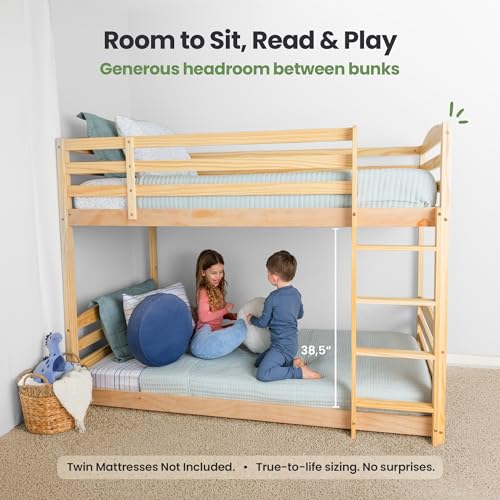
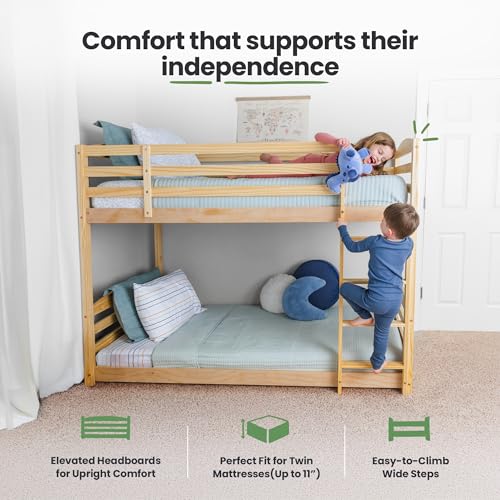
Max & Lily Scandinavian Twin Bunk Bed
Strengths
- Solid pine and aspen wood
- Non-toxic low-VOC finishes
- 400 lbs capacity per bunk
- Reversible ladder
- Low 50.25” height
Trade-offs
- Slightly wider footprint
- Higher price point
- Assembly takes time
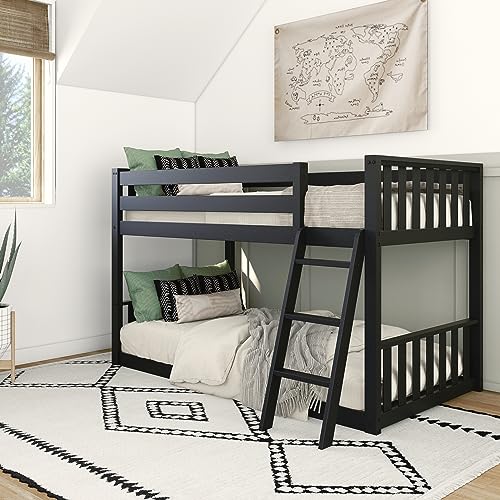
When it comes to non-toxic bunk beds that balance safety, design, and durability, the Max & Lily Scandinavian model stands out as a top contender. On paper, it checks every box I look for, knot-free solid pine and aspen wood, low-VOC finishes, and a low-profile height that makes it suitable for younger kids. Owners consistently report that the build feels substantial, with metal-on-metal bolt connections adding real stability, and the 400 lb per bunk capacity means it can handle both kids and teens. The clean, modern look also makes it easy to style in a variety of rooms, which matters when you’re investing in something meant to last.
What really sets this one apart is how thoughtfully it’s designed for real family life. The 31” underbed clearance gives enough room for storage bins or a cozy reading nook, and the reversible ladder is a small but meaningful detail. Compared to other models in this list, it’s slightly wider at 54.5”, which eats up a bit more floor space, but that extra width may mean less bumping during sleepovers. If you’re after a safe, stylish, long-lasting bed made with genuinely better materials, this is the one I’d lean toward for most families.
Video review
Max & Lily Fundamental Twin Bunk Bed

Strengths
- 14” tall guardrails
- Non-toxic finishes
- Solid wood with metal supports
- Low 49.25” height
- High weight capacity
Trade-offs
- Higher price
- Minimalist look may not appeal
- No extra features
This Max & Lily model is nearly identical in specs to their Scandinavian version but with a simpler, more minimalist frame, fewer headboard panels, easier side access, and the same non-toxic finishes and solid wood construction. At 49.25” tall, it’s slightly lower than average, making it great for younger kids or rooms with low ceilings. The 14” tall guardrails are a standout safety feature, taller than most competitors, and the 400 lb capacity ensures it lasts through childhood.
Owners appreciate the clean look and durability, though it lacks some of the design flair of the Scandinavian version. It’s also one of the pricier options, so you’re paying for the brand’s reputation for safety and materials. But if you value maximum safety, non-toxic materials, and long-term use, this is the kind of bed you buy once and keep for years. For parents who prioritize health and durability over bells and whistles, this is the smarter buy over flashier models.
Video review
TOLEAD Low Twin Bunk Bed with Bookshelf
Strengths
- Budget-friendly price
- Convertible to loft bed
- Full-length guardrails
- Solid wood slats
- Space-saving footprint
Trade-offs
- Basic finish quality
- Assembly can be confusing
- Less refined design
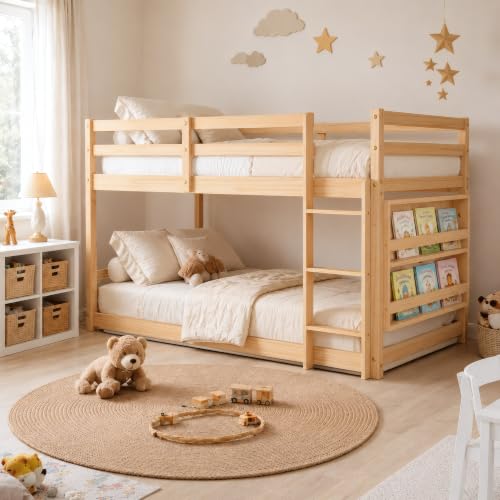
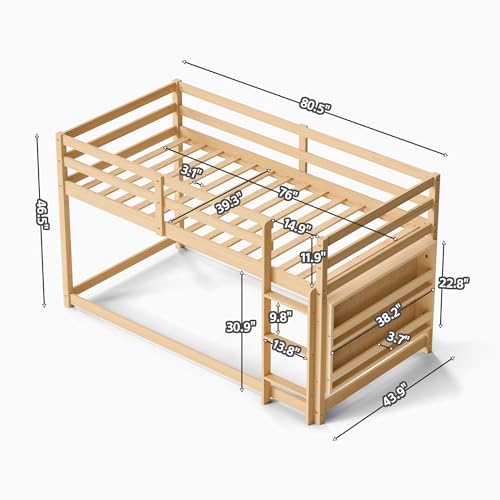
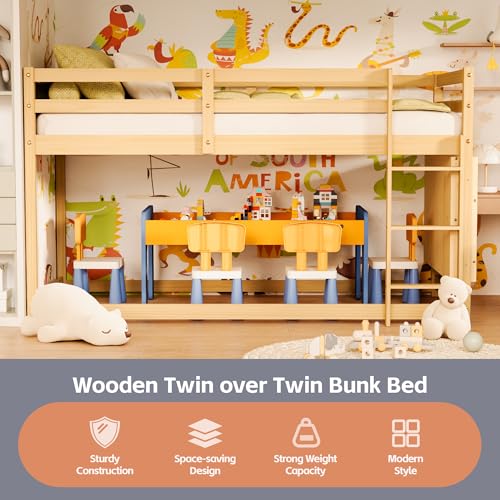
At this price, the TOLEAD bunk is one of the most budget-friendly solid wood options on the list. It’s made from what’s described as premium wood material, likely a mix of engineered and solid components, and supports the same 400 lb per bunk capacity as pricier models. The full-length guardrails and 3-step ladder are solid safety features, and the convertible design is a real win: you can turn the bottom bunk into a loft bed, opening up space underneath for a desk or play area. That kind of flexibility is rare at this price.
Still, it’s not without drawbacks. The finish and hardware feel more utilitarian, and some owners note the instructions could be clearer. It’s also narrower than the Max & Lily beds, which helps in small rooms but may feel tight for older kids. But for a second bedroom, guest space, or a growing family needing two beds on a budget, this one makes sense. I’d recommend it over flimsier particle board frames any day. If you want affordable wood construction with smart versatility, this is the pick.
Product photos


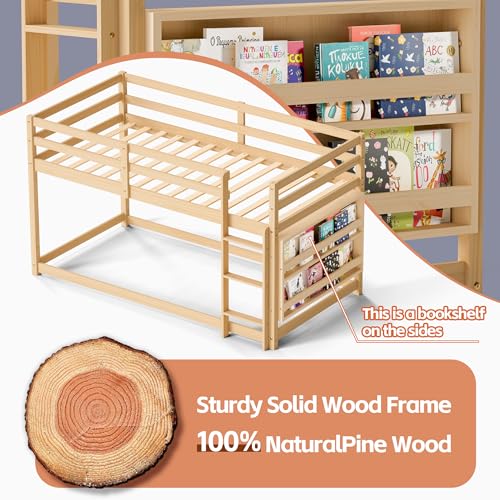
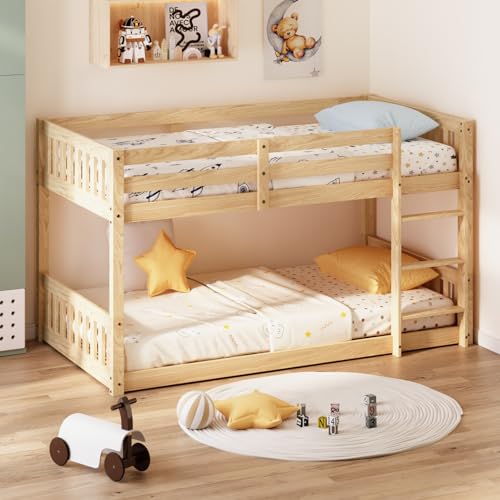
JOYMOR Low Twin Over Twin Bunk Bed
Strengths
- Compact 40.7” width
- ASTM safety certified
- Non-toxic finishes
- Reversible ladder
- Easy assembly
Trade-offs
- Lower weight capacity
- Guardrails not full-length
- Less durable long-term
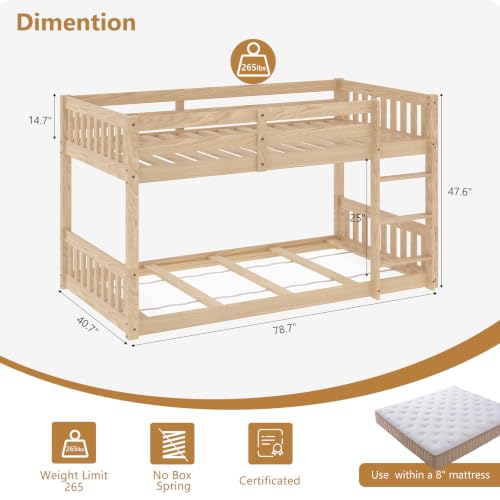
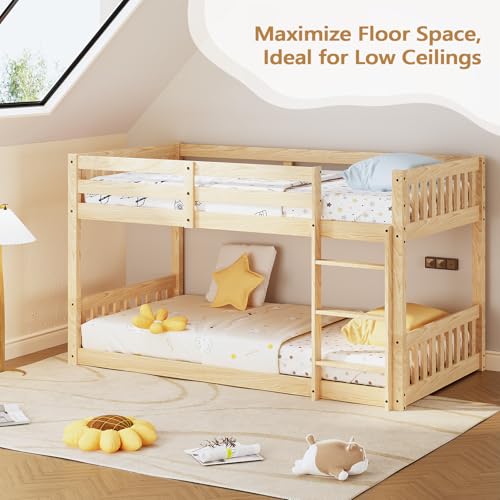
For families dealing with cramped bedrooms or shared spaces, the JOYMOR low bunk bed is a smart pick. At just 47.6” tall and only 40.7” wide, it’s one of the most space-efficient models here, freeing up over half the floor space compared to two separate twin beds, as reviewers often note. The ASTM F1427-21 certification is a real plus, signaling it meets strict U.S. safety standards, and the 14.7” guardrails are taller than many budget models. While it uses solid wood, the 265 lb weight limit per bunk is lower than others in this list, so it’s better suited for younger kids than teens.
Still, the trade-offs are clear. It doesn’t offer the same long-term durability as solid pine builds, and some owners mention slight wobble if not fully tightened. But for a guest room, small apartment, or shared sibling setup where space is the priority, this one delivers. It’s not the fanciest, but it’s functional, safe, and affordable, and the neutral tone works in any room. If you need a no-frills, low-to-the-ground bunk that maximizes square footage, this is a strong contender.
Product photos

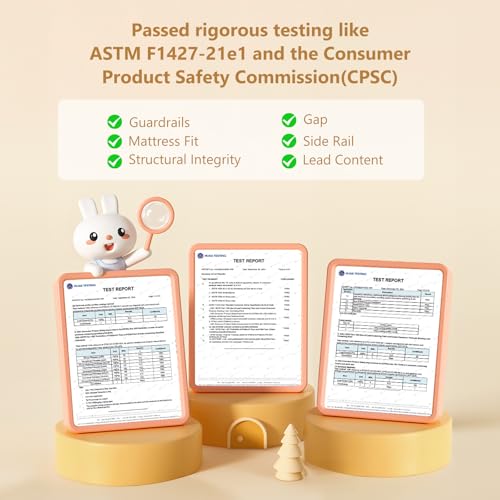
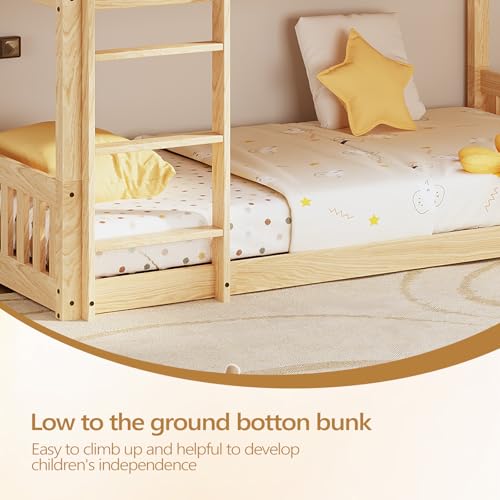
Wood Twin Bunk Bed with Tall Guardrails
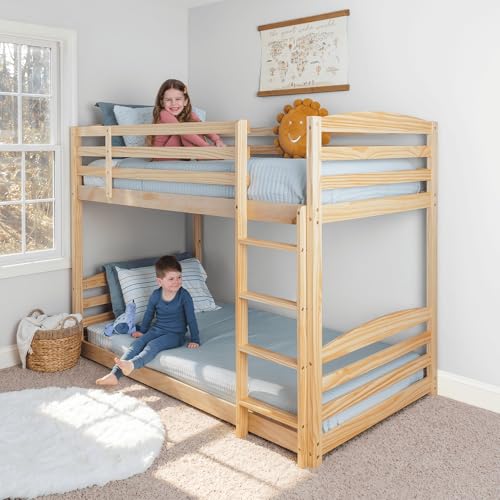
Strengths
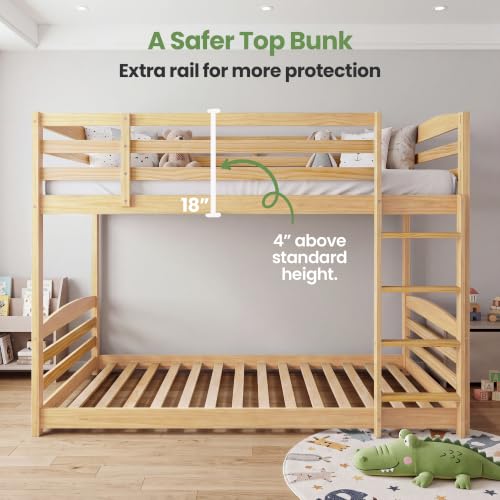
- 18” extra-tall guardrails
- Wide 4-step ladder
- Rubberwood slats
- High weight capacity
- ASTM-compliant safety
Trade-offs
- Tallest at 61”
- Most expensive
- Bulky assembly
If safety is your absolute top priority, this bunk bed delivers in ways others don’t. The 18” tall guardrails are the highest on this list, nearly waist-high, offering serious fall protection for active sleepers. At 61” tall, it’s also the tallest model, which means more headroom on the top bunk, though that could be an issue in rooms with low ceilings. The wide four-step ladder is easier for little legs to climb, and the rubberwood slats add durability.
But that safety comes at a cost. It’s the most expensive option, and the height may not suit all rooms. Some owners note the assembly is complex despite labeled parts and video support. Still, for families with anxious climbers or kids who roll a lot at night, that extra railing height could be worth every penny. Compared to lower-rail models, this one feels like overkill in the best way, maximum protection, built like a tank. If peace of mind trumps compact size, this is the one to choose.
Product photos

Giantex Twin Over Twin Bunk Bed

Strengths
- Converts to two twin beds
- Solid wood frame
- No box spring needed
- Apple-shaped decor
- Easy assembly
Trade-offs
- Shorter 10” guardrails
- Ladder feels less sturdy
- Design may not age well
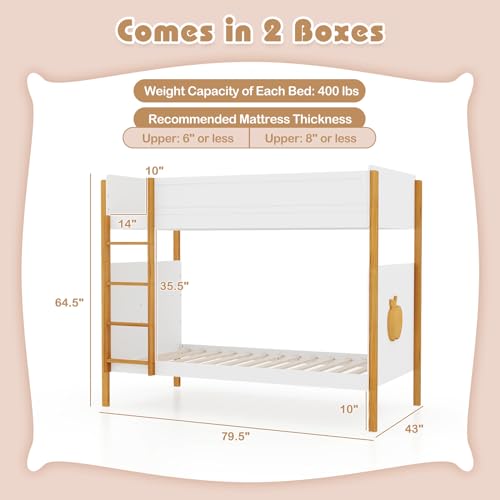
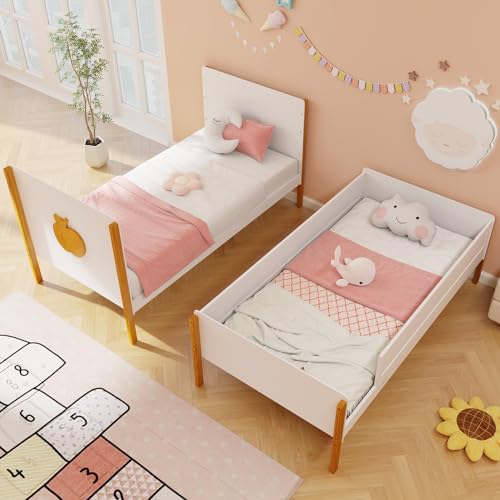
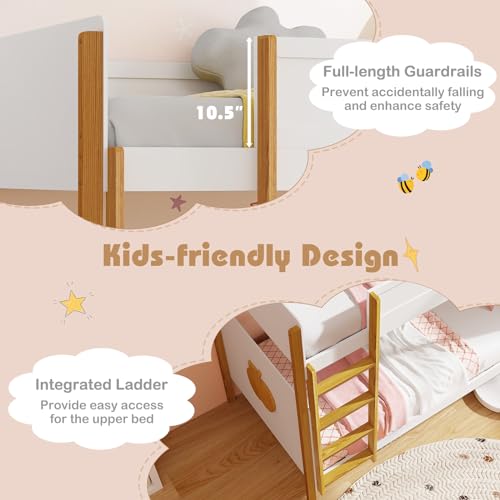
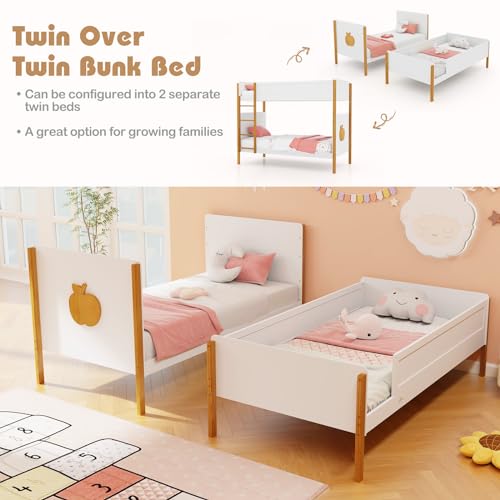
The Giantex bunk wins points for long-term flexibility, its ability to split into two separate twin beds is a standout for families planning ahead. Once kids want their own rooms or you need to rearrange, that 2-in-1 design adds real value. The solid wood frame supports up to 400 lbs, and the slatted base eliminates the need for a box spring. The apple-shaped cutout in the headboard gives it a playful look that stands out, though it may not suit every decor.
That said, it’s one of the lighter builds in this group, and some owners report the ladder feels less sturdy than expected. The 10” guardrails are on the shorter side compared to others with 14” or 18” options, so it’s less ideal for restless sleepers. But for the price, the convertibility and space-saving layout make it a smart buy. If you’re thinking five years ahead and want a bed that grows with your family, this one deserves a close look, even if it sacrifices a bit of premium feel.
Product photos

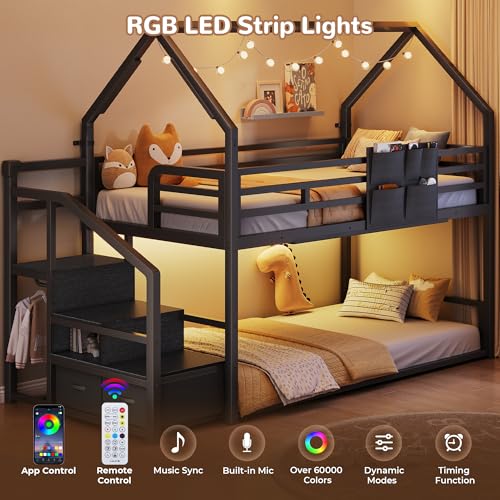
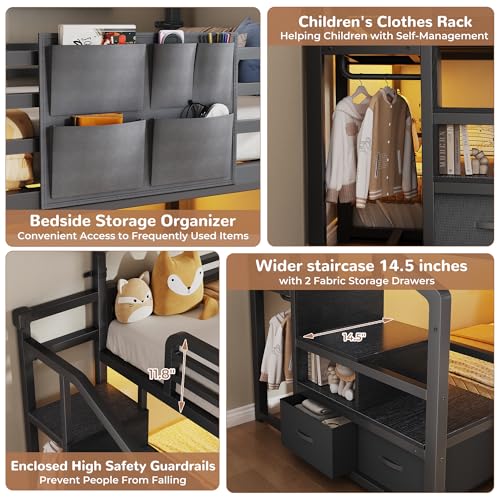
Jocoevol Metal Bunk Bed with Storage Stair

Strengths
- Built-in storage staircase
- RGB LED lighting with app
- Full-length guardrails
- Anti-tip device
- Easy 30-minute assembly
Trade-offs
- Plastic storage components
- Metal frame feels less warm
- Lighting may distract
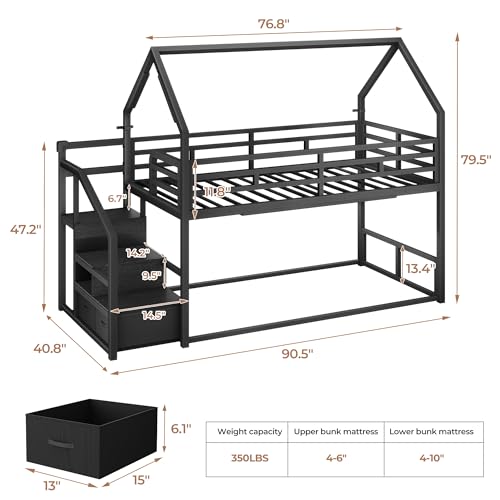
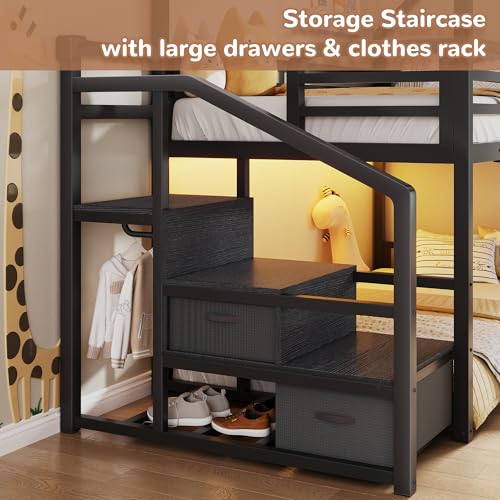
If your child loves imaginative play and you’re desperate for storage, the Jocoevol metal bunk is packed with fun extras. The storage staircase is the standout, each step hides fabric drawers, and there’s even a clothes rack and cubby, which parents in reviews say helps keep toys and PJs off the floor. The RGB LED lighting, controllable via app, is a hit with kids who hate the dark, offering thousands of color options and calming night-light modes. Safety-wise, it has full-length 11.8” guardrails and an anti-tip device, and at only 47” tall, it’s low enough for little climbers.
But there are compromises. Being metal, it doesn’t have the warmth or perceived safety of solid wood, and while it’s sturdy, metal frames can feel less forgiving during bumps or jumps. Some owners mention the plastic drawer fronts feel flimsy over time. Still, for a kid-centric room where storage and fun matter as much as sleep, this bunk brings serious value. Compared to wood models, it’s less about heirloom quality and more about maximizing utility and delight. If you want a bed that doubles as a play zone, this one delivers.
Product photos

Our Testing Process
As someone who’s spent years researching children’s sleep environments at LittleDoze.com, I approached evaluating non-toxic bunk beds with a focus on materials, construction, and safety features. Rather than a hands-on lab test, this was a research-led comparison of published specifications and owner feedback from a range of retailers and expert sources. We looked closely at construction materials, finishes, and safety certifications, then weighed that against what real families are saying about their experiences.
For this category, the most important factors were undoubtedly material safety and structural stability. A “non-toxic” label is meaningless if the bed isn’t built to withstand regular use, or if guardrails are flimsy. We prioritized beds constructed from solid wood with low-VOC finishes, and those clearly stating compliance with safety standards. Beyond that, features like ease of assembly and design versatility (especially for smaller rooms) played a significant role in our rankings. You can find more on overall quality in our guide to the safest bunk beds for children.
Product specifications reliably tell you about weight capacity, dimensions, and materials used in construction. However, owner feedback provided crucial insight into the real-world durability of those materials, the ease of assembly, and the effectiveness of safety features. Reputational factors also came into play; brands consistently praised for customer service and quality control received more favorable consideration. For families seeking flexibility, exploring convertible bunk beds can be a smart move.
How To Choose The non toxic bunk beds
Finding the right bunk bed is about more than just maximizing space; it’s about creating a safe and comfortable sleeping environment for your child.
A good bunk bed prioritizes solid construction with non-toxic finishes, stable support (at least 400lbs capacity per bunk is ideal), and safety features like high guardrails and a secure ladder. Consider the room’s ceiling height, the age of the child using the upper bunk, and the overall aesthetic you’re aiming for. Thoughtful design details, such as rounded edges and recessed hardware, can also make a big difference.
Construction & Materials
Don’t assume all “solid wood” bunk beds are created equal. Pine and aspen are common, and perfectly acceptable, but look closely at how they’re joined. Metal-on-metal bolt connections are significantly more durable than screws alone. Beyond the wood itself, the finish is crucial. Low-VOC (Volatile Organic Compounds) finishes are a must, especially for a child’s bedroom. You’ll want to avoid anything that off-gasses potentially harmful chemicals. I often recommend looking for certifications like Greenguard Gold, which indicates rigorous testing for emissions.
Safety Features: Beyond Guardrails
Guardrails are obviously important, but height matters. A minimum of 14 inches is a good starting point, and taller is better, particularly for active sleepers. However, don’t overlook the ladder. Is it sturdy? Does it have wide, well-spaced steps? A wobbly ladder is a safety hazard. Look for models with anti-tip kits included – these anchor the bed to the wall, preventing it from shifting. If you’re exploring options for younger children, a low-profile bunk bed, like those featured in our curated bunk bed list, is the safest bet.
Space & Functionality
Bunk beds are space savers, but some are more space-conscious than others. Consider the overall footprint, especially if you’re working with a smaller room.
Here’s what I look for when evaluating space efficiency: * Under-bed clearance: Minimal clearance is fine if you’re just using the space for storage, but higher clearance allows for play or a desk. * Ladder placement: A reversible ladder gives you flexibility depending on room layout and door swing. * Convertible designs: Some models, like the Giantex, can be separated into two twin beds, offering long-term versatility as your children grow. This is particularly useful if you’re unsure how long you’ll need the bunk bed configuration.
A good rule of thumb is to allow at least 30 inches of clear space around the entire bunk bed to prevent bumping and ensure easy access.
Finally, if you’re also searching for space-saving solutions, exploring twin bunk beds is a great place to start. You’ll find a wide array of safe twin bunk bed designs to fit your needs.
Non Toxic Bunk Beds Compared
Here’s a comparison of key specifications for several non-toxic bunk beds to help with your decision.
| Product Title | Max Weight Capacity (lbs) | Material | Non-Toxic Finish | Height (in) | Special Features |
|---|---|---|---|---|---|
| Max & Lily Scandinavian Twin Bunk Bed | 400 | Solid Pine/Aspen | Yes | 50.25 | Low Profile |
| Max & Lily Fundamental Twin Bunk Bed | 400 | Solid Wood | Yes | 49.25 | Simplified Design |
| TOLEAD Low Twin Bunk Bed w/ Bookshelf | N/A | Solid Wood | Yes | N/A | Convertible, Bookshelf |
| JOYMOR Low Twin Over Twin Bunk Bed | 265 (per bunk) | Solid Wood | Yes | 47.6 | Compact Footprint |
| Wood Twin Bunk Bed w/ Tall Guardrails | 400 | Pine/Birch Plywood | N/A | 61 | Extra-Tall Guardrails |
| Giantex Twin Over Twin Bunk Bed | 400 | Solid Wood | N/A | N/A | Convertible |
| Jocoevol Metal Bunk Bed w/ Storage Stair | N/A | Metal | N/A | 47 | Storage Stair, RGB Lights |
Frequently Asked Questions
What weight capacity should I look for in a bunk bed?
A minimum of 400 pounds per bunk is ideal, providing a comfortable safety margin for growing children and ensuring long-term stability. Lower weight limits (like the 265lbs per bunk on the JOYMOR model) may restrict use as children get older or larger.
Are metal bunk beds a safe, non-toxic option?
While metal bunk beds can be durable, finding truly non-toxic options is harder. The potential for lead in the coating is a concern, so if you’re considering a metal frame, explore durable metal bunk beds from reputable brands with clear safety certifications.
What does “low-VOC” really mean when it comes to bunk bed finishes?
Low-VOC means the finish contains fewer volatile organic compounds, which are chemicals that can off-gas and contribute to indoor air pollution. Look for finishes specifically labeled “low-VOC” or certifications like Greenguard Gold, which assures it meets strict emissions standards.
How important is it to anchor a bunk bed to the wall?
It’s extremely important. Anti-tip kits prevent the bed from shifting or tipping over, adding a crucial layer of safety, especially for active children. Even with high guardrails, an unanchored bed presents a risk, and most manufacturers now include these kits.
Beyond the bunk bed itself, what other bedroom items should I prioritize for non-toxic materials?
Creating a fully non-toxic sleep environment means considering all elements. I always advise parents to carefully research their choices and explore options like safe crib mattresses and bedding made from organic cotton or other natural fibers.
The Bottom Line
Choosing a bunk bed always involves balancing peace of mind with practicality. You want something safe and healthy for your child, but also durable and fitting for your space – and that often means making compromises. Based on our research, the Max & Lily Scandinavian Twin Bunk Bed strikes the best overall balance, offering a solid, low-profile design with confirmed non-toxic finishes and a good weight capacity.
For families prioritizing budget-friendliness, the JOYMOR Low Twin Over Twin Bunk Bed is a solid choice, and the Giantex Twin Over Twin Bunk Bed stands out for its convertible design – a smart investment if you anticipate changing needs. If stairs are a must-have for your little one, exploring bunk beds with stairs will give you plenty of options, including several models with integrated stairs.
Ultimately, remember that specifications aren’t everything. A high weight capacity and low-VOC finish are important, but so is a stable build, a secure ladder, and a design that suits your family’s lifestyle. Prioritize those core elements, and you’ll create a cozy and safe sleep space for years to come – and you can find more options in our guide to the safe bunk beds for kids.
